
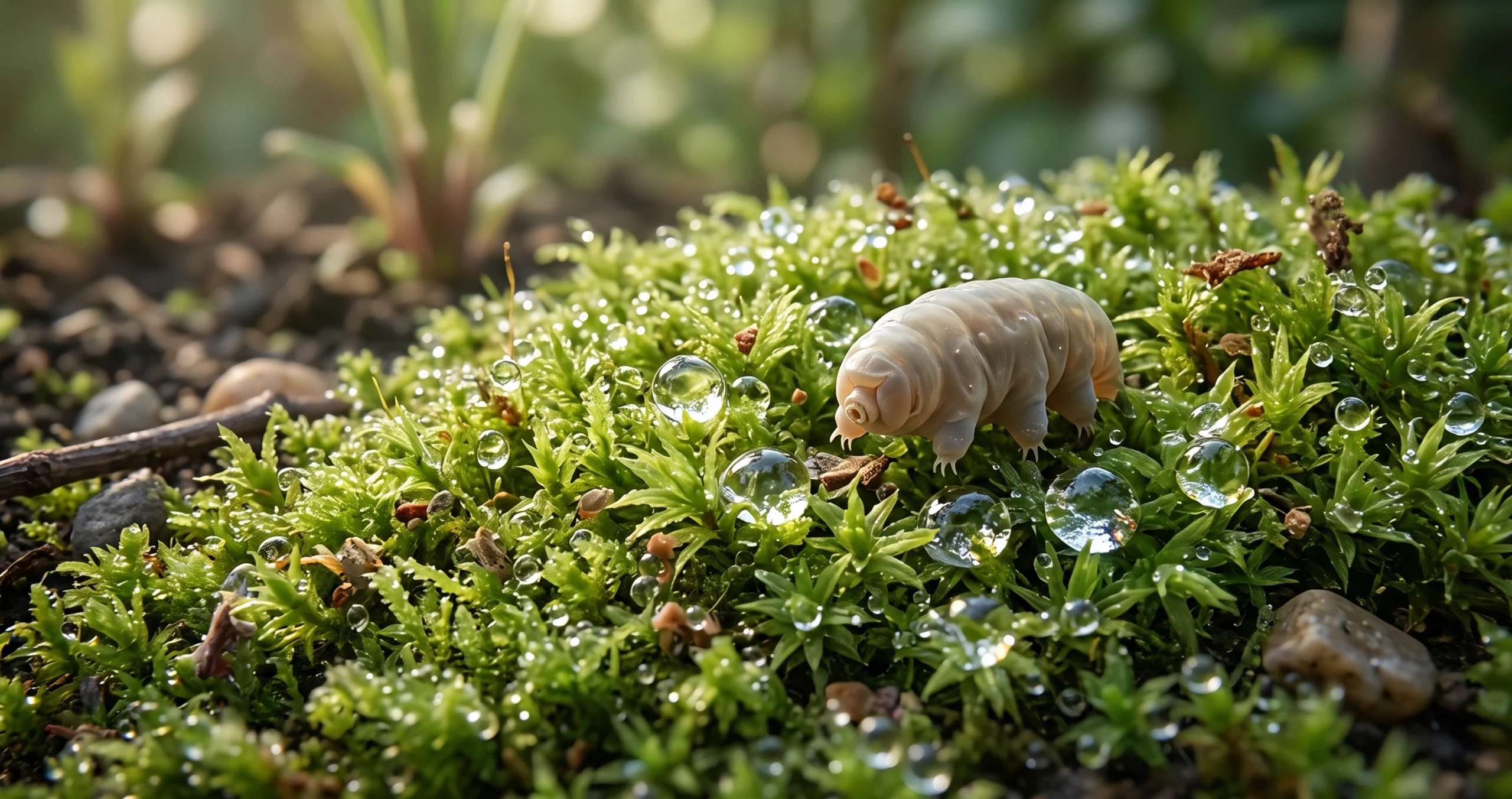
If there were an award for Earth’s toughest animal, the tardigrade would almost certainly be a contender. These microscopic creatures, often nicknamed “water bears” or “moss piglets,” have amazed scientists for decades with their ability to survive conditions that would quickly kill most other forms of life. Many tardigrade survival facts sound almost unbelievable, yet they are supported by years of laboratory research and space experiments.
Tardigrades can withstand extreme dehydration, freezing temperatures, intense radiation, crushing pressure, and even the vacuum of space—but only under specific circumstances. Their incredible resilience has made them valuable research organisms for biology, medicine, and even space exploration. Understanding how they survive may eventually help scientists develop better methods for preserving medicines, protecting astronauts, and storing biological materials.
Table of Contents
- What Are Tardigrades?
- Where Tardigrades Live
- Tardigrade Survival Facts: The Secret of Cryptobiosis
- How Tardigrades Protect Their Cells
- Record-Breaking Survival Abilities
- Can Tardigrades Really Survive Space?
- Why Scientists Study Tardigrades
- How to Find Tardigrades at Home
- Common Myths About Tardigrades
- Frequently Asked Questions
- Conclusion
What Are Tardigrades?
Tardigrades are tiny eight-legged invertebrates belonging to the phylum Tardigrada.
Most species measure only 0.1 to 0.5 millimeters long, making them invisible to the naked eye unless viewed very closely.
Despite their small size, they possess surprisingly complex bodies.
They have a digestive system, nervous system, muscles, claws for gripping surfaces, and a simple brain.
More than 1,300 known species have been described, and scientists continue discovering new ones around the world.
Although they appear delicate under the microscope, tardigrades are among the most resilient animals ever studied.
Where Tardigrades Live
One reason tardigrades are so successful is their remarkable adaptability.
They inhabit almost every continent and many different environments.
Common habitats include:
- Moss growing on rocks
- Tree bark
- Lichens
- Leaf litter
- Freshwater ponds
- Streams
- Garden soil
- Marine sediments
Wherever a thin film of moisture exists, tardigrades may be present.
Most spend active periods feeding on algae, bacteria, plant cells, fungi, or tiny invertebrates.
When conditions deteriorate, they activate one of biology’s most extraordinary survival strategies.
Tardigrade Survival Facts: The Secret of Cryptobiosis
The key to understanding tardigrade survival is a remarkable process called cryptobiosis.
Cryptobiosis is not simply deep sleep or hibernation.
Instead, it is an extreme survival state in which metabolism slows to an almost undetectable level.
When water disappears, tardigrades gradually lose nearly all of the water inside their bodies.
They retract their legs and curl into a compact structure known as a “tun.”
In this state:
- Metabolism drops dramatically.
- Water content falls to only a few percent.
- Cellular activity nearly stops.
- Growth and reproduction pause completely.
The animal remains alive but essentially suspended until favorable conditions return.
Once water becomes available again, many tardigrades rehydrate and resume normal activity within hours.
How Tardigrades Protect Their Cells
Removing nearly all body water creates enormous challenges.
Normally, dehydration damages proteins, cell membranes, and DNA.
Tardigrades avoid this through several remarkable biochemical adaptations.
Trehalose: An Important Protective Sugar
Some tardigrade species produce trehalose, a sugar that helps stabilize proteins and cellular membranes during dehydration.
Trehalose acts somewhat like a protective scaffold.
Rather than allowing delicate structures to collapse as water disappears, the sugar helps maintain their organization until rehydration.
However, researchers now know that trehalose alone cannot explain the extraordinary resilience observed across all tardigrade species.
Tardigrade-Specific Protective Proteins
One of the biggest breakthroughs in tardigrade research came with the discovery of unique proteins found only in these animals.
Scientists identified several families of intrinsically disordered proteins that behave differently from most proteins.
Instead of maintaining rigid shapes, they become glass-like during dehydration.
This glassy matrix helps stabilize cellular components while greatly reducing molecular damage.
Another important discovery involved a protein known as Dsup, short for “Damage Suppressor.”
Laboratory studies suggest Dsup helps protect DNA from certain forms of radiation-induced damage.
Researchers have even demonstrated that introducing Dsup into cultured human cells can reduce DNA damage under experimental conditions.
These exciting findings remain early-stage laboratory research rather than medical treatments, but they continue generating significant scientific interest.
Record-Breaking Survival Abilities
The list of documented tardigrade survival abilities is extraordinary.
However, it is important to understand that no single tardigrade survives every extreme simultaneously.
Different experiments test different environmental conditions.
Extreme Dehydration
Many tardigrades survive years without water by entering cryptobiosis.
Freezing Temperatures
Some species tolerate temperatures far below freezing after entering the tun state.
High Temperatures
Certain species survive brief exposure to surprisingly high temperatures, although tolerance depends on species, hydration state, and exposure time.
Crushing Pressure
Tardigrades have survived pressures far exceeding those found in Earth’s deepest ocean trenches.
Near Vacuum
Cryptobiotic tardigrades tolerate the near-vacuum conditions encountered in space experiments.
Intense Radiation
Compared with most animals, tardigrades withstand unusually high doses of ionizing radiation.
This remarkable resistance likely reflects multiple protective mechanisms involving DNA repair and specialized proteins.
Can Tardigrades Really Survive Space?
One of the most famous tardigrade survival facts comes from space research.
In 2007, the European Space Agency’s TARDIS experiment exposed dehydrated tardigrades directly to the vacuum of space during the FOTON-M3 mission.
Some individuals survived exposure to space vacuum.
Certain groups also survived ultraviolet radiation when shielded appropriately or depending on experimental conditions.
These results demonstrated that cryptobiotic tardigrades can tolerate combinations of environmental extremes previously thought impossible for animals.
Importantly, they do not actively live or reproduce in space.
They survive only because cryptobiosis places their biology into an extraordinary protective state.
Why Scientists Study Tardigrades
Tardigrades have become valuable models across multiple scientific disciplines.
Researchers hope their biology may inspire future technologies.
Medicine
Understanding cellular protection during dehydration could improve vaccine storage and preservation of biological materials.
Organ Preservation
Scientists are investigating whether tardigrade-inspired molecules might someday help extend storage times for donated organs.
Space Exploration
Protective proteins may eventually contribute to better methods for reducing radiation damage during long-duration missions.
Agriculture
Improved understanding of stress tolerance could help researchers develop crops better adapted to drought.
Although these applications remain under active investigation, tardigrades continue providing valuable biological insights rather than immediate technological solutions.
For reliable information about current biological research, the National Institutes of Health maintains resources on genetics, molecular biology, and biomedical science:
https://www.nih.gov/
How to Find Tardigrades at Home
One of the most enjoyable aspects of tardigrade research is that you may be able to observe them yourself.
You do not need to travel to exotic locations.
Collect Moss or Lichen
Look for healthy moss growing on rocks, tree trunks, walls, or rooftops.
Lichens may also contain tardigrades.
Soak the Sample
Place a small piece of moss in clean water for several hours.
This encourages tiny organisms to emerge.
Gently Squeeze the Moss
After soaking, squeeze excess water into a shallow dish or petri dish.
Examine Under Magnification
A stereo microscope or compound microscope provides the best chance of seeing tardigrades moving through the water.
Patience helps.
Many samples contain rotifers, nematodes, algae, and other fascinating microscopic life in addition to tardigrades.
If you enjoy exploring hidden biodiversity, you may also enjoy our guide to beneficial garden wildlife and microscopic ecosystems at secretsofthegreengarden.com.
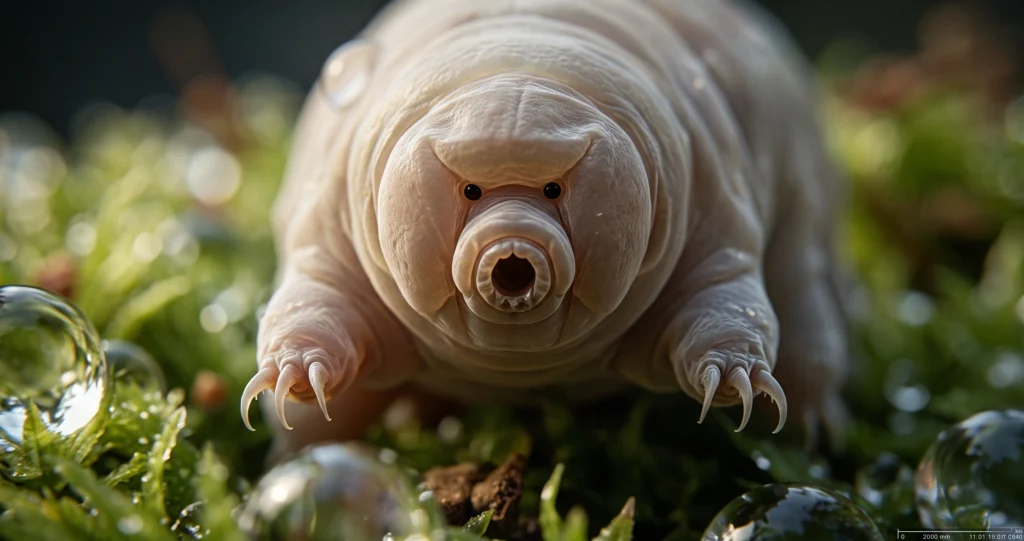
“tardigrade survival facts showing a microscopic water bear in moss.”
Common Myths About Tardigrades
Myth: Tardigrades are indestructible.
False.
They are exceptionally resilient but can still die under sufficiently extreme conditions.
Myth: They survive every environment while fully active.
False.
Most extraordinary survival abilities occur only after entering cryptobiosis.
Myth: Every tardigrade species survives equally well.
False.
Tolerance varies considerably among species.
Myth: Tardigrades can live permanently in space.
False.
They survive temporary exposure during cryptobiosis but cannot actively live or reproduce in outer space.
Myth: Scientists have already copied tardigrade biology for humans.
Not yet.
Research continues, but practical medical applications remain under development.
Frequently Asked Questions
What is cryptobiosis?
It is a reversible survival state in which metabolism slows to nearly undetectable levels during severe environmental stress.
Are tardigrades insects?
No.
They belong to their own animal phylum, Tardigrada.
Can you see a tardigrade without a microscope?
Usually not.
Most species are too small for detailed observation with the naked eye.
What does Dsup do?
Dsup is a tardigrade protein that appears to help reduce DNA damage from certain forms of radiation under laboratory conditions.
Can I find tardigrades in my backyard?
Quite possibly.
Mosses, lichens, damp soil, and leaf litter frequently contain tardigrades.
Conclusion
The remarkable biology behind tardigrade survival facts continues to redefine what scientists consider possible for animal life. Through cryptobiosis, specialized protective proteins, trehalose in some species, and sophisticated cellular repair mechanisms, these microscopic animals endure environmental extremes that few other organisms can tolerate.
Far from being simple curiosities, tardigrades have become valuable models for studying dehydration, radiation resistance, molecular stability, and long-term biological preservation. While researchers are only beginning to translate these discoveries into practical technologies, every new insight demonstrates how evolution has already solved some of biology’s most difficult challenges.
Whether viewed under a backyard microscope or studied aboard spacecraft, tardigrades remind us that some of the most extraordinary survivors on Earth are also among its smallest inhabitants.
2 Internal Link Suggestions:
- https://secretsofthegreengarden.com/how-pollinators-help-your-garden-thrive/
- https://secretsofthegreengarden.com/why-fireflies-are-important-for-healthy-gardens/
3 External Dofollow Authoritative Sources with URLs:
- National Institutes of Health (NIH): https://www.nih.gov/
- European Space Agency (ESA) – Tardigrade Space Research: https://www.esa.int/
- Animal Diversity Web – Tardigrada: https://animaldiversity.org/accounts/Tardigrada/