
Table of Contents
- Introduction
- What Makes Atlantic Puffins So Unique?
- Puffin Mate Fidelity: Returning to the Same Partner
- Site Fidelity: Why Puffins Return to the Same Burrow
- A Life Divided Between Sea and Land
- How Puffins Dig and Maintain Their Burrows
- Raising a Single Chick: A High-Stakes Strategy
- Conservation Challenges: Climate Change and Declining Fish Stocks
- Common Myths About Atlantic Puffins
- Frequently Asked Questions
- Conclusion
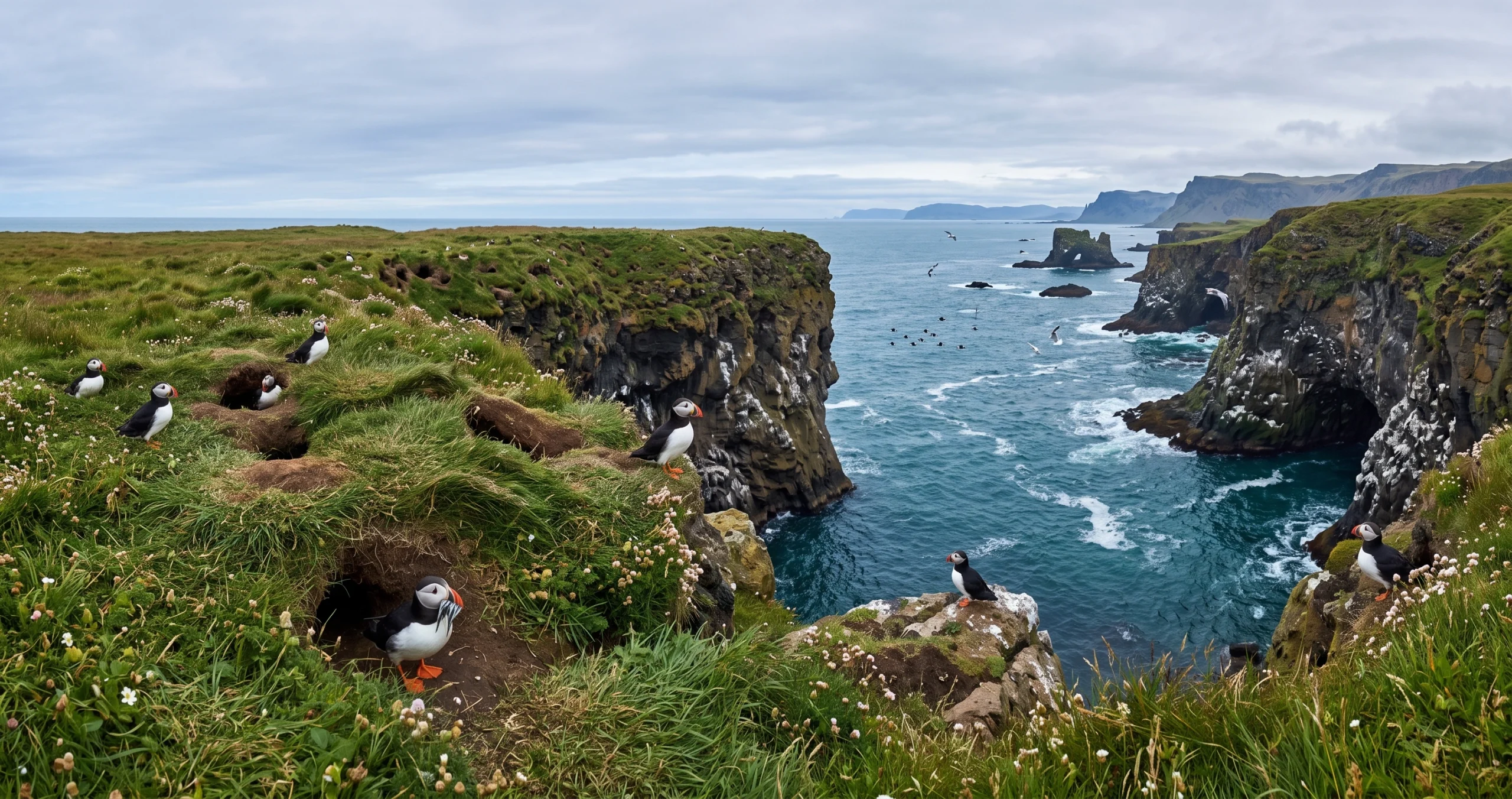
The remarkable phenomenon of puffin mate fidelity has made Atlantic puffins one of the most beloved seabirds in the world. Every spring, these colorful birds travel back from months spent on the open ocean, often returning not only to the same nesting colony but also to the very same burrow—and, if both birds survived the winter, the same mate. This extraordinary loyalty has fascinated researchers for decades and offers a fascinating glimpse into how long-lived seabirds maximize breeding success.
Although puffins are famous for their brightly colored bills and comical appearance, much of their lives remains hidden from view. They spend the majority of the year far out at sea, where they face storms, predators, and changing ocean conditions before reuniting on coastal cliffs for a brief but intense breeding season. Their remarkable navigation abilities, strong pair bonds, and attachment to familiar nesting sites all contribute to one of nature’s most reliable annual reunions.
Understanding why puffins repeatedly return to the same places—and often the same partners—helps explain both their evolutionary success and the growing conservation challenges they now face.
If you enjoy learning about remarkable animal behavior, you may also like our article on How Giant Tube Worms Survive Without a Mouth, Gut, or Sunlight here on secretsofthegreengarden.com.
What Makes Atlantic Puffins So Unique?
The Atlantic puffin (Fratercula arctica) breeds along rocky coastlines and offshore islands across the North Atlantic.
Colonies occur in Iceland, Norway, Greenland, the Faroe Islands, the United Kingdom, Ireland, Canada, and parts of the northeastern United States.
Often called the “clown of the sea” because of its colorful breeding plumage, the puffin is actually a highly specialized seabird built for life on the ocean.
Its wings function as underwater flippers when diving, allowing it to pursue small fish with remarkable agility.
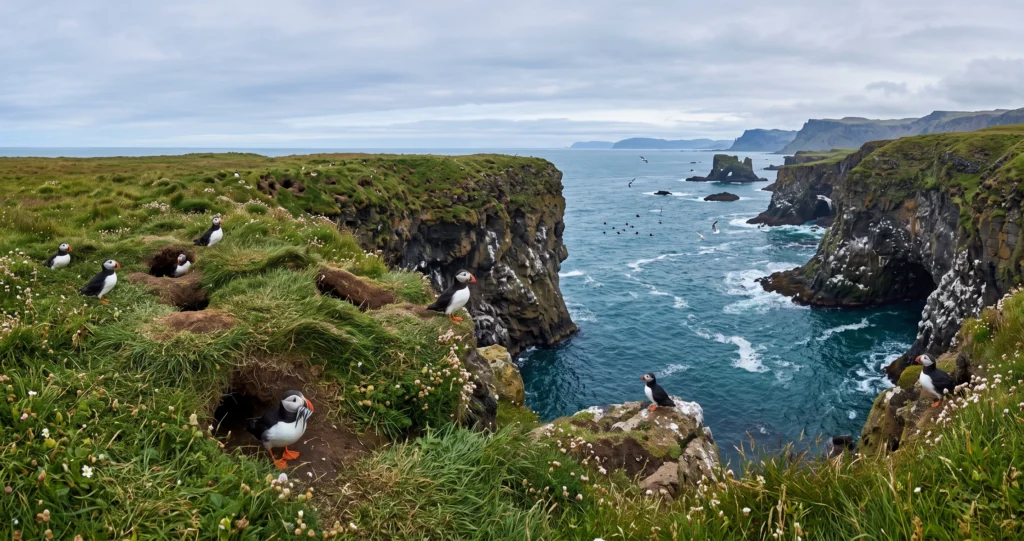
Unlike many seabirds that nest on exposed cliffs, puffins usually raise their chicks inside underground burrows.
This unusual nesting strategy offers protection from predators and harsh weather while providing a stable environment for their single offspring.
Puffin Mate Fidelity: Returning to the Same Partner
Puffin Mate Fidelity Strengthens Long-Term Breeding Success
One of the most fascinating aspects of puffin behavior is the strong tendency for established breeding pairs to reunite each year.
Researchers studying banded puffins have found that many successful pairs remain together for multiple breeding seasons, sometimes for many years.
This does not necessarily mean puffins form lifelong partnerships in every case.
If one partner dies during the winter or fails to return, the surviving bird typically finds a new mate.
However, when both individuals survive and return to the breeding colony, they frequently reunite and occupy the same nesting burrow.
Scientists believe this strategy offers several advantages.
Returning partners already know one another’s behavior.
They have experience defending the burrow together.
Previous breeding success may indicate compatibility.
By avoiding the need to establish entirely new pair bonds each season, puffins can devote more time and energy to reproduction.
Site Fidelity: Why Puffins Return to the Same Burrow
Puffins display not only mate fidelity but also remarkable site fidelity.
Site fidelity refers to an animal’s tendency to return repeatedly to familiar breeding locations.
In puffins, this often extends to the exact same burrow used in previous years.
Finding a suitable nesting site requires considerable effort.
Good burrows provide protection from predators such as gulls, ravens, and foxes while remaining above flooding and erosion.
Returning to an established burrow reduces the time needed to locate and prepare a new nest.
Researchers believe puffins rely on a combination of visual landmarks, celestial cues, magnetic orientation, and possibly olfactory information when navigating back to breeding colonies after months at sea.
Although many details remain under investigation, their navigational precision rivals that of many migratory birds.
A Life Divided Between Sea and Land
For most people, puffins seem closely associated with dramatic coastal cliffs.
In reality, they spend surprisingly little time on land.
After the breeding season ends, adults leave their nesting colonies and disperse across the North Atlantic.
For roughly eight to nine months each year, they remain almost entirely at sea.
During this period, puffins rest on the water, forage for fish, molt their feathers, and endure storms that may carry them hundreds of miles from breeding colonies.
Scientists once knew very little about this phase because following birds across the open ocean proved extremely difficult.
Miniature tracking devices have transformed this understanding.
Researchers now know that puffins travel vast distances before eventually returning with remarkable accuracy to their nesting colonies each spring.
This annual transition between ocean life and terrestrial breeding represents one of the most distinctive aspects of puffin ecology.
How Puffins Dig and Maintain Their Burrows
Unlike many cliff-nesting seabirds, puffins actively excavate burrows using both their bills and strong feet.
Burrows often extend 3 to 6 feet (1 to 2 meters) into soft soil atop grassy coastal cliffs.
Some colonies also occupy natural crevices among rocks where digging proves difficult.
Inside the tunnel lies a nesting chamber lined with grasses, feathers, and other soft vegetation.
Pairs frequently repair and enlarge existing burrows before each breeding season.
Reusing old burrows saves considerable energy compared with excavating entirely new tunnels every year.
Competition for suitable nesting sites can be intense.
Experienced birds returning to established burrows often enjoy higher breeding success than inexperienced individuals searching for available sites.
Raising a Single Chick
Atlantic puffins invest heavily in one offspring.
Females usually lay only a single egg each breeding season.
Both parents share incubation duties for approximately six weeks.
After hatching, the chick—called a puffling—remains inside the burrow while both adults forage repeatedly for small fish.
Puffins possess specialized bills capable of carrying surprisingly large numbers of fish simultaneously.
Tiny backward-facing spines on the tongue help hold captured fish securely while additional prey are collected.
Parents may deliver dozens of fish during a single feeding trip.
After roughly six weeks, the puffling leaves the burrow at night and heads directly toward the sea.
Remarkably, it receives no further parental care afterward.
Conservation Challenges: Climate Change and Declining Fish Stocks
Although puffins remain widespread across much of the North Atlantic, several populations have experienced significant declines.
Climate change represents one of the greatest long-term concerns.
Rising ocean temperatures affect the abundance and distribution of small forage fish such as sand eels, capelin, and herring.
These fish form the foundation of the puffin diet during breeding season.
When prey become scarce or shift farther offshore, adults must travel greater distances to find food.
Longer foraging trips reduce feeding frequency for chicks.
Poor nutrition lowers breeding success and increases chick mortality.
Extreme weather also poses growing challenges.
Powerful storms can reduce adult survival during winter months while eroding fragile nesting habitat.
Additional threats include pollution, invasive predators on breeding islands, overfishing, and accidental capture in fishing gear.
Why Puffins Matter to Coastal Ecosystems
Puffins contribute to healthy marine ecosystems in several ways.
As predators of small fish, they participate in complex food webs linking marine and terrestrial environments.
Nutrients deposited at breeding colonies enrich coastal soils, benefiting grasses and other vegetation.
Puffins also serve as important indicator species.
Because they depend heavily on forage fish, changes in puffin breeding success often reflect broader changes occurring throughout marine ecosystems.
Scientists use long-term puffin monitoring to better understand ocean health, fisheries, and climate-related ecological change.
Common Myths About Atlantic Puffins
Myth 1: Puffins mate for life without exception.
Reality:
Many pairs reunite repeatedly, but if one partner dies or fails to return, the surviving bird typically finds a new mate.
Myth 2: Puffins spend most of their lives on land.
Reality:
They spend the majority of the year far out at sea, returning to land primarily during the breeding season.
Myth 3: Puffins can carry fish only one at a time.
Reality:
Their specialized bills allow them to transport numerous fish simultaneously.
Myth 4: Every puffin nests in rocky cliffs.
Reality:
Many Atlantic puffins excavate burrows in grassy soil, although some use rock crevices where suitable.
Myth 5: Bright bills remain colorful year-round.
Reality:
The vivid breeding bill fades after the nesting season as outer layers are shed.
Frequently Asked Questions
Do Atlantic puffins really return to the same mate?
Often, yes. If both partners survive the winter and return to the same colony, they frequently reunite for another breeding season.
Why do puffins return to the same burrow?
Established burrows provide proven nesting sites, reducing the effort required to locate or excavate new ones.
How long do puffins stay at sea?
Adults typically spend about eight to nine months each year on the open ocean.
Why do puffins lay only one egg?
Raising a single chick allows parents to invest substantial resources in successfully fledging that offspring.
Are Atlantic puffins endangered?
Globally, Atlantic puffins are classified as Vulnerable by the IUCN because of ongoing population declines linked largely to changing marine conditions and food availability.
Conclusion
The remarkable pattern of puffin mate fidelity reflects a carefully evolved strategy that increases breeding success through stable partnerships and repeated use of familiar nesting sites. By returning to the same burrow—and often the same mate—Atlantic puffins reduce the costs of establishing new territories while focusing their efforts on raising a single chick during a short breeding season.
Yet these iconic seabirds face growing challenges as climate change alters ocean ecosystems and the availability of the small fish they depend upon. Continued research and conservation are essential to understanding how puffins adapt to these rapidly changing conditions. Their annual return to windswept coastal colonies remains one of nature’s most remarkable displays of loyalty, navigation, and resilience.
2 Internal Link Suggestions:
- https://secretsofthegreengarden.com/how-giant-tube-worms-survive-without-a-mouth-gut-or-sunlight/
- https://secretsofthegreengarden.com/how-birds-of-paradise-use-ultra-black-feathers-to-win-a-mate/
3 External Dofollow Authoritative Sources:
- British Trust for Ornithology: https://www.bto.org/
- BirdLife International: https://www.birdlife.org/
- National Audubon Society: https://www.audubon.org/