
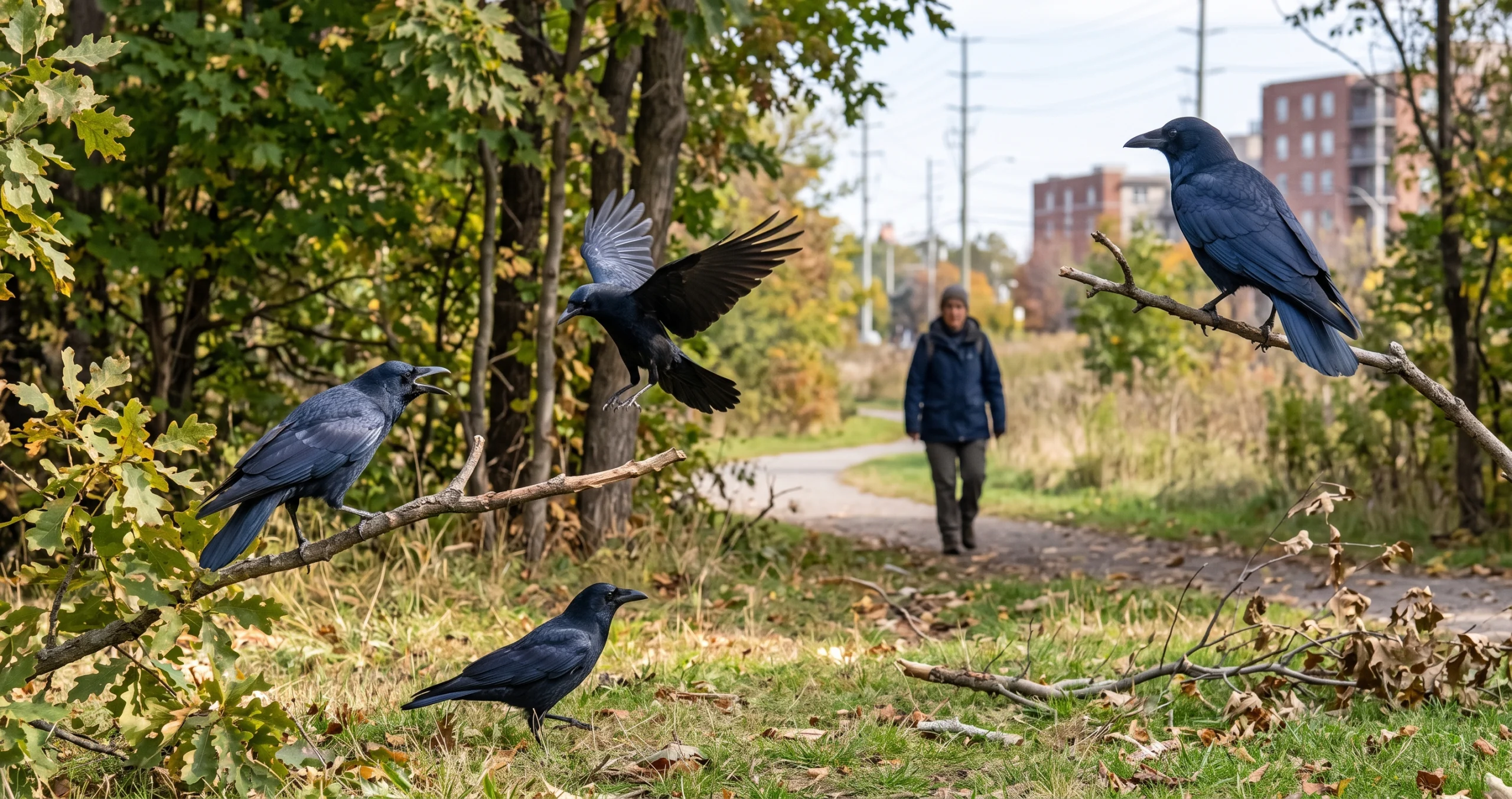
A person walks through a city park while an American crow watches from a nearby tree. To a human observer, there may be nothing unusual about the encounter. But suppose that same person—or, more precisely, the same recognizable face—was associated years earlier with an experience in which the crow was captured and handled.
Experiments with wild American crows (Corvus brachyrhynchos) have demonstrated that crows remember human faces associated with threatening experiences and can distinguish those faces from unfamiliar or neutral ones. Researchers tested this ability using carefully controlled masks, allowing them to separate recognition of facial features from other characteristics of the people wearing them.
The results reveal not only impressive long-term memory but also something equally remarkable: information about a dangerous-looking person can spread socially from one crow to another.
Table of Contents
- Crows Are Remarkably Good at Recognizing Individuals
- The Famous Human-Face Experiments
- Separating the Face From the Person
- What Happened When the Face Returned
- How Long Can a Crow Remember a Face?
- Recognition Without a New Bad Encounter
- Other Crows Can Learn About the Threat
- Learning Across Generations
- What Happens Inside a Crow’s Brain
- Why Remembering Individuals Matters
- Recognition Is Not the Same as Revenge
- Crow Intelligence Beyond Faces
- Living Alongside Urban Crows
- Frequently Asked Questions
- Conclusion
Crows Are Remarkably Good at Recognizing Individuals
American crows belong to the corvid family, which also includes ravens, jays, magpies, and related birds.
Corvids are known for sophisticated learning, memory, social behavior, behavioral flexibility, and problem solving. Their cognitive abilities allow them to respond rapidly to changing conditions—including environments dominated by humans.
For an urban crow, humans are not all equivalent.
Some people provide food. Others simply walk past. Still others may chase, capture, disturb, or otherwise threaten birds.
Being able to distinguish among individual humans could therefore provide useful information about risk.
Experiments with free-ranging American crows show that they are capable of doing exactly that under controlled conditions.
Image 1 placement — 1200 × 630 px, photorealistic, no text or graphic overlays
Alt text: American crow observing a human face in an urban park
The Famous Human-Face Experiments
One of the best-known demonstrations came from research led by John Marzluff at the University of Washington.
Researchers worked with wild American crows at several locations around Seattle, Washington. During capture, scientists wore distinctive rubber masks representing particular human faces.
The birds were trapped, banded, and released.
For those crows, the masked face became associated with a highly unusual and potentially threatening event: capture and handling.
Researchers subsequently returned to the same areas wearing either the mask associated with capture or other masks that had not been associated with the event.
The crows responded differently.
Their ability to discriminate between masks provided experimental evidence that the birds had learned visual characteristics associated with the threatening person.
The original study, published in Animal Behaviour, demonstrated rapid learning and recognition of the threatening face for at least 2.7 years.
Separating the Face From the Person
The use of masks was critical to the experiment.
Without them, a crow might potentially identify an individual through a combination of face, body shape, clothing, gait, voice, or other cues.
Researchers wanted to know whether facial characteristics themselves could serve as reliable recognition cues.
A mask allowed the same facial appearance to be transferred between people.
Different humans could wear the threatening mask, varying in age, gender, size, and walking style while presenting the same face to the birds.
The crows still responded strongly to the threatening mask.
This indicated that the birds were not merely recognizing the particular researcher who had physically captured them.
They had learned visual information associated with the face.
Researchers also used neutral masks for comparison. Before trapping, relatively few birds responded aggressively to either mask. After trapping, responses became strongly biased toward the face worn during capture.
What Happened When the Face Returned
A crow that recognized the threatening mask did not necessarily flee silently.
Researchers documented characteristic defensive responses, particularly scolding.
Crow scolds are harsh vocalizations associated with threatening situations. Vocalizing can also attract the attention of other crows, potentially producing a mobbing response in which multiple birds gather around a perceived threat.
Following capture, crows were considerably more likely to scold a person wearing the dangerous mask than someone wearing a neutral mask.
The birds responded even when different people wore the threatening face.
This result was particularly important because it demonstrated discrimination rather than simply a generalized reaction to humans.
The crows had not concluded that every nearby person was dangerous.
Their response was associated with particular visual information.
How Long Can a Crow Remember a Face?
Claims that crows “never forget a face” make memorable headlines, but the scientific evidence requires more precise wording.
The original peer-reviewed facial-recognition study demonstrated that wild American crows continued recognizing a threatening face for at least 2.7 years after capture.
Subsequent observations extended the story considerably.
Marzluff continued testing crows on the University of Washington campus for many years. In his later account of the long-running experiment, he reported that the proportion of crows scolding the threatening “caveman” mask actually increased during the first seven years.
Responses remained elevated through 12 years.
Eventually, however, they declined. By the 18-year test, the threatening mask no longer produced the earlier elevated response, and this occurred a year after the last originally captured crow had died.
These later observations make an important point.
Crows can retain and socially maintain information about a particular threatening face for extraordinarily long periods, but the evidence does not show that every crow remembers every human face indefinitely.
Recognition Without a New Bad Encounter
Long-term recognition does not require a threatening encounter every time the face appears.
Once the association has been learned, later sightings can activate the existing memory.
This is basic associative learning with considerable ecological value.
An animal that had to experience a dangerous event repeatedly before recognizing a threat would pay a substantial cost. Remembering a previous encounter allows behavior to change before another capture or attack occurs.
In the crow experiments, the threatening mask could therefore trigger scolding even though the person wearing it during later tests was simply walking through the area.
No new trapping was necessary.
The face had become a learned predictor of potential danger.
Other Crows Can Learn About the Threat
The story becomes even more interesting when crows that were never captured begin responding.
American crows are highly social animals. They observe one another and react to each other’s alarm behavior.
Follow-up experiments investigated whether knowledge of a dangerous human face could spread socially.
It could.
Researchers found evidence consistent with horizontal social learning: crows that had not personally been captured later responded to the dangerous face after opportunities to observe knowledgeable crows reacting to it.
The behavior also spread geographically.
At one study site, scolding of the dangerous mask doubled in frequency and spread at least 1.2 kilometers from the location where the original trapping had occurred over five years.
This does not mean one crow verbally “described” a person’s face to another.
Instead, an inexperienced crow could see a particular human face at the same time that experienced birds were producing alarm behavior. That combination provides an opportunity to associate the visual stimulus with danger.
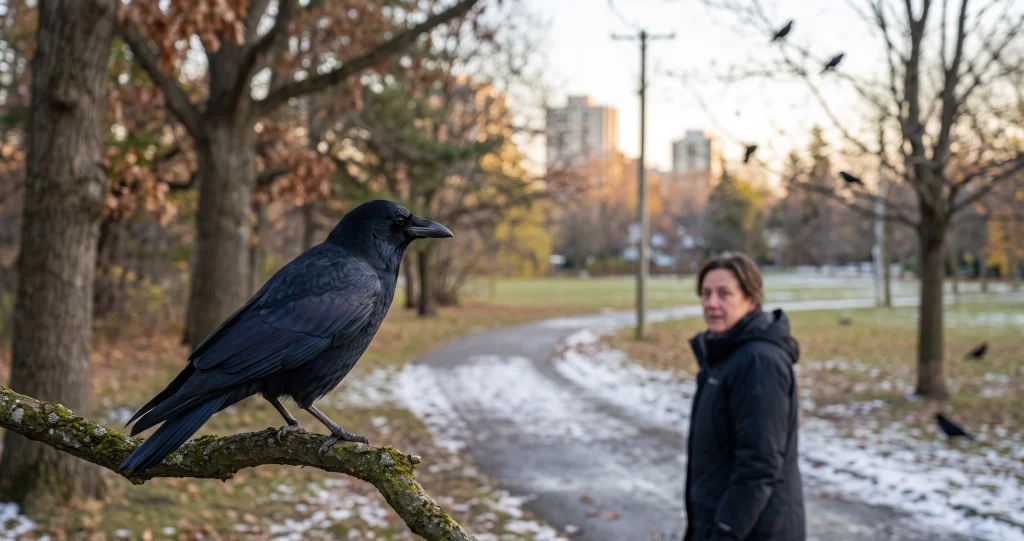
Image 2 placement — 1200 × 630 px, photorealistic, no text or graphic overlays
Alt text: Crows responding to a familiar human in a city park
Learning Across Generations
Social transmission was not limited to unrelated adults.
Researchers also found evidence of what is called vertical social learning—information passing from parents to young.
Young crows whose parents had learned to scold the dangerous mask eventually scolded it independently.
This is especially significant because the younger birds had not necessarily experienced the original capture event themselves.
They could acquire information about the threatening face through interactions with knowledgeable birds.
Researchers also found an important difference between direct and socially acquired knowledge.
Crows that had personally experienced capture discriminated between dangerous and neutral masks more precisely than birds that learned socially.
Firsthand experience therefore appeared to provide more accurate information.
The results nevertheless demonstrate how behavior toward a particular human face can persist within a local crow population even when many individuals were not present during the event that originally established the association.
What Happens Inside a Crow’s Brain?
Researchers have gone beyond observing behavior.
In a 2012 study published in Proceedings of the National Academy of Sciences, scientists used positron emission tomography, or PET imaging, to investigate brain activity in American crows exposed to familiar human faces.
Wild crows were captured by researchers wearing one mask. During several weeks in captivity, caregivers wearing a different mask fed and looked after them.
The birds therefore learned two distinct associations: a face connected with capture and a face connected with caretaking.
When researchers later showed the birds these familiar faces under controlled experimental conditions, different patterns of brain activity appeared.
Viewing familiar faces activated regions involved in visual discrimination, learning, and memory, including areas of the hyperpallium, nidopallium, mesopallium, and lateral striatum.
The threatening face produced additional activation involving amygdalar, thalamic, and brainstem circuitry associated in birds and other vertebrates with conditioned fear, attention, motivation, and defensive responses.
The caring face produced a different pattern, including activity in motivational and striatal regions.
Researchers also observed behavioral differences. When crows viewed the threatening face, they tended to freeze, stare, and blink less frequently.
These results suggest that crow recognition is not simply a visual matching exercise.
Visual information can be integrated with memories of previous experiences and their behavioral significance.
The original peer-reviewed neuroimaging research is available through the U.S. National Library of Medicine’s PubMed Central archive.
Why Remembering Individuals Matters
Wild crows regularly share landscapes with people.
In cities, suburbs, parks, farms, and university campuses, the same birds may repeatedly encounter the same humans.
Treating every person as equally dangerous would be inefficient.
Constantly fleeing harmless pedestrians could waste time and energy that might otherwise be spent feeding, caring for young, defending territory, or watching for genuine predators.
Ignoring every human would create the opposite problem.
Individual recognition offers another solution: adjust behavior according to experience.
A human associated with capture may deserve close attention, while a familiar person who has repeatedly behaved harmlessly may not justify the same defensive response.
This ability probably contributes to the behavioral flexibility that allows crows to function successfully in human-dominated environments.
Recognition Is Not the Same as Revenge
Descriptions of crow behavior often slip into human emotional language.
A crow scolding someone years after a capture may be described as holding a “grudge,” seeking “revenge,” or hating that person.
Those interpretations are not required by the evidence.
Experiments demonstrate recognition, associative memory, defensive behavior, and social learning. They do not demonstrate that a crow conceptualizes revenge in the complex human psychological sense.
Scolding is also functional behavior.
It can warn other birds, recruit additional crows, draw attention to a potential predator, and communicate information about risk.
A crow remembering a threatening face is scientifically remarkable without assigning human motives to the bird.
Crow Intelligence Beyond Faces
Facial recognition is only one component of corvid cognition.
Crows and their relatives demonstrate sophisticated memory, social learning, problem solving, and flexible responses to unfamiliar situations.
They can acquire information from other birds rather than depending entirely on firsthand experience. They can also modify behavior as conditions change.
Corvid cognition should not simply be ranked against human intelligence.
Their abilities evolved in response to their own ecological and social challenges.
Social information is particularly valuable for animals living in groups. Watching how another individual responds can provide information about food, predators, competitors, and unfamiliar environmental features without requiring the observer to take the same risks.
A fascinating comparison can be found in our article on lyrebird sound mimicry, which explores another bird whose sophisticated behavior depends heavily on learning.
Living Alongside Urban Crows
People living near crows generally have little reason for conflict with them.
Avoiding deliberate harassment is the simplest approach. Repeatedly chasing birds, throwing objects, or disturbing nests can create unnecessary defensive encounters.
Breeding season deserves particular care.
Adult crows may become more defensive around nests and fledglings. Giving the birds space and keeping dogs from approaching young crows can reduce confrontations.
Food management can also matter.
Unsecured garbage, pet food, and large amounts of intentionally provided food can concentrate wildlife around homes and alter normal behavior.
If a crow begins scolding near a particular location, moving calmly through the area rather than confronting the bird is generally the least disruptive response.
Coexistence does not require befriending crows.
It mostly requires recognizing that these are observant wild animals capable of learning from repeated interactions.
Frequently Asked Questions
Do crows really recognize human faces?
Yes. Controlled experiments with wild American crows demonstrated that they can discriminate particular human faces associated with threatening experiences from neutral faces.
How long can crows remember a threatening face?
The original peer-reviewed experiment demonstrated recognition for at least 2.7 years. Longer-term follow-up at the University of Washington found elevated responses persisting for many additional years before eventually declining.
Can a crow recognize someone who changes clothes?
Experimental results strongly indicate that facial information itself matters. Crows responded to a threatening mask even when it was worn by people differing in size, age, gender, and walking gait.
Can one crow teach another that a person is dangerous?
Other crows can acquire the association socially. Research found that birds without direct capture experience later responded to the dangerous mask after observing reactions from knowledgeable crows.
Can young crows learn dangerous faces from their parents?
Yes. Researchers documented independent scolding by young crows whose parents had learned to respond to the dangerous mask, providing evidence of vertical social learning.
Does this mean crows hold grudges?
Not scientifically. The experiments demonstrate long-term recognition, learned threat associations, and defensive responses. Calling those behaviors revenge or a human-like grudge adds psychological assumptions that the experiments did not establish.
Do crows recognize every human they see?
There is no evidence that crows memorize every human face indefinitely. Experiments show that they can learn and retain recognition of particular faces associated with meaningful experiences.
Conclusion
The research behind the statement that crows remember human faces is more impressive than the popular myth that crows simply “never forget.”
Experiments with wild American crows show that the birds can learn the facial characteristics of a person associated with capture, distinguish that face from neutral alternatives, and retain the association for years.
The information does not necessarily remain confined to the original birds.
Other crows can learn by observing knowledgeable individuals, and younger birds can acquire threat associations socially. In one long-term experiment, responses spread through the local population and across the surrounding area.
Brain-imaging research adds another layer to the story. When crows encounter familiar human faces, their brains integrate visual recognition with memory and the emotional or behavioral significance of previous encounters.
None of this requires assuming that crows seek revenge or understand human identity exactly as people do.
What the experiments demonstrate is already extraordinary: a wild bird living alongside humans can observe individual faces, connect them with meaningful experiences, retain those associations over long periods, and use social information to help determine whom to treat as a potential threat.
For an intelligent social animal navigating a landscape filled with people, remembering who has been dangerous before can be extremely valuable information.