
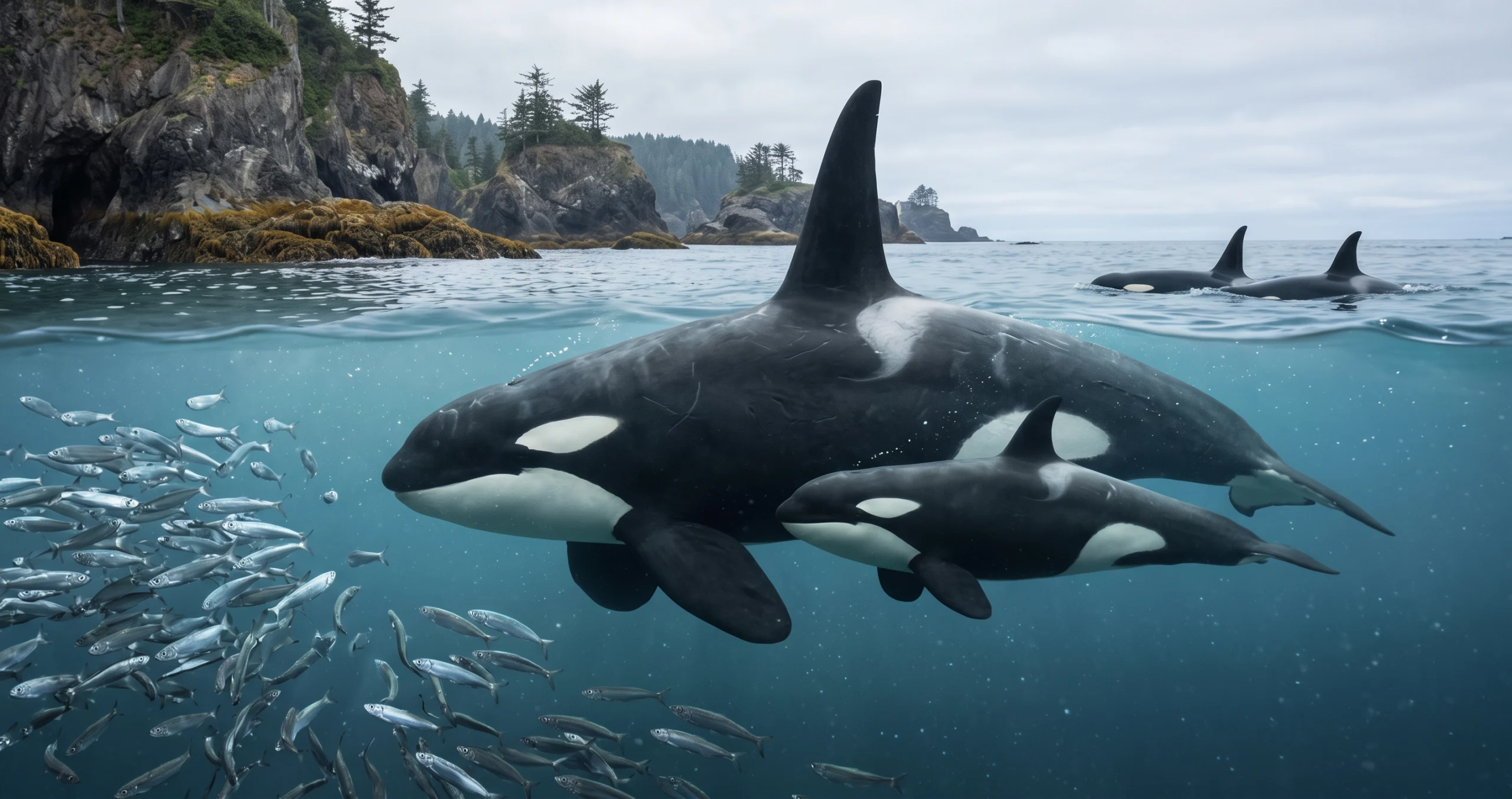
A young killer whale travels beside its mother and other experienced members of its social group as they search for prey. When the adults accelerate, dive, circle a school of fish, or approach a seal, the juvenile has opportunities to observe what happens, join the activity, and gradually refine its own behavior.
Such experiences are central to understanding orca hunting traditions. Killer whales (Orcinus orca) are not born knowing every specialized hunting technique used by their population. Genetics and individual development matter, but observation, participation, repeated practice, and long-lasting social relationships can help young whales acquire locally important ways of finding and capturing prey.
Across the world’s oceans, this process has produced an extraordinary diversity of foraging behavior.
Table of Contents
- Orcas Are Highly Social Predators
- Different Orca Populations Hunt Differently
- Learning From Experienced Whales
- The Importance of Mothers and Family Groups
- Hunting Fish
- Hunting Marine Mammals
- Intentional Stranding and Shore Hunting
- Wave-Washing Seals From Ice
- Other Local Hunting Specializations
- What Scientists Mean by Animal Culture
- Evidence for Cultural Transmission in Orcas
- Teaching or Social Learning?
- Why Hunting Traditions Can Persist for Generations
- Culture Can Influence What Orcas Eat
- When Specialization Becomes a Vulnerability
- Frequently Asked Questions
- Conclusion
Orcas Are Highly Social Predators
Killer whales are the largest members of the dolphin family and occur in oceans around the world.
They are highly intelligent, long-lived predators with sophisticated communication systems and complex social relationships. Many individuals maintain close associations with relatives over decades.
Their species-wide diet is remarkably broad. Killer whales collectively consume fish, squid, seals, sea lions, cetaceans, sharks, rays, and other marine animals.
But this does not mean an individual killer whale routinely eats everything available.
Different populations can have strikingly different diets. NOAA notes that diet and hunting behavior are strongly associated with the learned traditions of particular ecotypes and populations.
Different Orca Populations Hunt Differently
The eastern North Pacific provides one of the clearest examples.
Resident killer whales specialize on fish, particularly salmon. Bigg’s killer whales, historically called transients, primarily hunt marine mammals and also consume squid.
The distinction is remarkable because these whales can occupy overlapping waters.
Elsewhere, different patterns appear. Norwegian killer whales commonly target schooling fish such as herring. Some New Zealand killer whales hunt rays and sharks, while Antarctic populations include whales specializing on seals, fish, or other cetaceans.
The hunting techniques needed to capture these animals are dramatically different.
Catching a salmon requires different sensory cues and movements from ambushing a seal. Washing a seal from Antarctic ice demands yet another combination of coordination, timing, and experience.
Killer-whale behavior therefore cannot be summarized by one universal hunting strategy.
Learning From Experienced Whales
Young killer whales develop in a highly social environment.
By traveling with experienced animals, they can observe where relatives search for food, how they approach prey, what prey they pursue, and how group members coordinate during a hunt.
Social learning occurs when an animal acquires information or behavior through interaction with, or observation of, another individual or the products of that individual’s behavior.
It does not require formal instruction.
A juvenile following its mother may repeatedly encounter the same prey species and participate in the same sequences of behavior. Practice can then improve performance as the young whale grows.
Individual trial and error remains important as well.
The resulting skill may therefore emerge through an interaction among physical development, individual experience, ecological opportunity, and socially acquired information.
Image 1 placement — 1200 × 630 px, photorealistic, no text or graphic overlays
Alt text: Adult and juvenile orcas participating in a hunt together
The Importance of Mothers and Family Groups
Family structure creates unusually rich opportunities for cultural transmission.
In several well-studied killer-whale populations, individuals maintain long-lasting relationships with their mothers and maternal relatives. NOAA describes pods as groups of maternally related whales, with individuals often remaining closely affiliated with their matrilineal groups.
This stability matters for learning.
A young whale does not merely encounter an experienced hunter once. It can spend years traveling and foraging alongside relatives that repeatedly use the same prey, locations, and techniques.
Older females may be especially important repositories of ecological information.
Research on killer whales has shown that post-reproductive females can play important social roles, including helping relatives navigate ecological challenges. Long lives create opportunities for knowledge accumulated over decades to remain available within a social group.
Hunting Fish
Fish-eating killer whales display several locally specialized techniques.
Resident killer whales in the northeastern Pacific predominantly target salmon, especially Chinook salmon in many areas. They use echolocation extensively while searching for individual fish and may spread out while foraging before regrouping.
Other fish-hunting populations use very different methods.
Norwegian killer whales hunting herring have been documented using coordinated behaviors often described as carousel feeding. Whales can work around a school of herring, concentrating the fish into a dense formation.
A whale may then strike the school with its tail flukes, stunning or killing fish that can be eaten individually.
These techniques should not be generalized to every fish-eating killer whale.
The broader pattern is precisely the opposite: geographically and socially distinct populations can develop different solutions to similar foraging problems.
Hunting Marine Mammals
Marine-mammal specialists face a different challenge.
Seals, sea lions, dolphins, and other cetaceans are mobile animals capable of detecting and escaping predators. Some can also reach beaches, rocks, or ice that provide temporary refuge.
Killer whales hunting marine mammals may approach quietly and coordinate their movements.
Bigg’s killer whales in the northeastern Pacific, for example, often reduce vocal activity while hunting compared with fish-eating residents. That makes ecological sense because marine mammals possess sensitive hearing and could potentially detect an approaching predator.
Group members can cooperate during pursuit and prey handling.
Again, the exact strategy varies with population, location, prey species, and circumstances.
Intentional Stranding and Shore Hunting
One of the most dramatic local traditions occurs at Península Valdés in Argentina and has also been documented in the Crozet Islands.
Certain killer whales intentionally rush into extremely shallow water—or partially strand themselves—to capture pinnipeds close to shore.
The maneuver is dangerous.
A whale must approach with sufficient momentum to reach its prey while retaining the ability to maneuver back into deeper water. Misjudging the beach, waves, slope, or timing could leave the animal stranded.
Young whales do not immediately perform the technique with adult proficiency.
Long-term observations indicate an extended period in which juveniles approach beaches, practice in shallow water, and gradually develop the necessary skills. Intentional stranding has consequently become an important example in scientific discussions of socially transmitted killer-whale foraging traditions.
Reviews of killer-whale culture identify the behavior at Argentina and the Crozet Islands as a hunting specialization believed to pass between generations through social learning, while also noting the difficulty of experimentally testing transmission in free-ranging whales.
Wave-Washing Seals From Ice
Antarctica provides another spectacular example.
Pack-ice killer whales have been observed hunting seals resting on floating ice.
Rather than simply waiting for the seal to enter the water, multiple whales can line up and accelerate toward the ice in close formation. They dive together near the floe, producing a powerful wave.
That wave can rock or wash over the ice and force the seal into the water.
The behavior can be repeated several times during a single hunt.
A detailed study off the western Antarctic Peninsula documented 120 waves during 22 attacks. The whales took 12 of 16 Weddell seals they attacked, with successful hunts sometimes requiring multiple waves.
The coordination is extraordinary, but it should not be portrayed as a universal orca behavior.
It is a specialized foraging technique associated with particular Antarctic killer whales.
Other Local Hunting Specializations
The diversity extends far beyond these famous examples.
Some killer whales in New Zealand specialize on rays and sharks. Norwegian whales can exploit dense schools of herring, while North Pacific resident populations show detailed seasonal and geographic differences in the salmon species they target.
Other groups pursue large cetaceans cooperatively.
Even within broad categories such as “fish eater,” important differences can exist among populations in prey preference, timing, habitat use, and hunting technique.
This behavioral diversity is one reason researchers increasingly discuss killer whales in terms of ecological cultures rather than treating the species as a single, behaviorally uniform predator.
What Scientists Mean by Animal Culture
In animal-behavior research, “culture” has a more specific meaning than it often does in everyday human conversation.
Definitions vary somewhat among researchers, but the central idea involves information or behavior acquired through social learning and shared among members of a group or population.
A behavioral tradition can persist because individuals learn it from others rather than independently rediscovering it in every generation.
This does not mean killer-whale culture is identical to human culture.
Human cultures involve language, institutions, technologies, symbolic systems, and cumulative processes that cannot simply be equated with animal traditions.
But cultural transmission is not considered exclusively human.
Long-term cetacean research provides strong evidence that socially learned behaviors—including vocal repertoires and foraging traditions—can become stable characteristics of particular whale populations.
Evidence for Cultural Transmission in Orcas
Proving cultural transmission in wild animals is challenging.
Researchers cannot experimentally rearrange generations of free-ranging killer whales simply to determine which behaviors young animals acquire from particular relatives.
Instead, evidence comes from multiple sources.
Scientists compare populations occupying similar environments, follow identifiable individuals for decades, record social associations, examine diets, document the development and spread of behavior, analyze vocal dialects, and study genetic relationships.
Killer-whale populations can maintain highly distinctive prey preferences and hunting behaviors even where alternative prey are available.
Their vocal repertoires provide another important line of evidence. NOAA reports that eastern North Pacific pods possess characteristic calls that are learned and culturally transmitted, functioning partly as acoustic markers of social groups.
Ecological, behavioral, and genetic differences can also reinforce one another over long periods.
Researchers have therefore proposed that culture may contribute to ecological divergence among killer-whale populations and potentially interact with genetic evolution.
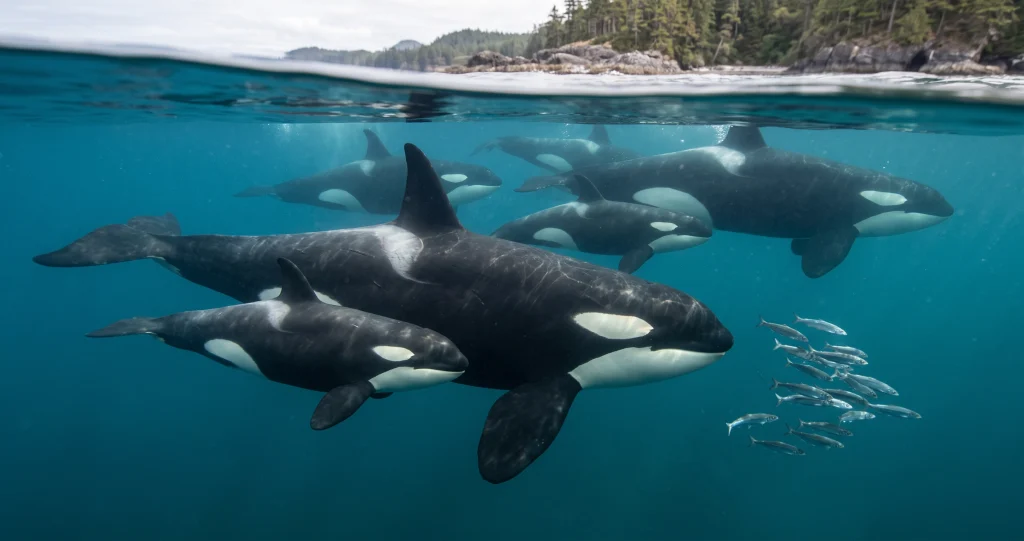
Image 2 placement — 1200 × 630 px, photorealistic, no text or graphic overlays
Alt text: Family group of orcas foraging together in coastal waters
Teaching or Social Learning?
These terms should not be used interchangeably.
Social learning requires that one animal’s behavior or presence influences what another animal learns. It does not require the experienced individual to understand that it is “giving a lesson.”
Teaching has a stricter scientific meaning.
A commonly used framework requires an experienced individual to modify its behavior in the presence of a naïve observer, potentially incur a cost or receive no immediate benefit from doing so, and help the learner acquire a skill or knowledge more efficiently.
Some killer-whale observations are strongly suggestive.
Adults have been observed manipulating or releasing prey in situations where younger whales subsequently interact with it. Intentional-stranding studies have likewise described experienced whales creating opportunities for juveniles around prey and shorelines.
Such observations make killer whales important candidates in research on animal teaching.
But an adult hunting alongside a calf is not automatically teaching.
In many cases, the scientifically safer conclusion is that juveniles have opportunities for social learning, participation, and practice. Demonstrating intentional or functional teaching requires additional evidence satisfying the stricter behavioral criteria.
Why Hunting Traditions Can Persist for Generations
Killer whales possess several characteristics favorable to long-lived traditions.
They live for decades. Young animals have prolonged developmental periods. Family relationships can persist for life, and some populations maintain stable social structures.
That creates continuity.
If young whales repeatedly accompany experienced relatives while feeding, locally successful behavior can be transmitted without needing to be genetically encoded in detailed form.
The next generation can then become the experienced individuals observed by younger whales.
Over many years, a hunting strategy can become a recognizable tradition of a particular matriline, group, population, or ecotype.
Culture Can Influence What Orcas Eat
Culture may influence not only how killer whales capture prey but which prey they consider food.
The northeastern Pacific provides a striking example.
Fish-eating resident killer whales and mammal-eating Bigg’s killer whales can inhabit overlapping regions while maintaining very different diets and social systems.
The environment alone therefore does not completely determine diet.
Learned prey preferences and inherited ecological traditions can help direct whales toward particular resources.
NOAA explicitly notes that while prey availability matters, killer-whale diets are strongly influenced by the culture—learned hunting tactics—of different ecotypes.
Over evolutionary timescales, persistent ecological specialization can potentially interact with genetics as populations become behaviorally and reproductively differentiated.
When Specialization Becomes a Vulnerability
Specialization has advantages.
A predator that develops exceptional skill at finding and capturing a particular prey may exploit that resource more efficiently than a generalist.
But specialization can also create risk.
If the culturally preferred prey declines, a population may not immediately switch to another abundant food source.
Southern Resident killer whales illustrate the conservation importance of this problem. They depend heavily on salmon, particularly Chinook, and prey limitation is among the major threats identified in their recovery. NOAA also identifies contaminants and vessel disturbance among important pressures.
Recent research emphasizes that culturally learned dietary preferences can influence how killer-whale populations respond to changes in prey availability. Strong traditions may provide valuable ecological knowledge under stable conditions but can potentially reduce flexibility when ecosystems change rapidly.
The same culture that helps make a population an efficient specialist can therefore become relevant to its conservation.
Readers interested in another remarkable example of specialized marine-animal behavior can explore our article on octopus camouflage.
For an authoritative overview of killer-whale ecology, diet, social structure, threats, and conservation, see NOAA Fisheries’ Killer Whale species profile.
Frequently Asked Questions
Are killer whales born knowing how to hunt?
Killer whales possess innate physical and behavioral capacities, but specialized population-specific hunting techniques are not simply complete at birth. Young whales can develop skills through experience, observation, participation, and repeated association with experienced individuals.
Do all killer whales hunt the same prey?
No. Diets differ dramatically among populations. Some specialize on fish, others primarily hunt marine mammals, and populations elsewhere may target sharks, rays, or other prey.
Do mother orcas teach their calves to hunt?
Mothers and other experienced relatives clearly provide important opportunities for social learning. Some observations are consistent with teaching, but scientists apply that term more cautiously because formal teaching requires evidence beyond an adult simply hunting in the presence of a juvenile.
Do killer whales really beach themselves intentionally?
Certain populations do. Intentional stranding to capture pinnipeds has been documented particularly at Península Valdés in Argentina and the Crozet Islands. It is a specialized local behavior rather than a species-wide hunting method.
How do Antarctic orcas wash seals from ice?
Some pack-ice killer whales coordinate their swimming toward an ice floe and dive together, generating waves capable of disturbing or washing a seal into the water. Multiple attempts may occur during one hunt.
Do killer whales have culture?
Under definitions used in animal-behavior research, there is strong evidence for culture in killer whales. Group-specific vocalizations and foraging behaviors can be acquired socially and maintained as traditions. This does not imply that killer-whale culture is identical to human culture.
Can hunting traditions affect orca conservation?
Yes. Cultural specialization can make populations exceptionally effective at exploiting particular resources, but strong reliance on specific prey can become a disadvantage if those prey decline.
Conclusion
There is no single universal killer-whale way of hunting.
Across the world’s oceans, different populations have developed remarkably different relationships with their prey. Some pursue salmon, others marine mammals, herring, sharks, rays, or Antarctic seals.
Genetics and local ecology help shape those differences, but neither tells the whole story.
Young killer whales grow up surrounded by experienced relatives. Through observation, participation, repeated exposure, individual practice, and—in some circumstances, possibly teaching—they can acquire information that previous generations already use successfully.
Stable social relationships allow those behaviors to persist.
That is why orca hunting traditions are so important to understanding the species. Killer whales are not simply predators responding independently to whatever prey happens to surround them. Their foraging ecology can also reflect information transmitted through social groups across generations.
Culture does not replace biology or ecology. It interacts with them.
Together, inherited characteristics, environmental opportunities, individual experience, and socially transmitted knowledge have produced one of the most behaviorally diverse predators in the ocean—and a powerful example of how an animal population’s history can influence the way its members survive today.