
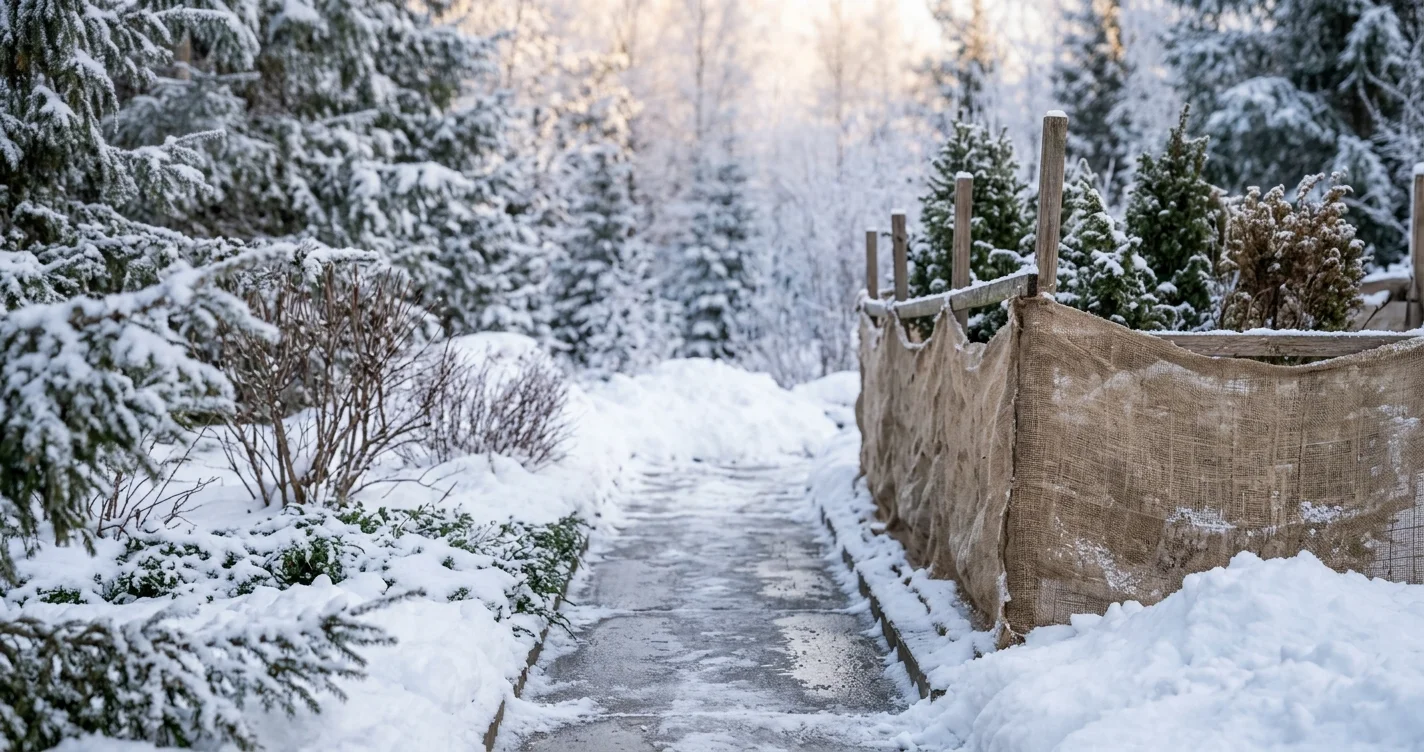
A sidewalk can look perfectly safe after a winter storm, while the garden beside it quietly absorbs the consequences. Snow melts, salty water runs toward the soil, and weeks later, evergreen needles turn brown or spring leaves emerge with scorched edges.
This is how road salt damage plants, often long after the ice has disappeared.
De-icing salt makes roads, driveways, and walkways safer during freezing weather, but it can also change soil chemistry, interfere with water uptake, and injure roots and foliage. The good news is that thoughtful winter maintenance and a few practical landscaping decisions can greatly reduce the risk.
Understanding where salt travels, how it affects plants, and which protective measures actually work can help gardeners maintain healthier landscapes without compromising winter safety.
Table of Contents
- Why Road Salt Is a Problem for Gardens
- How Road Salt Damage Plants: The Science Explained
- Recognizing Salt Damage on Trees, Shrubs, and Flowers
- Which Garden Plants Are Most Vulnerable?
- How De-Icing Salt Moves Through Soil and Water
- Preventing Road Salt Damage Before Winter
- What to Do When Plants Show Salt Injury
- Choosing Safer Winter De-Icing Practices
- Designing a Salt-Resilient Garden
- In Your Own Yard: A Practical Winter Protection Plan
- Frequently Asked Questions
Why Road Salt Is a Problem for Gardens
Road salt is widely used across colder regions of the United States to improve traction and reduce dangerous ice buildup.
The most familiar de-icing material is sodium chloride, the same chemical compound found in ordinary table salt. Other products may contain calcium chloride, magnesium chloride, or mixtures of several ingredients.
These materials work by lowering the freezing point of water, although their effectiveness varies with temperature, concentration, and surface conditions.
Where the Salt Goes After Snow Melts
Salt rarely stays exactly where it is spread.
Melting snow carries dissolved salts toward nearby lawns, planting beds, drainage channels, and roadside soil.
Passing vehicles can also spray salty water onto tree trunks, branches, and evergreen foliage.
Snowplows may push contaminated snow into landscaped areas, where salts accumulate until temperatures rise.
As a result, plants several feet from a road or driveway can experience exposure, depending on drainage patterns and winter conditions.
Why Damage Often Appears Later
Salt injury is not always obvious during winter.
Roots may experience stress while plants are dormant, but visible symptoms can appear only when growth resumes in spring.
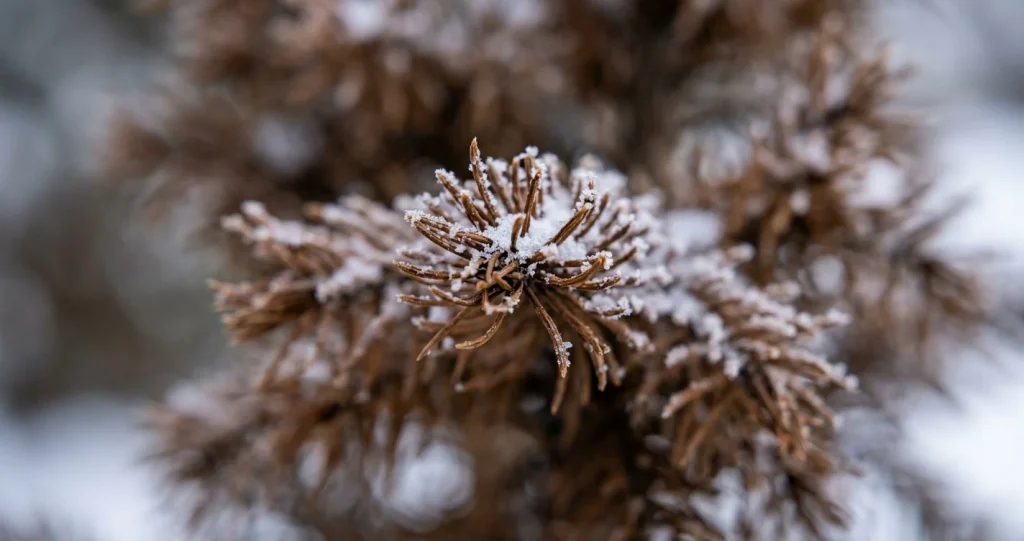
Evergreens can develop brown needles during winter or early spring, while deciduous trees may show delayed leaf emergence or scorched foliage later in the growing season.
Because drought, cold injury, and other environmental problems can produce similar symptoms, location and exposure history are important clues.
How Road Salt Damage Plants: The Science Explained
Salt affects plants through several interconnected processes. Understanding these mechanisms explains why even apparently healthy trees can struggle after repeated winters of exposure.
1. Osmotic Stress: When Water Becomes Harder to Absorb
Plant roots normally absorb water from the surrounding soil.
When dissolved salts accumulate, they lower the soil water potential, making it more difficult for roots to take up moisture.
A plant may experience physiological drought even when the ground contains water.
This condition is called osmotic stress.
The effects can include wilting, reduced growth, and drying of leaf margins.
2. Sodium and Chloride Toxicity
Sodium chloride separates into sodium and chloride ions when dissolved in water.
At excessive concentrations, these ions can interfere with normal plant functions.
Chloride may accumulate in leaves and contribute to tissue injury, while excess sodium can disrupt nutrient balance and cellular processes.
Different plant species tolerate these ions to different degrees.
3. Changes in Soil Structure
Sodium can also affect the physical condition of certain soils.
In susceptible soils, excessive exchangeable sodium may cause clay particles to disperse, reducing aggregation and restricting water infiltration.
This is especially concerning in fine-textured soils with poor drainage.
However, saline and sodic soil conditions are not identical, and road salt exposure does not automatically make every soil sodic.
The outcome depends on soil chemistry, drainage, and the balance of dissolved ions.
4. Direct Injury From Salt Spray
Roots are not the only vulnerable plant tissues.
Wind and passing vehicles can carry salty droplets onto branches and foliage.
Evergreen needles may develop brown tips or patches, especially on the side facing the road.
Deciduous trees can suffer injury to buds and young twigs, affecting their appearance and growth during the following spring.
5. Repeated Exposure and Long-Term Stress
One mild winter does not necessarily cause severe damage.
However, repeated salt exposure can increase the risk of injury, particularly where drainage is poor and contaminated snow is deposited in the same location year after year.
Stressed plants may become less vigorous and more vulnerable to additional environmental pressures.
Recognizing Salt Damage on Trees, Shrubs, and Flowers
Salt injury can resemble several other plant problems, so diagnosis requires attention to patterns.
Evergreen Needle Browning
Conifers growing near salted roads may develop yellow, brown, or reddish-brown needles.
Damage is sometimes concentrated on the road-facing side or on lower branches exposed to spray.
Needle browning may also result from winter desiccation, so the surrounding conditions matter.
Leaf Scorch on Deciduous Plants
Deciduous trees and shrubs may develop brown leaf edges, early leaf drop, or reduced growth.
Some plants show symptoms during spring and summer after winter salt exposure.
The severity depends on species tolerance, soil conditions, and the amount of salt reaching the root zone.
Bud and Twig Injury
Salt spray can damage exposed buds and young shoots.
Affected branches may leaf out poorly or develop dead tips.
When injury is concentrated on the side facing a roadway, salt spray becomes a plausible explanation, although other causes should still be considered.
Poor Growth in Roadside Planting Beds
Repeated exposure may contribute to thin lawns, weak ornamental plants, and uneven growth along sidewalks.
Plants located farther from the salted surface may remain healthy.
This contrast can help identify a possible salt-related problem.
Which Garden Plants Are Most Vulnerable?
Salt tolerance varies widely among plant species and can also differ with age, exposure route, and growing conditions.
Sensitive Evergreens
Some evergreens, including certain pines and other conifers, can be vulnerable to salt spray or salt accumulation in soil.
Their persistent foliage remains exposed throughout winter.
However, tolerance differs among species and cultivars, so broad labels such as “all evergreens are sensitive” are misleading.
Deciduous Trees and Shrubs
Some maples and ornamental shrubs can develop noticeable salt injury, especially when planted close to heavily treated roads.
Other species show greater tolerance under comparable conditions.
Regional extension recommendations are useful because they often distinguish between tolerance to airborne salt spray and tolerance to saline soil.
Perennials and Lawn Grasses
Perennials near driveways may experience root-zone salt exposure as contaminated snow melts.
Some turfgrass species and cultivars tolerate saline conditions better than others.
Plant selection should reflect local climate, soil characteristics, and expected exposure.
How De-Icing Salt Moves Through Soil and Water
Salt movement depends on more than the amount applied.
Snowmelt and Surface Runoff
As snow melts, dissolved salts travel with water.
On sloped properties, runoff may collect in low areas or flow into planting beds.
Impermeable surfaces can concentrate runoff into narrow drainage pathways.
Infiltration and Leaching
Some dissolved salts enter the soil and move downward with infiltrating water.
In well-drained soils, sufficient rainfall or irrigation may help leach soluble salts below the active root zone.
In poorly drained soils, salts may remain concentrated for longer periods.
Effects Beyond the Garden
Salt runoff can eventually reach streams, ponds, wetlands, and groundwater.
Elevated chloride concentrations can affect freshwater ecosystems and drinking-water resources.
This makes careful de-icer application important not only for gardens but also for the surrounding environment.
Preventing Road Salt Damage Before Winter
Prevention is usually more effective than attempting to rescue severely injured plants.
Use Only the Necessary Amount
Excess salt does not automatically make a walkway safer.
Follow product directions, account for surface temperature, and apply the smallest effective amount.
Mechanical snow removal before ice becomes compacted can reduce the quantity of de-icer needed.
Keep Salty Snow Away From Planting Beds
Avoid piling snow from heavily salted surfaces directly around sensitive shrubs, young trees, or garden beds.
Where practical, designate snow-storage areas away from vulnerable vegetation and drainage routes leading into gardens.
Install Seasonal Physical Barriers
Temporary burlap screens or other suitable barriers can reduce direct salt spray onto exposed shrubs.
Position barriers so they intercept spray without tightly wrapping or damaging the plants.
These screens help limit airborne exposure but cannot stop dissolved salts from entering soil through runoff.
Improve Drainage Where Appropriate
Well-designed drainage can reduce prolonged salt accumulation in planting beds.
Redirecting concentrated runoff away from sensitive plants may help, provided the water is managed safely and does not create hazards elsewhere.
Avoid directing contaminated runoff into natural waterways or neighboring properties.
What to Do When Plants Show Salt Injury
Salt-damaged plants may recover if exposure is reduced and enough healthy tissue remains.
Evaluate the Source of Damage
First, examine the plant’s location.
Consider nearby roads, snow-storage areas, driveway slopes, and the direction of winter spray.
Compare affected plants with similar plants farther from salted surfaces.
Because symptoms overlap with other disorders, a soil test for electrical conductivity and relevant ions may help confirm suspected root-zone salinity.
Leach Excess Salts When Conditions Allow
If soil testing indicates elevated soluble salts, and the soil drains well, applying suitable low-salinity water may help move salts below the root zone.
This approach works best when the ground is thawed and excess water can drain away.
Overwatering poorly drained soil may worsen root stress.
Avoid Unnecessary Fertilization
Salt-injured plants may already be struggling with water uptake.
Adding fertilizer without a demonstrated nutrient deficiency can increase dissolved salt concentrations around roots.
Base fertilizer decisions on soil testing and plant needs rather than assuming that extra nutrients will reverse salt injury.
Prune Only Clearly Damaged Growth
Allow time for spring growth to reveal which branches are alive.
Remove dead or damaged material using appropriate pruning techniques.
Avoid aggressive pruning before the extent of injury is clear.
Understand the Limits of Gypsum
Gypsum is sometimes recommended for sodium-affected soils because calcium can help displace sodium from soil exchange sites.
However, gypsum is not a universal cure for road salt damage.
Its usefulness depends on soil chemistry, and displaced sodium must still be removed through adequate drainage and leaching.
For ordinary chloride-related injury or soils without a sodium-related structural problem, gypsum may offer little benefit.
Choosing Safer Winter De-Icing Practices
Different winter products have different advantages and limitations.
Sodium Chloride
Sodium chloride is inexpensive and widely available.
However, repeated applications can contribute sodium and chloride to nearby soil and water.
Its effectiveness also declines as temperatures fall.
Calcium Chloride and Magnesium Chloride
These products can perform under colder conditions than sodium chloride, depending on the formulation and application.
However, both introduce chloride into the environment.
They should not be considered harmless to vegetation or freshwater systems.
Sand and Traction Materials
Sand provides traction rather than melting ice.
It can be useful in some situations, but accumulated material may require cleanup and can contribute sediment to stormwater systems.
Its suitability depends on the surface, conditions, and local maintenance practices.
Practical Winter Safety
A balanced approach combines timely shoveling, appropriate traction materials, and careful de-icer use when necessary.
Public safety remains the priority.
The objective is to reduce unnecessary chemical exposure while maintaining safe walking and driving conditions.
Designing a Salt-Resilient Garden
Garden layout can influence how much salt reaches vulnerable plants.
Create Distance From Salted Surfaces
Where space allows, place sensitive species farther from roads, sidewalks, and driveway edges.
Even modest changes in planting location may reduce direct spray exposure.
Choose Regionally Appropriate Plants
Select species with documented tolerance to the type of exposure expected.
Salt-spray tolerance and soil-salinity tolerance are different characteristics.
Consult local university extension resources before choosing roadside trees, shrubs, or grasses.
Use Raised Beds Carefully
Raised beds may help separate planting soil from contaminated surrounding ground.
However, they can still receive salty spray, runoff, or snow deposits.
Their placement and drainage design remain important.
Maintain Healthy Soil
Organic matter can improve soil structure and water movement in many garden soils.
Mulch can moderate soil temperature and moisture fluctuations.
Neither practice neutralizes salt, but good soil management can support overall plant resilience.
In Your Own Yard: A Practical Winter Protection Plan
A few seasonal habits can reduce salt exposure around a typical American home.
Before the First Snowfall
Identify planting beds beside driveways and sidewalks.
Move sensitive containers away from runoff paths and install appropriate spray barriers where needed.
Inspect drainage routes and decide where shoveled snow can be stored safely.
During Winter Storms
Remove snow promptly when practical.
Apply de-icing products according to instructions, avoiding unnecessary excess.
Keep heavily salted snow away from sensitive vegetation.
Watch for areas where meltwater repeatedly collects.
After Winter
Inspect evergreens for discoloration and deciduous plants for delayed growth.
Where salt exposure is suspected, consider soil testing before applying amendments.
If the soil is well drained and salinity is elevated, appropriate leaching may help.
Monitor plant recovery through spring rather than making immediate assumptions about permanent damage.
Frequently Asked Questions
1. Can road salt kill garden plants?
Yes. Severe or repeated salt exposure can damage roots, foliage, and buds, sometimes causing plant death. The outcome depends on salt concentration, plant sensitivity, soil drainage, and exposure duration.
2. Does rain wash road salt out of garden soil?
Rainfall can help leach soluble salts from well-drained soil, but removal depends on water movement and drainage. In compacted or poorly drained soils, salts may persist or accumulate in the root zone.
3. Is calcium chloride completely safe for plants?
No. Calcium chloride avoids adding sodium, but it still contributes chloride and can injure plants at excessive concentrations. Appropriate application rates and runoff management remain important.
Conclusion
The damage caused by winter de-icing products often becomes visible only after the snow is gone.
Understanding how road salt damage plants helps gardeners recognize the risks of salty runoff, spray exposure, and soil accumulation.
The most effective protection begins with prevention: careful snow removal, measured de-icer use, sensible drainage, and thoughtful plant placement.
When injury occurs, soil testing and appropriate water management are generally more useful than applying unverified remedies.
A safer winter walkway and a thriving spring garden do not have to be competing goals. With practical planning, both can remain part of a well-managed landscape.
External Sources
1. The Effects of Deicing Salts on Landscapes
Explain how sodium chloride damages plant roots, causes leaf browning, affects soil structure, and influences plant survival.
University of Minnesota Extension — Research-based horticultural guidance.
2. Deicing Salt and Plants: How to Prevent Damage in Your Landscape
Support the scientific explanation of osmotic stress, sodium and chloride toxicity, nutrient imbalance, soil compaction, and visible plant injury.
University of Illinois Extension (2025). https://extension.illinois.edu/blogs/good-growing/2025-12-05-deicing-salt-and-plants-how-prevent-damage-your-landscape
3. Protecting Trees and Shrubs in Winter
Explain salt spray injury, winter desiccation, protective barriers, and methods for reducing salt exposure to ornamental trees and shrubs.
University of Minnesota Extension.