
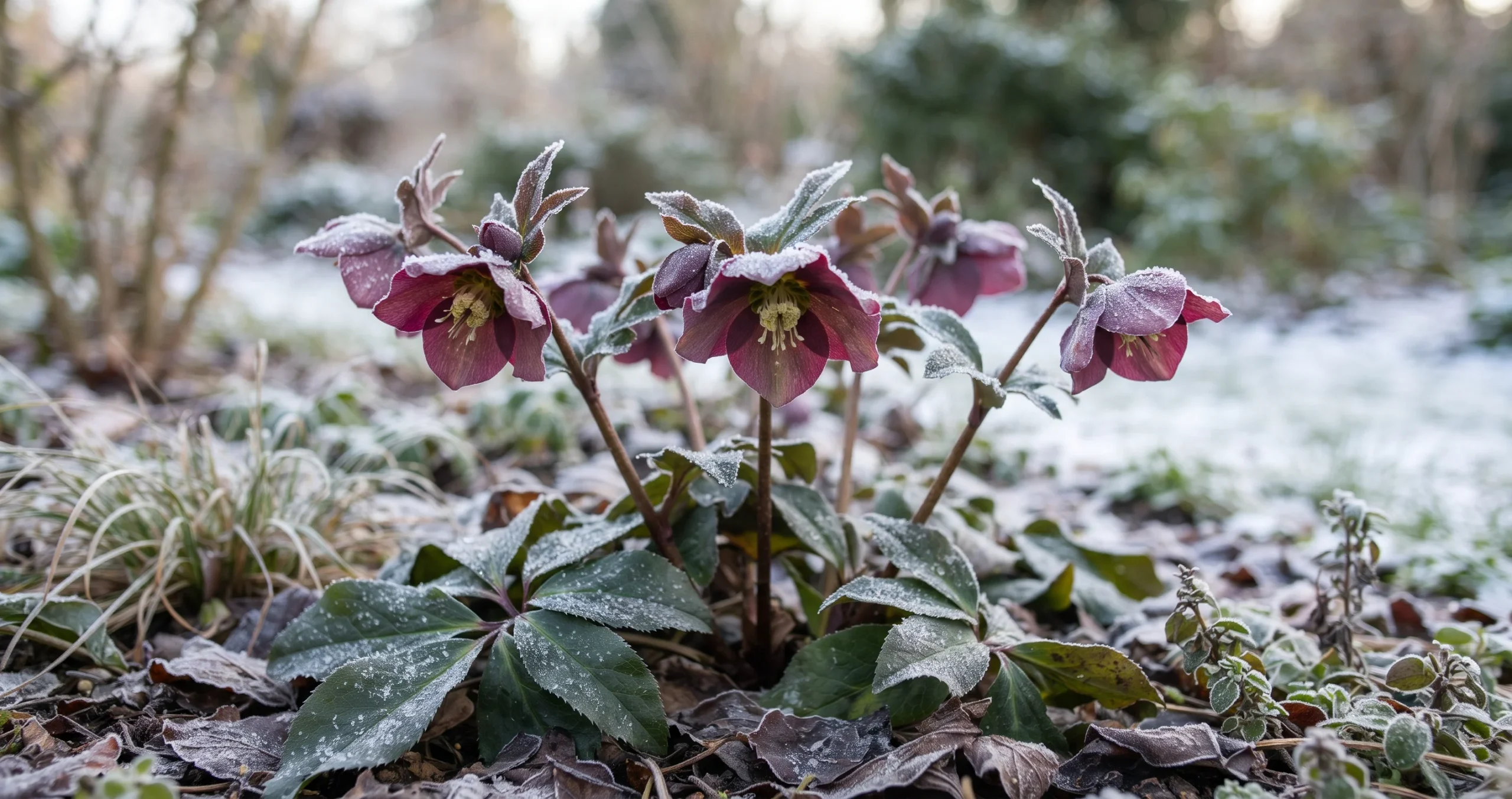
While most garden plants remain dormant beneath frost and snow, hellebores quietly produce some of the most beautiful flowers of the colder months. Their delicate, downward-facing blooms bring shades of white, pink, purple, and green to an otherwise sleeping garden.
The remarkable hellebores winter bloom is possible because these hardy perennials are adapted to cool seasonal conditions. Their protective flower structures, established root systems, and natural growth cycles allow them to flower when relatively few other garden plants are active.
Beyond their ornamental beauty, hellebores can provide food for early-season pollinators and add year-round structure to shaded garden beds.
Understanding their natural flowering habits makes growing and maintaining these fascinating plants surprisingly straightforward.
Table of Contents
- What Are Hellebores?
- Hellebores Winter Bloom: When Do They Flower?
- Why Hellebore Flowers Face Downward
- How Hellebores Tolerate Cold Weather
- Which Pollinators Visit Hellebores?
- When and How to Trim Old Hellebore Leaves
- Where and How to Plant Hellebores
- Are Hellebores Resistant to Deer and Rabbits?
- Understanding Hellebore Toxicity
- Common Hellebore Growing Problems
- Frequently Asked Questions
What Are Hellebores?
Hellebores are perennial flowering plants belonging to the genus Helleborus, which is part of the buttercup family, Ranunculaceae.
Many species originate from Europe and parts of Asia, where they naturally inhabit woodland edges, open forests, and other sheltered environments.
Their attractive foliage and unusual flowering season have made them popular additions to temperate gardens throughout the United States.
Popular Types of Hellebores
Several types are commonly grown in home gardens.
- Christmas rose (Helleborus niger): Known for its predominantly white flowers, which may appear during winter in suitable climates.
- Lenten rose (Helleborus × hybridus): A diverse group of hybrids producing flowers in numerous colors, generally from late winter into spring.
- Stinking hellebore (Helleborus foetidus): Recognized by its finely divided foliage and clusters of green, bell-shaped flowers.
- Corsican hellebore (Helleborus argutifolius): Produces pale green flowers above distinctive, leathery foliage.
Despite their common names, Christmas roses and Lenten roses are not members of the rose family.
They are entirely different plants with their own growing requirements and seasonal characteristics.
Hellebores Winter Bloom: When Do They Flower?
The flowering season depends on the species, cultivar, local climate, and growing conditions.
Some Christmas roses begin flowering in December or January, particularly in regions with relatively mild winters. In colder areas, flowering may occur later.
Lenten roses generally bloom from late winter into early spring, often providing color before many traditional spring bulbs reach their peak.
Why Their Flowers Last So Long
One of the most interesting features of hellebores is that their colorful, petal-like structures are actually sepals.
In most flowering plants, sepals protect the developing flower before it opens. In hellebores, these structures become large and colorful, forming the most visible part of the bloom.
The true petals are modified into smaller nectar-producing structures inside the flower.
Because the showy sepals often remain attached after pollination, hellebores can retain their ornamental appearance for several weeks or longer.
Their colors may gradually change as the flowers mature and seed development begins.
Why Hellebore Flowers Face Downward
Many traditional hellebore varieties produce nodding flowers that naturally face toward the ground.
Although this makes their intricate centers slightly more difficult to admire, the orientation may offer practical advantages during unpredictable winter weather.
Protection From Rain and Snow
Downward-facing flowers can reduce the amount of rainwater and melting snow that collects directly around sensitive reproductive structures.
This orientation may help protect pollen and nectar from excessive moisture.
During a season characterized by frequent precipitation, such protection can be particularly useful.
However, flower orientation varies considerably among hellebore species and cultivated varieties.
Modern breeding has also produced varieties with more outward-facing or upright flowers, making their decorative patterns easier to appreciate.
How Hellebores Tolerate Cold Weather
The hellebores winter bloom is closely connected to the plant’s natural adaptation to temperate climates.
Unlike tender tropical plants, many hellebores can survive seasonal freezing temperatures when planted in suitable locations.
Their underground crowns and roots remain protected by surrounding soil, while their foliage and flowers possess varying degrees of cold tolerance.
Natural Cold Acclimation
As temperatures decline during autumn, cold-adapted plants undergo physiological changes that improve their ability to withstand freezing conditions.
These changes may include adjustments in cellular water balance, membrane composition, and the accumulation of protective soluble compounds.
Such mechanisms help living tissues tolerate cold more effectively.
However, cold hardiness does not mean that every flower or leaf is completely immune to frost damage.
Why Hellebores Sometimes Droop During Frost
During particularly cold weather, hellebore stems and leaves may temporarily droop toward the ground.
This can be associated with changes in tissue water balance during freezing conditions.
When temperatures rise, healthy plants often regain their normal appearance.
Persistent discoloration, collapsed tissues, or damaged flowers after a severe freeze may indicate actual cold injury.
Understanding Hardiness Zones
Many commonly cultivated hellebores are suitable for USDA hardiness zones roughly 4 through 9, although individual species and cultivars differ.
Always check the plant’s specific hardiness rating before purchasing.
Established plants generally tolerate winter conditions better than recently planted specimens or those growing in exposed containers.
Which Pollinators Visit Hellebores?
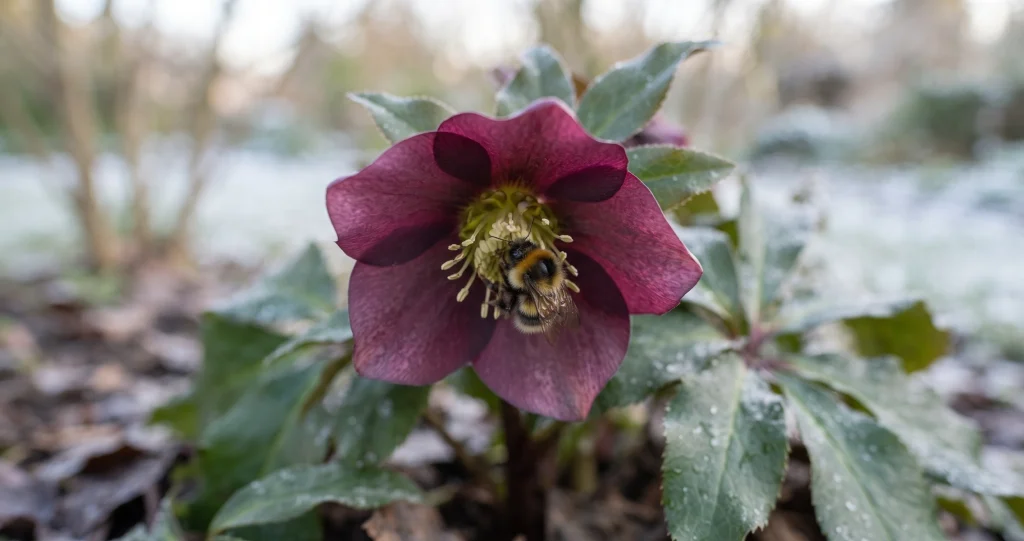
One of the ecological advantages of the hellebores winter bloom is its timing. During late winter and early spring, relatively few flowers are available to insects emerging from seasonal dormancy.
On sufficiently warm days, hellebore flowers can provide accessible nectar and pollen.
Bumblebees and Other Early Pollinators
Bumblebees are among the insects that may visit hellebore flowers during favorable weather. Honeybees, certain solitary bees, and some flower-visiting flies may also take advantage of these early resources.
The number of visitors depends on local temperatures, insect populations, and the availability of other flowering plants.
Single-flowered varieties generally provide easier access to their reproductive structures than densely packed double-flowered cultivars.
For a more wildlife-friendly garden, combine hellebores with regionally appropriate native plants that flower at different times throughout the year.
Although hellebores provide useful seasonal resources, they should complement rather than replace native pollinator habitat. RHS
When and How to Trim Old Hellebore Leaves
Removing old foliage is one of the most useful maintenance tasks for many garden hellebores.
Last year’s leaves may become damaged, discolored, or covered with fungal spots during winter. They can also conceal emerging flowers beneath dense foliage.
The Best Time to Remove Old Leaves
For hybrid Lenten roses, late winter or early spring is generally a suitable time to remove aging foliage, ideally as flower stems begin emerging.
The exact timing depends on your climate and the development of individual plants.
The Royal Horticultural Society’s hellebore growing guide distinguishes between hybrid Lenten roses and other species that require different pruning approaches.
How to Prune Hellebores Correctly
Put on gardening gloves and use clean, sharp pruning shears.
Identify the previous year’s leaves and carefully follow their individual stalks toward the base of the plant. Remove these stalks without damaging emerging flower stems, new foliage, or the crown.
Collect diseased leaves and dispose of them appropriately rather than leaving them around the plant.
For stem-forming hellebores, such as Corsican and stinking hellebores, avoid removing healthy flowering stems during winter. These are generally trimmed after flowering finishes.
Correct pruning improves the appearance of the hellebores winter bloom while helping manage certain foliage diseases.
Where and How to Plant Hellebores
Choosing the right location is essential for establishing healthy, long-lived plants.
A suitable planting site provides protection from excessive summer heat while maintaining enough light for healthy growth.
Choose Partial Shade
Many hellebores perform particularly well beneath deciduous trees.
During winter, bare branches allow sunlight to reach the plants. As the trees develop their summer canopy, the hellebores receive welcome protection from intense afternoon sunlight.
A location receiving gentle morning sun and afternoon shade can also work well.
Prepare Well-Drained Soil
Hellebores generally prefer fertile soil containing plenty of organic matter.
Although they appreciate consistent moisture, their roots should not remain in saturated ground.
Improve suitable garden soil with mature compost or leaf mold. Where drainage is consistently poor, consider a raised planting area or a suitable container.
Winter waterlogging can be more damaging than ordinary cold weather, particularly for Christmas roses.
Plant at the Correct Depth
Dig a hole wide enough to accommodate the root ball comfortably.
Position the plant at approximately the same depth at which it was previously growing. Fill around the roots with soil, firm gently, and water thoroughly.
Avoid burying the crown beneath a thick layer of soil or mulch.
Allow enough space for the mature plant to develop naturally. About 18 inches between many common hybrid varieties is a useful starting point, although larger cultivars may require additional room.
Water During Establishment
Recently planted hellebores benefit from consistent moisture while their roots become established.
Water during extended dry periods when the soil is unfrozen, and check moisture levels before adding more water.
Once established, many varieties require relatively little supplemental irrigation under suitable garden conditions.
For additional insight into how cold weather affects moisture availability in plants, see our article on winter desiccation in evergreens.
Are Hellebores Resistant to Deer and Rabbits?
Hellebores are often selected for gardens where browsing animals damage other ornamental plants.
Their leathery foliage and naturally occurring toxic compounds make them relatively unattractive to many deer and rabbits.
North Carolina State Extension identifies hellebores as plants that generally experience less browsing pressure from these animals. North Carolina Extension Gardener Plant Toolbox
However, deer resistance does not mean complete protection. Hungry animals may investigate unfamiliar plants when preferred food becomes scarce.
Protect newly planted specimens if browsing becomes a recurring problem.
Understanding Hellebore Toxicity
Despite their ornamental appeal, hellebores are toxic plants that should never be eaten.
Their tissues contain several potentially harmful compounds, including substances that may affect the heart and digestive system.
Ingestion can cause symptoms such as excessive salivation, vomiting, abdominal discomfort, diarrhea, and potentially more serious complications.
Are Hellebores Dangerous to Pets?
Hellebores are toxic to cats, dogs, and horses.
Although their unpleasant taste may discourage consumption, this does not guarantee that curious animals will avoid them.
Plant hellebores away from areas where pets frequently chew vegetation or dig around plant roots.
If a pet consumes any part of a hellebore, contact a veterinarian or animal poison control service promptly. Do not attempt to induce vomiting without professional instructions.
Handle Plants Carefully
Hellebore sap can also irritate the skin of some individuals.
Wear gloves when pruning, dividing, or handling damaged plants, and wash your hands afterward.
For more information about choosing plants responsibly around animals, explore our guide to 10 common garden plants that are toxic to pets and how to keep them safe.
Common Hellebore Growing Problems
Although many hellebores are relatively easy to maintain, unfavorable conditions can interfere with flowering and foliage development.
Recognizing problems early can help prevent unnecessary plant losses.
| Problem | Possible cause | Recommended action |
|---|---|---|
| Brown or black leaf spots | Fungal leaf spot | Remove affected foliage |
| Weak flowering | Deep shade or immature plants | Improve growing conditions and allow establishment |
| Rotting crown | Excess soil moisture | Improve drainage |
| Temporary frost-related drooping | Cold weather | Allow temperatures to recover |
| Yellowing leaves | Environmental stress or natural aging | Check drainage and moisture |
| Black streaks and distorted growth | Possible hellebore black death | Seek confirmation and remove infected plants |
Hellebore black death is a serious viral disease associated with characteristic dark markings and abnormal growth. There is currently no cure, and confirmed infected plants should be removed to reduce the risk of transmission.
Frequently Asked Questions
Do hellebores bloom when snow is on the ground?
Yes. Some cold-hardy varieties produce flowers while patches of snow remain in the garden. However, severe freezes can damage exposed blossoms.
How long does the hellebores winter bloom last?
Individual flowers can remain decorative for several weeks, while an established plant may display successive blooms over a longer period. Weather, species, and cultivar influence flowering duration.
Should I cut all the leaves off my hellebores?
Removing old foliage is appropriate for many hybrid Lenten roses around flowering time. Other hellebore species require more selective pruning, so identify your plant before cutting.
Can hellebores grow in pots?
Yes. Choose a sufficiently large container with drainage holes and a suitable growing medium. Protect container-grown roots from prolonged freezing and excessive winter moisture.
Why are my hellebores not flowering?
Possible reasons include insufficient light, unsuitable soil conditions, recent transplanting, or immature plants. Seed-grown hellebores may need several years before producing their first flowers.
Do hellebores return every year?
Yes. Hellebores are perennial plants that can return and flower for many years when grown in suitable conditions.
Are hellebores safe for cats and dogs?
No. Hellebores contain toxic compounds and should be kept away from animals that chew plants. Suspected ingestion requires veterinary advice.
Conclusion
Hellebores demonstrate that winter does not have to be a season without flowers.
Their nodding blossoms, cold-weather adaptations, and extended flowering period make them exceptional additions to sheltered garden beds and woodland landscapes.
Successful hellebores winter bloom begins with suitable planting conditions, good drainage, thoughtful pruning, and realistic expectations about cold tolerance.
By choosing appropriate varieties and handling these toxic plants responsibly, gardeners can enjoy their extraordinary beauty while providing additional seasonal resources for visiting pollinators.
When much of the garden is still waiting for spring, hellebores offer a beautiful reminder that nature follows many different seasonal rhythms.
External Sources
1. How to Grow Hellebores
Expert horticultural guidance covering flowering periods, planting conditions, pruning, winter maintenance, and pollinator benefits. North Carolina State University Extension. Royal Horticultural Society. https://www.rhs.org.uk/plants/hellebore/growing-guide
2. Helleborus
Research-based botanical information covering plant characteristics, toxicity, growing requirements, diseases, and deer and rabbit resistance. https://plants.ces.ncsu.edu/plants/helleborus/
3. Helleborus Niger
Detailed information about Christmas roses, winter flowering, planting locations, cold-weather requirements, and botanical characteristics. North Carolina State University Extension. https://plants.ces.ncsu.edu/plants/helleborus-niger/