
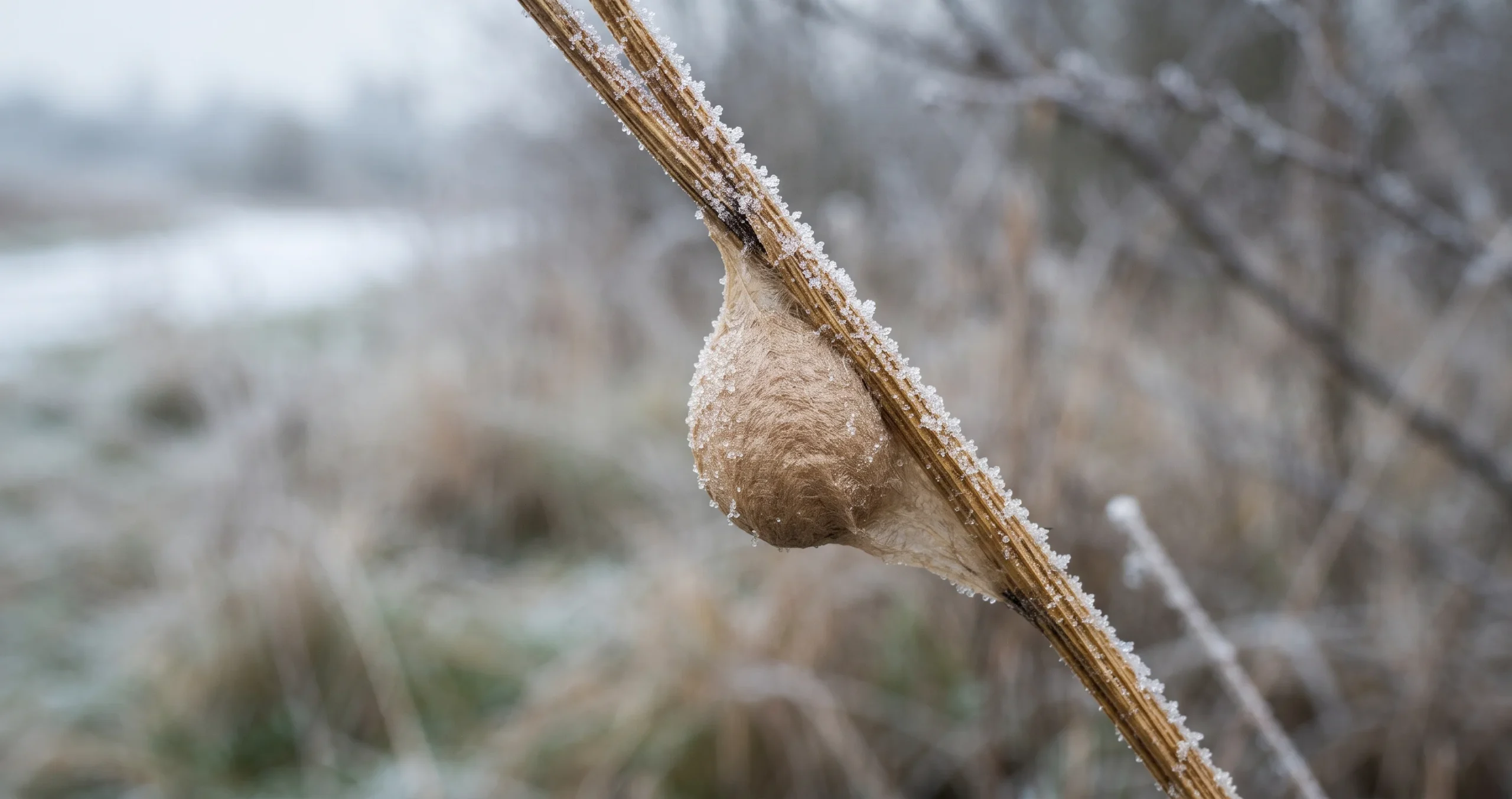
A small, tan, papery ball attached to a dried garden stem might easily be mistaken for a seed pod. Look more closely, however, and you may discover something remarkable: a garden spider egg sac containing the next generation of spiders.
The yellow garden spider (Argiope aurantia) produces protective silk egg sacs toward the end of its growing season. In many regions, the young spiders hatch inside these structures and remain sheltered throughout winter before emerging in spring.
This remarkable survival strategy allows garden spiders to continue their life cycle despite freezing temperatures, seasonal food shortages, and the disappearance of adult spiders.
Understanding these delicate structures can help gardeners protect beneficial wildlife while discovering the extraordinary natural processes taking place in their own backyards.
Table of Contents
- What Is a Garden Spider Egg Sac?
- The Life Cycle of the Yellow Garden Spider
- How Garden Spiders Build Their Egg Sacs
- Where Garden Spiders Place Their Egg Sacs
- When Do Garden Spider Eggs Hatch?
- How Spiderlings Survive Winter Inside the Egg Sac
- Spring Emergence and Spider Ballooning
- What to Do if You Find a Garden Spider Egg Sac
- Why Garden Spiders Are Beneficial
- Common Myths About Garden Spider Egg Sacs
- Frequently Asked Questions
What Is a Garden Spider Egg Sac?
A garden spider egg sac is a protective structure made from silk that surrounds developing spider eggs. It provides a sheltered environment during the earliest and most vulnerable stages of a spider’s life.
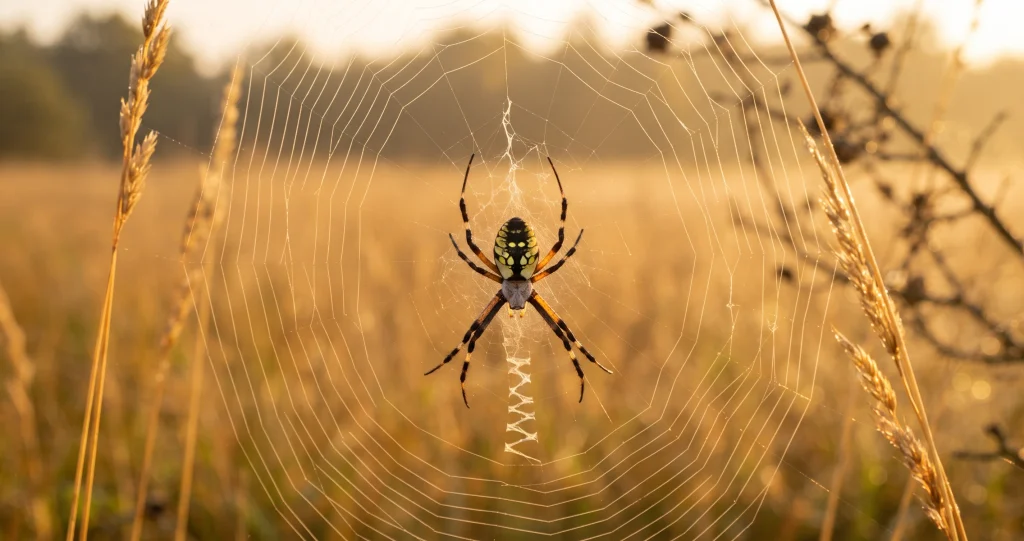
The yellow garden spider is particularly recognizable because of its striking black-and-yellow markings and large circular webs. It is commonly found in gardens, meadows, fields, and sunny woodland edges across much of the United States.
Its egg sacs are typically rounded or somewhat pear-shaped, with a tan or brown outer covering that resembles dried paper.
What Does a Yellow Garden Spider Egg Sac Look Like?
A mature egg sac often has several recognizable characteristics:
- A rounded or slightly pear-shaped appearance.
- A light brown, tan, or beige outer surface.
- A dense, papery silk covering.
- Attachment to vegetation through strong silk threads.
- A sheltered position among stems, leaves, or branches.
Individual sacs vary in size, shape, and color. Other spider species also produce similar structures, so appearance alone cannot always confirm the species.
Unlike a plant seed pod, a spider egg sac is constructed from silk rather than plant tissue.
The Life Cycle of the Yellow Garden Spider
The yellow garden spider follows a strongly seasonal life cycle across much of its range.
Its development is closely connected to changes in temperature, prey availability, and the progression of the growing season.
Spring: Young Spiders Emerge
As temperatures become favorable, young spiders leave their protective egg sacs and begin exploring their surroundings.
These tiny spiderlings establish themselves in suitable habitats where small insects provide accessible food.
Many disperse away from their original location, reducing competition with their siblings.
Summer: Growth and Web Construction
Throughout spring and summer, young garden spiders grow by feeding on captured prey.
Like other spiders, they periodically shed their external skeletons through a process called molting.
As they mature, their webs become larger and more capable of capturing bigger insects.
Adult females eventually develop the distinctive black-and-yellow coloration associated with the species.
Late Summer and Fall: Reproduction
Mature male spiders locate females and attempt to mate.
After successful mating, females produce eggs and construct protective silk sacs in suitable locations.
A female may produce more than one garden spider egg sac during the reproductive season, depending on her condition and environmental circumstances.
In regions with cold winters, adult yellow garden spiders generally die by late autumn or after hard freezes. Their developing offspring carry the population into the following year.
How Garden Spiders Build Their Egg Sacs
The construction of an egg sac demonstrates the remarkable versatility of spider silk.
Spiders produce different types of silk for different purposes, including prey capture, movement, web construction, and reproduction.
Creating a Protective Silk Chamber
A female yellow garden spider produces silk from specialized structures called spinnerets, located near the end of her abdomen.
She deposits her eggs within a silk structure and adds protective layers around them.
The finished sac contains a relatively soft interior surrounding the eggs and a tougher external covering.
These layers help protect the developing offspring from physical disturbance, moisture fluctuations, and some natural enemies.
Why Egg Sacs Contain So Many Eggs
A single garden spider egg sac may contain several hundred eggs, although the number varies considerably.
Producing numerous offspring is part of the species’ reproductive strategy.
Young spiders face many challenges, including predators, parasites, unfavorable weather, competition, and limited food availability.
Only a portion of the offspring will survive long enough to become reproductive adults.
Where Garden Spiders Place Their Egg Sacs
Female yellow garden spiders typically attach their egg sacs to vegetation or other relatively stable structures.
Suitable locations may include tall grasses, dried flower stems, shrubs, garden fences, and sheltered branches.
The sac is often positioned near the female’s web, although it does not necessarily remain within the web’s main circular structure.
Why Dried Garden Stems Matter
Standing vegetation provides useful attachment points for spider egg sacs.
A sturdy perennial stem can remain upright throughout autumn and winter, offering a relatively stable location for developing offspring.
Removing every dried stem during fall garden cleanup may unintentionally destroy or displace these structures.
Leaving some healthy vegetation standing until spring can therefore benefit spiders and other overwintering wildlife.
A sheltered position beneath surrounding vegetation may also reduce direct exposure to rain and other environmental disturbances. Research summarized by the University of Florida’s Institute of Food and Agricultural Sciences describes how yellow garden spiders use protective silk layers and select sheltered locations for their egg sacs.
When Do Garden Spider Eggs Hatch?
One of the most surprising aspects of yellow garden spider reproduction is that the eggs do not necessarily remain unhatched throughout winter.
In many temperate regions, the eggs hatch during late summer or autumn. The newly hatched spiders remain inside the protective silk enclosure rather than immediately venturing outdoors.
This means that a garden spider egg sac discovered in November may already contain living spiderlings instead of unhatched eggs.
Hatching Is Different From Emergence
Hatching occurs when a developing spider breaks free from its individual egg.
Emergence occurs when the young spider leaves the larger silk sac that shelters the entire group.
These events can be separated by several months, particularly in regions with cold winters.
The University of Michigan’s Animal Diversity Web documents this seasonal pattern of autumn hatching followed by spring emergence in yellow garden spiders. Animal Diversity Web
How Spiderlings Survive Winter Inside the Egg Sac
Winter presents substantial challenges for small invertebrates. Freezing temperatures, limited food supplies, and exposure to predators can make survival difficult.
The protective structure built by the mother spider helps her offspring endure these conditions.
Multiple Layers of Protective Silk
The outer covering provides a physical barrier, while softer internal silk helps moderate short-term changes in temperature.
These layers also reduce direct contact with precipitation and surrounding surfaces.
However, the sac is not a heated shelter. Its internal temperature still responds to environmental conditions, and it cannot guarantee protection against severe weather.
Reduced Activity During Winter
Overwintering spiderlings enter a state of dormancy that reduces their activity and energy requirements.
They remain sheltered rather than attempting to hunt insects during a season when suitable prey may be difficult to find.
Energy reserves remaining from their early development help support them during this inactive period.
Natural Threats to Overwintering Spiderlings
Even a well-constructed garden spider egg sac remains vulnerable to natural threats.
Birds may tear open the silk covering, while certain parasitic wasps and flies can attack the developing offspring.
Other risks include physical damage, extreme environmental conditions, and fungal deterioration.
These natural pressures help explain why female spiders produce so many eggs.
Spring Emergence and Spider Ballooning
As winter gives way to spring, surviving spiderlings gradually become active.
Seasonal temperature changes influence the timing of emergence, which varies according to geographic location and weather conditions.
The young spiders may gather temporarily near their original shelter before dispersing into the surrounding landscape.
How Spiderlings Travel Through the Air
One of their most fascinating dispersal methods is known as ballooning.
A young spider climbs onto an exposed surface, such as a grass blade or plant stem, and releases fine strands of silk.
Air currents can lift these lightweight threads, carrying the spider away from its original location.
This natural transportation method allows small spiders to reach new habitats without walking the entire distance.
Why Dispersal Matters
Remaining together in one location would create intense competition for food and suitable web-building sites.
Dispersal allows spiderlings to spread throughout gardens, meadows, and other environments.
When they settle in suitable locations, they begin constructing small webs and capturing appropriately sized prey.
By late summer, surviving females may have grown into the large, colorful spiders commonly seen in gardens.
What to Do if You Find a Garden Spider Egg Sac
Finding an egg sac among dried plants is generally a sign that your garden provides suitable habitat for local wildlife.
In most situations, the best response is simply to leave it undisturbed.
Delay Unnecessary Garden Cleanup
If an egg sac is attached to a healthy dried perennial stem, consider leaving that stem standing throughout winter.
You can continue removing diseased vegetation and maintaining pathways while preserving selected areas of wildlife habitat.
There is no need to keep the entire garden untidy to support overwintering spiders.
Keep Egg Sacs Outdoors
Avoid bringing an occupied egg sac into a heated house.
Indoor warmth may interfere with its natural seasonal development or encourage premature emergence when suitable prey is unavailable.
The original outdoor location generally provides conditions better aligned with the species’ life cycle.
Move It Only When Necessary
If a stem must be removed, carefully relocate the entire supporting stem to a nearby sheltered outdoor location whenever practical.
Try to maintain its original orientation and avoid squeezing, puncturing, or separating the sac from its silk attachments.
Relocation can introduce additional risks, so leaving it in place remains preferable.
Observe Without Opening the Sac
Cutting open an egg sac destroys part of its protective structure and may injure the developing spiders.
Instead, take photographs and observe changes from a comfortable distance throughout the season.
For another example of how spiders use silk to protect their offspring, explore our article about tarantula maternal care. Although tarantulas and yellow garden spiders have different reproductive behaviors, both demonstrate the importance of silk in spider reproduction.
Why Garden Spiders Are Beneficial
Yellow garden spiders are natural predators that capture numerous insects in their circular webs.
Their prey may include grasshoppers, flies, beetles, moths, and other insects that encounter the sticky silk.
By consuming these animals, spiders contribute to the complex ecological relationships that exist within gardens.
Natural Insect Population Regulation
Garden spiders can help regulate populations of certain plant-feeding insects.
However, they are generalist predators rather than specialized pest-control agents. Their webs may also capture pollinators and other beneficial insects.
Their greatest ecological value comes from participating in a diverse and balanced food web.
Supporting Backyard Biodiversity
Spiders themselves provide food for birds, predatory wasps, and other animals.
Protecting a garden spider egg sac therefore supports more than a single species. It helps maintain the ecological connections between predators, prey, vegetation, and seasonal habitats.
Reducing unnecessary broad-spectrum insecticide use and preserving varied vegetation can help maintain suitable conditions for these animals.
Common Myths About Garden Spider Egg Sacs
Several misunderstandings surround spiders and their reproductive habits.
Separating fact from fiction makes it easier to appreciate their role in outdoor environments.
| Common myth | Scientific explanation |
|---|---|
| Adult garden spiders spend winter inside egg sacs. | The sacs generally shelter developing offspring rather than adults. |
| The eggs always hatch in spring. | In colder regions, eggs often hatch during autumn, with spiderlings emerging in spring. |
| Every spiderling becomes an adult. | Many young spiders are lost to predators, competition, and environmental pressures. |
| Egg sacs must be removed from gardens. | Most outdoor garden spider egg sacs can remain undisturbed. |
| Yellow garden spiders are highly dangerous to humans. | They are generally nonaggressive, and their bites are uncommon. |
| Silk keeps spiderlings completely warm. | Silk offers some environmental protection but cannot eliminate freezing risks. |
Like most spiders, yellow garden spiders possess venom for subduing prey. However, they are not generally considered medically significant to humans.
Avoid handling unfamiliar spiders unnecessarily, and appreciate their behavior from a respectful distance.
Frequently Asked Questions
How many eggs are inside a garden spider egg sac?
A yellow garden spider egg sac can contain several hundred eggs, sometimes exceeding a thousand. The actual number varies among females and individual sacs.
What month do garden spider eggs hatch?
Eggs often hatch in late summer or autumn in temperate climates. The young spiders may remain inside the sac until the following spring.
Can garden spider egg sacs survive frost?
Yes. Their protective construction and the seasonal dormancy of developing spiderlings help them withstand winter conditions. Nevertheless, survival is not guaranteed.
Does the mother spider survive winter?
In colder climates, adult female yellow garden spiders generally die during late autumn or following hard freezes. Their offspring overwinter inside the egg sacs.
Should I remove spider egg sacs from my plants?
Generally, leaving outdoor egg sacs undisturbed is preferable. If pruning is necessary, preserve the supporting stem in a nearby sheltered location when possible.
Do garden spider egg sacs attract hundreds of spiders to my house?
Most emerging yellow garden spiders disperse into suitable outdoor habitats. They generally favor vegetation and open areas where they can construct their webs rather than indoor living spaces.
Can I tell whether an egg sac is empty?
A visible opening or damaged silk may indicate that its occupants have emerged or that predators have entered. External appearance alone cannot always establish whether living spiderlings remain inside.
Conclusion
A small garden spider egg sac attached to a dried stem represents an extraordinary seasonal survival strategy.
Through carefully constructed silk layers, winter dormancy, and spring dispersal, yellow garden spiders maintain their life cycle even after the adult generation disappears.
For gardeners, protecting these delicate structures requires very little effort. Leaving selected stems standing, avoiding unnecessary disturbance, and maintaining diverse garden habitats can support the next generation of beneficial wildlife.
What appears to be a simple papery ball in November may contain hundreds of tiny spiders waiting for spring.
It is a quiet reminder that even a seemingly dormant winter garden remains full of life.
Internal Sources
1. Tarantula Maternal Care
https://secretsofthegreengarden.com/tarantula-maternal-care/?utm_source=chatgpt.com
External Sources
1. Yellow Garden Spider
Scientific information covering egg sac construction, protective silk layers, spiderling development, and ballooning behavior. University of Florida. https://ask.ifas.ufl.edu/publication/IN1273?utm_source=chatgpt.com
2. Animal Diversity Web: Argiope aurantia
Detailed zoological information about reproduction, autumn hatching, winter dormancy, maternal protection, and natural predators. University of Michigan. https://animaldiversity.org/accounts/Argiope_aurantia/?utm_source=chatgpt.com
3. Black-and-Yellow Garden Spider
Authoritative information covering egg sac identification, seasonal life cycles, spring emergence, and ecological benefits. Missouri Department of Conservation. https://mdc.mo.gov/discover-nature/field-guide/black-yellow-garden-spider?utm_source=chatgpt.com