
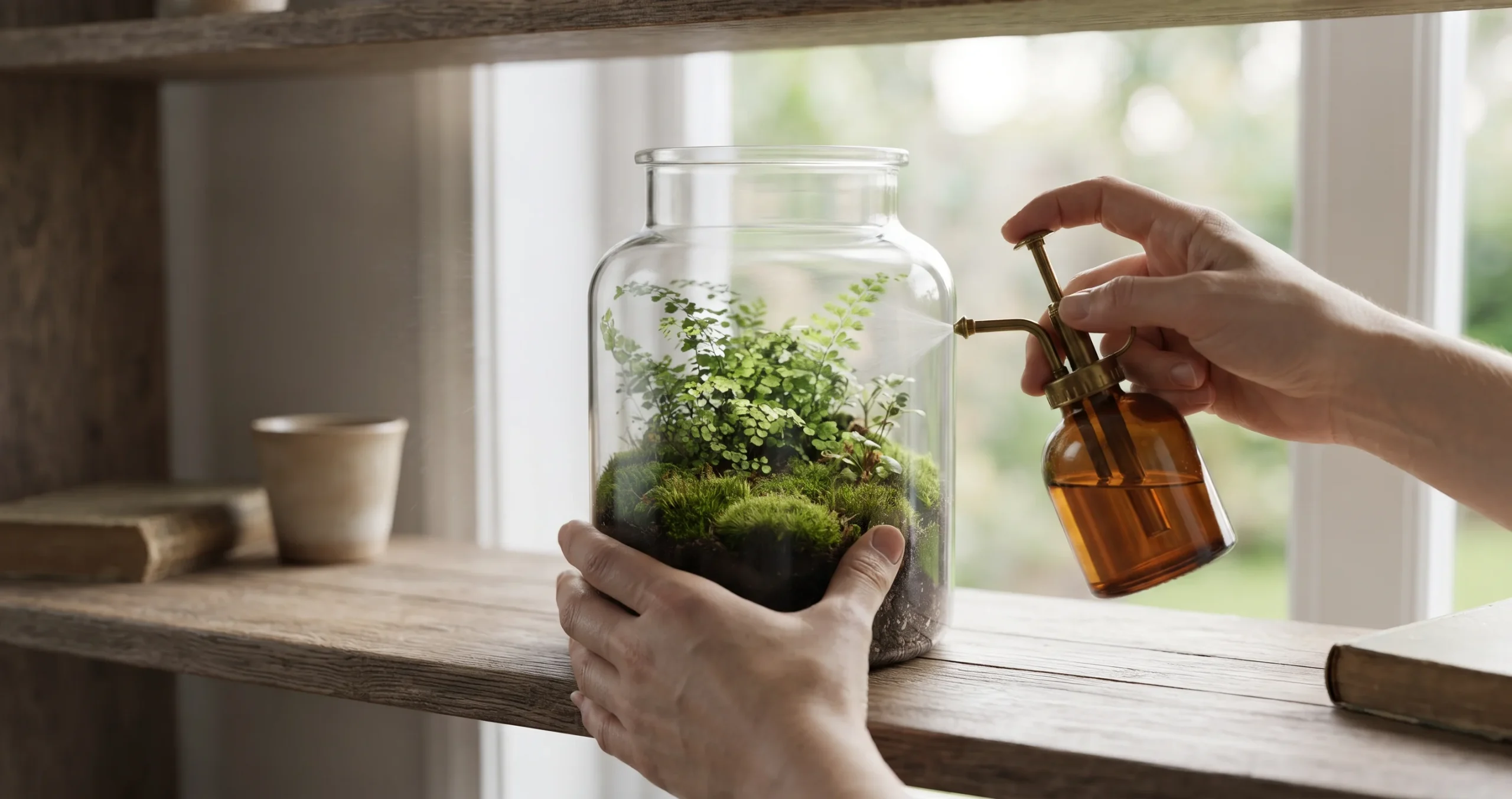
A tiny green landscape growing inside a glass jar can bring a surprising amount of nature into your home. Soft cushions of moss, miniature stones, and delicate plants create the appearance of a woodland floor on a much smaller scale.
A moss terrarium is a simple indoor gardening project that requires relatively few materials and little space. When properly assembled, a closed terrarium can recycle moisture through condensation and evaporation, reducing the need for frequent watering.
Whether you want to brighten a desk, decorate a bookshelf, or explore the fascinating world of miniature ecosystems, making a moss jar is an enjoyable way to start.
This guide explains everything from selecting suitable moss to maintaining a healthy terrarium throughout the year.
Table of Contents
- What Is a Moss Terrarium?
- Supplies You Need to Make a Moss Jar
- How to Source Moss Responsibly
- How to Make a Moss Terrarium Step by Step
- How to Water and Mist a Moss Terrarium
- Choosing the Right Light and Temperature
- Managing the Terrarium Lid
- Common Moss Terrarium Problems and Solutions
- Best Plants to Add to a Moss Terrarium
- How Long Does a Moss Terrarium Last?
- Frequently Asked Questions
What Is a Moss Terrarium?
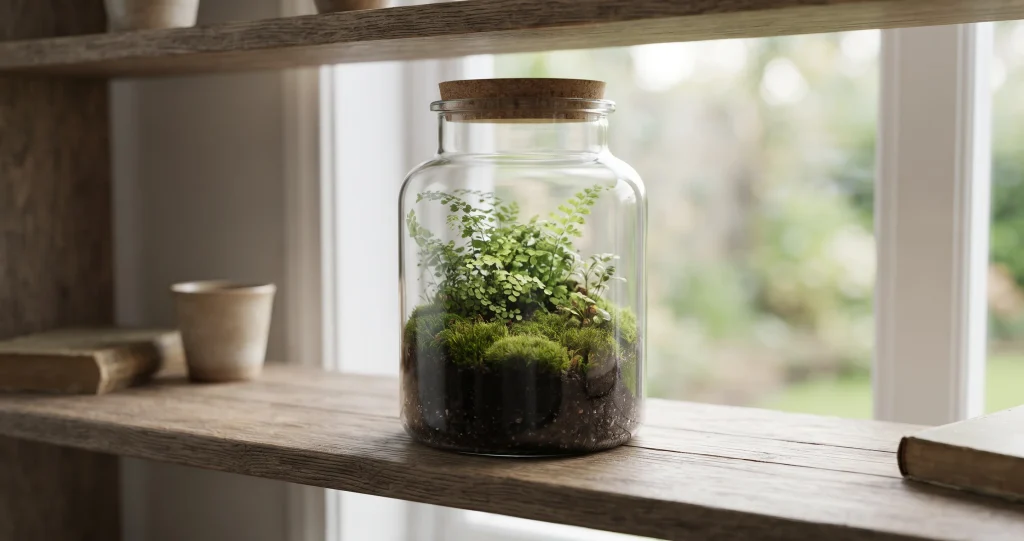
A moss terrarium is a miniature planted environment created inside a transparent container, usually a glass jar, bottle, or decorative vessel.
Unlike traditional houseplant arrangements, moss terrariums are designed to maintain relatively humid conditions that resemble the sheltered environments where many moss species naturally grow.
Mosses are nonvascular plants, meaning they lack the specialized water-transporting tissues found in most familiar garden plants. Instead of true roots, they possess small structures called rhizoids that primarily help anchor them to surfaces.
They absorb much of their moisture directly through their exposed tissues.
Open vs. Closed Terrariums
An open terrarium allows moisture to escape freely into the surrounding air. It generally requires more frequent watering and is better suited to plants that prefer greater ventilation.
A closed moss terrarium retains moisture beneath a lid. Water evaporates from the substrate and plants, condenses against the glass, and eventually returns to the growing medium.
For many moisture-loving woodland mosses, a closed or partially closed container provides favorable growing conditions.
However, maintaining a suitable balance between moisture, light, and ventilation remains essential.
Supplies You Need to Make a Moss Jar
You can assemble a beautiful miniature landscape using inexpensive materials and an ordinary glass container.
Gather the following supplies before starting:
- A clean, transparent glass jar with a removable lid.
- Small washed pebbles or gravel.
- Horticultural activated charcoal, if desired.
- A suitable, low-fertilizer growing medium.
- Living moss suitable for humid terrarium conditions.
- A small spray bottle filled with suitable water.
- Long tweezers or a narrow spoon.
- Small decorative stones or clean pieces of bark.
- Optional miniature humidity-loving plants.
Choose a jar with a sufficiently wide opening to make planting and maintenance easier.
A container that holds roughly one to two quarts is a practical starting point, although smaller and larger jars can also work.
How to Source Moss Responsibly
Not all mosses thrive in the warm, humid conditions of an indoor terrarium. Some species naturally grow in exposed, relatively dry environments, while others prefer cool woodland habitats.
Choosing appropriate living moss is therefore more important than simply collecting the first green patch you find.
Purchase Cultivated Moss
Specialist terrarium suppliers and reputable nurseries often sell moss grown specifically for indoor projects.
Cultivated moss can reduce pressure on natural habitats and may be easier to establish in a controlled environment.
Check that the product contains living moss rather than preserved decorative moss, which has been treated and will not resume growth.
Collect Only Where Permitted
If you collect moss outdoors, obtain the landowner’s permission and check applicable local regulations.
Avoid removing moss from protected forests, nature reserves, public parks, and environmentally sensitive habitats.
Where collection is permitted, take only a small portion from an abundant patch and leave most of the colony undisturbed.
Moss provides shelter for tiny organisms, helps retain moisture, and contributes to woodland ecosystems.
How to Make a Moss Terrarium Step by Step
Building a moss terrarium involves arranging several materials inside a glass container. Each layer serves a practical or decorative purpose, although the exact arrangement can vary.
Step 1: Clean the Glass Jar
Wash the container thoroughly using warm water and ordinary dish soap.
Rinse away all soap residue and allow the jar to dry before adding materials.
A clean container helps reduce the introduction of unwanted organic debris and microorganisms.
Step 2: Add a Gravel Reservoir
Place a shallow layer of washed gravel or small pebbles at the bottom of the jar.
For a medium-sized container, approximately half an inch to one inch is usually sufficient.
This layer creates space where small amounts of excess water can collect.
However, gravel does not provide true drainage in a sealed jar because water cannot escape. Careful watering remains the most important way to prevent waterlogging.
Step 3: Add Optional Activated Charcoal
Sprinkle a thin layer of horticultural activated charcoal over the gravel if desired.
Activated charcoal can adsorb certain dissolved substances, but its effectiveness is limited and it is not essential for a successful terrarium.
It cannot replace appropriate watering, clean materials, or occasional maintenance.
Avoid using barbecue charcoal or briquettes, which may contain unsuitable additives.
Step 4: Add the Growing Medium
Place a shallow layer of suitable growing medium above the gravel and charcoal.
A lightweight, moisture-retentive mixture with good aeration and minimal added fertilizer works well for many terrarium mosses.
Approximately one to two inches of substrate is a useful starting point for a medium-sized jar, although the depth should reflect the plants being grown.
Moss generally requires less substrate than deeply rooted houseplants.
Step 5: Arrange the Living Moss
Place small sections of living moss onto the prepared substrate.
Gently press them against the surface to establish good contact without crushing the delicate shoots.
You can combine flat-growing moss with small cushion-forming varieties to create an interesting miniature landscape.
Leave a little space between sections to accommodate future growth.
Step 6: Add Natural Decorative Elements
Position a few small stones, clean pieces of bark, or miniature branches among the moss.
These materials can create the appearance of a woodland path, rocky hillside, or tiny forest floor.
Avoid adding large quantities of decomposing organic matter, which may encourage excessive fungal growth inside a humid container.
Step 7: Mist and Close the Jar
Lightly mist the moss and substrate if they are not already sufficiently moist.
The growing medium should feel damp rather than saturated, with little or no standing water in the gravel reservoir.
Place the lid on the jar and observe moisture levels during the following days.
Your moss terrarium is now ready to begin establishing itself.
How to Water and Mist a Moss Terrarium
Watering is one of the most important aspects of maintaining a miniature moss garden.
Because closed containers retain moisture, watering should be based on actual conditions rather than a fixed weekly schedule.
How Often Should You Mist Moss?
A well-balanced closed moss terrarium may remain sufficiently moist for several weeks or even months without additional watering.
Check the appearance of the moss, the moisture of the substrate, and the condensation inside the jar.
If the substrate becomes dry and the moss begins losing moisture, apply a light mist.
Choose Suitable Water
Distilled water, reverse-osmosis water, or clean collected rainwater are generally suitable options, particularly for mosses sensitive to mineral accumulation.
Hard tap water can gradually leave mineral deposits on the glass and growing medium.
Because water evaporates but dissolved minerals remain inside the container, using low-mineral water can help prevent excessive accumulation.
Choosing the Right Light and Temperature
Moss needs light for photosynthesis, even when growing in a humid, enclosed environment.
Place your jar somewhere that receives bright, indirect daylight without prolonged exposure to direct sunlight.
An east-facing window with filtered light or a bright shelf away from the window can provide suitable conditions.
Can Moss Grow Under Artificial Light?
A small LED grow light can support moss growth in rooms with limited natural daylight.
Use a timer to establish a consistent light cycle, following the requirements of your chosen moss species.
Keep the jar away from radiators, heating vents, and other heat sources. Direct sunlight can rapidly increase temperatures inside a closed glass container. RHS Advice+1
Managing the Terrarium Lid
The lid helps maintain the moisture balance inside a closed moss terrarium.
However, new terrariums often require adjustments before their internal conditions stabilize.
Understanding Condensation
Light condensation that appears and disappears during the day is generally a normal part of the miniature water cycle.
If the glass remains completely fogged or large droplets constantly run down the sides, there may be excessive moisture.
Temporarily remove the lid to allow some moisture to escape, then replace it and observe the conditions again.
Should You Open the Jar Every Day?
A balanced terrarium does not necessarily require daily opening.
Occasional ventilation may be useful when dealing with excess moisture, decaying material, or fungal growth.
Adjust the lid according to the condition of the plants rather than following an unnecessary daily routine.
Common Moss Terrarium Problems and Solutions
Even a carefully assembled moss terrarium can experience problems during its first few weeks.
Early observation makes it easier to identify unsuitable conditions before they cause widespread damage.
| Problem | Possible cause | Practical solution |
|---|---|---|
| White mold | Excess moisture or decomposing debris | Remove affected debris and ventilate temporarily |
| Brown, dry moss | Insufficient moisture or excessive heat | Check the substrate and adjust watering or location |
| Brown, soggy moss | Excessive watering | Reduce moisture and remove decaying sections |
| Constantly fogged glass | Excess humidity | Open the lid temporarily |
| Mineral deposits | Mineral-rich water | Switch to distilled or reverse-osmosis water |
| Weak growth | Insufficient light or unsuitable species | Improve indirect lighting or replace unsuitable moss |
Dealing With Mold
Small fungal growths occasionally appear on organic materials inside humid terrariums.
Remove affected dead plant material using clean tweezers and improve ventilation if moisture is excessive.
Persistent mold may indicate that the terrarium contains too much water or decomposing organic matter.
Best Plants to Add to a Moss Terrarium
Moss can form an attractive landscape on its own, but miniature companion plants can introduce interesting shapes and colors.
Choose small, slow-growing plants with similar moisture, temperature, and light requirements.
Suitable options include:
- Miniature fittonia, also known as nerve plant.
- Small, humidity-loving ferns.
- Compact tropical peperomia varieties.
- Certain miniature Pilea species.
- Spikemoss (Selaginella), where conditions suit the species.
Avoid overcrowding the container, and remember that cacti and most succulents prefer drier conditions than those found in closed terrariums.
How Long Does a Moss Terrarium Last?
A carefully maintained moss terrarium can remain attractive for months or several years.
Its lifespan depends on the suitability of the moss, moisture balance, lighting, container size, and ongoing maintenance.
Although some closed ecosystems survive for exceptionally long periods, ordinary terrariums may eventually require trimming, replacement plants, or a complete redesign.
The goal is to maintain a healthy miniature garden rather than create a container that must remain permanently sealed.
Frequently Asked Questions
Does a moss terrarium need charcoal?
No. Horticultural activated charcoal is an optional ingredient. Appropriate moisture management and healthy planting materials are more important for long-term success.
Can I use ordinary garden soil?
Garden soil may introduce unwanted organisms and can become compacted inside a jar. A clean, lightweight growing medium suitable for terrarium plants is usually preferable.
Can moss survive inside a completely closed jar?
Suitable moss species can grow inside closed jars when sufficient light, moisture, and appropriate temperatures are maintained. Occasional maintenance may still be necessary.
Why is my terrarium moss turning brown?
Browning can result from dehydration, excessive moisture, heat, mineral accumulation, or unsuitable growing conditions. Examine the substrate and surrounding environment before adjusting your care routine.
Does terrarium moss need fertilizer?
Most moss-only terrariums require little or no supplemental fertilizer. Excess nutrients can encourage unwanted algae and other growth.
Can I make a terrarium without gravel?
Yes. Gravel is primarily an optional water reservoir and decorative feature. It does not create true drainage inside a container without drainage holes.
Conclusion
Creating a moss terrarium is a rewarding way to bring the subtle beauty of a woodland landscape indoors.
With responsibly sourced living moss, a suitable substrate, gentle moisture, and indirect light, an ordinary glass jar can become a fascinating miniature garden.
The secret to maintaining it is balance. Observe moisture levels, make small adjustments when necessary, and choose plants adapted to the conditions inside the container.
Over time, your moss jar can become a living reminder of the intricate natural processes that take place on the forest floor.
External Sources
1. Terrariums and Bottle Gardens
Practical recommendations for growing mosses, miniature ferns, and humidity-loving plants inside glass containers. Royal Horticultural Society. https://www.rhs.org.uk/plants/types/houseplants/bottle-gardens-and-terrariums.
2. How to Design a Closed-System Terrarium
Educational information about miniature ecosystems, container preparation, planting materials, condensation, and long-term maintenance. Mississippi State University Extension. https://extension.msstate.edu/publications/how-design-closed-system-terrarium.