
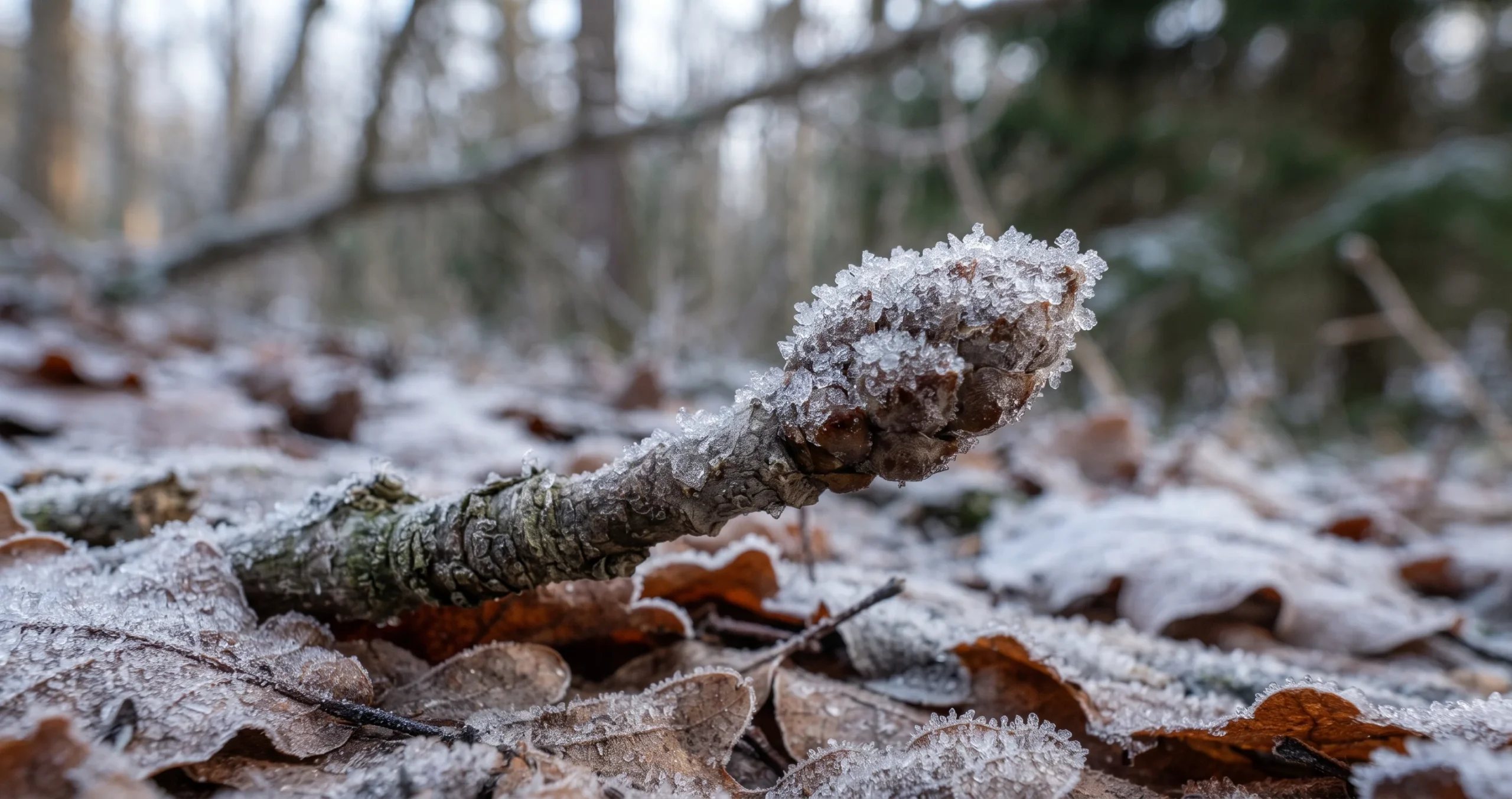
A bare tree in the middle of winter may look completely lifeless, but something remarkable is happening along its branches. Tiny buds contain the beginnings of next spring’s leaves, flowers, and shoots, carefully protected from freezing temperatures and drying winds.
These winter buds on trees are living structures that have developed specialized ways to survive months of unfavorable weather. Protective scales, internal chemical changes, and carefully regulated dormancy help them remain alive until growing conditions improve.
Understanding how buds survive winter reveals an extraordinary side of plant biology. It also helps gardeners recognize healthy branches, choose the right pruning time, and understand why unusually warm winters can affect spring growth and flowering.
Table of Contents
- What Are Winter Buds on Trees?
- How Bud Scales Protect Developing Leaves and Flowers
- Understanding Winter Dormancy in Trees
- Why Trees Need Winter Chilling
- How Buds Know When to Open
- What Happens to Tree Buds During Mild Winters?
- How to Tell Flower Buds From Leaf Buds
- Why Winter Buds Matter for Pruning
- How to Protect Developing Buds in Your Garden
- Frequently Asked Questions
What Are Winter Buds on Trees?
A winter bud is a compact structure containing developing plant tissues that will resume growth when conditions become favorable. Depending on the species and type of bud, it may contain immature leaves, flowers, shoots, or a combination of these structures.
Many deciduous trees begin forming their buds during the previous growing season. By the time autumn arrives, much of the following spring’s growth is already prepared in miniature.
Although the branches appear inactive after leaf fall, the tree is maintaining living tissues that will become essential for its next growing season.
Different Types of Tree Buds
Winter buds on trees generally fall into several categories:
- Leaf buds: Produce leaves and often new vegetative shoots.
- Flower buds: Contain developing flowers or flower clusters.
- Mixed buds: Produce both flowers and leaves or shoots.
- Terminal buds: Develop at the ends of branches and shoots.
- Lateral buds: Form along the sides of branches, often near former leaf attachment points.
Their size, color, shape, and arrangement vary considerably between tree species.
These differences are so distinctive that botanists can identify many deciduous trees in winter simply by examining their buds and twigs.
How Bud Scales Protect Developing Leaves and Flowers
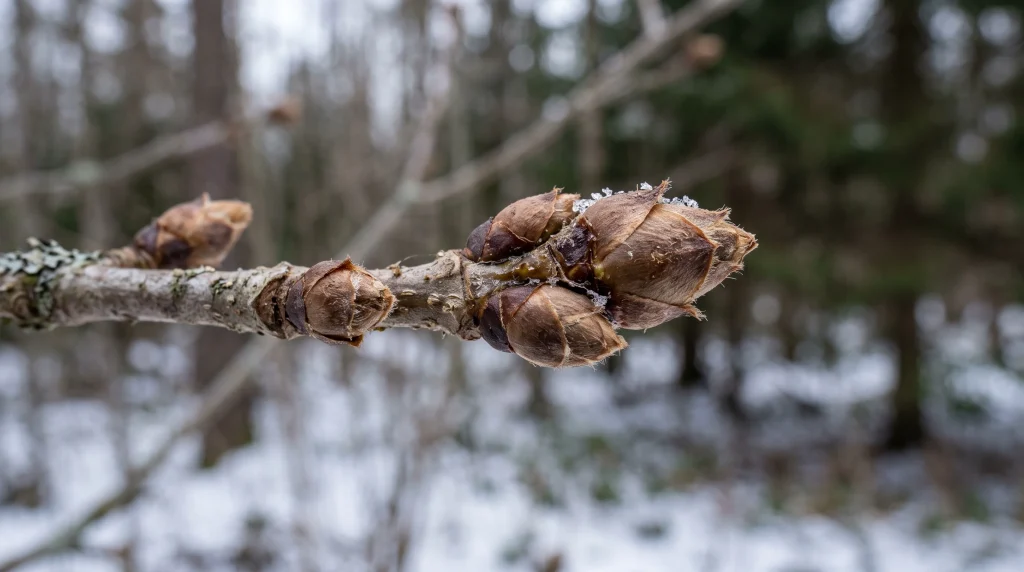
One of the most noticeable features of winter buds on trees is their protective outer covering.
In many species, overlapping structures called bud scales surround the delicate tissues inside. These scales are often modified leaves that become tougher and less permeable than ordinary foliage.
They function like a small protective enclosure, helping shield developing tissues from the harsh winter environment.
Protection Against Moisture Loss
Winter air can be surprisingly drying, particularly when strong winds accompany freezing temperatures.
When the ground freezes, trees may also have difficulty replacing water lost from exposed tissues.
Bud scales help reduce moisture loss by limiting the exposure of developing leaves and flowers to the surrounding air.
Some trees, including horse chestnuts and certain poplars, produce sticky or resinous substances around their buds that provide additional protection.
Protection Against Cold and Physical Damage
Overlapping scales help protect buds from direct exposure to ice, wind, and mechanical damage.
However, scales alone cannot prevent freezing injury. The living tissues inside also undergo physiological changes that increase their ability to tolerate low temperatures.
Some species accumulate soluble sugars and other protective compounds, while others use mechanisms that allow sensitive tissues to avoid damaging ice formation.
Not every tree produces prominent bud scales. Some species have naked buds protected by dense hairs or other specialized structures.
Understanding Winter Dormancy in Trees
Dormancy is a natural biological state in which visible plant growth temporarily stops or slows dramatically.
For deciduous trees in temperate climates, this process helps prevent new leaves and flowers from developing during conditions that could damage them.
Winter buds on trees remain alive throughout dormancy, even though their external appearance changes very little.
How Trees Prepare for Dormancy
As summer ends, changes in daylight duration and temperature influence growth-regulating processes inside many trees.
Shoot growth slows, buds mature, and the plant begins developing greater resistance to cold.
This gradual preparation is known as cold acclimation.
Different tree species respond to seasonal signals in different ways. Some are particularly sensitive to shortening days, while others respond more strongly to falling temperatures.
Two Important Stages of Winter Dormancy
Plant scientists distinguish between several forms of dormancy, including two particularly relevant to winter buds.
Endodormancy occurs when internal biological mechanisms prevent a bud from opening, even if outdoor conditions temporarily become favorable.
Ecodormancy occurs after those internal restrictions have been sufficiently released, but external conditions, particularly low temperatures, continue to prevent growth.
This distinction explains why a warm afternoon in December does not necessarily cause a dormant tree to produce new leaves.
Later in winter, after its chilling needs have been satisfied, the same tree may respond much more readily to prolonged warmth.
Why Trees Need Winter Chilling
It may seem surprising that many trees need cold weather before they can grow successfully in spring. However, exposure to cool temperatures is an essential part of the seasonal cycle for numerous temperate tree species.
This biological need is known as a chilling requirement.
What Are Chilling Hours?
Chilling hours are a way of estimating how much cool weather a plant experiences during its dormant period.
One commonly used model counts hours when temperatures remain roughly between 32°F and 45°F (0°C and 7°C). More sophisticated models consider the different effects of temperature fluctuations.
The University of Minnesota Extension’s guide to dormancy and chilling hours explains how these requirements vary among perennial fruit crops and cultivars.
A peach tree adapted to a mild southern climate may require considerably less chilling than a variety developed for colder growing regions. UMN Extension+1
Why Freezing Temperatures Are Not Always Necessary
Chilling does not mean that trees must experience severe freezes.
Moderately cold conditions can contribute to dormancy release, while extreme temperatures may damage sensitive tissues rather than provide additional benefits.
This distinction is particularly important when choosing fruit trees for regions with relatively mild winters.
How Buds Know When to Open
Winter buds on trees respond to environmental signals through complex biological processes.
They do not follow a fixed calendar date. Instead, their development reflects a combination of seasonal temperature patterns, internal growth regulators, and, in some species, daylight duration.
Temperature Acts as a Seasonal Signal
Once a tree has received sufficient chilling, warmer temperatures encourage renewed cellular activity.
Water movement increases, stored carbohydrates become available to growing tissues, and buds gradually begin to swell.
The protective scales eventually separate, allowing developing leaves or flowers to emerge.
This transition is called bud break.
Why Different Trees Open at Different Times
Even trees growing next to one another may begin their spring development weeks apart.
A red maple may flower while neighboring oak trees still have tightly closed buds. Peach blossoms can appear before the tree develops its full canopy of leaves.
These differences reflect each species’ inherited growth patterns, temperature requirements, and sensitivity to seasonal conditions.
What Happens to Tree Buds During Mild Winters?
An unusually warm winter can affect trees in two different ways, depending on when the warmth occurs.
Insufficient chilling can delay normal growth, while warmth after dormancy release can encourage buds to develop prematurely.
Insufficient Winter Chilling
When a tree fails to receive enough cool weather, its spring growth may become irregular.
Possible consequences include delayed bud break, uneven flowering, reduced fruit production, and inconsistent leaf development.
This is particularly important for apples, peaches, cherries, and other fruit trees with specific chilling requirements. Choosing locally adapted varieties can reduce these problems.
Premature Bud Opening
Warm weather late in winter may encourage winter buds on trees to swell earlier than usual.
As the tissues resume growth, they gradually lose some of their ability to tolerate freezing temperatures.
A subsequent cold spell can therefore injure buds that would have survived similar temperatures earlier in winter.
Research summarized in Penn State Extension’s guide to critical frost temperatures in fruit crops demonstrates how frost sensitivity increases as flower buds develop.
For gardeners, this means that a mild winter does not necessarily guarantee a successful spring flowering season. UMN Extension+1
How to Tell Flower Buds From Leaf Buds
Learning to identify winter buds on trees is a useful skill, especially when caring for ornamental and fruit-bearing varieties.
Although appearances vary among species, several visual characteristics can help distinguish different bud types.
Characteristics of Flower Buds
Flower buds are often larger, rounder, and fuller than neighboring vegetative buds.
Their swollen appearance reflects the developing floral structures inside.
On peach trees, for example, rounded flower buds frequently appear beside a narrower central leaf bud.
Characteristics of Leaf Buds
Leaf buds are frequently smaller, narrower, and more pointed.
They may sit close to the branch or project outward at an angle, depending on the tree species.
When they open, they produce new foliage and sometimes an extending shoot.
Understanding Mixed Buds
Some trees produce buds containing both flowers and vegetative tissues.
Apple trees commonly develop mixed buds, which can produce a cluster of blossoms alongside new leaves.
Because bud appearance differs among species, gardeners should use species-specific identification guides rather than relying entirely on shape.
| Characteristic | Flower buds | Leaf buds |
|---|---|---|
| Shape | Often rounded | Often pointed |
| Size | Frequently larger | Frequently smaller |
| Contents | Developing flowers | Leaves and vegetative shoots |
| Function | Flowering and reproduction | Vegetative growth |
These characteristics are general identification clues rather than universal botanical rules.
Why Winter Buds Matter for Pruning
Every pruning cut potentially removes some of the tree’s future growth. Recognizing winter buds on trees helps gardeners make more informed decisions about which branches to keep.
This is particularly important for plants that develop their flower buds during the previous growing season.
Protect Spring-Flowering Trees and Shrubs
Many spring-flowering plants carry their upcoming blossoms on branches formed during the previous year.
Examples include lilacs, forsythias, flowering dogwoods, and many magnolias.
Heavy winter pruning can remove these developing flowers before they have an opportunity to bloom.
When flowering is the priority, routine shaping is generally best performed shortly after flowering finishes, provided the species has no other pruning restrictions.
Prune Fruit Trees With Their Buds in Mind
Late winter is a suitable pruning period for many apple and pear trees.
Dormant branches are easier to examine because the absence of foliage reveals their structure.
However, different fruit trees produce flowers on different types of wood. Apples often bear fruit on short spurs, while peaches primarily fruit on shoots produced during the preceding growing season.
Learning where a particular variety develops its fruiting buds helps prevent unnecessary crop losses.
The University of Minnesota Extension’s pruning guide provides further guidance on selecting branches and making appropriate pruning cuts. UMN Extension+1
How to Protect Developing Buds in Your Garden
Healthy trees are generally better equipped to withstand seasonal temperature fluctuations.
While gardeners cannot control the weather, several practical measures can support natural winter survival.
Choose Trees Adapted to Your Climate
Consider both winter hardiness and chilling requirements when purchasing trees.
A plant may tolerate the lowest temperatures in your region but still struggle to flower or fruit properly if winter chilling is insufficient.
Local nurseries and cooperative extension services can help identify suitable varieties.
Maintain Healthy Roots and Soil
Apply approximately two to three inches of organic mulch around the root zone, keeping it away from direct contact with the trunk.
Mulch moderates soil temperature fluctuations and helps conserve moisture.
Water trees during dry periods when the soil is unfrozen, particularly before winter arrives.
For a closer look at how frozen soil and moisture loss affect woody plants, explore our guide to winter desiccation in evergreens.
Avoid Encouraging Tender Late-Season Growth
Excessive nitrogen fertilization and unnecessary pruning late in the growing season may encourage new growth that has insufficient time to develop cold resistance.
Follow species-specific recommendations for fertilization and pruning.
Allow trees to complete their natural seasonal transition before undertaking major maintenance work.
Inspect Buds Before Removing Branches
After a severe freeze, some buds may become shriveled or develop dark internal tissues.
However, apparently inactive branches may still contain healthy dormant buds.
If you suspect winter damage, wait until normal spring growth becomes evident before removing questionable branches, unless they present an immediate safety hazard.
Frequently Asked Questions
Are winter buds on trees alive?
Yes. Dormant buds contain living tissues that remain protected while visible growth temporarily pauses. Their activity increases when environmental and internal conditions favor development.
Do all tree buds have protective scales?
No. Many trees have overlapping bud scales, but others possess exposed buds protected by fine hairs or alternative adaptations.
Can tree buds survive freezing temperatures?
Healthy dormant buds on cold-adapted trees can tolerate substantial freezing temperatures. Their resistance depends on the species, seasonal acclimation, and stage of development.
Why are my tree buds opening in winter?
Unusually warm conditions can encourage early bud development, particularly after the tree has received enough chilling. Returning freezes may damage this emerging growth.
What happens if flower buds freeze?
Severely damaged flower buds may turn brown internally and fail to open. The tree can remain healthy and produce normal foliage even when part of its flower crop is lost.
Can I prune trees when their buds begin to swell?
It depends on the species and purpose of pruning. Many trees benefit from dormant-season pruning, but spring-flowering plants often benefit from being pruned after flowering.
Conclusion
A tiny bud on a bare winter branch contains far more life than its appearance suggests.
Through protective scales, cold acclimation, dormancy, and carefully regulated growth responses, winter buds on trees preserve the beginnings of another growing season.
For gardeners, understanding these processes makes it easier to recognize healthy growth, choose appropriate pruning times, and select trees suited to local weather conditions.
The next time you walk past a leafless tree in winter, take a closer look at its branches. Within those tightly closed buds, spring is already taking shape.
External Sources
1. Understanding Dormancy and Chilling Hours in Perennial Fruit Crops
Scientific information about seasonal dormancy, chilling requirements, temperature responses, and bud break. University of Minnesota Extension. https://blog-fruit-vegetable-ipm.extension.umn.edu/2024/11/understanding-dormancy-and-chilling.html
2. Pruning Trees and Shrubs
Practical horticultural guidance on pruning timing, branch selection, flowering habits, and healthy tree development. University of Minnesota Extension. https://extension.umn.edu/garden-and-home/yard-and-garden/gardening-in-minnesota/pruning-trees-and-shrubs