
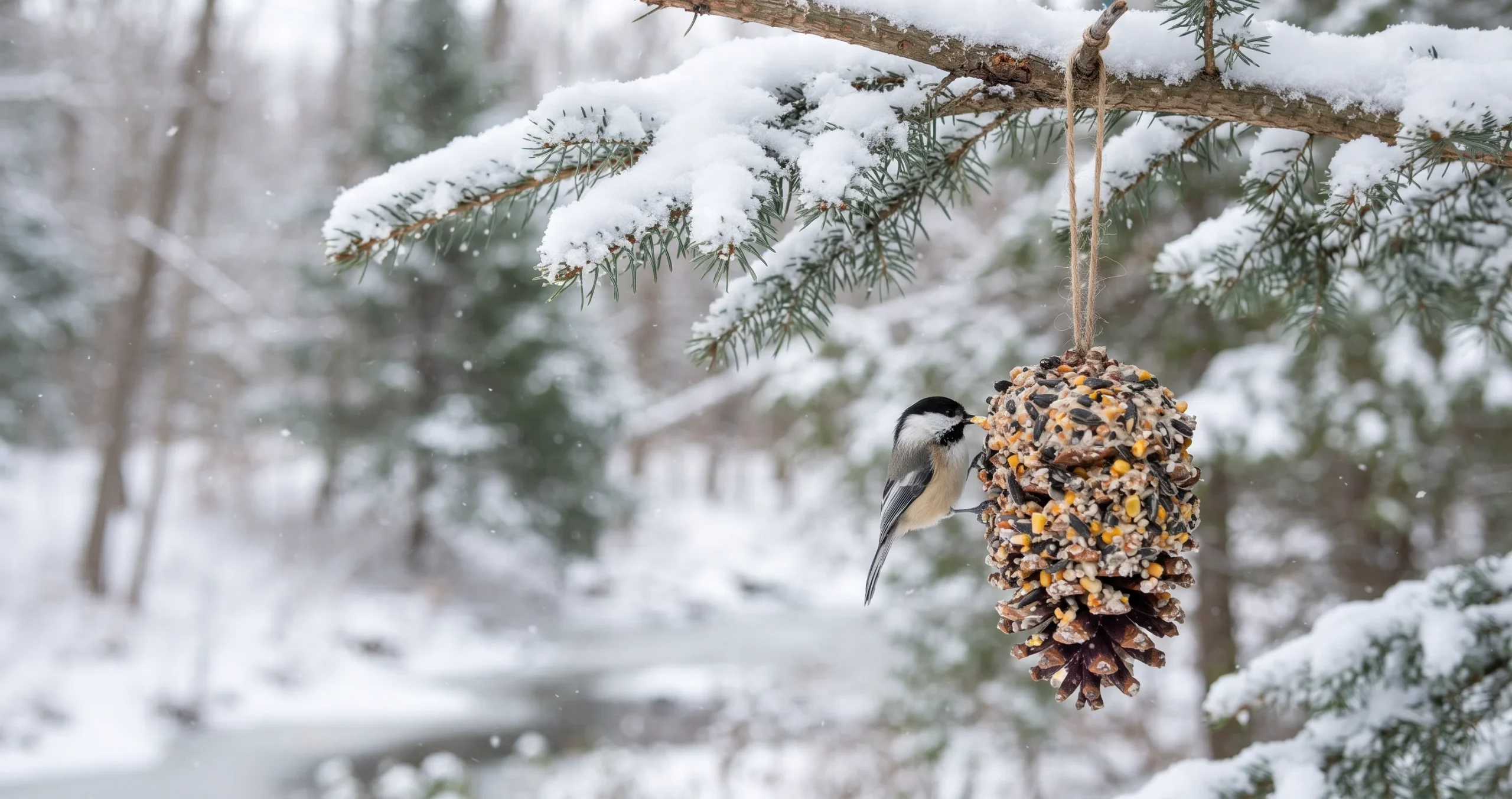
A pinecone hanging from a tree branch may seem like a simple decoration, but with a few bird-friendly ingredients, it can become a useful winter feeding station. Making a pinecone bird feeder is an inexpensive backyard project that brings birds closer while helping you observe their feeding behavior.
During winter, many familiar backyard birds spend much of the day searching for food. Natural seeds, insects, and berries remain important, but a well-maintained feeder can provide an additional source of energy.
This project requires only a natural pinecone, unsalted seed butter, birdseed, and a secure way to hang the finished feeder. The most important details are choosing safe ingredients, placing it thoughtfully, and keeping the feeding area clean.
Table of Contents
- What Is a Pinecone Bird Feeder?
- Materials Needed for a Pinecone Bird Feeder
- How to Make a Pinecone Bird Feeder Step by Step
- Choosing the Best Seeds and Seed Butters
- Where to Hang Your Pinecone Bird Feeder
- Which Birds Will Visit?
- How to Keep Pinecone Feeders Clean
- How Long Does a Pinecone Bird Feeder Last?
- Important Safety Tips
- Winter Bird-Feeding Basics
- Common Mistakes to Avoid
- Frequently Asked Questions
What Is a Pinecone Bird Feeder?
A pinecone bird feeder is a homemade feeding device made by coating a natural pinecone with bird-safe seed butter and pressing seeds into its scales.
The pinecone provides a textured surface that holds food in small spaces. Birds can perch on the cone or nearby branches while picking seeds from the coating.
Unlike a conventional plastic or metal feeder, this project uses a natural object as its main structure.
However, the finished feeder is not completely maintenance-free or automatically safer than other feeding stations. Food can spoil, moisture can accumulate, and feeding birds can leave behind contaminants.
For that reason, a pinecone feeder works best as a temporary, closely monitored feeding activity rather than a permanent fixture.
Why Make One During Winter?
Cold weather increases the energy demands of many small birds, particularly during freezing nights.
Seeds rich in fats can be valuable foods for species adapted to eating them.
A homemade feeder also creates an opportunity to observe which birds use different feeding surfaces and how they interact around food.
Supplemental feeding is optional for most healthy wild bird populations, but responsible feeding can offer an enjoyable connection to backyard wildlife.
Materials Needed for a Pinecone Bird Feeder
You only need a few simple materials.
- One large, natural, untreated pinecone with open scales
- Plain, unsalted peanut butter or another suitable seed butter
- Unsalted birdseed, preferably sunflower seed pieces
- A shallow bowl or plate
- A butter knife or small spatula
- A short length of sturdy natural-fiber twine or suitable hanging cord
- A clean work surface
Choose a pinecone that is firm, dry, and free from visible mold.
Avoid cones treated with paint, glitter, fragrance, preservatives, or decorative chemicals.
If collecting pinecones outdoors, check local collection rules and take only a small number from areas where gathering is permitted.
Choose the Right Size
A medium or large pinecone is generally easier to handle than a very small one.
Open scales provide more space for the seed butter and seeds.
A tightly closed cone may hold less food and can be harder for birds to use.
Do not force the scales apart, because this can break the cone and create sharp fragments.
How to Make a Pinecone Bird Feeder Step by Step
The entire project can usually be completed in a short afternoon.
Step 1: Inspect and Prepare the Pinecone
Examine the pinecone for dirt, insects, damaged scales, and mold.
Brush away loose debris and allow the cone to dry completely if it is damp.
Discard any cone that smells musty or shows signs of fungal growth.
A clean, dry surface helps the coating adhere more evenly.
Step 2: Attach the Hanging Cord
Secure a short length of twine around the upper portion of the pinecone.
Tie it firmly beneath several scales so the cord cannot easily slip off.
Make sure the knot can support the weight of the finished feeder.
Keep the cord short and tidy, without loose loops that could entangle birds or other wildlife.
Check that the cone hangs upright before adding food.
Step 3: Spread the Seed Butter
Use a butter knife or spatula to apply a thin layer of plain seed butter.
Work it gently between the open scales rather than covering the cone with a heavy mass.
A moderate coating is enough to hold seeds.
Avoid large, exposed blobs that may become messy or collect dirt.
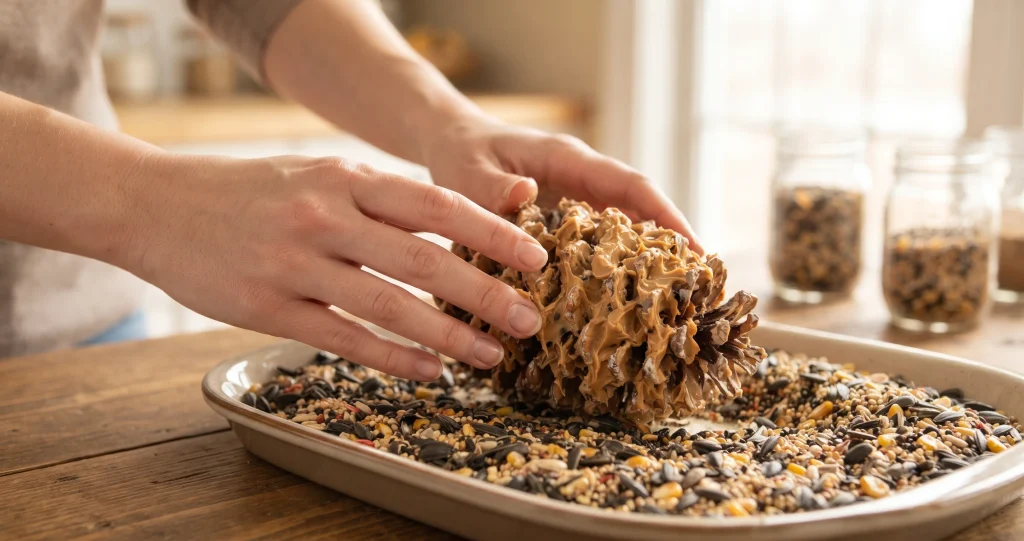
Step 4: Add Birdseed
Pour the selected seeds into a shallow bowl.
Roll the coated pinecone through the seeds, turning it slowly to cover different sides.
Press additional seeds into bare areas with the spatula if necessary.
The finished cone should have seeds distributed across its surface without excessive loose food.
Step 5: Hang the Feeder
Carry the completed feeder outdoors and attach it to a suitable branch or stable support.
Choose a location that allows birds to approach and leave easily.
Avoid placing it directly above a busy walkway or where pets can reach it.
Watch from a distance to see whether birds begin investigating.
Choosing the Best Seeds and Seed Butters
Food selection matters more than decorative appearance.
Birds have different feeding preferences, and ingredients suitable for people are not always appropriate for wildlife.
Black-Oil Sunflower Seeds
Black-oil sunflower seeds are a popular choice for many backyard birds.
Their relatively high fat content makes them useful in cold weather.
For a pinecone project, shelled sunflower pieces are often easier to press into the coating than whole seeds.
Use fresh seeds without added salt or seasoning.
Sunflower Hearts and Chips
Sunflower hearts are sunflower seeds with their outer shells removed.
They create less shell waste beneath the feeder and are convenient for small birds.
Because shelled seeds are exposed, they can spoil more quickly when wet.
Offer modest amounts and replace the feeder promptly if the food becomes damp or contaminated.
Millet and Mixed Birdseed
Small seeds such as millet may attract certain species, although many millet-feeding birds prefer feeding on the ground or flat surfaces.
A seed mix can work, but some inexpensive blends contain ingredients that local birds may ignore.
Choosing a simple mix of fresh, commonly eaten seeds often reduces waste.
Peanut Butter and Other Seed Butters
Plain peanut butter can be used in small amounts as a binder for birdseed.
Choose an unsalted product without added sugar, chocolate, or artificial sweeteners.
Plain sunflower seed butter can be another option if it contains no unsuitable additives.
Avoid using heavily sweetened spreads, flavored nut butters, or products with unknown ingredients.
Where to Hang Your Pinecone Bird Feeder
The location should provide birds with convenient access while reducing avoidable hazards.
Choose a Sheltered Area
However, dense cover immediately beside a feeder may also conceal a stalking cat.
A branch near shrubs or other vegetation can give small birds somewhere to retreat if threatened.
Aim for a balance between nearby escape cover and good visibility around the feeding station.
Consider Window Safety
Bird collisions with windows are a significant hazard around homes.
One widely recommended approach is to place feeders very close to windows, within about 3 feet, or farther away, beyond roughly 30 feet.
At close distances, birds generally cannot build up as much speed before reaching the glass.
These distances are guidelines rather than guarantees. Bird-safe window treatments remain important wherever reflections create collision risks.
Keep Feeders Away From Pets
Hang the feeder beyond the reach of dogs and cats.
Do not allow pets to eat fallen seed butter, seeds, or pieces of twine.
A securely attached feeder also reduces the chance of it falling into an area accessible to animals.
Avoid Unsuitable Locations
Do not hang feeders over ponds, drinking-water containers, or areas where droppings could contaminate food preparation surfaces.
Avoid exposed locations where rain repeatedly soaks the coating.
A sheltered position with good visibility makes monitoring easier.
Which Birds Will Visit?
The birds attracted to a pinecone bird feeder depend on your location, habitat, season, and ingredients.
Not every species can perch comfortably on a hanging pinecone.
Chickadees
Black-capped and Carolina chickadees are familiar visitors to seed feeders in their respective ranges.
They frequently take sunflower seeds and may carry food to nearby cover.
Their quick movements make them entertaining birds to observe.
Titmice
Tufted Titmice and related species may investigate feeders offering sunflower seeds.
They often approach briefly, select food, and move away.
Their use of a pinecone feeder depends partly on how securely it hangs.
Nuthatches
White-breasted and Red-breasted Nuthatches are adapted to moving along tree trunks and branches.
They may investigate seed-covered pinecones, particularly when sunflower pieces are available.
Their climbing behavior can make them especially well suited to textured feeding surfaces.
Woodpeckers
Some woodpeckers consume nuts, seeds, and other energy-rich foods.
Downy Woodpeckers may visit suitable feeders, although they often prefer stable surfaces or specialized suet feeders.
A swinging pinecone may be less attractive than a firmly supported feeder.
Other Visitors
Depending on the region, finches, jays, and other seed-eating birds may show interest.
Squirrels can also investigate the feeder and may remove much of the food.
A pinecone feeder is not a reliable way to exclude squirrels.
How to Keep Pinecone Feeders Clean
Clean feeding practices are essential whenever birds gather around supplemental food.
Unlike a reusable metal or plastic feeder, a coated pinecone is difficult to sanitize thoroughly.
The safest practical approach is to treat it as disposable.
Inspect the Feeder Daily
Look for wet seeds, mold, droppings, unusual odors, and deteriorating food.
Remove the feeder immediately if contamination is visible.
Do not attempt to rescue a moldy feeder by scraping off the affected section.
Fungal growth may extend beyond the areas that are easily visible.
Replace Rather Than Recoat
Avoid repeatedly spreading fresh seed butter over an old, dirty pinecone.
The spaces between the scales can trap food residue and moisture.
Once the feeder is depleted or contaminated, replace it with a clean cone.
Remove all twine before disposing of the used feeder.
Keep the Ground Clean
Seeds and food fragments can accumulate beneath hanging feeders.
Sweep or collect waste regularly, especially where birds gather frequently.
Move feeding locations occasionally if the ground becomes heavily soiled.
If sick or dead birds appear around feeding stations, stop feeding temporarily and follow current guidance from local wildlife or animal-health authorities.
How Long Does a Pinecone Bird Feeder Last?
There is no universal lifespan for a homemade pinecone feeder.
How long it remains usable depends on temperature, precipitation, bird activity, and the ingredients used.
In cool, dry weather, birds may consume the coating before it deteriorates.
During damp or mild conditions, exposed seed butter and shelled seeds may spoil more quickly.
For this reason, the feeder should be checked every day rather than left outdoors for a predetermined number of weeks.
A heavily used feeder might be emptied quickly, while an untouched feeder should still be removed if its food becomes old or wet.
The most reliable rule is to replace it whenever the food is depleted, contaminated, or no longer fresh.
Important Safety Tips
A successful winter feeding project should protect birds as well as attract them.
Avoid Salt and Seasonings
Wild birds should not be offered salted snack mixes, flavored peanut butter, or seasoned seeds.
Use plain ingredients intended for bird feeding whenever possible.
Avoid chocolate, candy coatings, and sweetened spreads.
Prevent Entanglement
Long pieces of string, loose loops, and frayed synthetic fibers can create hazards.
Use a short, secure hanging attachment and inspect it regularly.
Remove damaged cord promptly.
Consider Local Wildlife Risks
In some regions, feeding birds can attract rodents, bears, or other wildlife.
Follow local restrictions and seasonal recommendations.
Where bears are active, bird feeders may need to be removed during periods when bears are searching for food.
Supervise Children
Making a pinecone feeder can be an enjoyable family activity.
Adults should supervise the use of knives, scissors, and hanging materials.
Wash hands after handling pinecones, seed butter, and outdoor feeding equipment.
Winter Bird-Feeding Basics
A pinecone feeder works best as one part of a broader bird-friendly landscape.
Natural habitat remains important throughout the year.
Provide Natural Food Sources
Native trees, shrubs, and seed-producing perennials can supply food and shelter without requiring daily refilling.
Leaving some seed heads standing through winter may benefit seed-eating birds.
Fallen leaves and natural garden debris can also support insects and other organisms that birds use as food.
For a related example of how wildlife uses woody plants, read Winter Desiccation in Evergreens to learn how evergreen foliage survives winter conditions and contributes to year-round garden structure.
Offer Fresh Water Safely
Birds need water during winter as well as summer.
A shallow, clean birdbath may be useful where natural water sources freeze.
Use a purpose-built birdbath heater if needed, following its safety instructions.
Never add salt, antifreeze, or other chemicals to prevent freezing.
Maintain Regular Feeders
Reusable feeders should be cleaned and disinfected according to current bird-health recommendations.
Dry them thoroughly before refilling.
Discard damp or moldy seed and avoid allowing large amounts of waste to collect beneath feeding stations.
Observe Without Disturbing
Watch visiting birds from indoors or a comfortable distance.
Avoid sudden movements near the feeder.
If predators repeatedly target the feeding station, consider moving or temporarily removing it.
The goal is to provide a safe supplemental food source, not to concentrate birds in a hazardous location.
Common Mistakes to Avoid
One common mistake is using decorative pinecones that have been sprayed, painted, or treated with fragrance.
Another is applying too much seed butter, creating a heavy coating that collects debris.
Using salted seeds or sweetened spreads also introduces unnecessary risks.
Poor placement can expose birds to window collisions, stalking pets, or unstable hanging supports.
Finally, leaving a wet or moldy feeder outdoors for too long can create health hazards.
A simple project remains beneficial only when the ingredients, placement, and maintenance are handled responsibly.
Frequently Asked Questions
Can birds safely eat peanut butter?
Plain, unsalted peanut butter can be used in small amounts as part of a seed-coated feeder. Avoid added sugar, chocolate, xylitol, and other unsuitable ingredients. Keep the feeder clean and remove spoiled food promptly.
Can I use any pinecone?
Choose a natural, untreated pinecone that is dry and free from mold. Avoid decorative cones coated with paint, glitter, fragrance, or chemical preservatives.
Should I hang a pinecone feeder in the rain?
A sheltered location is preferable. Rain can soak seeds and seed butter, increasing the risk of spoilage. Remove the feeder if its contents become persistently wet.
Do pinecone feeders attract squirrels?
Yes. Squirrels may be attracted to seeds and nut butter. A pinecone feeder is not squirrel-proof, so place it thoughtfully and avoid locations where squirrels can easily damage nearby property.
Can I reuse the same pinecone?
It is better to replace a used pinecone than repeatedly recoat it. Food residue and contaminants can remain trapped between the scales, making thorough cleaning difficult.
Conclusion
Making a pinecone bird feeder is a simple way to combine a winter craft with backyard birdwatching.
A natural pinecone, plain unsalted seed butter, and fresh sunflower seeds are enough to create a temporary feeding station that some familiar backyard birds may visit.
The most important steps are selecting safe ingredients, securing the feeder properly, choosing a suitable location, and replacing it before food spoils.
With careful maintenance, this small project can offer an enjoyable opportunity to observe winter birds while supporting responsible wildlife-friendly gardening.
External Sources
1. Research-based guidance on feeding wild birds, selecting food, and observing backyard visitors. Cornell Lab of Ornithology. Project FeederWatch
2. Bird conservation information, backyard bird habitat advice, and educational resources on feeding birds responsibly. National Audubon Society
3. Species identification, feeding preferences, natural history, and information about common feeder visitors. Cornell Lab of Ornithology . All About Birds