
Introduction
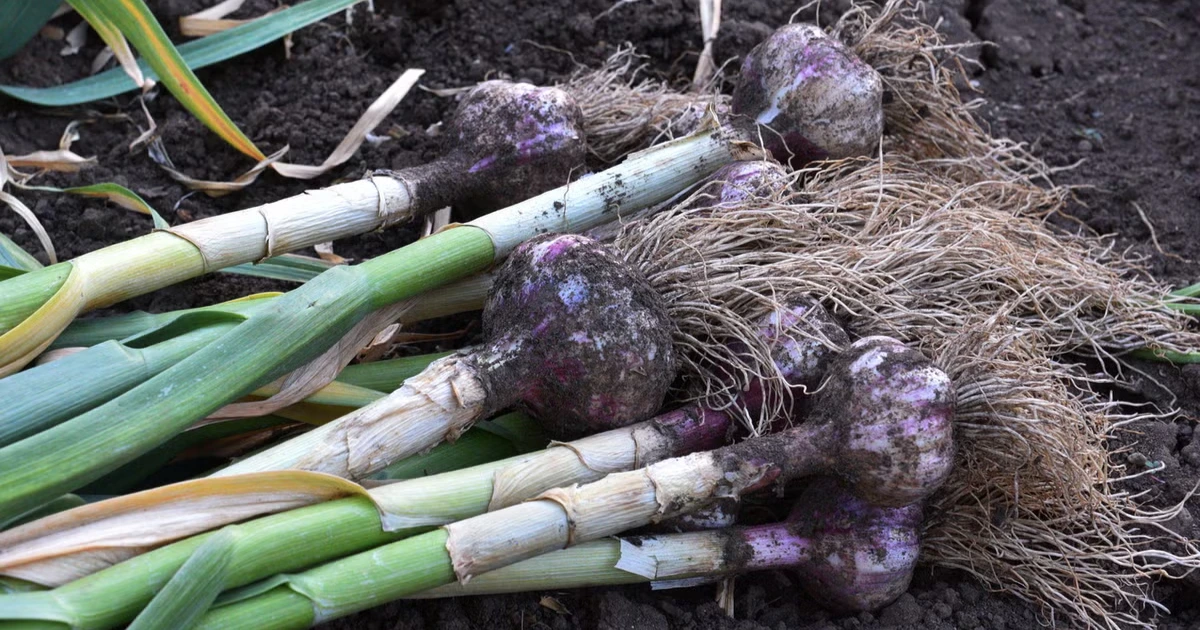
Growing garlic is one of the most rewarding projects in the vegetable garden. It requires relatively little maintenance, stores well after harvest, and produces bulbs that often surpass supermarket garlic in both flavor and size. Yet despite months of careful cultivation, many gardeners make one critical mistake at the finish line—they harvest at the wrong time.
Pull garlic too early, and the bulbs remain small with underdeveloped cloves. Wait too long, and the protective wrappers begin to split, exposing the cloves and reducing storage life. The difference between an excellent harvest and a disappointing one often comes down to recognizing the plant’s natural signals.
Many gardeners watch the wrong part of the plant. They focus on the flower stalk, assume all the leaves should die back completely, or simply harvest according to the calendar. In reality, garlic tells you exactly when it is ready—but the message comes from the leaves.
Learning to read those leaves is one of the most valuable skills a garlic grower can develop.
Why Harvest Timing Matters
Unlike many vegetables that can remain in the garden after reaching maturity, garlic has a relatively narrow harvest window.
Harvesting at the correct stage helps ensure:
- Large, fully developed bulbs.
- Well-formed cloves.
- Strong protective wrappers.
- Better storage life.
- Reduced risk of disease.
- Easier curing.
Even a delay of one or two weeks can noticeably affect bulb quality, depending on weather conditions and the garlic variety.
Understanding How Garlic Grows
Garlic follows a predictable annual cycle.
After planting—usually in autumn in many temperate climates—the cloves develop roots before winter dormancy.
In spring, new leaves emerge rapidly.
As daylight increases and temperatures rise, the plant begins directing energy toward bulb formation underground.
Each green leaf corresponds to one protective wrapper surrounding the bulb.
This relationship becomes extremely important when deciding when to harvest.
The Signal Hidden in the Leaves
Many gardeners expect garlic to behave like onions, waiting until the entire plant collapses before harvesting.
Garlic works differently.
The leaves naturally die from the bottom upward.
Each time a leaf dies, the corresponding bulb wrapper also begins to deteriorate.
If too many leaves die before harvest, fewer wrappers remain to protect the cloves during storage.
For most hardneck and softneck garlic varieties, the ideal harvest window generally occurs when:
- The lower leaves have turned brown.
- The upper leaves remain green.
- About one-third to one-half of the leaves have died back.
This typically means approximately five or six healthy green leaves remain, although the exact number varies depending on the variety and the total number of leaves produced.
Why Green Leaves Matter
Every green leaf still attached to the plant usually represents an intact wrapper protecting the bulb.
These wrappers serve several important purposes.
They help:
- Protect individual cloves.
- Reduce moisture loss.
- Prevent disease.
- Improve long-term storage.
- Keep bulbs attractive after curing.
Waiting until nearly all the leaves have died often results in bulbs with missing or damaged outer wrappers.
What Happens If You Harvest Too Early?
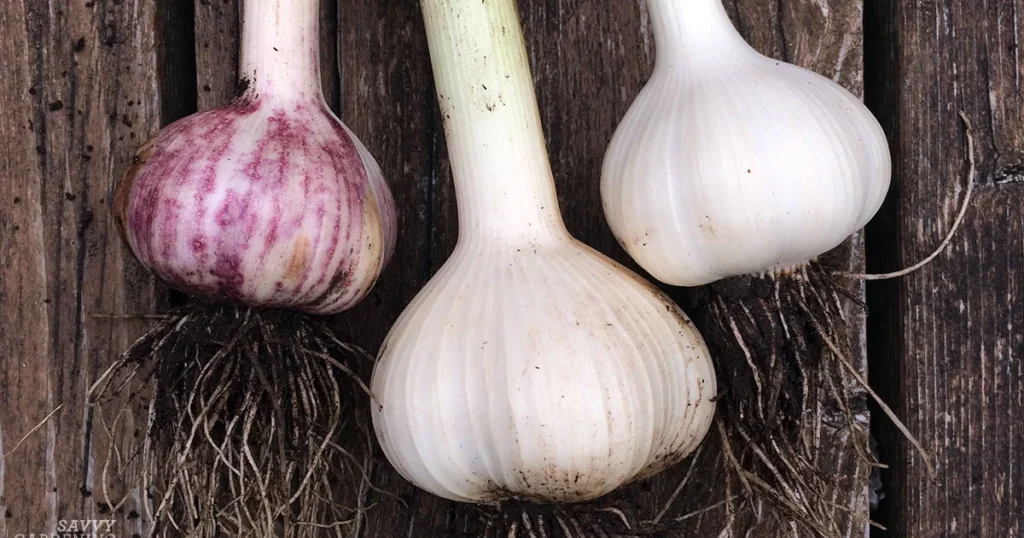
Early harvesting prevents bulbs from reaching their full potential.
Common consequences include:
- Smaller bulbs.
- Less developed cloves.
- Reduced yields.
- Lower overall storage potential.
However, slightly early garlic generally stores better than garlic harvested far too late.
Young garlic harvested before maturity is often called “green garlic.”
It resembles a large spring onion and can be eaten fresh rather than cured.
What Happens If You Harvest Too Late?
Late harvesting creates different problems.
As the outer wrappers decay, bulbs become exposed.
The cloves may begin separating from one another.
Late harvesting can lead to:
- Split bulbs.
- Exposed cloves.
- Reduced storage life.
- Greater risk of fungal diseases.
- Increased damage during lifting.
Once the wrappers split, the garlic remains edible but usually stores less successfully.
Hardneck vs. Softneck Garlic
Harvest timing follows similar principles for both major garlic types.
Hardneck Garlic
Hardneck varieties produce a flowering stem known as a scape.
Removing the scape shortly after it curls is widely believed to allow the plant to direct more energy toward bulb development.
However, the appearance or removal of the scape is not the harvest signal.
The leaves remain the most reliable indicator.
Softneck Garlic
Softneck garlic usually does not produce a flowering stalk.
Because no scape develops, gardeners should rely entirely on leaf condition to determine harvest readiness.
Softneck varieties often store longer than hardneck garlic under suitable conditions.
Does Climate Affect Harvest Time?
Yes.
Harvest dates vary considerably depending on location.
In many regions:
- Warm climates may harvest during late spring or early summer.
- Cooler climates often harvest in midsummer.
Rather than relying on a calendar date, observe the condition of the leaves each season.
Weather patterns influence maturity more than the calendar itself.
How to Check Bulb Development
If you are uncertain, gently uncover the soil around one bulb.
Inspect its size without fully removing it.
Look for:
- Well-developed shoulders.
- Firm bulb formation.
- Intact wrappers.
If the bulb appears undersized, allow additional time while continuing to monitor leaf condition.
Avoid repeatedly disturbing multiple plants, as this may damage roots.
The Best Weather for Harvesting
Choose a dry day whenever possible.
Dry conditions reduce:
- Mud sticking to bulbs.
- Damage during lifting.
- Risk of fungal infection.
- Drying time after harvest.
Avoid harvesting immediately after heavy rain.
How to Harvest Garlic Properly
Never pull garlic directly by the leaves.
Instead:
- Loosen the soil using a garden fork or spade.
- Lift the bulb gently.
- Shake off loose soil.
- Leave roots and leaves attached.
- Avoid bruising the bulbs.
Damaged garlic generally stores less successfully.
Why Curing Is Essential
Freshly harvested garlic contains significant moisture.
Curing allows:
- Outer wrappers to dry.
- Neck tissue to seal.
- Flavor to develop.
- Storage life to increase.
Most gardeners cure garlic by hanging whole plants or laying them on racks in a warm, dry, well-ventilated area away from direct sunlight for approximately two to four weeks.
Once fully cured:
- Trim the roots.
- Cut the stems (or braid softneck garlic).
- Store bulbs in a cool, dry, well-ventilated location.
Storage Tips
Properly cured garlic stores surprisingly well.
Ideal conditions include:
- Good airflow.
- Moderate humidity.
- Cool temperatures.
- Darkness.
Avoid storing garlic in sealed plastic bags or refrigerators for long-term storage, as excess moisture may encourage mold or sprouting.
Storage life depends on the variety, curing quality, and storage conditions.
Common Mistakes
Waiting Until Every Leaf Is Brown
By then, many protective wrappers may already have deteriorated.
Pulling Instead of Digging
This can tear stems away from bulbs and damage cloves.
Harvesting Immediately After Rain
Wet bulbs require longer drying and may be more prone to disease.
Washing Bulbs
Excess water slows curing.
Brush away loose soil instead.
Skipping the Curing Process
Fresh garlic rarely stores well without proper curing.
Practical Tips
- Watch the leaves rather than the calendar.
- Harvest when roughly one-third to one-half of the leaves have browned.
- Dig bulbs carefully instead of pulling them.
- Cure garlic in a shaded, well-ventilated location.
- Save the healthiest bulbs for planting next season.
- Label different varieties during curing.
Frequently Asked Questions
How do I know when garlic is ready to harvest?
The most reliable indicator is the leaves. Harvest when the lower leaves have turned brown while several upper leaves remain green, leaving enough healthy wrappers around the bulb.
Should I wait until all the leaves die?
No. Waiting too long often reduces the number of protective wrappers and shortens storage life.
Can I eat garlic immediately after harvest?
Yes. Fresh garlic is edible immediately, but curing improves storage life and often enhances flavor.
What happens if my garlic bulb splits?
Split bulbs remain edible but usually store for a shorter period because the exposed cloves lose their protective covering.
Should I remove garlic scapes?
For hardneck varieties, many gardeners remove scapes soon after they curl to encourage larger bulbs. The scape itself is edible and popular in stir-fries, pestos, and other dishes.
Conclusion
Garlic does not keep its harvest date a secret—it announces it through its leaves. The challenge is knowing which signals matter. While calendars, flowering stalks, and bulb size all provide useful clues, the gradual browning of the leaves offers the clearest guide to perfect harvest timing.
By lifting bulbs while several healthy green leaves remain, gardeners preserve the protective wrappers that give garlic its excellent storage potential. Combined with careful digging and thorough curing, this simple observation can mean the difference between bulbs that last only a few weeks and a harvest that remains in excellent condition for months.
Like many aspects of gardening, success comes from watching the plant itself rather than the calendar. Garlic has been refining its timing for thousands of years—the leaves simply invite us to pay attention.
SEO Package
SEO Title: When to Harvest Garlic: The Leaf Signal Most Gardeners Miss
Meta Description: Learn exactly when to harvest garlic by reading its leaves, avoid common mistakes, and maximize bulb size, flavor, and long-term storage.
Focus Keyword: when to harvest garlic
Related Keywords:
- garlic harvest
- garlic curing
- hardneck garlic
- softneck garlic
- garlic growing
- garlic storage
- harvesting garlic bulbs
- garlic scapes
- vegetable gardening
URL Slug: when-to-harvest-garlic
Suggested Category: Cultivation & Soil Preparation
Suggested Tags: Garlic, Vegetable Gardening, Harvesting, Garlic Growing, Kitchen Garden, Garden Tips, Food Gardening, Organic Gardening
Internal Linking
Learn how proper August feeding supports healthier vegetable crops:
https://secretsofthegreengarden.com/august-garden-feeding/
Discover why protecting bare soil improves next season’s harvests:
https://secretsofthegreengarden.com/why-not-leave-bare-soil-winter/
Build an organized workspace for seed starting and transplanting:
https://secretsofthegreengarden.com/potting-bench-guide/
Propagate herbs and other garden plants for free:
https://secretsofthegreengarden.com/propagation-from-cuttings/
Recommended External Sources
- Royal Horticultural Society (RHS): https://www.rhs.org.uk
- University of Minnesota Extension: https://extension.umn.edu
- Oregon State University Extension Service: https://extension.oregonstate.edu