
Table of Contents
- Introduction
- What Makes Sea Otter Tool Use So Extraordinary?
- How Sea Otters Use and Keep Their Favorite Tools
- The Remarkable “Armpit Pouch” Anatomy
- Why Tool Use Is Rare Among Marine Mammals
- How Young Sea Otters Learn Tool Skills
- Sea Otters as Keystone Species Protecting Kelp Forests
- What Happens When Sea Otters Disappear?
- Common Myths About Sea Otter Tool Use
- Frequently Asked Questions
- Conclusion
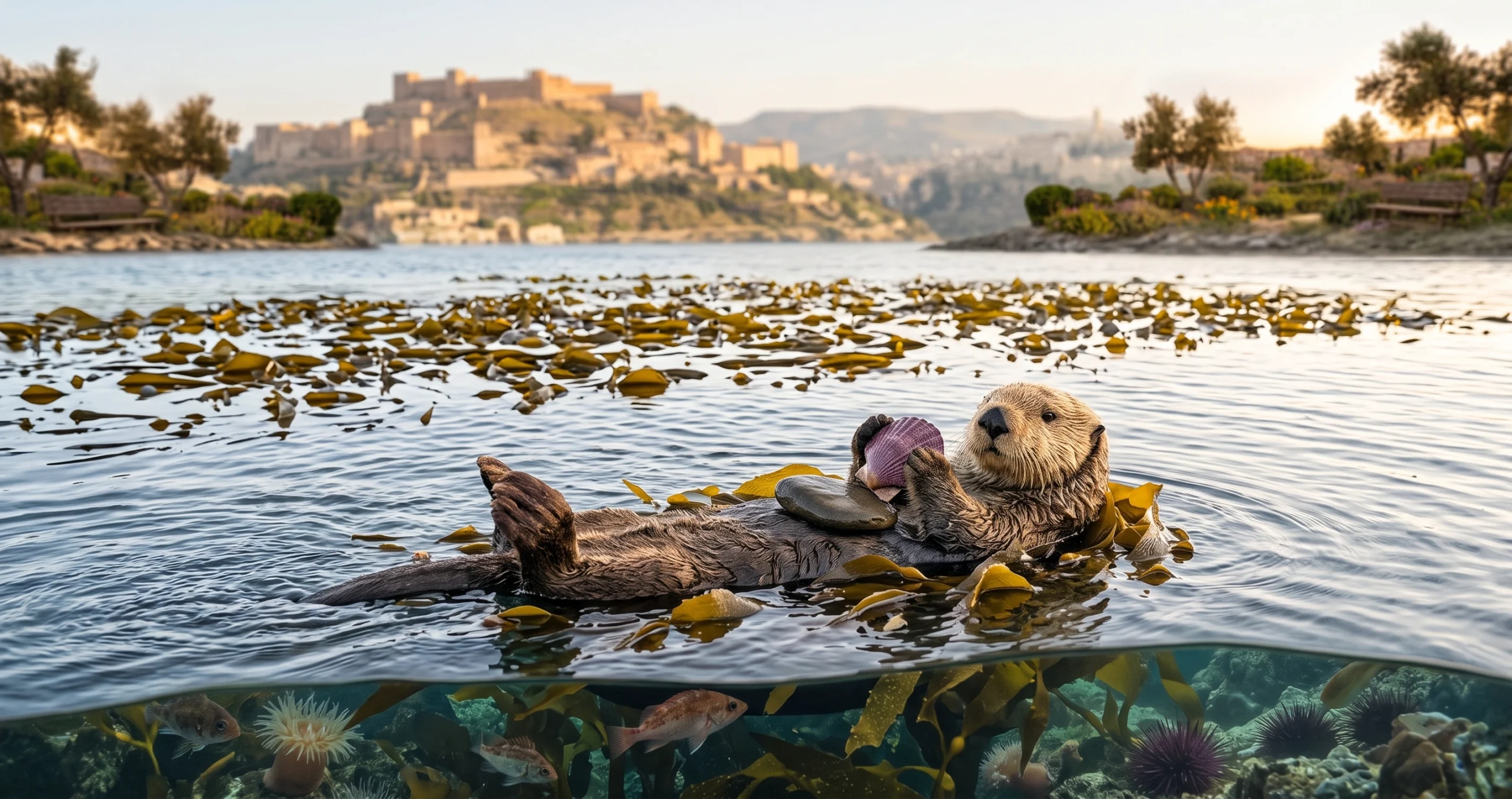
One of the most fascinating examples of sea otter tool use comes from a simple rock. While many animals occasionally use objects to solve problems, sea otters do something even more remarkable—they often keep favorite tools for years, carrying them everywhere they go in a built-in storage pouch beneath their forelimbs. Scientists have documented individuals repeatedly using the same stones to crack open shellfish thousands of times over their lifetimes.
This behavior places sea otters among a very small group of mammals known to use and retain tools. Their ability to select, transport, and repeatedly use specific rocks demonstrates impressive problem-solving skills while supporting one of the most important ecological roles in the Pacific Ocean. Beyond being clever animals, sea otters are keystone species whose feeding habits help protect vast underwater kelp forests that support hundreds of marine organisms.
Understanding how sea otters use tools reveals not only an extraordinary adaptation but also why conserving these charismatic marine mammals benefits entire coastal ecosystems.
If you enjoy learning about remarkable wildlife adaptations, you may also like our article on how hummingbirds survive the night using torpor and fly backward here on secretsofthegreengarden.com.
What Makes Sea Otter Tool Use So Extraordinary?
Tool use has evolved independently in only a relatively small number of animal groups.
Chimpanzees use sticks to collect termites.
New Caledonian crows shape hooks from twigs.
Octopuses have been observed carrying coconut shells for shelter.
Sea otters stand apart because they are among the very few marine mammals that regularly use handheld tools while feeding.
Instead of relying entirely on powerful jaws or specialized teeth, sea otters frequently pick up rocks from the seafloor to crack open hard-shelled prey.
Clams, mussels, abalones, crabs, snails, and sea urchins often require considerable force to open.
Rather than wasting energy attempting to crush these prey items directly, otters use carefully selected stones as portable hammers or anvils.
Researchers have observed many individuals showing strong preferences for rocks of particular sizes and shapes, suggesting they recognize which tools perform best for specific foods.
How Sea Otters Use and Keep Their Favorite Tools
Sea Otter Tool Use Involves Long-Term Tool Retention
Perhaps the most remarkable aspect of sea otter tool use is not simply using rocks—but keeping them.
Unlike many animals that discard tools after each use, sea otters often store favored stones beneath their forelimbs and retrieve them repeatedly over months or even years.
Researchers studying wild populations have documented individuals returning to the same preferred tools again and again.
Some rocks become visibly worn after years of repeated impacts against shells.
This suggests individual otters develop long-term relationships with particular tools rather than selecting random objects every time they feed.
The Monterey Bay Aquarium has documented numerous examples of sea otters repeatedly using preferred stones while foraging:
https://www.montereybayaquarium.org/
A Typical Feeding Sequence
A sea otter typically dives to the seafloor searching for prey.
Using sensitive forepaws, it locates shellfish hidden among rocks or buried in sediment.
If necessary, the otter also selects an appropriate stone.
Returning to the surface, it floats comfortably on its back.
The shellfish rests on its chest while the rock becomes either a hammer or an anvil.
Repeated strikes quickly break the shell, allowing the otter to consume the soft tissue inside.
After finishing the meal, many otters simply return the tool to their storage pouch before diving again.
This efficient routine may be repeated dozens of times each day.
The Remarkable “Armpit Pouch” Anatomy
Sea otters possess one of the most unusual anatomical features found in marine mammals.
Loose folds of skin extend beneath each forelimb, forming natural pockets often referred to as “armpit pouches.”
These pouches serve multiple purposes.
They safely store collected prey during dives.
They also provide convenient storage for favorite rocks.
Because sea otters lack thick blubber like seals and whales, they rely instead on extremely dense fur for insulation.
The loose skin surrounding the forelimbs accommodates this specialized storage system without interfering with swimming.
Few other marine mammals possess anything comparable.
The pouch essentially functions as a waterproof backpack permanently built into the animal’s body.
Why Tool Use Is Rare Among Marine Mammals
Most marine mammals evolved very different feeding strategies.
Baleen whales filter enormous quantities of plankton.
Dolphins capture fish using speed and coordination.
Seals rely on strong jaws and sharp teeth.
Walruses use suction feeding.
Because these methods already efficiently exploit available food, tool use offers little additional advantage.
Sea otters occupy a unique ecological niche.
Their prey often consists of heavily armored invertebrates attached firmly to rocks or protected by thick shells.
Using tools dramatically reduces the effort required to access these nutritious foods.
Additionally, sea otters possess unusually dexterous forepaws.
Their sensitive fingers manipulate objects with remarkable precision, making repeated tool handling possible.
Combined with flexible shoulders and excellent coordination, these anatomical traits create ideal conditions for tool use.
How Young Sea Otters Learn Tool Skills
Tool use is not entirely instinctive.
Young sea otters spend months closely observing their mothers.
During this period, pups learn which prey are edible, where to find them, and how to handle rocks effectively.
Scientists believe much of this knowledge spreads through social learning rather than genetics alone.
Some populations show regional differences in prey preferences and tool techniques, suggesting local traditions can develop.
This cultural transmission resembles patterns observed in chimpanzees, dolphins, and certain bird species.
Juveniles initially struggle to manipulate rocks efficiently.
Practice gradually improves coordination until feeding becomes highly efficient.
Sea Otters as Keystone Species Protecting Kelp Forests
Sea otters do far more than impress scientists with clever tool use.
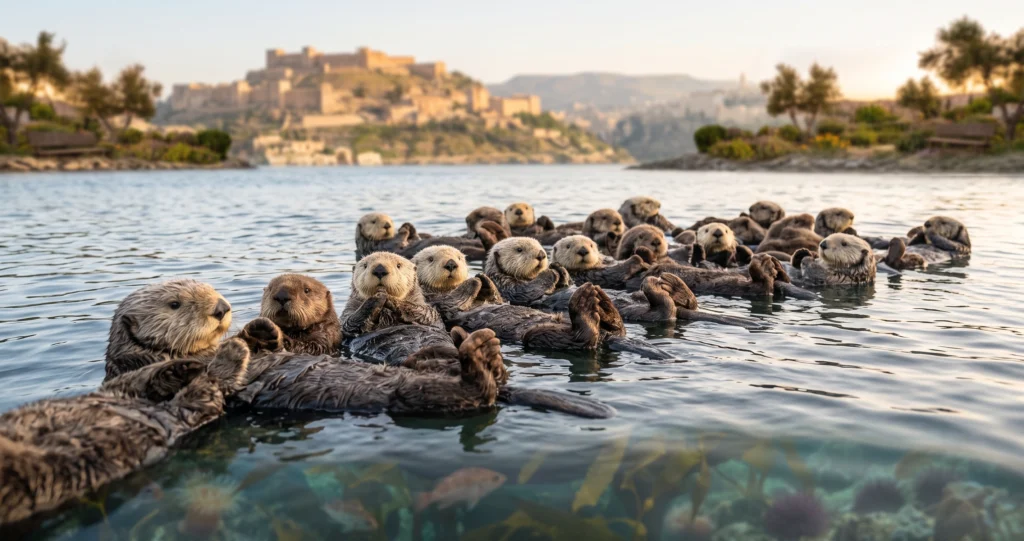
They are among the Pacific Ocean’s most important keystone species.
Keystone species exert ecological influence far greater than their population size would suggest.
One of the sea otter’s favorite foods is the sea urchin.
Sea urchins feed aggressively on kelp holdfasts—the structures anchoring giant kelp to the seafloor.
Without predators, sea urchin populations can explode.
Large numbers of hungry urchins create “urchin barrens,” underwater landscapes stripped almost entirely of kelp.
When sea otters remain abundant, they keep sea urchin populations under control.
Healthy kelp forests continue growing, providing food and shelter for fish, crabs, seabirds, marine invertebrates, and countless other species.
Kelp forests also capture carbon, reduce coastal erosion, and support valuable fisheries.
By simply eating their preferred prey, sea otters indirectly protect entire ecosystems.
What Happens When Sea Otters Disappear?
Historical fur hunting dramatically reduced sea otter populations during the 18th and 19th centuries.
In many regions, kelp forests subsequently declined as sea urchin numbers increased.
Modern ecological studies have repeatedly confirmed this relationship.
Areas where sea otters recover often experience healthier kelp forests within years.
These improvements ripple throughout the ecosystem.
Fish populations increase.
Marine biodiversity expands.
Commercial fisheries may benefit from healthier habitats.
This cascading influence demonstrates why sea otters remain one of ecology’s textbook examples of a keystone species.
Common Myths About Sea Otter Tool Use
Myth 1: Every sea otter uses tools.
Reality:
Although common in many populations, not every individual regularly uses tools. Feeding techniques vary depending on prey availability and local conditions.
Myth 2: Sea otters use any rock they find.
Reality:
Many individuals show clear preferences for rocks with suitable size, weight, and shape, often reusing favorite tools repeatedly.
Myth 3: Tool use makes sea otters unique among all mammals.
Reality:
Several mammals—including chimpanzees and some primates—also use tools. However, sea otters are among the very few marine mammals known for consistent handheld tool use.
Myth 4: Their armpit pouches exist only for carrying rocks.
Reality:
The pouches store both food and tools collected during dives.
Myth 5: Sea otters only matter because they are cute.
Reality:
Their ecological importance extends far beyond public appeal. By controlling sea urchin populations, they help maintain healthy kelp forests that support hundreds of other species.
Why Sea Otter Tool Use Fascinates Scientists
Researchers continue studying sea otters because their behavior raises important questions about intelligence, learning, and evolution.
Long-term tool retention suggests planning beyond immediate needs.
Repeated use of preferred objects may reflect memory, individual preferences, and experience.
Scientists also investigate whether different sea otter populations develop distinct foraging traditions passed from one generation to the next.
These discoveries contribute to broader understanding of animal cognition and the evolution of culture in non-human species.
Frequently Asked Questions
Do sea otters really keep the same rock for years?
Researchers have documented individuals repeatedly using favored stones over extended periods, with some tools showing heavy wear from thousands of shell-cracking impacts.
Where do sea otters store their tools?
They carry them inside loose skin pouches located beneath each forelimb, commonly called armpit pouches.
Why don’t other marine mammals use tools?
Most marine mammals evolved feeding strategies that do not require external objects, whereas sea otters specialize in hard-shelled prey that benefit from tool use.
Why are sea otters considered keystone species?
By controlling sea urchin populations, they protect kelp forests that support diverse marine ecosystems.
Are sea otter populations fully recovered?
Many populations have recovered substantially since historical fur hunting, but some remain threatened by oil spills, disease, fisheries interactions, habitat changes, and climate-related challenges.
Conclusion
The remarkable phenomenon of sea otter tool use illustrates that sophisticated behavior is not limited to primates or birds. Sea otters not only select and use stones to crack open shellfish but often retain favorite tools for years, carrying them in specialized armpit pouches uniquely adapted for storing both food and equipment.
Beyond showcasing remarkable intelligence, these marine mammals play an essential ecological role as keystone species. By regulating sea urchin populations, they preserve healthy kelp forests that sustain countless marine organisms and provide valuable environmental benefits. Protecting sea otters therefore means protecting entire coastal ecosystems, making them one of the most important—and fascinating—animals in the world’s oceans.
2 Internal Link Suggestions:
- https://secretsofthegreengarden.com/how-hummingbirds-survive-the-night-using-torpor-and-fly-backwards/
- https://secretsofthegreengarden.com/why-peregrine-falcons-are-the-fastest-animal-on-earth/
3 External Dofollow Authoritative Sources:
- Monterey Bay Aquarium – Sea Otters: https://www.montereybayaquarium.org/
- Smithsonian’s National Zoo – Sea Otter: https://nationalzoo.si.edu/animals/sea-otter
- IUCN Red List – Sea Otter: https://www.iucnredlist.org/