
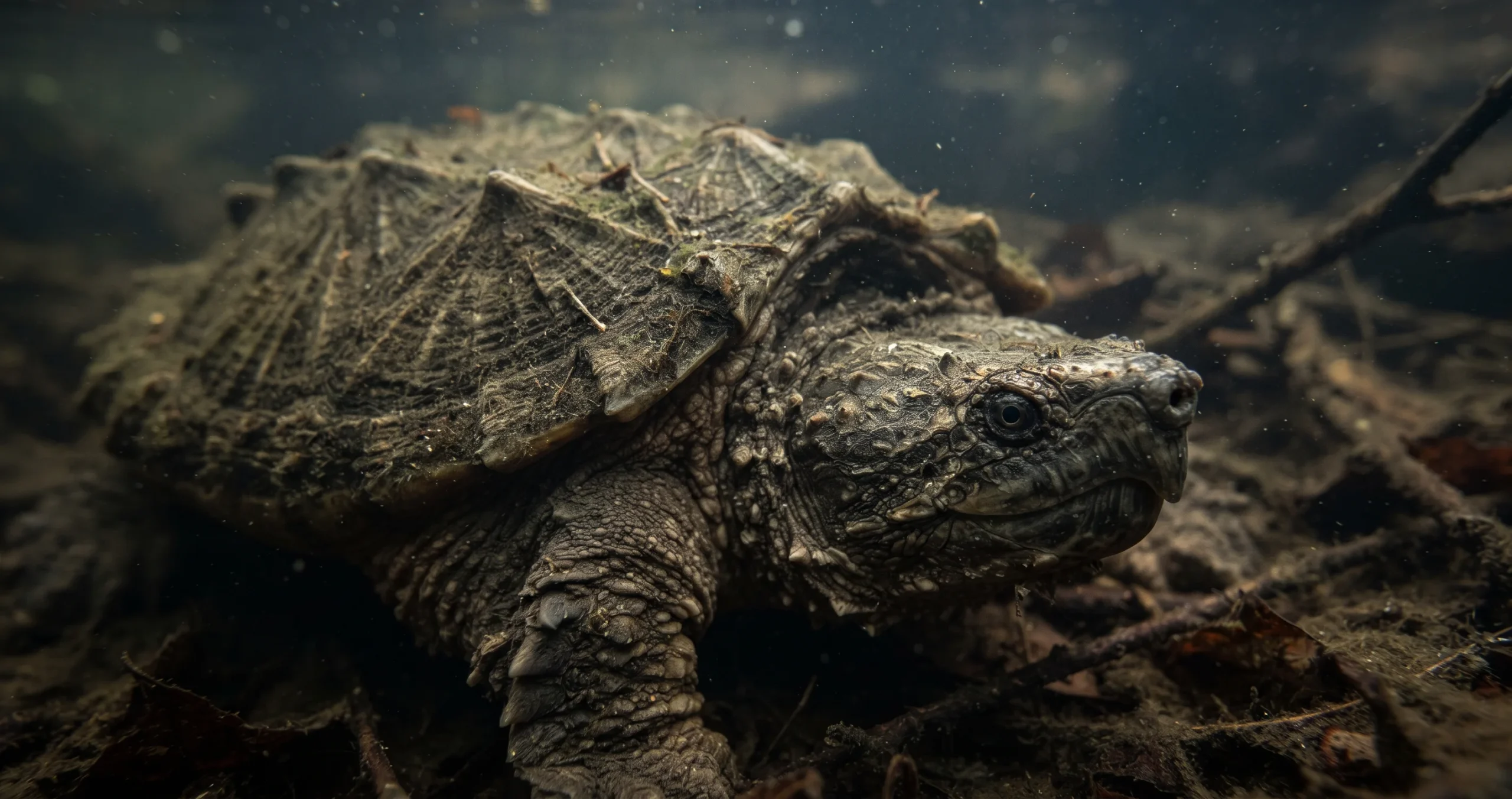
Imagine looking into a muddy Southern river and seeing what appears to be a tiny pink worm wriggling inside a dark underwater cave. A curious fish swims closer, unaware that the cave is actually the open mouth of one of North America’s most remarkable freshwater predators.
That predator is the alligator snapping turtle, a massive, prehistoric-looking reptile with a rugged shell, powerful jaws, and an extraordinary hunting adaptation: a worm-like lure attached to its tongue.
Unlike many predators that actively chase their meals, this turtle often relies on patience. It can remain nearly motionless underwater, waiting for prey to approach. Its unusual appearance and hunting behavior have made it one of the most fascinating animals in the southeastern United States.
But there is much more to this turtle than its intimidating appearance. Behind those formidable jaws is a specialized freshwater animal that plays a role in river ecosystems and faces growing conservation challenges.
- Meet the Alligator Snapping Turtle
- How the Alligator Snapping Turtle Uses Its Tongue to Hunt
- Alligator Snapping Turtle vs. Common Snapping Turtle
- Where Alligator Snapping Turtles Live
- Life Cycle: From Riverbank Nest to Giant Turtle
- Are Alligator Snapping Turtles Dangerous?
- Why Alligator Snapping Turtles Need Protection
- In Your Own Yard: Helping Freshwater Wildlife
- Frequently Asked Questions
Meet the Alligator Snapping Turtle
The alligator snapping turtle (Macrochelys temminckii) is among the largest freshwater turtles in North America. It belongs to the family Chelydridae, which also includes the more familiar common snapping turtle.
Its native range is associated with river systems draining toward the Gulf of Mexico, particularly in the southeastern United States. It favors freshwater environments where submerged logs, muddy bottoms, and underwater structure provide places to shelter and hunt.
A Shell That Looks Like Ancient Armor
One of the first things people notice about an alligator snapping turtle is its heavily textured shell.
Three prominent ridges run along the upper shell, giving it a rough, almost dinosaur-like appearance. Its large head, hooked beak, thick limbs, and long tail complete the prehistoric impression.
The shell’s dark brown or grayish coloring can help the turtle blend into murky water and submerged debris. Algae may also grow on its shell, making a resting animal even less conspicuous.
Despite its dramatic appearance, this turtle is not a living dinosaur. It is a modern reptile with a long evolutionary history and adaptations suited to its aquatic lifestyle.
Just How Big Can It Get?
Adult males are generally much larger than females. Particularly large males can exceed 150 pounds, although body size varies considerably with age, sex, and individual circumstances.
Exceptional historical weight claims should be treated cautiously because some are poorly documented or involve captive animals.
Females are typically smaller, but even a mature female is a substantial freshwater turtle.
Unlike small pond turtles that may fit comfortably in someone’s hands, an adult alligator snapping turtle is a heavy, powerful animal that should never be casually handled.
How the Alligator Snapping Turtle Uses Its Tongue to Hunt
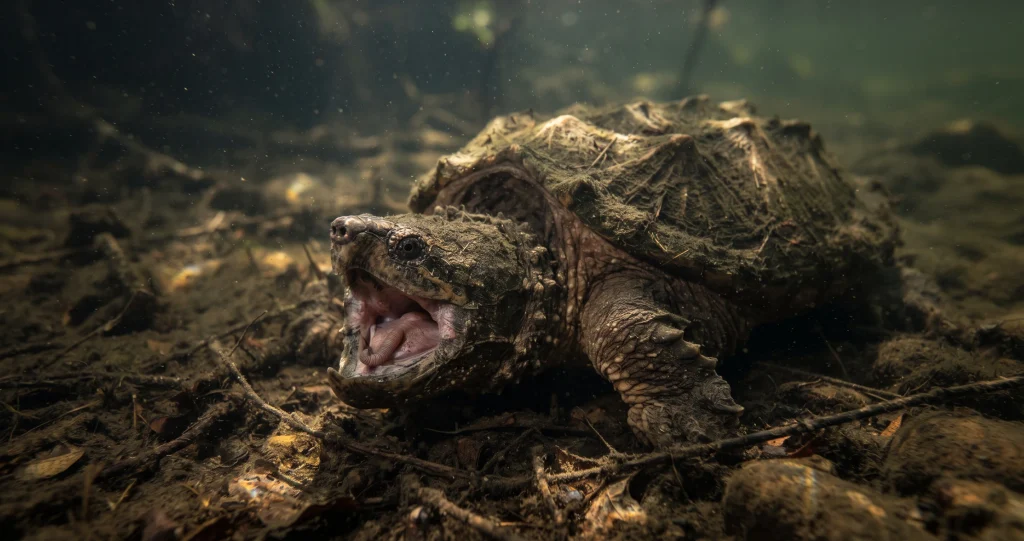
The most remarkable feature of the alligator snapping turtle is hidden inside its mouth.
On the floor of its mouth is a small, fleshy projection known as a vermiform appendage. The word vermiform means worm-shaped, which describes its appearance.
This structure acts as a lure, helping the turtle attract prey without actively pursuing it.
Step 1: Find the Perfect Ambush Spot
An alligator snapping turtle often settles into a quiet underwater location, sometimes among submerged branches, roots, or other natural cover.
Its dark coloration and irregular shell help it blend into the surrounding environment.
Instead of constantly swimming after prey, the turtle may remain still for extended periods. This behavior allows it to conserve energy while taking advantage of animals that move nearby.
The strategy is especially useful in habitats where visibility is limited.
Step 2: Open the Mouth and Move the Lure
Once positioned, the turtle opens its mouth and moves the small pink appendage on its tongue.
Against the darker interior of the mouth, the lure can resemble a tiny worm or another edible aquatic creature.
A fish investigating the movement may approach closely enough to enter the turtle’s striking range.
This is an example of aggressive mimicry: a predator uses a signal resembling something attractive to prey.
The turtle is not using a real worm. The moving lure is part of its own anatomy.
Step 3: Wait for the Fish to Approach
The turtle’s success depends on timing and proximity.
Rather than launching into a long chase, it waits for an opportunity when prey is close enough to capture.
Its broad head and powerful jaw muscles help it seize prey rapidly.
The sudden closing of its jaws can surprise a fish that has been investigating the apparently harmless movement inside the mouth.
Not every hunting attempt succeeds, and the lure is not necessarily used for every meal.
Step 4: Capture and Swallow the Prey
When prey enters the appropriate position, the turtle closes its jaws and captures it.
Fish are an important part of its diet, but alligator snapping turtles are opportunistic feeders.
They may also consume crayfish, mollusks, other aquatic animals, and carrion. Their diets can vary with habitat, available food, and age.
The tongue lure is therefore one specialized hunting tool within a broader feeding strategy.
Why This Hunting Strategy Works
The alligator snapping turtle combines camouflage, patience, and a visual lure.
Each feature contributes to its ability to capture prey while minimizing unnecessary movement.
Its heavy body and armored shell are not designed for sustained high-speed pursuit. Instead, the turtle is well suited to remaining concealed in freshwater habitats and exploiting nearby opportunities.
The lure makes this strategy especially unusual among North American freshwater turtles.
It also illustrates an important principle of evolution: predators do not always become successful by moving faster. Sometimes, success comes from convincing prey to move closer.
Alligator Snapping Turtle vs. Common Snapping Turtle
Although their names are similar, alligator snapping turtles and common snapping turtles are different animals.
The common snapping turtle (Chelydra serpentina) has a broad North American distribution and can be found in many ponds, lakes, marshes, and slow-moving waterways.
Alligator snapping turtles have a more restricted native distribution and are particularly associated with large river systems in the southeastern United States.
Differences in Appearance
An alligator snapping turtle typically has three pronounced ridges along its upper shell, a large triangular head, and a strongly hooked beak.
A common snapping turtle generally has a smoother adult shell and a different head shape, although young common snapping turtles may show noticeable shell ridges.
Both species possess strong jaws and can defend themselves when threatened.
Differences in Behavior
Common snapping turtles are often more active foragers, while alligator snapping turtles are especially associated with underwater ambush feeding.
However, neither species follows a single rigid hunting pattern.
Behavior depends on environmental conditions, food availability, and the individual animal.
Both spend much of their lives in water and should be observed from a respectful distance.
Where Alligator Snapping Turtles Live
Alligator snapping turtles inhabit freshwater environments across parts of the southeastern United States.
Their habitats include rivers, connected backwaters, swamps, and other slow-moving freshwater systems.
Rivers, Roots, and Submerged Logs
Large river systems offer the underwater structure these turtles often use.
Submerged wood, muddy channels, and irregular river bottoms create opportunities for shelter and hunting.
These habitats also support the fish, crayfish, and other organisms that form part of the turtle’s food supply.
Why Water Quality Matters
Healthy freshwater systems support complex food webs.
Sedimentation, pollution, habitat modification, and changes in river connectivity can affect aquatic wildlife, including large turtles.
Because alligator snapping turtles can live for decades and mature slowly, their populations may recover gradually from losses.
Protecting connected waterways and suitable nesting areas is therefore important for long-term conservation.
Life Cycle: From Riverbank Nest to Giant Turtle
Although alligator snapping turtles spend most of their lives underwater, females must leave the water to lay eggs.
During the nesting season, a female travels onto land and digs a nest in suitable soil.
She deposits her eggs, covers the nest, and returns to the water.
A Vulnerable Beginning
Eggs and hatchlings face numerous threats.
Nest predators, flooding, unsuitable temperatures, and habitat disturbance can reduce survival.
Young turtles are also vulnerable to larger aquatic predators.
As they grow, their size and protective shell provide increasing advantages, but they remain part of the wider freshwater food web.
Slow Growth and Long Lives
Alligator snapping turtles are long-lived reptiles, and their growth and reproductive development take time.
Their longevity is one reason conservation is especially important.
When large breeding adults are removed from a population, replacing them may take many years.
This makes sustained harvesting pressure particularly harmful.
Are Alligator Snapping Turtles Dangerous?
Their powerful jaws deserve respect, but alligator snapping turtles are not animals that normally pursue people.
They spend much of their time submerged and generally avoid unnecessary encounters.
The greatest risk of a bite arises when someone attempts to handle, restrain, or provoke one.
A Powerful Defensive Bite
An alligator snapping turtle can inflict serious injuries with its hooked beak and strong jaws.
Its bite should never be treated as a novelty or tested for entertainment.
The turtle’s defensive capabilities are primarily useful for feeding and protecting itself when threatened.
Safe Wildlife Observation
If you encounter a large snapping turtle, enjoy the sighting from a distance.
Avoid placing hands near its head or attempting to lift it.
Never pick up a large snapping turtle by its tail. Doing so can injure the animal.
If a turtle is in immediate danger on a road or in another hazardous location, contacting a local wildlife professional is often the safest approach.
Why Alligator Snapping Turtles Need Protection
Despite their formidable appearance, alligator snapping turtles face threats from human activity.
Historical commercial collection, illegal harvest, fishing-related injuries, and habitat degradation have contributed to conservation concerns.
Their slow maturation and relatively low replacement rate make populations vulnerable to the loss of mature adults.
Collection and Trade
Large turtles have historically been collected for meat, and some have entered the wildlife trade.
Removing mature animals can have lasting effects on local populations.
Wildlife regulations differ by state, and federal protections may also apply. Anyone encountering these turtles should follow current wildlife laws rather than assuming collection is permitted.
Habitat Loss and River Changes
River engineering, development, and changes to floodplain habitats can alter the environments these turtles depend upon.
Protecting freshwater habitat benefits many species beyond turtles, including native fish, amphibians, aquatic invertebrates, and waterbirds.
Conservation Through Better Understanding
Conservation efforts may involve habitat protection, population monitoring, research, and enforcement of wildlife regulations.
Scientists also study the distribution and classification of alligator snapping turtles and closely related Macrochelys populations.
As research improves, conservation strategies can become more geographically precise.
In Your Own Yard: Helping Freshwater Wildlife
Most homeowners will never encounter an alligator snapping turtle in their garden. However, people living near rivers, wetlands, and freshwater habitats can take practical steps to support the ecosystems these animals depend on.
Protect Natural Shorelines
Native vegetation along streams and ponds can reduce erosion and help filter runoff.
Where appropriate, retaining natural shoreline plants also provides shelter for insects, amphibians, and other wildlife.
Avoid unnecessary clearing of vegetation along waterways.
Keep Waterways Free of Trash
Discarded fishing line, hooks, plastic, and other litter can injure aquatic animals.
Collect and dispose of fishing line responsibly, and retrieve abandoned tackle when it is safe to do so.
Community stream cleanups can also improve local freshwater habitats.
Reduce Harmful Runoff
Use lawn fertilizers and garden chemicals carefully, following label instructions and local regulations.
Keeping chemicals and excess nutrients out of storm drains and waterways helps protect aquatic environments.
Rain gardens, native plantings, and vegetated buffer strips can reduce runoff in suitable locations.
Respect Wild Turtles
Observe wild turtles without disturbing them.
Never remove an alligator snapping turtle from its habitat or attempt to keep one as a pet.
If you discover a turtle nest, leave it undisturbed and follow guidance from local wildlife authorities.
Protecting native freshwater wildlife begins with respecting its habitat and natural behavior.
Frequently Asked Questions
1. Do alligator snapping turtles really use their tongues as bait?
Yes. Alligator snapping turtles possess a worm-like appendage on the tongue that they can move to attract prey, especially fish. This behavior is one of their most distinctive hunting adaptations, although they also obtain food in other ways.
2. How long can an alligator snapping turtle live?
Alligator snapping turtles can live for many decades. Their precise maximum lifespan in the wild is difficult to establish, and estimates vary. Their slow growth and long lives make protecting mature breeding animals especially important.
3. Can an alligator snapping turtle live in a backyard pond?
A typical backyard pond is not an appropriate habitat for keeping a wild alligator snapping turtle. These animals grow large, require specialized aquatic conditions, and may be protected by state and federal wildlife regulations. Wild individuals should remain in their natural habitats.
Conclusion
The alligator snapping turtle is proof that remarkable wildlife adaptations are not limited to distant rainforests or deep oceans.
In the rivers and wetlands of the American Southeast, this extraordinary reptile combines camouflage, powerful jaws, and a tiny moving tongue lure to capture prey.
Its hunting strategy is a reminder that nature often rewards patience as much as speed.
And the next time a small fish investigates what looks like a harmless pink worm in murky water, it may be approaching one of North America’s most unusual freshwater predators.
Protecting the rivers these turtles inhabit helps preserve not only an impressive species, but also the intricate freshwater ecosystems that make its extraordinary way of life possible.
External Sources
- Alligator Snapping Turtle (Macrochelys temminckii) Support facts about the tongue lure, hunting behavior, size, habitat, diet, and conservation threats. U.S. Fish & Wildlife Service (USFWS). U.S. Fish & Wildlife Service, Alligator Snapping Turtle — USFWS
- Alligator Snapping Turtle — Animal Diversity Web Explain the turtle’s feeding habits, sensory abilities, and unusual underwater ambush strategy. Animal Diversity Web, University of Michigan. Animal Diversity Web, Macrochelys temminckii — Animal Diversity Web
- Alligator Snapping Turtle: Innovations in Conservation Support the conservation section with information about scientific monitoring, fishing-related injuries, and population protection. U.S. Fish & Wildlife Service, November 14, 2024. U.S. Fish & Wildlife Service Innovations in Conservation — USFWS