
Introduction
Few gardening skills offer a greater return on investment than propagation from cuttings. Once you understand the basic principles, a single healthy plant can become dozens of new ones over time—all for little more than the cost of a few small pots and quality growing medium.
Unlike buying mature plants every season, taking cuttings allows gardeners to multiply favorite shrubs, flowers, herbs, and houseplants while preserving the exact characteristics of the original plant. Every successful cutting is a genetic clone of its parent, meaning the new plant will have the same flowers, foliage, fruit, and growth habit.
Whether you’re filling borders, creating a hedge, sharing plants with friends, or expanding your garden on a budget, propagation from cuttings is one of the most rewarding and economical gardening techniques you can learn.
What Is Plant Propagation from Cuttings?
Propagation from cuttings is the process of producing a new plant from a piece of an existing one.
Instead of growing from seed, a section of stem, leaf, or root is encouraged to develop new roots and shoots.
Because the cutting comes directly from the parent plant, the resulting plant is genetically identical.
This differs from seed propagation, where offspring may vary due to genetic recombination, especially in hybrids.
Why Gardeners Love Growing Plants from Cuttings
Propagation offers several advantages over buying new plants.
It allows gardeners to:
- Expand a garden at very low cost.
- Preserve favorite varieties.
- Replace aging plants.
- Create matching groups of shrubs or flowers.
- Share plants with family and friends.
- Maintain cultivars that may not grow true from seed.
For many species, cuttings also produce mature flowering plants much faster than growing from seed.
Why Cuttings Produce Identical Plants
Plants produced from cuttings are clones.
Every cell in the cutting carries the same genetic information as the original plant.
This means new plants usually retain the same:
- Flower color.
- Leaf shape.
- Fruit quality.
- Growth habit.
- Disease resistance (where genetically determined).
- Ornamental characteristics.
For gardeners wanting predictable results, this is one of the greatest advantages of vegetative propagation.
How Do Cuttings Grow New Roots?
Many plants contain groups of undifferentiated cells capable of developing into new roots when conditions are favorable.
After a cutting is taken:
- The wound begins to heal.
- Specialized cells near the cut become active.
- New root tissue develops.
- Roots eventually emerge into the growing medium.
Plant hormones called auxins naturally regulate much of this process.
Commercial rooting powders or gels often contain synthetic auxins that encourage root formation in species that root more slowly.
Types of Plant Cuttings
Different plants are propagated using different parts of the plant.
Softwood Cuttings
Taken from fresh, flexible new growth during spring or early summer.
Suitable for many:
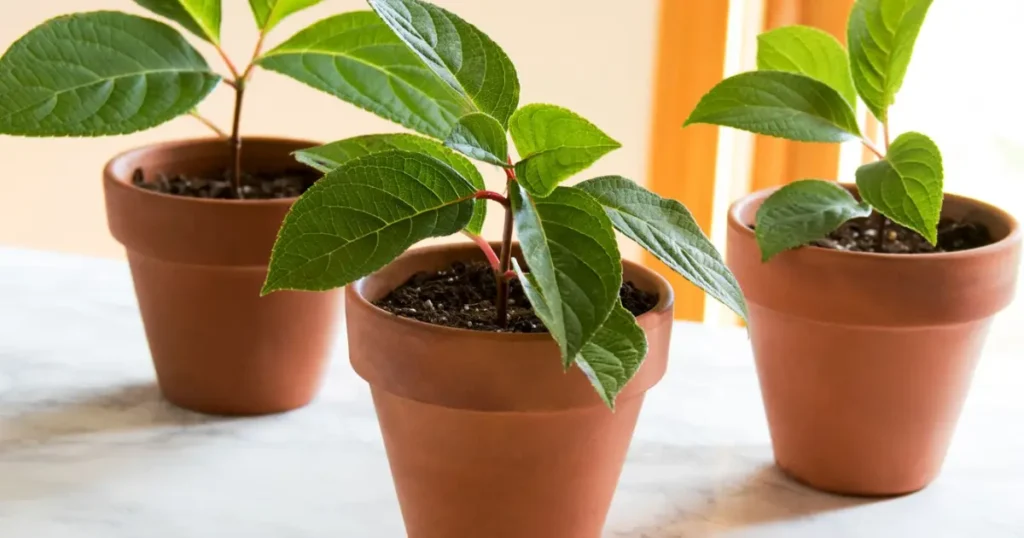
- Hydrangeas.
- Fuchsias.
- Salvias.
- Coleus.
- Herbs.
These root quickly but require careful moisture management.
Semi-Hardwood Cuttings
Collected during late summer after new growth begins to mature.
Common for:
- Camellias.
- Azaleas.
- Holly.
- Viburnum.
- Many evergreen shrubs.
Hardwood Cuttings
Taken during winter from dormant woody stems.
Often used for:
- Roses.
- Grapes.
- Currants.
- Figs.
- Willows.
- Dogwoods.
These usually root more slowly but are simple to prepare.
Leaf Cuttings
Some plants grow entirely from leaves.
Examples include:
- African violets.
- Snake plants.
- Begonias.
- Jade plants.
Root Cuttings
Certain perennials produce new plants from sections of healthy roots.
Examples include:
- Oriental poppies.
- Phlox.
- Japanese anemones.
Plants That Root Easily
Many popular garden plants root readily without specialized equipment.
Some of the easiest include:
- Lavender.
- Rosemary.
- Mint.
- Basil.
- Sage.
- Geraniums.
- Coleus.
- Hydrangeas.
- Fuchsia.
- Willow.
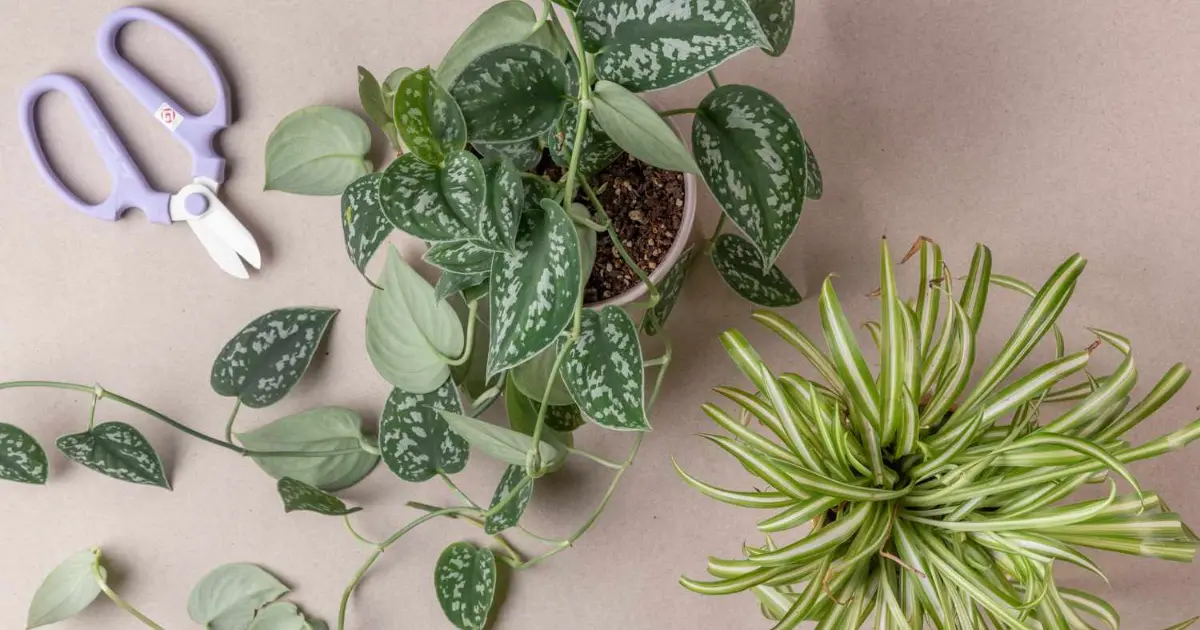
- Pothos.
- Spider plants.
These species often produce roots within a few weeks under suitable conditions.
Choosing the Right Cutting
Healthy parent plants produce the best results.
Look for stems that are:
- Free from pests.
- Disease-free.
- Firm but not woody (unless taking hardwood cuttings).
- Not flowering heavily.
- Well hydrated.
Avoid weak, damaged, or stressed growth.
How to Take a Stem Cutting
Although techniques vary by species, the basic process is straightforward.
- Use clean, sharp pruning scissors.
- Select a healthy stem 10–15 cm (4–6 inches) long.
- Cut just below a leaf node.
- Remove leaves from the lower portion.
- Dip the base into rooting hormone if appropriate.
- Insert the cutting into moist propagation mix.
- Keep warm and humid until roots develop.
Choosing the Best Growing Medium
Successful rooting requires excellent drainage while retaining enough moisture.
Common propagation media include:
- Seed-starting mix.
- Perlite mixed with peat or coco coir.
- Vermiculite.
- Fine horticultural sand.
- Specialized propagation compost.
Ordinary garden soil is usually too heavy for rooting cuttings.
Water or Soil?
Some houseplants root easily in water.
Examples include:
- Pothos.
- Philodendron.
- Tradescantia.
- Lucky bamboo.
However, many woody plants establish stronger root systems when rooted directly in a suitable propagation medium.
Water propagation is convenient but not always ideal for every species.
Humidity Is Essential
Fresh cuttings have no roots to replace water lost through their leaves.
High humidity slows dehydration while new roots develop.
Gardeners often increase humidity by:
- Using propagation domes.
- Covering pots loosely with clear plastic.
- Misting lightly when appropriate.
- Growing cuttings in a greenhouse or propagator.
Good ventilation remains important to reduce fungal disease.
Common Reasons Cuttings Fail
Even experienced gardeners lose some cuttings.
Common causes include:
Too Much Water
Constantly wet growing media can encourage stem rot before roots develop.
Too Little Humidity
Without roots, cuttings lose water rapidly.
Dry air often causes wilting.
Excessive Sunlight
Bright indirect light is generally better than intense midday sun during rooting.
Taking Weak Material
Healthy parent plants produce healthier cuttings.
Poor Hygiene
Dirty tools may introduce diseases that infect freshly cut stems.
Practical Tips
- Take cuttings early in the morning when plants are well hydrated.
- Label every cutting with the plant name and date.
- Use clean tools to reduce disease risk.
- Remove flowers from cuttings so energy goes into root formation.
- Check moisture regularly without overwatering.
- Be patient—some species root in weeks, while others take several months.
Common Mistakes
Using Flowering Stems
Flower production competes with root development.
Leaving Too Many Leaves
Large numbers of leaves increase water loss before roots form.
Overwatering
Waterlogged media often causes stem rot.
Expecting Every Cutting to Root
Success rates vary depending on the species, season, and growing conditions.
Taking several cuttings improves the chances of success.
Frequently Asked Questions
Are plants grown from cuttings identical to the parent plant?
Yes. They are genetic clones and usually retain the same characteristics as the original plant.
Do all plants grow from cuttings?
No. Many species root readily, while others require grafting, layering, tissue culture, or seed propagation.
Is rooting hormone necessary?
Not always. Many plants root successfully without it, although rooting hormone can improve success with more difficult species.
Can I root cuttings in water?
Some plants root very well in water, but others develop stronger root systems when started directly in a suitable growing medium.
What is the best time to take cuttings?
It depends on the species. Softwood cuttings are usually taken in spring or early summer, while hardwood cuttings are commonly collected during winter dormancy.
Conclusion
Propagation from cuttings is one of gardening’s most valuable skills because it transforms a single healthy plant into many without the ongoing expense of buying new stock. By understanding how plants naturally produce new roots and providing the right conditions for growth, gardeners can expand flower beds, create hedges, replace aging plants, and share favorite varieties with others.
More than simply saving money, propagation encourages a deeper understanding of plant biology and allows gardeners to build landscapes that become richer and more personal with every growing season. A single cutting may seem small, but over time it can become the foundation of an entire garden.
Internal Linking
Learn how to prepare young plants for outdoor life:
https://secretsofthegreengarden.com/hardening-off-seedlings/
Discover which vegetables thrive even in gardens with limited sunlight:
https://secretsofthegreengarden.com/best-vegetables-herbs-for-shaded-gardens/
Improve long-term soil health before planting your new cuttings:
https://secretsofthegreengarden.com/why-not-leave-bare-soil-winter/
Recommended External Sources
- Royal Horticultural Society (RHS): https://www.rhs.org.uk
- Missouri Botanical Garden: https://www.missouribotanicalgarden.org
- North Carolina State Extension: https://extension.ncsu.edu