
Introduction
Every garden has one.
It might be the narrow strip beneath a fence, the north-facing corner behind a shed, the space beneath a mature maple tree, or the border that receives only a few hours of morning sun. These areas are often viewed as gardening problems—places where vegetables struggle, flowers bloom poorly, and lawns gradually disappear.
Many gardeners simply accept these spaces as limitations. Some plant a few shade-tolerant bedding flowers each spring, while others leave them bare, cover them with mulch, or fill them with decorative stones.
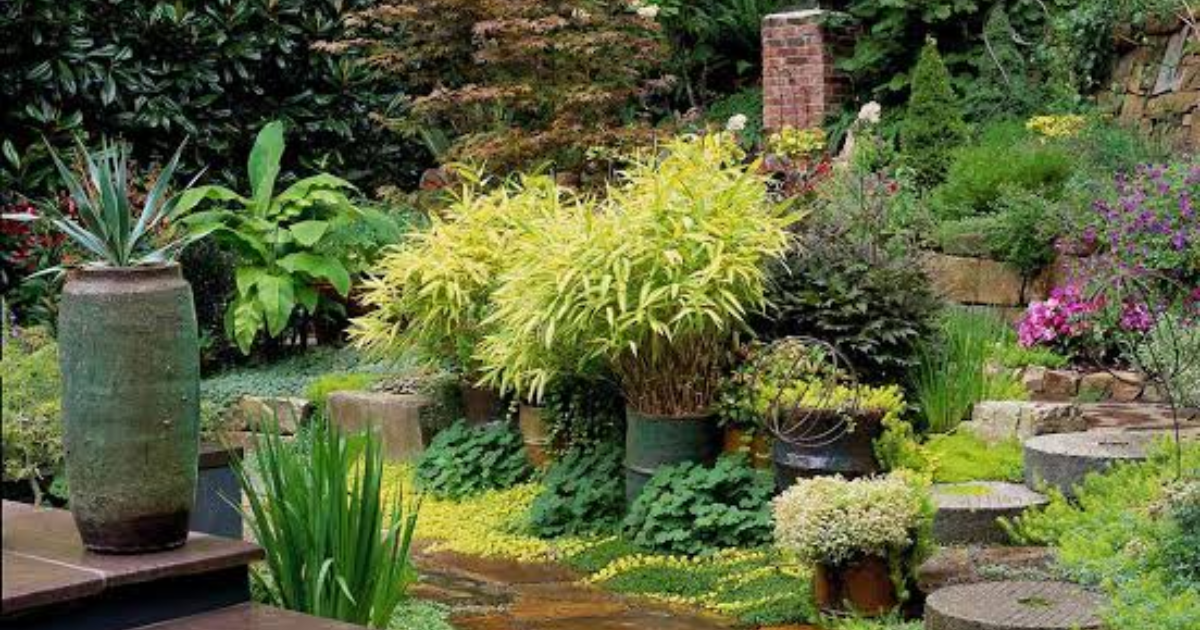
But shade is not a gardening failure. It is simply a different growing environment with its own opportunities. In fact, some of the world’s most elegant gardens feature shaded woodland borders filled with lush foliage, layered textures, and plants that would suffer in full sun.
Once you begin choosing plants that naturally thrive in lower light, those forgotten corners can become some of the most attractive and lowest-maintenance areas in the entire garden.
Understanding Garden Shade
Not all shade is the same.
The amount of sunlight an area receives determines which plants will thrive there.
Full Shade
Receives less than three hours of direct sunlight each day.
Often found:
- On the north side of buildings.
- Beneath dense evergreen trees.
- Behind walls.
- Between closely spaced structures.
Partial Shade
Receives roughly three to six hours of sunlight daily, usually in the morning or late afternoon.
Many woodland plants perform exceptionally well under these conditions.
Dappled Shade
Sunlight filters through tree branches, creating constantly shifting patches of light.
This closely resembles the natural habitat of many forest plants.
Why Shade Isn’t the Problem
Plants fail in shade for one simple reason—they were never adapted to grow there.
Sun-loving plants such as:
- Roses.
- Lavender.
- Tomatoes.
- Zinnias.
- Sunflowers.
Require many hours of direct sunlight to produce healthy flowers and vigorous growth.
Shade-loving plants evolved under forest canopies where light is naturally limited.
Instead of producing large numbers of flowers, many invest in spectacular foliage that remains attractive throughout the growing season.
The Beauty of Foliage Gardens
One of the biggest advantages of shade gardening is that color comes from leaves rather than flowers alone.
Different plants contribute:
- Deep green foliage.
- Silver markings.
- Blue-green leaves.
- Gold variegation.
- Purple stems.
- Dramatic textures.
These combinations create interest for months rather than only during flowering periods.
Best Perennials for Shade
Many long-lived perennials thrive with limited sunlight.
Excellent choices include:
Hostas
Hostas are famous for their remarkable foliage.
Available in hundreds of varieties, they offer:
- Blue leaves.
- Gold foliage.
- Variegated patterns.
- Giant architectural forms.
- Miniature varieties.
Ferns
Ferns create elegant textures and movement.
Popular options include:
- Japanese painted fern.
- Lady fern.
- Christmas fern.
- Ostrich fern.
Hellebores
Often called the Lenten rose, hellebores bloom during late winter or early spring when few other plants are flowering.
Their evergreen foliage remains attractive for much of the year.
Brunnera
Heart-shaped leaves with silver markings brighten darker corners.
Small blue flowers resemble forget-me-nots in spring.
Heuchera
Also known as coral bells, these plants offer foliage in shades of:
- Lime green.
- Bronze.
- Purple.
- Amber.
- Nearly black.
Flowering Plants for Shade
Shade gardens are far from colorless.
Beautiful flowering options include:
- Astilbe.
- Bleeding heart (Dicentra).
- Foxglove.
- Japanese anemone.
- Toad lily.
- Columbine.
- Woodland phlox.
- Primroses.
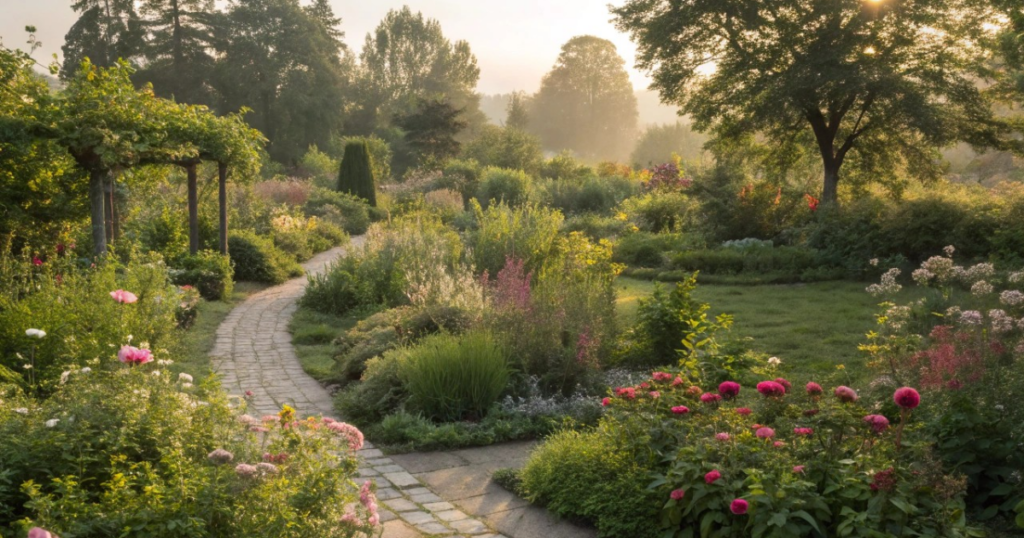
Choosing species with different bloom times provides flowers from early spring through autumn.
Shrubs That Thrive in Shade
Many shrubs perform well with limited sunlight.
Good options include:
- Hydrangeas (depending on species).
- Fatsia japonica.
- Aucuba.
- Mahonia.
- Sarcococca.
- Camellias.
- Pieris.
These provide year-round structure while supporting birds and pollinators.
Gardening Beneath Mature Trees
One of the most challenging shaded locations is beneath established trees.
Here, plants compete not only for sunlight but also for water and nutrients.
Success depends on choosing species adapted to woodland conditions.
Good choices include:
- Epimedium.
- Wild ginger.
- Solomon’s seal.
- Foamflower.
- Lungwort.
- Wood anemone.
Avoid excessive digging, which can damage tree roots.
Adding organic mulch helps retain moisture and gradually improves soil quality.
Dry Shade: The Toughest Challenge
Dry shade occurs beneath large trees where dense roots absorb most available moisture.
Not every shade plant tolerates these conditions.
Reliable performers include:
- Epimedium.
- Hellebores.
- Sweet woodruff.
- Ivy (used carefully where appropriate).
- Dead nettle (Lamium).
- Bergenia.
These species generally establish better once their roots become well developed.
Creating Layers Like a Woodland
Natural forests rarely consist of one plant height.
Successful shade gardens often imitate this layered structure.
Consider combining:
- Small trees.
- Shrubs.
- Tall perennials.
- Ferns.
- Groundcovers.
- Spring bulbs.
Layering creates visual depth while maximizing available growing space.
Groundcovers That Replace Bare Soil
Groundcovers reduce weeds while protecting soil.
Excellent options include:
- Sweet woodruff.
- Pachysandra.
- Ajuga.
- Wild ginger.
- Lamium.
- Vinca (where appropriate and not invasive in your region).
Always check whether a species is considered invasive in your local area before planting.
Soil Matters Even More in Shade
Shaded soils often differ from sunny beds.
They may contain:
- More leaf litter.
- Higher organic matter.
- Tree roots.
- Lower evaporation.
Improving soil with compost helps increase moisture retention while supporting beneficial soil organisms.
Common Mistakes
Choosing Sun-Loving Plants
Plants adapted to full sun rarely perform well in deep shade.
Ignoring Tree Root Competition
Many failures beneath trees result from moisture competition rather than shade alone.
Planting Too Closely
Shade gardens become lush over time.
Allow enough space for mature growth.
Overwatering
Shaded areas dry more slowly than sunny borders.
Check soil moisture before watering.
Practical Tips
- Observe how much sunlight reaches each area throughout the day.
- Match plants to the actual light conditions.
- Improve soil with compost before planting.
- Apply mulch to conserve moisture.
- Water deeply during establishment.
- Combine foliage textures rather than relying only on flowers.
- Add spring bulbs for early seasonal color before trees leaf out.
Frequently Asked Questions
What grows best in full shade?
Hostas, ferns, hellebores, epimedium, and many woodland plants thrive with very little direct sunlight.
Can flowers bloom in shade?
Yes. Many plants—including astilbe, foxglove, bleeding heart, and Japanese anemone—flower beautifully in partial or full shade.
Why won’t grass grow beneath trees?
Tree roots compete for water and nutrients while the tree canopy reduces available sunlight, making turf difficult to maintain.
How do I improve dry shade?
Add organic matter, mulch regularly, choose drought-tolerant woodland plants, and water new plantings during establishment.
Are shade gardens easier to maintain?
Often, yes. Once established, many shade-loving perennials require less watering and fewer replacements than sun-loving annual bedding plants.
Conclusion
The darkest corners of a garden are not empty spaces waiting to be tolerated—they are opportunities waiting to be planted differently. Rather than forcing sun-loving plants into unsuitable conditions, embracing woodland species allows these overlooked areas to become cool, textured, and richly layered landscapes that remain attractive for much of the year.
By understanding the different types of shade and selecting plants adapted to them, gardeners can transform difficult spaces beneath trees, along walls, and behind buildings into thriving gardens that require surprisingly little maintenance. In many landscapes, the most memorable garden is not the brightest border—but the one that turns shade into an advantage.
SEO Package
SEO Title: Best Plants for Shade: How to Transform Dark Garden Corners into Beautiful Borders
Meta Description: Discover the best shade-loving plants, shrubs, and groundcovers to transform dark garden corners into lush, low-maintenance landscapes.
Focus Keyword: shade garden plants
Related Keywords:
- plants for shade
- shade-loving perennials
- woodland garden
- dry shade plants
- hostas
- ferns
- shade border
- garden under trees
URL Slug: best-shade-garden-plants
Suggested Category: Indoor Gardening & Houseplants
Suggested Tags: Shade Garden, Woodland Plants, Hostas, Ferns, Garden Design, Perennials, Gardening Tips, Groundcovers
Internal Linking
Learn which edible plants thrive in lower light:
https://secretsofthegreengarden.com/best-vegetables-herbs-for-shaded-gardens/
Discover why healthy soil is essential for long-term plant success:
https://secretsofthegreengarden.com/why-not-leave-bare-soil-winter/
Propagate your favorite shade plants without buying new ones:
https://secretsofthegreengarden.com/propagation-from-cuttings/
Recommended External Sources
- Royal Horticultural Society (RHS): https://www.rhs.org.uk
- Missouri Botanical Garden: https://www.missouribotanicalgarden.org
- Cornell University Gardening Resources: https://gardening.cals.cornell.edu