
For nearly two centuries, a pangolin specimen collected in Nepal sat in a natural-history collection carrying evidence that scientists could not fully read when it was collected. Modern analysis of this pangolin species museum DNA has now helped resolve a long-running taxonomic puzzle, confirming the Himalayan pangolin, Manis aurita, as a distinct living species rather than simply a form of the Chinese pangolin.
The specimen dates to 1836, making it about 190 years old. By recovering degraded genetic material from this historical reference animal and comparing it with modern pangolins, researchers were able to connect an old scientific name with a genetically distinct lineage still living in Nepal and northern India.
Importantly, this was not the discovery of an animal nobody had ever seen. It was the recognition that pangolins hiding in plain sight had been classified incorrectly—and that distinction could matter enormously for their conservation.
Table of Contents
- What Exactly Did Scientists Discover?
- The 1836 Pangolin That Became Crucial
- Pangolin Species Museum DNA and the Taxonomic Puzzle
- How DNA Can Survive in Museum Specimens
- How Scientists Recover DNA From Historical Animals
- Why Ancient and Museum DNA Is Difficult to Analyze
- How Researchers Confirmed Manis aurita
- Why the Himalayan Pangolin Went Unrecognized
- What Makes Manis aurita Different?
- Why Accurate Species Names Matter for Conservation
- Pangolins and the Illegal Wildlife Trade
- How Genetics Can Help Track Trafficked Pangolins
- Why Hidden Species Matter for Biodiversity
- Why Natural-History Museums Are Scientific Time Machines
- Common Myths
- FAQ
- Conclusion
What Exactly Did Scientists Discover?
The story is slightly more complicated—and more interesting—than the headline “new pangolin discovered.”
Researchers confirmed that a genetically distinct Himalayan lineage deserves recognition as the species Manis aurita.
The animal itself was not unknown.
Naturalist Brian Houghton Hodgson described Manis aurita from Nepal in 1836. Later taxonomic treatments folded it into the Chinese pangolin, Manis pentadactyla, treating the Himalayan form as a subspecies rather than a full species.
Much more recently, genomic evidence revealed deep genetic differences within what scientists had been calling the Chinese pangolin.
A Himalayan lineage was subsequently described under another name, Manis indoburmanica.
That created a problem.
Was this really a newly named species, or was it actually the same animal Hodgson had described almost 190 years earlier?
The answer was sitting in a museum.
The 1836 Pangolin That Became Crucial
In taxonomy, historical specimens can have extraordinary importance.
A type specimen is the physical reference associated with the scientific description and name of a species or other taxon. When scientists disagree about what an old name actually represents, returning to that reference material can help resolve the problem.
For Manis aurita, researchers needed to determine whether the historical Himalayan animal belonged to the same genetic lineage that modern genomic studies had detected.
Descriptions, skull measurements, body proportions, and preserved skins provided important clues.
But DNA offered something earlier zoologists could never have imagined using.
Scientists working with the Natural History Museum in London successfully recovered genetic information directly from the historical reference specimen dating to 1836.
That allowed an animal collected before Darwin published On the Origin of Species to participate in a modern genomic study.
Pangolin Species Museum DNA Solved a Taxonomic Puzzle
The resulting research was published in Communications Biology in July 2026 and received renewed science-news attention later in the summer.
In the original peer-reviewed study in Communications Biology, researchers combined genomic evidence with detailed morphological comparisons.
The results supported two deeply separated lineages.
The Himalayan population represented by the historical aurita specimen was genetically distinct from the Chinese pangolin in the stricter sense.
Researchers estimated that these lineages diverged roughly 1.8 million years ago and subsequently experienced very limited genetic exchange.
Crucially, modern Himalayan pangolins grouped with the historical aurita material.
That settled the naming problem.
The recently recognized Himalayan lineage was not an entirely unnamed animal after all. It corresponded to Manis aurita, a name established in the nineteenth century.
Under zoological naming rules, the older valid name has priority.
How Can DNA Survive in a Museum for 190 Years?
DNA begins breaking down after an organism dies.
Enzymes, microorganisms, moisture, heat, oxygen, ultraviolet radiation, and chemical reactions gradually fragment genetic material.
A museum specimen therefore does not contain DNA in the pristine condition found in a living animal.
Instead, researchers often work with tiny fragments.
Preservation can nevertheless slow some destructive processes.
Dried skins, bones, teeth, claws, scales, feathers, and other tissues may retain genetic material for decades or centuries, especially when stored under relatively stable museum conditions.
The DNA molecules may be fragmented and chemically damaged, but modern sequencing technologies do not necessarily require long, perfect chromosomes.
Scientists can recover huge numbers of short pieces and reconstruct useful portions of the genome computationally.
That has transformed museum collections into genetic archives.
How Scientists Recover DNA From Historical Animals
Historical DNA work begins with an uncomfortable problem: the specimen is scientifically priceless.
Researchers cannot simply cut large pieces from it.
Sampling therefore aims to obtain enough biological material while causing as little permanent damage as possible.
Depending on the specimen, scientists may sample tiny amounts of skin, bone, scale, claw, dried tissue, or other material.
The laboratory procedures used for old specimens are designed around degraded DNA.
Cells and tissues are chemically broken down, proteins and other material are removed, and surviving DNA fragments are purified.
Those fragments can then be converted into sequencing libraries.
Modern high-throughput sequencing reads enormous numbers of DNA fragments.
Bioinformatic software compares those sequences, filters unwanted material, identifies authentic genetic information, and aligns fragments with reference genomes.
The process turns microscopic biological remains into an evolutionary family tree.
Why Historical DNA Is Difficult to Analyze
Old DNA creates several problems that fresh tissue does not.
The first is fragmentation.
Instead of long strands, scientists may recover extremely short pieces.
The second is chemical damage.
DNA changes predictably after death, and those changes can introduce apparent differences that are not genuine biological mutations.
Contamination is another major concern.
A specimen may have been collected, prepared, handled, studied, repaired, and displayed by many people over nearly two centuries.
Modern human DNA and DNA from microorganisms can become mixed with the target material.
Laboratories working with historical DNA therefore use strict contamination controls, specialized preparation procedures, negative controls, and computational methods designed to distinguish authentic old sequences from unwanted material.
Repeated agreement among independent lines of evidence is especially valuable.
That is one reason the Manis aurita study combined genetics with anatomy rather than relying on a single DNA result.
Why This Pangolin Lineage Went Unrecognized
The Himalayan pangolin illustrates a classic problem in taxonomy: closely related species do not always look dramatically different.
For decades, the Himalayan animals were grouped with Chinese pangolins.
Their overall appearance is certainly similar.
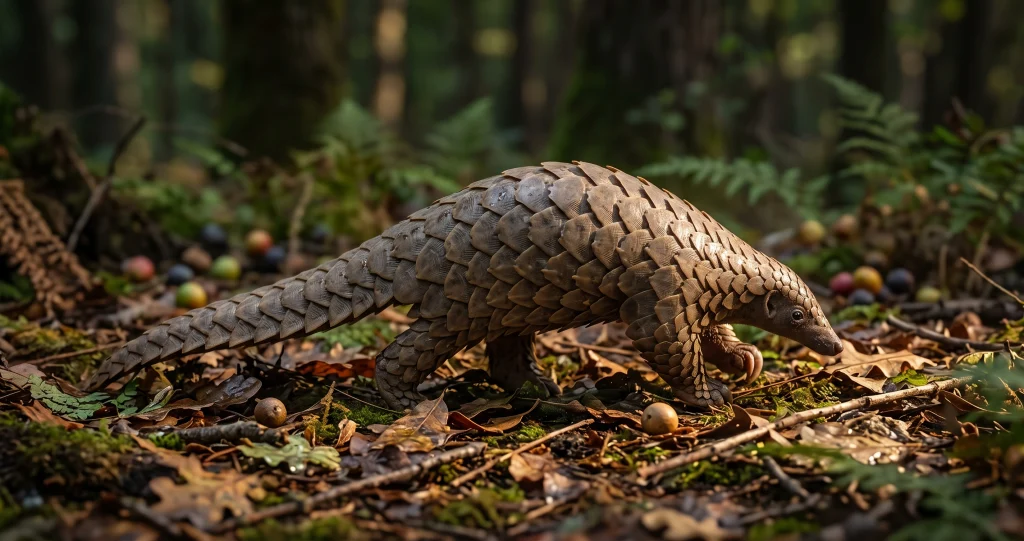
Both are armored Asian mammals covered with overlapping keratin scales. Both have elongated bodies, powerful digging claws, long tongues, and specialized diets dominated by ants and termites.
Historical taxonomy also depended heavily on external anatomy and skeletal measurements.
Genomics changed what researchers could see.
Populations that appear superficially similar may contain deep evolutionary divisions invisible to the naked eye.
Earlier genomic work had already revealed two strongly divergent lineages within the broadly defined Chinese pangolin.
The missing piece was connecting that genetic discovery with historical names.
The pangolin species museum DNA supplied that connection.
What Makes Manis aurita Different?
Genetics was not the only evidence.
Researchers compared external and cranial characteristics across specimens.
The Himalayan pangolin showed consistent morphological differences from Manis pentadactyla in the stricter sense.
According to the Field Museum’s summary of the research, the Himalayan form tends to have a larger body, longer tail, and smaller ears compared with the Chinese pangolin.
Geography reinforces the distinction.
Current evidence places M. aurita in the southern Himalayan region, including Nepal and northern India, while the recognized ranges of the two species do not overlap.
The research therefore brought genetics, anatomy, geography, and historical taxonomy into agreement.
That is much stronger than declaring a species from one unusual-looking specimen.
Why Accurate Species Names Matter for Conservation
Taxonomy can sound like an argument about labels.
For threatened wildlife, it can determine what gets protected.
Imagine that conservation authorities believe one species occupies a vast geographic range.
If that “species” actually consists of two or three independently evolving species, each may occupy a much smaller range than previously recognized.
Their population sizes may also be smaller.
Threats that appeared localized could suddenly represent a major proportion of one species’ entire habitat.
This is why recognition of Manis aurita matters.
It identifies a separate evolutionary lineage concentrated in the southern Himalayas.
The Mammal Diversity Database currently lists Manis aurita separately while noting that its IUCN Red List status has not yet been evaluated independently.
A new taxonomic boundary therefore creates an immediate conservation question: what is the true population size, distribution, habitat requirement, and threat level of this newly revalidated species?
Pangolins Already Face Extraordinary Pressure
Pangolins are among the animals most heavily affected by illegal wildlife trafficking.
They are hunted for meat and especially for their keratin scales, which are used in illegal and traditional wildlife markets despite lacking the extraordinary medicinal properties sometimes attributed to them.
All pangolin species receive the highest level of international commercial-trade restriction under CITES Appendix I.
Several recognized species are already classified as Endangered or Critically Endangered.
Habitat loss adds further pressure.
Discovering another distinct lineage does not magically create more pangolins.
It reveals that the animals conservationists thought belonged to a larger population may actually represent a smaller and evolutionarily independent unit.
That can make protection more urgent, not less.
How DNA Can Help Track Trafficked Pangolins
Illegal wildlife shipments often do not contain whole animals.
Authorities may encounter bags or containers filled with detached pangolin scales.
Once scales have been removed and mixed together, identifying the original species visually can be extremely difficult.
Genetics changes that.
Reference DNA from correctly identified pangolins can be compared with material confiscated from wildlife trafficking.
If researchers know which genetic variants occur in particular species and geographic populations, forensic analysis can potentially reveal where seized material originated.
That information can expose trafficking hotspots and identify populations experiencing intense hunting pressure.
Museum specimens are particularly valuable because many were collected with location information before modern population declines.
They provide historical genetic reference points.
Research on other pangolin museum collections has already shown that old specimens can reveal previously overlooked lineages and improve geographic tracing of confiscated scales.
The Manis aurita discovery strengthens that approach.
Why Hidden Species Matter for Biodiversity
A hidden, or cryptic, species is not necessarily rare or newly evolved.
It is hidden from scientific classification because researchers previously grouped it with another species.
That distinction has consequences.
Species are products of independent evolutionary histories.
If an overlooked lineage disappears before scientists recognize it, an entire branch of biodiversity can vanish while conservation databases still treat it as part of something more widespread.
Hidden species can also have unique ecological relationships, disease vulnerabilities, genetic adaptations, or habitat requirements.
Protecting biodiversity therefore begins with knowing what biodiversity actually exists.
The Himalayan pangolin demonstrates why genomic taxonomy has become such an important conservation tool.
For another example of how evolutionary history can remain hidden in a living mammal, read our article on why the pronghorn may still be built to outrun extinct predators.
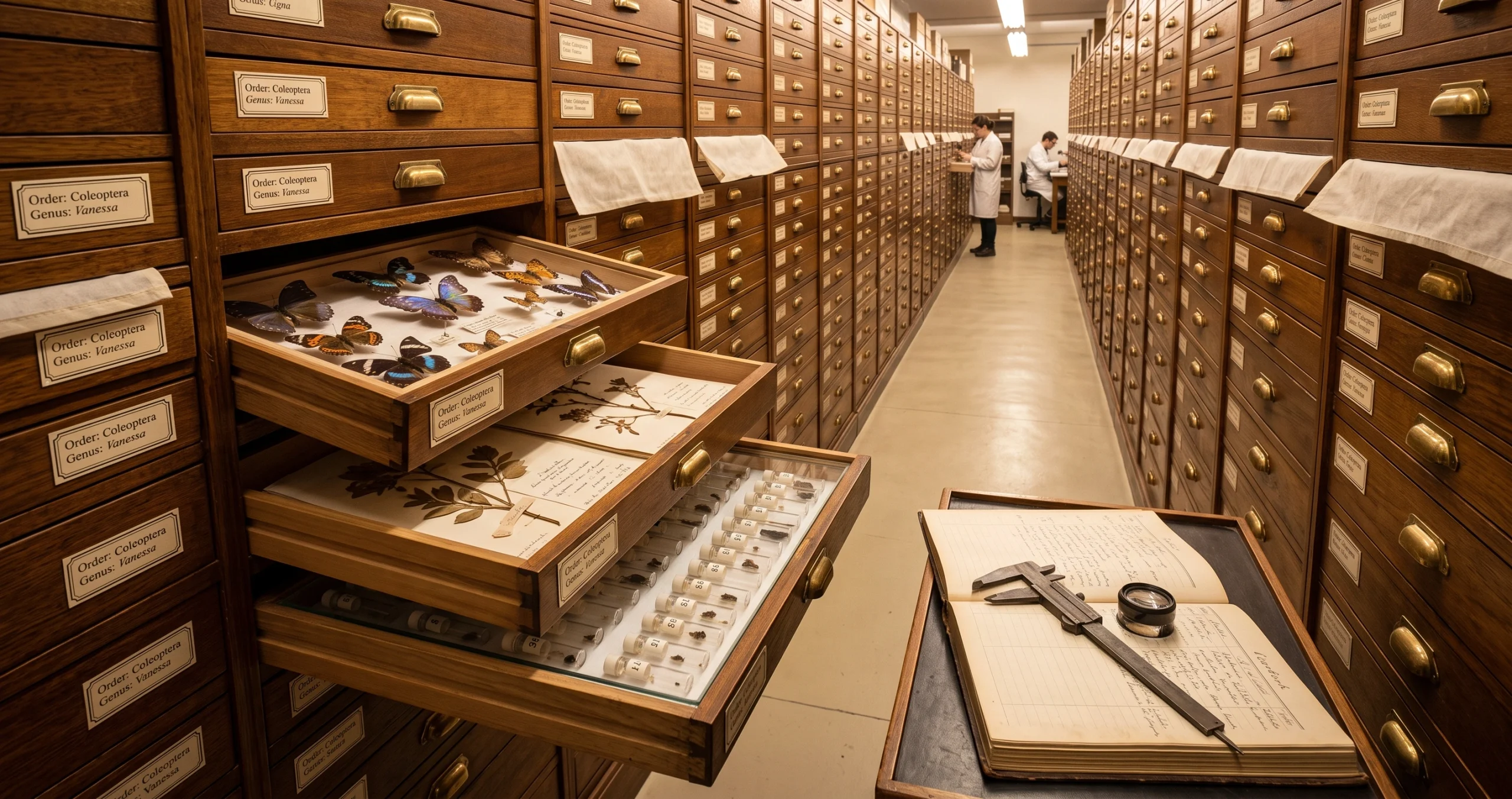
Museums Are Scientific Time Machines
Natural-history museums are sometimes imagined as warehouses filled with dead animals.
Modern science increasingly reveals how misleading that picture is.
A properly documented specimen records a species at a particular location and moment in history.
Its bones preserve anatomy.
Its tissues may preserve DNA.
Its fur can contain chemical evidence about diet or pollution. Labels preserve geographic and historical information.
Collections can therefore answer questions nobody imagined when the specimens were collected.
The 1836 pangolin could not have been collected for genomic sequencing because DNA’s molecular structure would not be understood for more than a century.
Yet nearly 190 years later, improved sequencing technology turned it into decisive evidence.
That is one of the strongest arguments for maintaining natural-history collections over very long periods.
Their future scientific value cannot always be predicted.
Common Myths
Myth 1: Scientists Found a Completely Unknown Pangolin
Not exactly.
The Himalayan pangolin had been encountered and described previously. The breakthrough confirmed that it represents a distinct species and established that the correct historical name is Manis aurita.
Myth 2: The Pangolin Had Been Forgotten in a Drawer for 190 Years
The specimen existed in a scientific collection and remained taxonomically important.
What changed was scientists’ ability to extract genomic information from it.
Myth 3: DNA Remains Perfectly Preserved in Museums
Historical DNA is usually fragmented and chemically damaged.
Modern techniques make it possible to recover useful information despite that degradation.
Myth 4: DNA Alone Created the New Classification
No.
The researchers used an integrative approach combining genomic, morphological, geographic, and historical evidence.
Myth 5: All Pangolins Are One Species
Pangolins comprise multiple distinct species distributed across Africa and Asia.
Recognition of Manis aurita further clarifies that diversity.
Myth 6: Finding Another Species Means Pangolins Are Less Threatened
The opposite may be true locally.
Splitting what appeared to be one widespread species can reveal smaller, more geographically restricted populations requiring separate protection.
FAQ
What did scientists discover from the 190-year-old pangolin?
DNA from the historical reference specimen helped confirm that Himalayan pangolins represent a distinct species, Manis aurita, separate from the Chinese pangolin.
How old was the museum specimen?
The specimen dates to 1836, making it approximately 190 years old when analyzed for the 2026 research.
Where was the specimen kept?
The crucial historical reference material was held by the Natural History Museum in London.
How can DNA survive for almost 200 years?
DNA gradually degrades after death, but dried and preserved tissues can retain short genetic fragments for centuries.
Modern sequencing methods can recover and computationally assemble information from those fragments.
Is Manis aurita really a new species?
It is newly revalidated rather than newly encountered.
The name dates to the nineteenth century, but the animal was subsequently classified with the Chinese pangolin before genomic and morphological evidence restored it as a distinct species.
Where does the Himalayan pangolin live?
Current evidence places Manis aurita in the southern Himalayan region, including Nepal and northern India.
Why does pangolin species museum DNA matter for conservation?
Accurate genetic references can help conservationists distinguish species, map their distributions, identify vulnerable populations, and potentially determine the origins of confiscated pangolin scales.
Is Manis aurita endangered?
Its independent IUCN assessment has not yet been established in the same way as longer-recognized pangolin species.
However, pangolins across Asia face severe threats from illegal hunting, wildlife trafficking, and habitat loss, making assessment of this distinct lineage particularly important.
Can museums contain other undiscovered species?
Absolutely.
Modern genetic and anatomical studies repeatedly reveal overlooked species and evolutionary lineages among specimens collected decades or even centuries ago.
Conclusion
The story of pangolin species museum DNA shows that discovering biodiversity does not always require traveling into an unexplored forest.
Sometimes the crucial expedition leads into a museum collection.
A pangolin collected in Nepal in 1836 preserved enough genetic information for scientists nearly two centuries later to resolve an evolutionary mystery.
By combining that historical DNA with modern genomes, skull measurements, external anatomy, geography, and taxonomic records, researchers confirmed the Himalayan pangolin as Manis aurita.
The discovery also corrects a common misconception about what “new species” means.
This pangolin was not invisible to local people or unknown to nineteenth-century naturalists.
Its hidden identity was taxonomic.
Scientists knew the animals existed but had not correctly understood where one evolutionary lineage ended and another began.
For conservation, that difference is critical.
Pangolins already face intense pressure from trafficking and habitat loss. If apparently widespread species actually contain smaller, distinct lineages, conservation strategies need to recognize those boundaries.
Genetic identification may also strengthen wildlife forensics.
A confiscated scale can contain information about the species—and potentially the population—from which it came.
Building accurate reference databases can help authorities determine which pangolins are being targeted and where poaching pressure is concentrated.
Most of all, the discovery demonstrates the long-term value of museums.
The people who preserved that pangolin in 1836 could not have imagined genomic sequencing.
They preserved the specimen anyway.
Almost 190 years later, science finally developed the tools necessary to read the biological message it had been carrying all along.
Related Reading
Explore how evolutionary history and modern genetic research are revealing remarkable adaptations and previously hidden biological differences in living animals:
- Why the Pronghorn May Still Be Built to Outrun Extinct Predators — Explore how traits found in living pronghorn may reflect evolutionary pressures imposed by a very different community of predators in prehistoric North America.
- How Modern Genomics Is Revealing the Unusual Biology of Long-Lived Bats — Discover how genomic research is helping scientists investigate the unusual longevity, viral defenses, and cancer-related adaptations of bats.
References and Further Reading
For additional scientific information about pangolin taxonomy, museum DNA, evolutionary history, genomics, and conservation:
- Communications Biology — Revalidation of Manis aurita Based on Integrative Genomic and Morphological Evidence — The original 2026 peer-reviewed study combining DNA from historical museum material with modern genomic, morphological, and geographic evidence to support recognition of the Himalayan pangolin as a distinct species.
- Field Museum — New Analysis of Pangolin DNA and Evolution — Research-institution coverage explaining the historical specimen, the taxonomic investigation, conservation implications, and how genetic information could contribute to efforts against illegal pangolin trafficking.
- Smithsonian National Museum of Natural History — Pangolin Museum Genomics — Coverage of museum-based pangolin genetic research showing how historical specimens can reveal overlooked evolutionary lineages and provide reference data relevant to conservation and wildlife-trafficking investigations.