
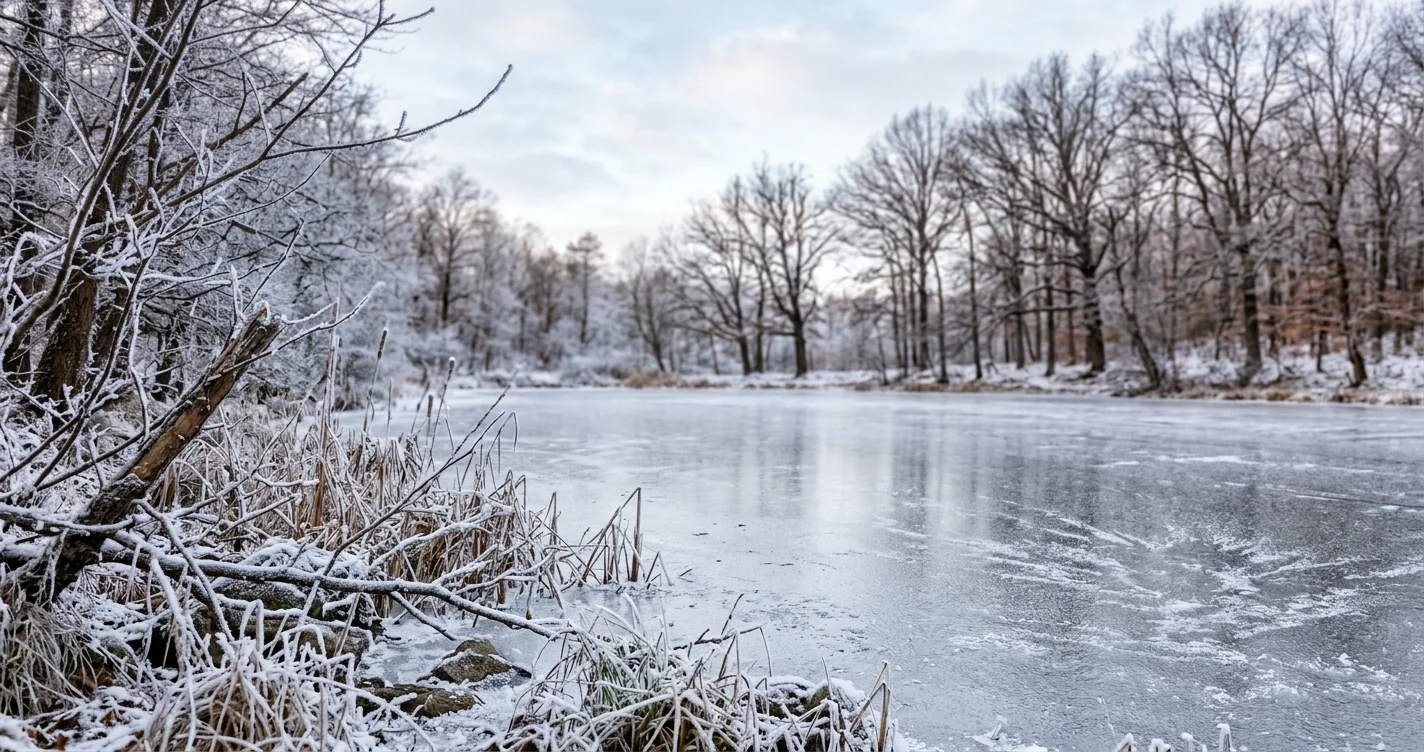
A winter pond can look completely lifeless. Its surface is covered with ice, snow gathers along the edges, and not a single ripple disturbs the frozen water. Yet several feet below that icy surface, fish may still be alive, moving slowly through water that remains liquid.
This remarkable winter survival story begins with an unusual property of water.
Understanding why ponds freeze from the top reveals how nature creates a protective environment beneath the ice. Unlike most substances, water becomes less dense when it freezes, allowing ice to float instead of sinking.
That floating layer helps insulate the water below, while fish adjust their metabolism and behavior to survive the cold.
But winter survival isn’t guaranteed. Pond depth, dissolved oxygen, snow cover, and the amount of decomposing organic material can all influence whether aquatic animals make it through the season.
The science behind a frozen pond is a fascinating combination of physics, biology, and ecology.
Table of Contents
- What Happens When a Pond Begins to Freeze?
- Why Ponds Freeze From the Top: The Science Explained
- How Ice Protects the Water Below
- How Fish Survive Beneath Frozen Ponds
- Where Fish Go During Winter
- Why Some Ponds Experience Winter Fish Kills
- What Happens to Frogs, Turtles, and Other Pond Animals?
- Does a Pond Ever Freeze Completely?
- How Snow Changes Conditions Beneath the Ice
- In Your Own Yard: Protecting a Garden Pond in Winter
- Common Winter Pond Care Mistakes
- Frequently Asked Questions
What Happens When a Pond Begins to Freeze?
As autumn turns into winter, the surface of a pond loses heat to the colder air.
The cooling process begins at the water’s surface, where heat is exchanged with the atmosphere.
During early autumn, cooling surface water may sink and mix with deeper water.
This circulation helps redistribute heat and dissolved gases throughout the pond.
However, something unusual happens as the water approaches freezing.
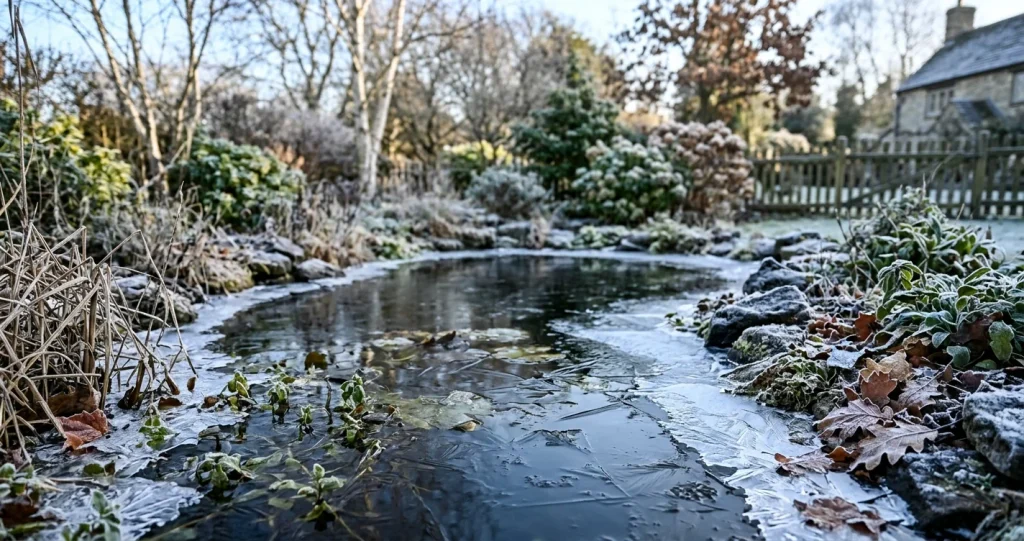
The First Changes in Water Temperature
Water reaches its greatest density at approximately 39°F (4°C).
When surface water cools toward this temperature, it becomes denser and tends to sink.
Warmer water from below may rise to replace it.
This process can continue until much of the pond approaches a similar temperature.
As surface water cools below 39°F, its density begins decreasing rather than increasing.
That change has important consequences.
The Surface Becomes the Coldest Layer
Once the pond has cooled sufficiently, water colder than 39°F tends to remain near the surface because it is less dense than the water below.
As air temperatures continue falling, this upper layer approaches 32°F (0°C).
Ice crystals can then begin forming.
Instead of sinking, the ice remains at the surface.
This creates the familiar frozen covering seen on ponds and lakes during winter.
Why Ponds Freeze From the Top: The Science Explained
The reason ponds freeze from the surface downward involves a remarkable property of water known as its density anomaly.
Most substances become progressively denser as they cool.
Water behaves differently near its freezing point.
Water Is Densest at About 39°F
Liquid water reaches its maximum density at approximately 39.2°F (4°C), under ordinary atmospheric pressure.
Above this temperature, cooling generally increases water density.
Below it, further cooling causes water to expand slightly.
This means water at 32°F is less dense than water at 39°F.
The difference may seem small, but it strongly influences how water moves in a pond.
Hydrogen Bonds Explain Water’s Unusual Behavior
Water molecules are made of two hydrogen atoms bonded to one oxygen atom.
Because of their molecular structure, water molecules form temporary attractions called hydrogen bonds.
These interactions influence how molecules arrange themselves as temperature changes.
Near freezing, the organization of hydrogen bonds increasingly favors more open molecular arrangements.
As a result, water expands slightly as it cools below its maximum-density temperature.
When water freezes, its molecules form an ordered crystal structure that occupies more space than the same mass of liquid water.
This explains why ice is less dense than liquid water.
Why Ice Floats Instead of Sinking
Because ice is less dense than liquid water, it floats.
That simple fact changes the entire winter environment of freshwater ponds.
If ice sank, freezing could progress very differently.
Instead, newly formed ice remains at the surface and gradually develops into a continuous covering.
Water below the ice can remain liquid, provided the pond is sufficiently deep and conditions are favorable.
Winter Temperature Layers
A deeper freshwater pond may develop a temperature pattern called inverse winter stratification.
Under suitable conditions, the coldest liquid water lies immediately beneath the ice.
Deeper water may remain closer to 39°F.
This is the opposite of typical summer stratification, when warmer water often occupies the upper layers.
However, not every pond develops stable temperature layers.
Shallow ponds, wind exposure before freezing, water inflows, and other local conditions can influence the temperature structure.
Why Freezing Usually Progresses Downward
Once ice forms at the surface, additional heat must escape from the water below for the ice layer to thicken.
Heat moves upward through the ice and is lost to the atmosphere.
As this process continues, more water freezes at the underside of the ice.
The ice therefore generally grows downward.
The rate of growth depends on air temperature, existing ice thickness, snow cover, and other environmental factors.
This is the central explanation for why ponds freeze from the top rather than forming ice first at the bottom.
How Ice Protects the Water Below
A frozen pond might seem like an especially hostile environment.
Yet its ice covering can provide important protection.
Ice Slows Heat Loss
Ice conducts heat less efficiently than liquid water undergoing active circulation.
Once a continuous ice cover develops, it also reduces direct mixing between the pond and the atmosphere.
This can slow additional heat loss from the water beneath.
The protective effect depends on ice thickness and environmental conditions.
Snow Can Provide Additional Insulation
Snow often contains trapped air, making it an effective insulating material.
A snow layer on top of pond ice can reduce the rate at which heat escapes.
This may slow ice thickening.
However, snow also blocks sunlight, creating another challenge for aquatic organisms.
Liquid Water Remains Beneath the Ice
In sufficiently deep ponds, the lower water may remain liquid throughout winter.
Fish and other aquatic animals can occupy this environment.
The water is cold, and biological activity is generally reduced, but it can still support life.
The presence of liquid water alone, however, does not guarantee survival.
Adequate dissolved oxygen is also essential for most pond fish.
How Fish Survive Beneath Frozen Ponds
Fish have physiological adaptations that allow many species to remain active, although often much less active, in cold water.
Their survival depends on a combination of temperature tolerance, metabolism, behavior, and water quality.
Fish Are Ectothermic Animals
Most fish are ectothermic, meaning their body temperature closely follows the surrounding water.
Unlike humans, they do not need to maintain a constant high internal temperature.
As water temperatures decline, many of their physiological processes slow.
This reduces their energy requirements.
Metabolism Slows in Cold Water
A fish’s metabolism includes the chemical processes required to maintain life.
In cold conditions, these processes often operate more slowly.
Fish may swim less frequently, digest food more slowly, and require less energy.
The degree of slowing varies by species.
Some fish remain relatively active in winter, while others become much less mobile.
Fish Often Feed Less
Many pond fish reduce their feeding activity as temperatures decline.
Their digestive systems may function more slowly in cold water.
This is especially important for ornamental pond fish such as koi and goldfish.
Feeding practices should reflect species requirements and actual water temperature rather than following a fixed year-round schedule.
Cold Water Can Hold More Oxygen
An interesting property of water is that colder water can hold more dissolved oxygen at saturation than warmer water.
This can benefit aquatic organisms under some conditions.
However, oxygen availability beneath ice is influenced by more than temperature.
Fish, microorganisms, and other organisms continue consuming oxygen.
If oxygen is not replenished, concentrations can fall even in very cold water.
Where Fish Go During Winter
Fish do not necessarily gather in one exact location in every frozen pond.
Their distribution depends on species, pond depth, dissolved oxygen, temperature, and available shelter.
Deeper Water May Offer More Stable Temperatures
In deeper ponds, water near the bottom may remain close to 39°F.
This can provide a relatively stable thermal environment.
Some fish spend substantial time in deeper areas during winter.
However, the deepest water is not always the best habitat if dissolved oxygen becomes depleted.
Fish Reduce Unnecessary Movement
Many fish conserve energy by moving less.
They may remain near submerged structures or other sheltered areas.
This behavior helps reduce energy expenditure when feeding opportunities are limited.
Different Fish Have Different Strategies
Bluegill, bass, perch, and other freshwater fish can remain active to varying degrees during winter.
Some species continue feeding beneath the ice.
Others become considerably less active.
Cold tolerance and habitat preferences vary, so it is misleading to describe all fish as entering the same dormant state.
Why Some Ponds Experience Winter Fish Kills
Although ice can protect liquid water below, prolonged ice cover can also create dangerous conditions.
One of the most important risks is winter oxygen depletion, sometimes called winterkill.
Oxygen Consumption Continues
Fish continue using dissolved oxygen during winter.
Bacteria and other microorganisms also consume oxygen as they break down organic matter.
Even though many biological processes slow in cold conditions, oxygen consumption does not stop.
Ice Limits Gas Exchange
A continuous ice cover reduces direct exchange of gases between pond water and the atmosphere.
Without adequate replenishment, dissolved oxygen may gradually decline.
This risk can become greater during extended periods of ice cover.
Snow Reduces Photosynthesis
Aquatic plants and algae can produce oxygen through photosynthesis when sufficient light is available.
However, thick snow covering the ice can greatly reduce the amount of sunlight entering the pond.
Photosynthetic oxygen production may decline.
Meanwhile, respiration and decomposition continue consuming oxygen.
This imbalance can become dangerous for fish.
Decomposing Leaves Increase Oxygen Demand
Leaves, dead aquatic plants, and other organic debris accumulate in many ponds.
Microorganisms breaking down this material consume dissolved oxygen.
Ponds with large amounts of decomposing organic matter may be particularly vulnerable.
Shallow, nutrient-rich ponds can face increased winterkill risk under prolonged ice and snow cover.
Warning Signs of Winterkill
Fish may become stressed when dissolved oxygen falls too low.
However, conditions beneath opaque ice are difficult to assess visually.
Fish mortality may not become apparent until the ice melts.
For managed ponds, appropriate water-quality monitoring can help identify problems.
What Happens to Frogs, Turtles, and Other Pond Animals?
Fish are not the only animals that survive winter in and around freshwater ponds.
Different species use different strategies.
Frogs
Some aquatic frogs spend winter submerged in ponds or other water bodies.
They may remain relatively inactive while obtaining oxygen through their skin, depending on the species and conditions.
Other frogs overwinter on land.
Their strategies vary considerably.
Freshwater Turtles
Some freshwater turtles overwinter underwater in suitable habitats.
Their metabolism slows, and certain species can tolerate prolonged periods of low oxygen.
However, these adaptations differ among species.
Not all turtles can survive the same winter conditions.
Aquatic Insects
Many aquatic insects survive winter as larvae, nymphs, or other developmental stages.
They may remain in sediments, among aquatic vegetation, or in other protected habitats.
Some continue limited activity beneath the ice.
Microorganisms
Microorganisms remain active in winter pond ecosystems, although their activity often slows.
They continue processing organic material and recycling nutrients.
Their respiration contributes to the pond’s oxygen demand.
Does a Pond Ever Freeze Completely?
Yes. Shallow ponds can freeze all the way to the bottom during sufficiently severe or prolonged cold weather.
The protective effect of floating ice does not make complete freezing impossible.
Pond Depth Matters
Deeper ponds contain more water and often have greater capacity to retain liquid water beneath ice.
Shallow ornamental ponds may freeze solid during severe winters.
The outcome depends on climate, depth, water movement, and local conditions.
Small Containers Are Especially Vulnerable
Water features, tubs, and small aboveground ponds lose heat relatively quickly.
Their limited water volume increases the risk of complete freezing.
Fish should not be expected to survive in containers that freeze solid.
Climate Makes a Difference
A pond in a relatively mild winter climate may develop only thin or temporary ice.
A pond in a much colder region may remain ice-covered for months.
Local winter severity strongly influences how much water remains liquid.
How Snow Changes Conditions Beneath the Ice
Snow has two important and sometimes opposing effects on frozen ponds.
It provides insulation, but it also reduces light penetration.
Snow Slows Ice Growth
Because snow contains trapped air, it can reduce heat loss from the pond.
This may help maintain liquid water below the ice.
Snow Blocks Sunlight
Thick snow can prevent much of the available sunlight from reaching aquatic plants and algae.
With less light, photosynthesis declines.
This reduces one potential source of dissolved oxygen.
Why the Balance Matters
In a pond with sufficient oxygen reserves and relatively low biological demand, snow cover may not cause serious problems.
In a shallow, nutrient-rich pond with abundant decomposing vegetation, prolonged snow and ice cover can contribute to oxygen depletion.
The effect depends on the pond’s ecological conditions.
In Your Own Yard: Protecting a Garden Pond in Winter
If you maintain a backyard pond, understanding winter physics can help you protect fish and other aquatic organisms.
The goal is not to keep the entire pond warm.
Instead, focus on suitable depth, water quality, safe equipment, and appropriate seasonal maintenance.
1. Check Pond Depth Before Winter
A pond intended to support fish through winter needs sufficient depth for the local climate.
There is no single depth that guarantees survival everywhere.
In colder regions, seek guidance from local pond specialists or university Extension services.
Small decorative ponds may not be suitable for year-round outdoor fish keeping.
2. Remove Excess Leaves and Debris
Before ice forms, remove accumulated fallen leaves and excessive dead vegetation where practical.
This can reduce the amount of organic matter decomposing during winter.
Avoid removing all habitat or disturbing overwintering wildlife unnecessarily.
3. Maintain Appropriate Gas Exchange
Some ornamental fish ponds benefit from a properly installed pond de-icer or aeration system.
These devices can help maintain an opening or improve oxygen conditions, depending on their design.
However, equipment placement matters.
Strong circulation that mixes warmer deep water with colder surface water may be undesirable in some ponds.
Follow manufacturer guidance and consult a qualified pond professional when necessary.
4. Never Smash Ice With Heavy Tools
Striking frozen pond ice can create strong vibrations and pressure waves.
It can also damage pond liners or equipment and create safety hazards.
Avoid using hammers, axes, or other heavy tools to break ice.
If a maintained opening is needed, use suitable equipment designed for pond conditions.
5. Adjust Fish Feeding
As water temperatures decline, many ornamental pond fish require less food.
Feeding should be adjusted according to species, temperature, and activity.
Uneaten food can deteriorate water quality.
Follow species-specific winter feeding guidance rather than using a fixed calendar date.
6. Inspect Winter Equipment
Check pond heaters, aerators, and electrical connections before freezing weather.
Use equipment rated for outdoor aquatic use.
Follow electrical safety recommendations, including appropriate ground-fault protection.
Do not handle electrical equipment while standing in water.
7. Monitor Conditions Safely
Never walk onto pond ice unless its safety has been professionally assessed for the intended activity.
Ice thickness and strength can vary substantially, especially near water inflows and equipment.
For backyard ponds, observe from shore and use safe monitoring methods.
Common Winter Pond Care Mistakes
Winter pond care sometimes becomes more complicated because well-intentioned actions create additional problems.
Trying to Heat the Entire Pond
Most outdoor ponds do not need to be maintained at summer temperatures.
Heating the entire water volume can be expensive and unnecessary.
Appropriate winter management depends on the fish species and local conditions.
Overfeeding Fish
Excess food can accumulate and decompose.
This contributes to water-quality problems.
Cold-water feeding should be conservative and species-appropriate.
Removing Every Aquatic Plant
Aquatic vegetation can provide habitat and influence water quality.
While excessive dead vegetation may need removal, stripping a pond of all plant material can disturb its ecosystem.
Aim for balanced maintenance.
Ignoring Dissolved Oxygen
A pond may have plenty of liquid water beneath the ice while still developing dangerously low oxygen levels.
For managed fish ponds, oxygen conditions can be more important than simply keeping the water from freezing.
Assuming All Ponds Behave the Same Way
A small ornamental pond is not equivalent to a deep natural lake.
Differences in depth, fish density, nutrient levels, and winter climate influence survival.
Management should reflect the actual pond.
Frequently Asked Questions
1. Why does a pond freeze at the surface instead of the bottom?
Water reaches its maximum density at approximately 39°F (4°C).
As surface water cools below this temperature, it becomes less dense and remains above the slightly warmer water below.
When it freezes, the resulting ice floats because it is less dense than liquid water.
This allows ice to form at the surface while deeper water may remain liquid.
2. Can fish survive all winter under frozen pond ice?
Yes, many freshwater fish can survive beneath winter ice if liquid water remains available and dissolved oxygen levels are sufficient.
Their metabolism often slows in cold water, reducing energy requirements.
However, prolonged ice and snow cover can contribute to oxygen depletion and winterkill.
3. Should I break the ice on my backyard pond to help fish breathe?
Avoid smashing the ice with heavy tools.
If your fish pond requires winter aeration or a maintained opening, use equipment designed for that purpose.
The appropriate method depends on pond depth, climate, fish species, and water quality.
Consult local pond-care guidance for your conditions.
Conclusion
A frozen pond may appear silent and lifeless, but beneath the ice, an entire aquatic community can continue surviving.
The explanation for why ponds freeze from the top begins with water’s unusual density behavior.
Because water is densest at approximately 39°F and ice floats, freezing generally begins at the surface.
The resulting ice cover can slow heat loss, allowing deeper water to remain liquid.
Fish survive by adjusting their metabolism, conserving energy, and using suitable underwater habitats.
However, their survival still depends on dissolved oxygen, pond depth, and overall water quality.
For backyard pond owners, careful fall maintenance and appropriate winter equipment can help reduce avoidable risks.
The next time you see a pond covered with ice, remember that the frozen surface is only part of the story.
Below it, life may be continuing in a cold, quiet world protected by one of water’s most remarkable properties.
External Sources
Explain why water reaches its maximum density near 39°F (4°C), why ice floats, and why freshwater ponds freeze from the surface downward. U.S. Geological Survey (USGS)
2. Local Winterkills & Other Fish Die-Offs
Explain how snow-covered ice reduces sunlight, limits photosynthesis, and contributes to oxygen depletion and winter fish kills, especially in shallow ponds. Minnesota Department of Natural Resources.