
Introduction
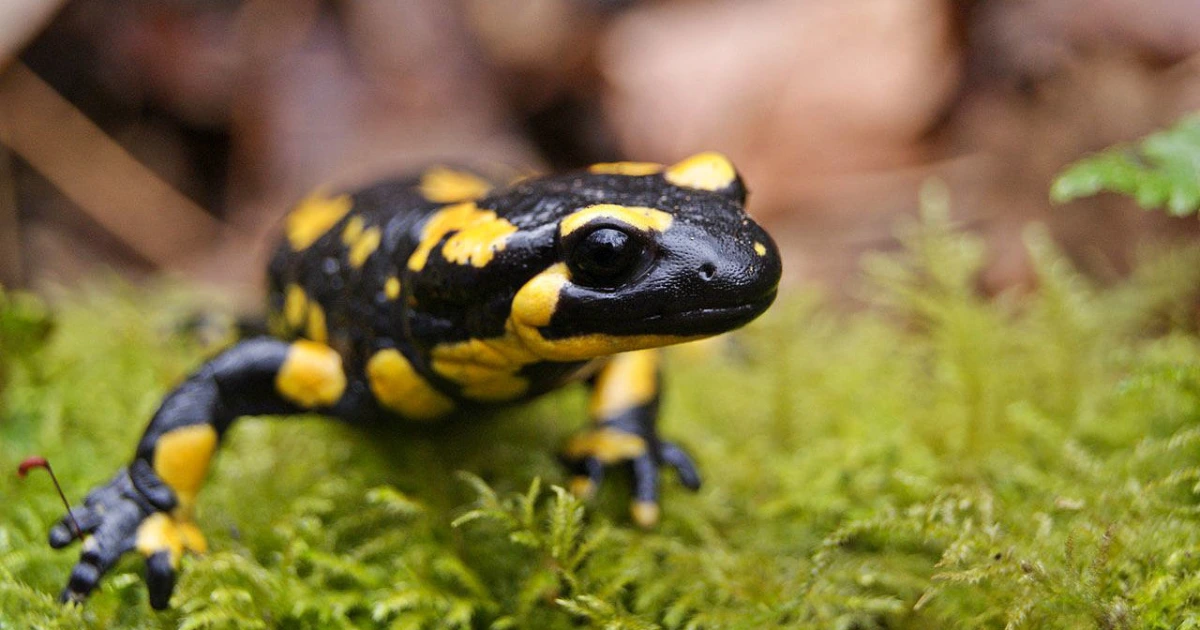
Few groups of animals are as mysterious—or as frequently overlooked—as salamanders. Hidden beneath moss-covered logs, tucked into leaf litter, or gliding silently through cool mountain streams, these remarkable amphibians have been quietly evolving across North America for millions of years.
North America is the world’s center of salamander diversity, with more species than any other continent. From permanently aquatic giants that retain feathery external gills throughout life to tiny woodland species that rarely venture into the open, salamanders occupy an astonishing variety of habitats. Some breathe through lungs, others through their skin, and an entire family has abandoned lungs altogether.
Despite sharing a familiar long-bodied shape, salamanders differ dramatically in size, coloration, behavior, and life history. Some spend their entire lives underwater, while others emerge only on damp nights to hunt insects among fallen leaves. Many possess extraordinary regenerative abilities, allowing them to regrow lost limbs, tails, spinal tissue, and even parts of their hearts and eyes.
Understanding these fascinating amphibians reveals not only one of North America’s richest groups of vertebrates but also why healthy forests, streams, and wetlands are essential for their survival.
What Is a Salamander?
Salamanders belong to the amphibian order Caudata (also called Urodela).
Unlike frogs and toads, salamanders retain their tails throughout life.
Most species possess:
- Four limbs.
- Moist, permeable skin.
- Elongated bodies.
- Long tails.
- Small teeth used for gripping prey.
Although they resemble small lizards, salamanders are amphibians and are only distantly related to reptiles.
North America: The Global Center of Salamander Diversity
North America supports more than 190 native salamander species, making it the richest region in the world for salamander diversity.
The Appalachian Mountains are particularly famous for their extraordinary concentration of species.
The region’s cool climate, ancient forests, and abundant streams have allowed salamanders to diversify over millions of years.
The Main Types of Salamanders
North American salamanders fall into several broad ecological groups.
These include:
- Fully aquatic species.
- Stream-dwelling salamanders.
- Woodland salamanders.
- Mole salamanders.
- Newts.
Each group has evolved unique adaptations for its environment.
Fully Aquatic Salamanders
Some salamanders never leave the water.
Species such as the mudpuppy (Necturus maculosus) retain their feathery external gills throughout life.
This condition, known as neoteny, allows adults to remain permanently aquatic instead of undergoing complete metamorphosis.
Mudpuppies inhabit:
- Rivers.
- Lakes.
- Large streams.
They feed primarily on:
- Crayfish.
- Aquatic insects.
- Small fish.
- Snails.
The Hellbender: North America’s Largest Salamander
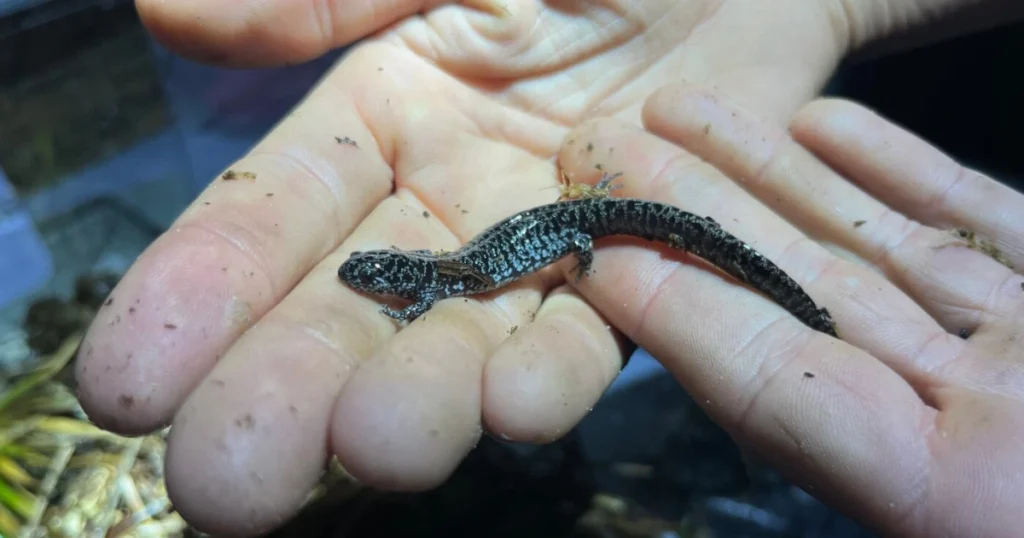
The eastern hellbender (Cryptobranchus alleganiensis) is the largest salamander in North America.
Adults may exceed 29 inches (74 cm) in length.
Flattened bodies and wrinkled skin allow hellbenders to absorb oxygen directly from fast-flowing streams.
They spend much of their lives beneath large rocks, emerging at night to hunt crayfish and other aquatic prey.
Because they require exceptionally clean, well-oxygenated water, hellbenders are considered important indicators of stream health.
Woodland Salamanders
The family Plethodontidae, commonly called lungless salamanders, dominates eastern North America.
Instead of lungs, these salamanders breathe entirely through:
- Their skin.
- The moist lining of the mouth.
This adaptation requires consistently damp environments.
Many woodland species spend their lives beneath:
- Logs.
- Rocks.
- Moss.
- Leaf litter.
Some individuals may occupy surprisingly small home territories for many years.
Red-Backed Salamander
The eastern red-backed salamander (Plethodon cinereus) is among the continent’s most abundant woodland vertebrates.
It feeds on:
- Springtails.
- Mites.
- Small insects.
- Spiders.
Although tiny, these salamanders play an important role in forest nutrient cycling by influencing populations of soil invertebrates.
Mole Salamanders
Members of the genus Ambystoma spend much of the year underground.
Adults emerge mainly during rainy nights to breed in temporary woodland pools.
Notable species include:
- Spotted salamander.
- Tiger salamander.
- Marbled salamander.
Temporary pools provide a safe nursery because they usually lack predatory fish.
Eastern Newts
Eastern newts (Notophthalmus viridescens) have one of the most complex life cycles among North American amphibians.
Their development includes:
- Aquatic larva.
- Bright orange terrestrial “eft.”
- Aquatic breeding adult.
The striking orange juvenile stage serves as a warning to predators that the animal contains skin toxins.
Incredible Regeneration
Few vertebrates rival salamanders when it comes to regeneration.
Many species can regrow:
- Limbs.
- Tails.
- Jaw tissue.
- Parts of the spinal cord.
- Eye structures.
- Heart tissue.
Scientists continue studying salamanders because understanding these regenerative processes may one day contribute to advances in regenerative medicine.
How Salamanders Breathe
Different species use different respiratory strategies.
Some rely on:
- Lungs.
- External gills.
- Skin respiration.
- A combination of methods.
Lungless salamanders have entirely abandoned lungs, making moist skin essential for survival.
Why Moist Skin Is So Important
Salamander skin allows oxygen exchange but also loses water rapidly.
For this reason, salamanders are most active:
- At night.
- During rainfall.
- In humid weather.
- Beneath moist cover.
Dry conditions greatly limit their activity.
Diet
Most salamanders are carnivores.
Their prey includes:
- Earthworms.
- Beetles.
- Ants.
- Flies.
- Crickets.
- Slugs.
- Snails.
- Small crustaceans.
Larger species may consume:
- Small fish.
- Frogs.
- Other salamanders.
Salamanders as Ecosystem Indicators
Because salamanders depend on:
- Clean water.
- Healthy forests.
- Stable moisture.
- Intact soils.
their populations often reflect overall ecosystem health.
Declining salamander numbers may indicate:
- Habitat degradation.
- Water pollution.
- Deforestation.
- Climate-related changes.
For this reason, salamanders are considered valuable bioindicators.
Threats Facing Salamanders
Many species face increasing conservation challenges.
Major threats include:
- Habitat loss.
- Wetland drainage.
- Stream pollution.
- Road mortality during breeding migrations.
- Climate change.
- Invasive species.
- Emerging fungal diseases such as chytridiomycosis in some amphibian populations.
Observing Salamanders Responsibly
Salamanders are delicate animals.
If searching for them:
- Turn logs carefully.
- Replace logs exactly as found.
- Avoid handling whenever possible.
- Never disturb breeding pools.
- Wash hands before and after any necessary handling, as lotions or chemicals on skin can harm amphibians.
Responsible observation helps protect both salamanders and their habitats.
Practical Tips
- Explore forests after gentle rain.
- Search beneath fallen logs and rocks carefully.
- Visit woodland streams in spring.
- Leave natural leaf litter undisturbed in wildlife-friendly gardens.
- Support wetland conservation efforts.
Common Misconceptions
Salamanders Are Lizards
No. Salamanders are amphibians, not reptiles.
All Salamanders Live in Water
Many species spend most of their adult lives on land.
They Are Slimy
Their skin is moist but generally feels smooth rather than slimy.
Touching a Salamander Causes Warts
This is a myth. Salamanders do not cause warts, although they should not be handled unnecessarily because their delicate skin is easily damaged.
Frequently Asked Questions
How many salamander species live in North America?
North America is home to more than 190 native salamander species, more than any other continent.
What is the largest salamander in North America?
The eastern hellbender is the continent’s largest native salamander.
Why do some salamanders have external gills?
Species such as mudpuppies retain juvenile characteristics throughout life, allowing them to remain permanently aquatic.
Can salamanders really regrow limbs?
Yes. Many species possess remarkable regenerative abilities, including the ability to regrow limbs and tails.
Why are salamanders important?
They help regulate insect populations, contribute to nutrient cycling, and serve as indicators of healthy ecosystems.
Conclusion
Salamanders are among North America’s most remarkable yet underappreciated vertebrates. From giant hellbenders hidden beneath river rocks to tiny woodland species living quietly beneath fallen leaves, they represent millions of years of evolutionary adaptation to an extraordinary range of habitats.
Their diversity extends far beyond appearance. Some breathe with lungs, others with gills, and many entirely through their skin. Some spend their entire lives underwater, while others rarely enter streams after leaving the larval stage. Perhaps most astonishing of all is their unparalleled ability to regenerate lost body parts, a trait that continues to fascinate scientists around the world.
Protecting salamanders ultimately means protecting the cool forests, clean streams, wetlands, and healthy soils that support countless other forms of life. The next time you lift a mossy log after a gentle rain, remember that beneath it may live one of North America’s most extraordinary—and least noticed—animals.
Internal Linking
Explore the remarkable diversity of wild cats across the Americas:
https://secretsofthegreengarden.com/wild-cats-of-the-americas/
Learn how migration helps birds survive changing seasons:
https://secretsofthegreengarden.com/bird-migration-explained/
Discover fascinating animal adaptations for survival:
https://secretsofthegreengarden.com/ears-built-for-survival/
See how predators help shape healthy ecosystems:
https://secretsofthegreengarden.com/yellowstone-wolves-river-ecosystem/
Recommended External Sources
- AmphibiaWeb: https://amphibiaweb.org
- Smithsonian’s National Zoo & Conservation Biology Institute: https://nationalzoo.si.edu
- U.S. Geological Survey (USGS) Amphibian Research and Monitoring Initiative: https://armi.usgs.gov