
Introduction
From the frozen forests of Canada to the tropical rainforests of the Amazon and the windswept grasslands of Patagonia, the Americas are home to one of the world’s greatest diversities of wild cats. These remarkable predators occupy nearly every major habitat, from deserts and wetlands to cloud forests and alpine mountains.
While many people are familiar with the jaguar, puma, and bobcat, the Americas also support several smaller and far more elusive feline species. Some weigh less than a domestic cat, yet possess extraordinary hunting abilities that allow them to survive in environments where few other predators can.
Despite belonging to the same biological family (Felidae), each species has evolved unique physical traits, hunting strategies, and behaviors suited to its environment. Some are powerful ambush predators capable of taking large mammals, while others specialize in catching rodents, birds, reptiles, or even fish.
Understanding these wild cats not only highlights their incredible diversity but also emphasizes the importance of conserving the habitats they depend upon in an increasingly fragmented world.
The Wild Cats of the Americas
The Americas are home to 12 recognized native wild cat species, ranging from the massive jaguar to the tiny kodkod.
They include:
- Jaguar (Panthera onca)
- Puma or Mountain Lion (Puma concolor)
- Ocelot (Leopardus pardalis)
- Bobcat (Lynx rufus)
- Canada Lynx (Lynx canadensis)
- Jaguarundi (Herpailurus yagouaroundi)
- Margay (Leopardus wiedii)
- Geoffroy’s Cat (Leopardus geoffroyi)
- Pampas Cat (Leopardus colocola complex)
- Andean Mountain Cat (Leopardus jacobita)
- Kodkod (Leopardus guigna)
- Oncilla or Northern Tiger Cat (Leopardus tigrinus complex, with taxonomy varying by region)
Each occupies a unique ecological niche.
Jaguar: The Largest Cat in the Americas
The jaguar is the only member of the genus Panthera native to the Americas.
Adult males may exceed 250 pounds (113 kg), making them the third-largest cat in the world after tigers and lions.
Unlike many other big cats, jaguars possess an exceptionally powerful bite capable of piercing turtle shells and even the skulls of large prey.
They inhabit:
- Tropical rainforests.
- Wetlands.
- River systems.
- Dry forests.
- Seasonal floodplains.
Excellent swimmers, jaguars frequently hunt fish, turtles, caimans, and capybaras.
Puma: The Most Widespread Wild Cat
The puma has the largest geographic range of any wild terrestrial mammal in the Western Hemisphere.
Its distribution extends from western Canada to southern Chile and Argentina.
Pumas thrive in:
- Mountains.
- Forests.
- Grasslands.
- Deserts.
- Coastal habitats.
Unlike jaguars, they rely primarily on stealth and powerful leaps rather than overwhelming bite force.
Bobcat
The adaptable bobcat occupies much of the United States, southern Canada, and northern Mexico.
Recognizable by its short tail and tufted ears, it hunts:
- Rabbits.
- Rodents.
- Birds.
- Reptiles.
Bobcats have adapted remarkably well to landscapes modified by humans and are among North America’s most successful predators.
Canada Lynx
Closely associated with northern boreal forests, the Canada lynx is highly specialized for snowy environments.
Adaptations include:
- Large fur-covered feet that function like snowshoes.
- Thick insulating fur.
- Long legs.
- Excellent hearing.
Snowshoe hares form the majority of their diet, and lynx populations often fluctuate alongside hare numbers.
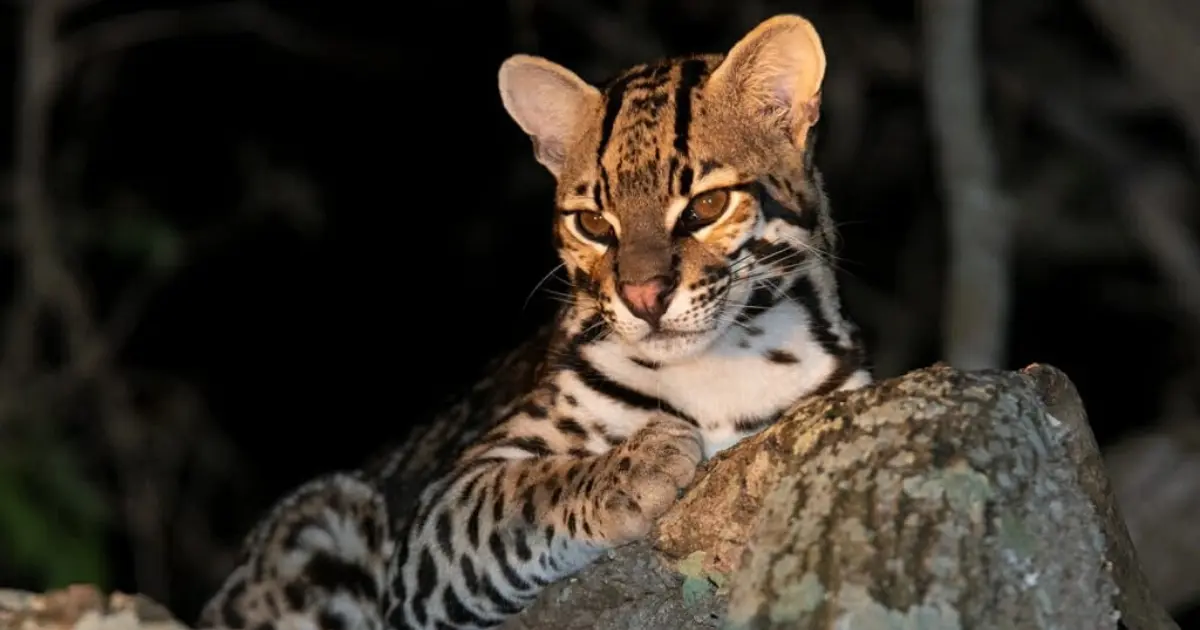
Ocelot
The ocelot is one of the Americas’ most beautifully patterned cats.
Its distinctive chain-like spots and stripes provide excellent camouflage in dense vegetation.
Ocelots hunt primarily at night, feeding on:
- Rodents.
- Birds.
- Lizards.
- Small mammals.
They occur from the southern United States through Central America and much of South America.
Margay
Often called the “tree cat,” the margay is one of the world’s most accomplished climbers.
Unlike most cats, it can rotate its ankles nearly 180 degrees, allowing it to descend tree trunks headfirst.
Much of its hunting takes place in the forest canopy.
Its prey includes:
- Birds.
- Squirrels.
- Tree-dwelling mammals.
- Lizards.
Jaguarundi
The jaguarundi looks remarkably different from most wild cats.
Its body is:
- Long.
- Low to the ground.
- Slender.
Its small rounded ears and uniform coat resemble those of an otter more than a typical spotted cat.
Unlike many other felines, jaguarundis are often active during daylight hours.
Geoffroy’s Cat
Native to southern South America, Geoffroy’s cat occupies:
- Grasslands.
- Scrublands.
- Open woodlands.
Roughly the size of a large domestic cat, it hunts rodents, birds, reptiles, and insects.
Although relatively small, it is an efficient predator.
Pampas Cat
The Pampas cat inhabits a wide variety of open habitats including:
- Grasslands.
- Shrublands.
- High-altitude plains.
Recent genetic research suggests that what was once considered a single species may actually represent several closely related species or subspecies, and scientific classification continues to evolve.
Andean Mountain Cat
One of the world’s rarest wild cats, the Andean mountain cat inhabits high elevations of the Andes.
Living above 10,000 feet (3,000 m), it survives in:
- Rocky slopes.
- Alpine deserts.
- Sparse vegetation.
Very little is known about its behavior because of its remote habitat and extremely low population density.
Kodkod
The kodkod is the smallest wild cat in the Americas.
Native to Chile and parts of Argentina, adults often weigh less than 6 pounds (2.7 kg).
Despite its small size, it is an agile hunter capable of climbing trees and capturing birds, rodents, and reptiles.
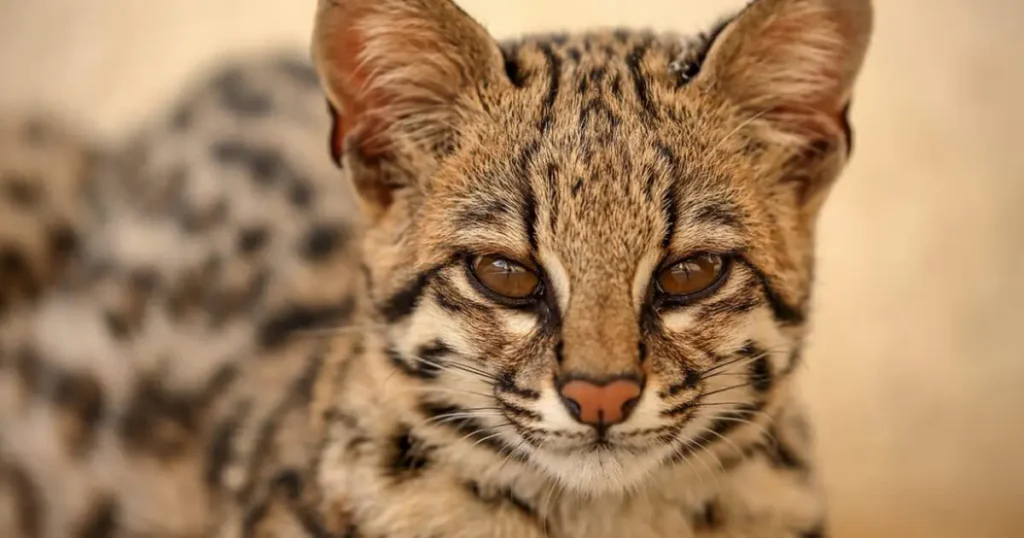
Oncilla (Tiger Cat)
The oncilla resembles a miniature ocelot.
It occupies forests from Central America into northern South America.
Primarily nocturnal, it feeds on:
- Small mammals.
- Birds.
- Lizards.
- Frogs.
Recent genetic studies indicate that populations traditionally grouped as one species may represent multiple distinct species.
How Wild Cats Occupy Different Habitats
Together, these felines occupy nearly every ecosystem in the Americas.
Their habitats include:
- Tropical rainforest.
- Cloud forest.
- Temperate forest.
- Desert.
- Prairie.
- Wetland.
- Mangrove.
- Mountain.
- Alpine plateau.
This diversity reflects millions of years of evolution and adaptation.
Hunting Strategies
Although all are carnivores, hunting methods differ considerably.
Examples include:
- Jaguars overpower large prey.
- Pumas stalk and ambush deer.
- Margays hunt in trees.
- Lynx specialize in snowshoe hares.
- Jaguarundis pursue small prey during daylight.
- Ocelots rely on stealth in dense vegetation.
These differences reduce competition where multiple species share the same habitat.
Threats Facing Wild Cats
Many species face increasing pressures from human activity.
Major threats include:
- Habitat loss.
- Deforestation.
- Road mortality.
- Illegal hunting.
- Declining prey populations.
- Habitat fragmentation.
Large predators often require extensive territories, making them particularly vulnerable to landscape changes.
Why Wild Cats Matter
Wild cats play vital ecological roles.
As predators, they help regulate populations of:
- Herbivores.
- Rodents.
- Smaller carnivores.
Healthy predator populations contribute to balanced ecosystems by influencing food webs throughout the landscape.
Practical Tips
If you’re fortunate enough to visit habitats where wild cats live:
- Observe wildlife from a safe distance.
- Never feed wild animals.
- Stay on designated trails.
- Support protected areas and conservation organizations.
- Respect local wildlife regulations.
Common Misconceptions
All Wild Cats Roar
Only members of the genus Panthera, including the jaguar, can roar.
Most smaller American cats communicate through purrs, growls, chirps, or other vocalizations.
Small Cats Are Less Skilled Hunters
Species like the margay, kodkod, and oncilla are highly specialized predators despite their small size.
Wild Cats Only Live in Rainforests
American wild cats inhabit deserts, mountains, forests, wetlands, grasslands, and even suburban edges in some regions.
Jaguars and Leopards Are the Same Animal
They resemble one another, but jaguars live naturally in the Americas, while leopards are native to Africa and Asia.
Frequently Asked Questions
How many wild cat species live in the Americas?
There are 12 recognized native wild cat species, although ongoing genetic research continues to refine the classification of some smaller cats.
Which is the largest wild cat in the Americas?
The jaguar is the largest and most powerful native cat in the Western Hemisphere.
Which is the smallest?
The kodkod, found mainly in Chile and Argentina, is generally considered the smallest wild cat in the Americas.
Which American wild cat has the widest range?
The puma has the broadest geographic distribution, ranging from Canada to southern South America.
Are American wild cats endangered?
Conservation status varies. Some species, such as the bobcat, remain relatively widespread, while others—including the Andean mountain cat and certain regional populations of ocelots—face significant conservation challenges.
Conclusion
The wild cats of the Americas demonstrate an extraordinary range of evolutionary adaptations. From the immense strength of the jaguar to the remarkable tree-climbing abilities of the margay and the tiny but efficient kodkod, each species has carved out its own ecological niche across one of the most geographically diverse continents on Earth.
Although their appearances and hunting styles differ dramatically, they all share a common role as predators that help maintain healthy ecosystems. Protecting these remarkable animals ultimately means protecting the forests, mountains, wetlands, deserts, and grasslands they call home.
The next time you think of wild cats, look beyond the famous jaguar or puma. Hidden in the forests, mountains, and grasslands of the Americas are some of the world’s most fascinating—and least-known—felines, each playing an irreplaceable part in the natural world.
Internal Linking
Discover how predator reintroduction reshaped Yellowstone’s ecosystem:
https://secretsofthegreengarden.com/yellowstone-wolves-river-ecosystem/
Learn about one of North America’s oldest living trees:
https://secretsofthegreengarden.com/bristlecone-pine-oldest-tree/
Explore the remarkable diversity of coral reef ecosystems:
https://secretsofthegreengarden.com/coral-reef-night-life/
Learn how biodiversity supports healthy ecosystems around the world:
https://secretsofthegreengarden.com/companion-planting-science/
Recommended External Sources
- International Union for Conservation of Nature (IUCN): https://www.iucn.org
- Panthera: https://panthera.org
- Smithsonian’s National Zoo & Conservation Biology Institute: https://nationalzoo.si.edu