
Introduction
Walk through a meadow filled with goldenrod or native wildflowers in late summer, and you’ll probably notice bees, butterflies, hoverflies, and wasps moving from bloom to bloom. What most people never see is the predator waiting among them.
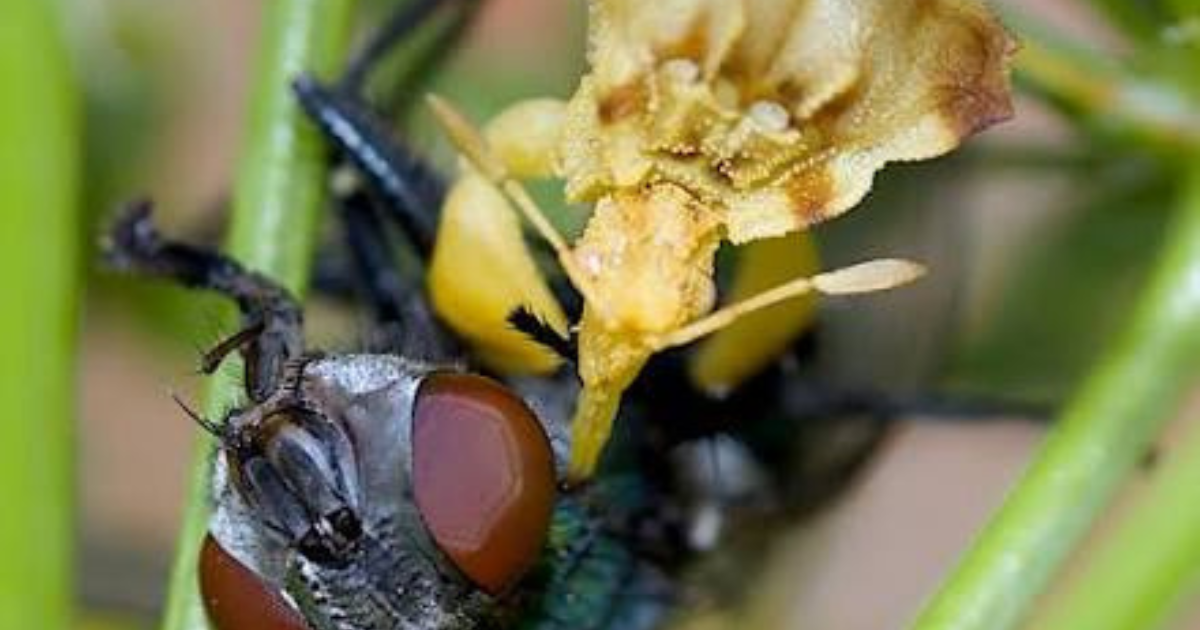
The ambush bug is one of the most remarkable—and most overlooked—hunters in the American garden. Barely half an inch long, it spends its life perched on flowers, remaining perfectly still until an unsuspecting insect comes within reach. Then, in a fraction of a second, it strikes with powerful grasping forelegs, capturing prey that can be several times its own size.
From August through October, ambush bugs are especially common on goldenrod, asters, sunflowers, and other late-season flowers across much of North America. Despite hunting in broad daylight, their camouflage is so effective that many gardeners spend years observing pollinators without ever realizing a skilled predator has been sitting among the blossoms all along.
Far from being a pest, the ambush bug is a fascinating part of the garden ecosystem, demonstrating how predators help maintain balance even among the busiest flower beds.
What Is an Ambush Bug?
Ambush bugs belong to the genus Phymata, a group of true bugs within the assassin bug family (Reduviidae).
Unlike many assassin bugs, which actively search for prey, ambush bugs rely almost entirely on camouflage and patience.
Their bodies are:
- Broad and flattened.
- Irregularly shaped.
- Often yellow, white, green, or brown.
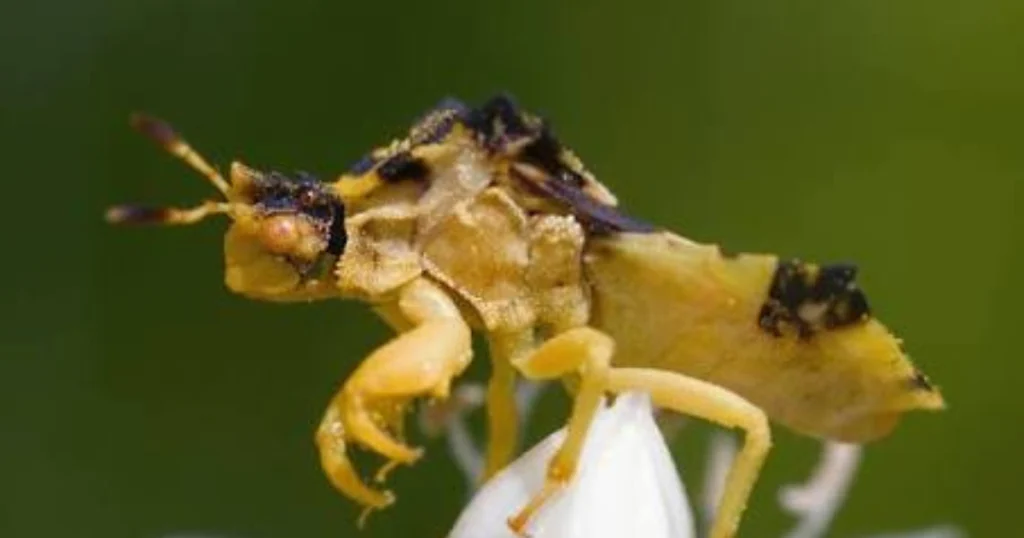
- Covered with bumps and projections that resemble flower parts.
This disguise allows them to blend seamlessly into blossoms.
Where Are Ambush Bugs Found?
Ambush bugs occur across much of North America.
They are commonly found in:
- Native prairies.
- Meadows.
- Roadsides.
- Wildflower gardens.
- Pollinator gardens.
- Woodland edges.
They are especially abundant on flowering plants during late summer and early autumn.
Goldenrod (Solidago species) is one of their favorite hunting locations because it attracts large numbers of pollinating insects.
Masters of Camouflage
Camouflage is the ambush bug’s greatest weapon.
Rather than hiding beneath leaves, it sits directly on flowers where pollinators naturally gather.
Its coloration often matches:
- Yellow flowers.
- White blossoms.
- Green flower buds.
- Brown seed heads.
Remaining motionless for hours, it becomes almost invisible even at close range.
Many photographers discover an ambush bug only after reviewing close-up images of flowers.
Built for Ambush Hunting
Several physical adaptations make the ambush bug an efficient predator.
These include:
- Thick grasping front legs.
- A powerful piercing beak.
- Excellent camouflage.
- Strong forelimb muscles.
- Wide field of vision.
The front legs function much like those of a praying mantis, quickly snapping shut around prey.
How the Hunt Works
The hunting strategy is remarkably simple.
An ambush bug waits quietly on a flower until an insect lands nearby.
When prey comes within reach:
- The front legs clamp around the victim.
- The piercing mouthpart punctures the prey.
- Digestive enzymes begin breaking down internal tissues.
- The liquefied contents are consumed.
The entire attack happens in a fraction of a second.
Surprisingly Large Prey
One of the most astonishing aspects of ambush bugs is the size of the insects they capture.
Prey may include:
- Bumblebees.
- Honey bees.
- Solitary bees.
- Wasps.
- Butterflies.
- Hoverflies.
- Flies.
- Small beetles.
Some victims weigh considerably more than the ambush bug itself.
The predator succeeds because it relies on surprise rather than strength alone.
Do They Harm Pollinators?
Yes—but this is a natural part of a healthy ecosystem.
Pollinators are essential for flowering plants, yet predators are equally important because they help regulate insect populations and maintain ecological balance.
Ambush bugs typically capture only a tiny fraction of the insects visiting flowers.
Their presence does not threaten healthy pollinator populations.
Why Goldenrod Is a Favorite Hunting Ground
Goldenrod is often alive with insect activity during late summer.
Its dense flower clusters attract:
- Native bees.
- Bumblebees.
- Wasps.
- Beetles.
- Butterflies.
- Hoverflies.
For an ambush bug, few locations offer a better opportunity to wait for prey.
Rather than chasing insects, it simply lets the flowers bring food directly to it.
Life Cycle
Most ambush bugs have one generation each year.
The life cycle generally follows this pattern:
- Eggs overwinter.
- Nymphs hatch in spring.
- Young bugs molt several times.
- Adults become common from midsummer into autumn.
- Females lay eggs before winter.
The eggs survive cold temperatures until the following spring.
Can They Bite People?
Ambush bugs are not aggressive toward humans.
However, like other assassin bugs, they can deliver a painful defensive bite if handled or accidentally pressed against the skin.
These bites are uncommon and are not considered medically significant for most people.
Observing them without touching them is the best approach.
Differences Between Ambush Bugs and Praying Mantises
Because of their grasping forelegs, ambush bugs are sometimes confused with tiny praying mantises.
Key differences include:
Ambush bugs:
- Belong to the true bug family.
- Have short, broad bodies.
- Possess a piercing beak.
- Sit directly on flowers.
Praying mantises:
- Have elongated bodies.
- Hunt in a wider variety of locations.
- Use chewing mouthparts.
The two groups evolved similar hunting strategies independently, an example of convergent evolution.
Why They Matter in the Garden
A healthy garden supports more than pollinators.
Predators like ambush bugs contribute to biodiversity by helping regulate insect communities.
They are one part of a larger food web that includes:
- Spiders.
- Assassin bugs.
- Lady beetles.
- Lacewings.
- Dragonflies.
- Birds.
A diverse garden naturally contains both hunters and prey.
Encouraging Ambush Bugs Naturally
If you want to support ambush bugs and other beneficial predators:
- Plant native wildflowers.
- Grow goldenrod and asters.
- Avoid unnecessary insecticide use.
- Leave some natural meadow areas.
- Provide flowering plants throughout the growing season.
- Encourage overall insect diversity.
A garden rich in pollinators naturally attracts their predators as well.
Practical Tips
- Examine goldenrod closely during late summer.
- Look for insects that appear unusually motionless.
- Use a macro lens for photography.
- Observe rather than disturb them.
- Grow a variety of native flowering plants.
Common Misconceptions
They Are Baby Praying Mantises
No. Ambush bugs belong to the assassin bug family and are unrelated to mantises.
They Are Garden Pests
They prey on insects but rarely occur in numbers that would negatively affect pollinator populations.
They Chase Their Prey
Ambush bugs rely almost entirely on camouflage and surprise.
They Are Dangerous
They are harmless unless handled, when they may deliver a defensive bite.
Frequently Asked Questions
What does an ambush bug eat?
Ambush bugs feed on a wide variety of insects, including bees, flies, butterflies, wasps, beetles, and other flower visitors.
Where can I find ambush bugs?
They are commonly found on goldenrod, asters, sunflowers, and other flowering plants from late summer through autumn.
Are ambush bugs beneficial?
Yes. They are native predators that contribute to healthy insect communities within natural ecosystems and gardens.
Can they sting?
No. They do not sting, although they can bite defensively if handled.
Why are they so difficult to see?
Their body shape and coloration closely resemble the flowers on which they hunt, providing exceptional camouflage.
Conclusion
The ambush bug perfectly illustrates how much fascinating wildlife exists in even the smallest garden. While attention often focuses on colorful butterflies and busy bees, an equally remarkable predator may be waiting only a few inches away, hidden in plain sight.
Its extraordinary camouflage, lightning-fast strike, and ability to overpower insects much larger than itself make it one of North America’s most impressive miniature hunters. Rather than disrupting the garden, the ambush bug plays an important role in maintaining ecological balance, reminding us that every healthy flower patch supports a complex community of predators, prey, and pollinators.
The next time goldenrod blooms in late summer, slow down and look carefully. You may discover that the flowers you’ve admired for years have been hiding one of the garden’s most remarkable predators all along.
Internal Linking
Learn how companion planting supports beneficial insects and a healthier garden:
https://secretsofthegreengarden.com/companion-planting-science/
Discover why goldenrod is one of the most valuable late-season plants for wildlife:
https://secretsofthegreengarden.com/goldenrod-benefits-for-pollinators/
Explore remarkable survival adaptations found throughout the animal kingdom:
https://secretsofthegreengarden.com/ears-built-for-survival/
See how sensory gardens can attract wildlife while engaging all five senses:
https://secretsofthegreengarden.com/sensory-garden-design-guide/
Recommended External Sources
- University of Florida IFAS Extension: https://edis.ifas.ufl.edu
- Iowa State University Extension and Outreach: https://extension.iastate.edu
- Xerces Society for Invertebrate Conservation: https://www.xerces.org