
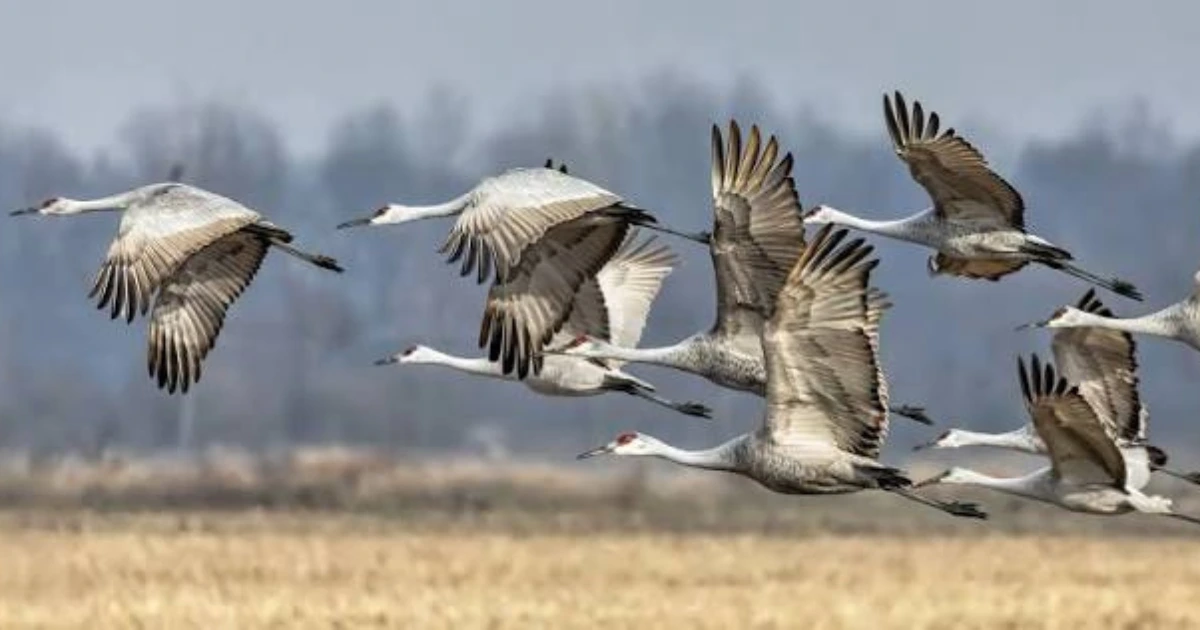
Introduction
Twice each year, one of nature’s greatest spectacles unfolds largely unnoticed. As the seasons change, billions of birds leave their breeding grounds and embark on journeys that may span hundreds, thousands, or even tens of thousands of miles. Some cross entire oceans without stopping, while others fly over deserts, mountain ranges, and vast stretches of forest before reaching their destination.
Long-distance migration is among the most physically demanding behaviors in the animal kingdom. A bird weighing only a few ounces may fly farther than many mammals travel in a lifetime, surviving storms, predators, and rapidly changing weather while relying on instincts that have evolved over millions of years.
Every migratory species has developed its own strategy. Some build enormous fat reserves before departure. Others pause at critical stopover sites to refuel. Wing shape, muscle structure, metabolism, and navigation abilities all reflect the unique journey each bird must complete.
Understanding bird migration reveals not only the extraordinary abilities of these animals but also the importance of protecting the habitats they depend on throughout their annual travels.
What Is Bird Migration?
Migration is the regular seasonal movement of animals between different regions.
For birds, migration usually connects:
- Breeding grounds.
- Wintering grounds.
- Important stopover sites.
Most migrations are driven by changing food availability rather than temperature alone.
As insects disappear, water freezes, or plants stop producing seeds and fruit, many birds move to areas where food remains abundant.
Why Birds Migrate
Migration allows birds to take advantage of the best conditions at different times of the year.
Benefits include:
- Longer daylight hours during breeding.
- Abundant seasonal food.
- Reduced competition.
- Better nesting opportunities.
- Increased survival of young.
By moving between regions instead of remaining in one place year-round, many species successfully exploit resources that would otherwise be unavailable.
Different Types of Migration
Not all birds migrate in the same way.
Long-Distance Migrants
Species such as Arctic terns and many shorebirds travel thousands of miles between continents every year.
Medium-Distance Migrants
Many ducks, geese, and songbirds move several hundred to a few thousand miles.
Short-Distance Migrants
Some species simply move from mountains to valleys or shift to nearby regions with milder winter conditions.
Partial Migrants
In certain species, only part of the population migrates while others remain year-round.
Wings Designed for Distance
Wing shape strongly influences migration.
Long-distance migrants often possess:
- Long, narrow wings.
- High aerodynamic efficiency.
- Reduced energy consumption.
- Excellent gliding ability.
These adaptations allow sustained flight over remarkable distances.
By contrast, woodland birds that migrate shorter distances often have shorter, rounder wings better suited to maneuvering through dense vegetation.
Fueling the Journey
Migration demands enormous amounts of energy.
Before departure, many birds dramatically increase their food intake.
Some species nearly double their body weight by storing fat.
Fat provides more than twice the energy per gram compared with carbohydrates or protein, making it the ideal fuel for endurance flight.
During migration, birds may stop repeatedly to replenish these reserves.
Navigation: Finding the Way
Bird navigation remains one of biology’s greatest mysteries.
Research has shown that migrating birds use a combination of cues, including:
- The position of the sun.
- The stars.
- Earth’s magnetic field.
- Landmarks.
- Polarized light.
- Their sense of smell in some species.
Young birds often inherit an instinctive migration direction, while older birds refine their routes through experience.
Stopover Sites Matter
Most long-distance migrants cannot complete their journeys without resting.
Wetlands, forests, grasslands, and coastal habitats provide critical places to:
- Feed.
- Rest.
- Restore fat reserves.
The loss of these stopover habitats can reduce migration success even when breeding and wintering grounds remain intact.
Famous Long-Distance Migrants
Arctic Tern
The Arctic tern (Sterna paradisaea) undertakes the longest known migration of any animal.
Individuals may travel more than 40,000 miles (64,000 km) each year as they move between Arctic breeding grounds and Antarctic waters.
Over a lifetime, one bird may fly the equivalent of several trips to the Moon.
Bar-Tailed Godwit
The bar-tailed godwit (Limosa lapponica) holds one of the longest known non-stop flights.
Some individuals fly over 8,000 miles (13,000 km) across the Pacific Ocean without landing.
They accomplish this by accumulating enormous fat reserves before departure.
Ruby-Throated Hummingbird
Despite weighing only about 3–4 grams, ruby-throated hummingbirds cross the Gulf of Mexico during migration.
Their nonstop flight covers approximately 500 miles (800 km) under favorable conditions.
Sandhill Crane
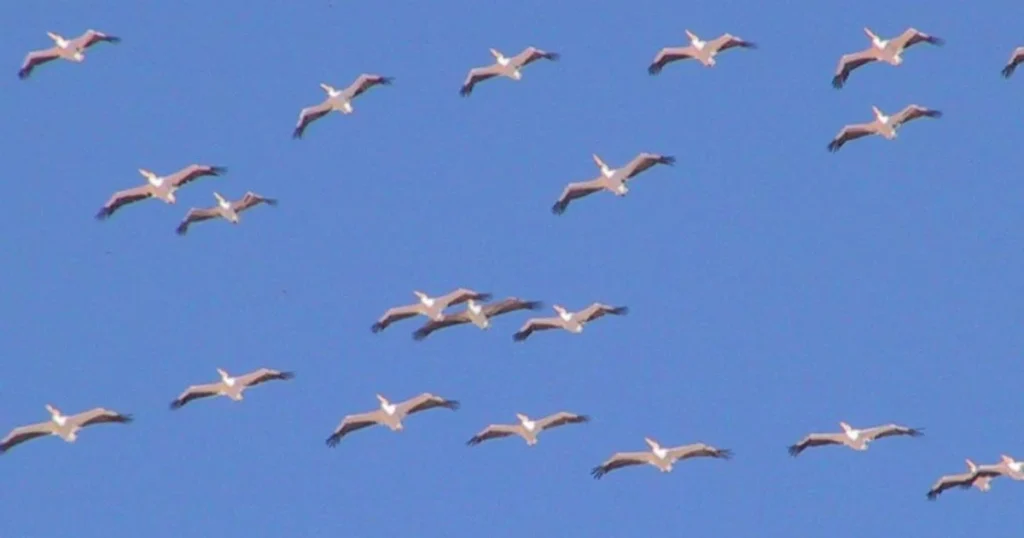
Sandhill cranes migrate in large flocks across North America.
Their spectacular stopovers along rivers such as Nebraska’s Platte River attract hundreds of thousands of birds each spring.
Weather and Migration
Weather strongly influences migration timing.
Birds often wait for:
- Favorable tailwinds.
- Stable atmospheric conditions.
- Appropriate temperatures.
Storms can delay departures or force birds to alter their routes.
Climate patterns also influence food availability along migration corridors.
Challenges Along the Way
Migration is dangerous.
Birds face numerous threats, including:
- Storms.
- Predators.
- Habitat loss.
- Glass collisions.
- Artificial lighting.
- Wind turbines in some locations.
- Hunting in certain regions.
Many young birds do not survive their first migration.
The Importance of Flyways
Rather than migrating randomly, many birds follow broad migration corridors known as flyways.
Major examples include:
- Atlantic Flyway.
- Mississippi Flyway.
- Central Flyway.
- Pacific Flyway.
These routes connect breeding areas with wintering grounds while linking essential stopover habitats.
Climate Change and Migration
Changing climate conditions are altering migration in many species.
Scientists have documented changes such as:
- Earlier spring arrivals.
- Shifts in breeding ranges.
- Altered migration timing.
- Changes in food availability.
Not every species responds at the same rate, creating new ecological challenges where migration and seasonal food supplies become less synchronized.
How People Can Help Migratory Birds
Simple actions can support migrating birds.
These include:
- Planting native vegetation.
- Protecting wetlands.
- Keeping cats indoors during peak migration.
- Reducing unnecessary outdoor lighting at night.
- Making windows more bird-friendly.
- Supporting habitat conservation projects.
Even small gardens can provide valuable food and shelter during migration.
Practical Tips for Birdwatchers
If you’d like to observe migration:
- Visit wetlands during spring or autumn.
- Watch early in the morning.
- Bring binoculars.
- Learn common migration seasons in your region.
- Listen for nocturnal migration calls during clear nights.
Migration often peaks shortly after favorable weather conditions.
Common Misconceptions
Birds Migrate Only Because It’s Cold
Food availability is the primary driver of migration, not temperature alone.
All Birds Migrate
Many bird species remain in the same area throughout the year.
Birds Always Follow the Same Route
Migration routes can vary depending on weather, age, and environmental conditions.
Young Birds Learn Every Route from Adults
Many species complete their first migration using inherited instincts without adult guidance.
Frequently Asked Questions
Which bird migrates the farthest?
The Arctic tern is generally recognized as having the longest annual migration of any animal.
How do birds know where to go?
Birds use multiple navigation systems, including celestial cues, Earth’s magnetic field, landmarks, and inherited instincts.
Why do birds stop during migration?
Stopovers allow birds to rest and rebuild the fat reserves needed for the next stage of their journey.
Do all birds migrate at night?
No. Many songbirds migrate primarily at night, while species such as cranes, geese, and many raptors often migrate during daylight.
Can climate change affect bird migration?
Yes. Changes in climate are influencing migration timing, breeding schedules, and the availability of food along migration routes.
Conclusion
Bird migration is one of nature’s most extraordinary achievements. Each year, millions of birds undertake journeys that test the limits of endurance, navigating across continents and oceans using a remarkable combination of instinct, experience, and environmental cues.
From the Arctic tern’s globe-spanning flights to the hummingbird’s astonishing nonstop crossing of the Gulf of Mexico, every migratory species demonstrates unique adaptations shaped by countless generations of evolution. Their survival depends not only on strong wings and remarkable navigation skills but also on healthy breeding grounds, wintering habitats, and the countless stopover sites that connect them.
Protecting migratory birds means thinking beyond individual landscapes. Their annual journeys remind us that conservation is an international effort, linking ecosystems across continents through one of the greatest natural phenomena on Earth.
Internal Linking
Learn how different wing shapes help birds survive in diverse habitats:
https://secretsofthegreengarden.com/ears-built-for-survival/
Discover mammals uniquely adapted to North America’s Great Plains:
https://secretsofthegreengarden.com/mammals-of-the-great-plains/
Explore the remarkable diversity of wild cats across the Americas:
https://secretsofthegreengarden.com/wild-cats-of-the-americas/
See how ecosystems change when top predators return:
https://secretsofthegreengarden.com/yellowstone-wolves-river-ecosystem/
Recommended External Sources
- Cornell Lab of Ornithology: https://www.birds.cornell.edu
- BirdLife International: https://www.birdlife.org
- Audubon: https://www.audubon.org