
Introduction
There is a quiet lesson hidden in almost every mature Japanese maple. Unlike fast-growing shade trees that quickly dominate a landscape, a Japanese maple grows with remarkable patience. A young nursery tree, barely taller than a person, may appear modest when first planted. Twenty years later, it has become something entirely different—not simply larger, but more graceful, more sculptural, and more deeply woven into the character of the garden.
Few ornamental trees reward long-term care as consistently as the Japanese maple (Acer palmatum). Its elegant branching, finely divided leaves, spectacular autumn color, and architectural silhouette have made it one of the world’s most admired landscape trees for centuries.
Yet many gardeners misunderstand how Japanese maples grow. They assume slow growth indicates poor health, prune too aggressively in an attempt to shape them quickly, or plant them where they eventually struggle with afternoon heat or confined root space.
Understanding the natural growth habits of Japanese maples allows gardeners to create landscapes that become more beautiful with every passing year rather than requiring constant correction.
What Is a Japanese Maple?
Japanese maple refers primarily to Acer palmatum, a deciduous tree native to Japan, Korea, eastern China, and parts of eastern Mongolia.
For centuries, it has been cultivated in Japanese gardens, temple landscapes, and private homes, where its refined appearance complements stone, water, moss, and carefully designed planting schemes.
Today, hundreds of cultivars exist, varying in:
- Leaf shape.
- Leaf color.
- Mature size.
- Branch structure.
- Growth rate.
- Autumn color.
Some remain compact shrubs less than 5 feet (1.5 m) tall, while others develop into elegant trees reaching 20–25 feet (6–8 m) under ideal conditions.
Why Japanese Maples Grow Slowly
One of the reasons Japanese maples remain so desirable is that they prioritize quality of structure over rapid growth.
Young trees spend their early years building:
- Strong root systems.
- Balanced branch architecture.
- Dense twig networks.
- Stable trunk development.
Most established Japanese maples grow approximately 12–24 inches (30–60 cm) per year under favorable conditions, although growth varies among cultivars.
A slow-growing tree is not necessarily an unhealthy one.
In fact, steady, moderate growth often produces stronger branch structure and longer-lived ornamental value than extremely fast-growing species.
A Tree That Improves with Age
Many ornamental trees reach their visual peak relatively quickly.
Japanese maples often become more attractive for decades.
As the tree matures:
- Branches become increasingly layered.
- The trunk develops character.
- Bark texture improves.
- The canopy gains depth.
- Seasonal color becomes more dramatic.
Unlike formal clipped shrubs, Japanese maples often acquire beauty through gradual natural development rather than constant shaping.
Choosing the Right Variety
Selecting the appropriate cultivar is one of the most important decisions.
Japanese maples fall into several broad groups.
Green-Leaf Varieties
Classic green cultivars produce fresh spring foliage followed by brilliant autumn colors ranging from yellow and orange to scarlet.
Popular examples include:
- ‘Osakazuki’
- ‘Sango-kaku’ (coral bark maple)
- ‘Seiryu’
Red-Leaf Varieties
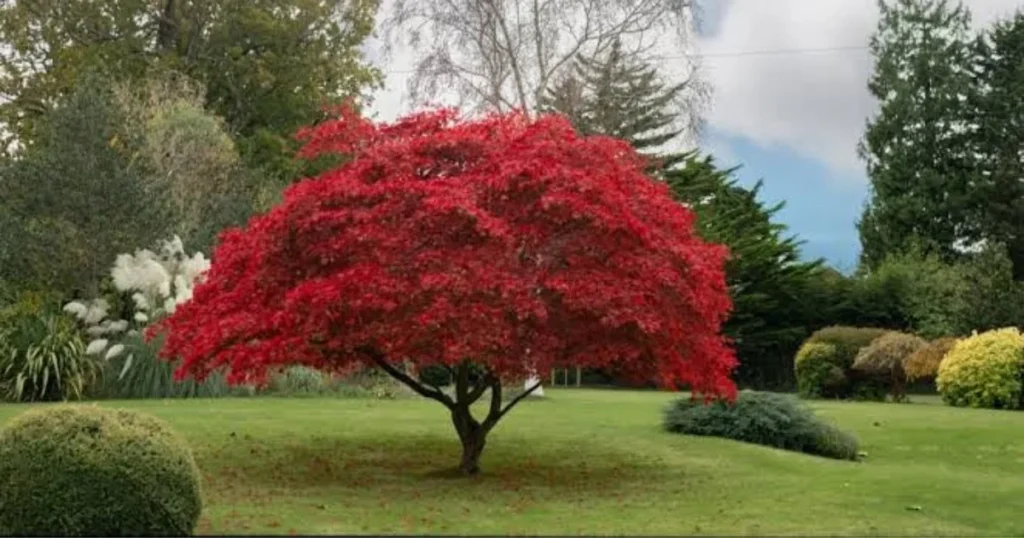
These provide rich burgundy or purple foliage through much of the growing season.
Well-known cultivars include:
- ‘Bloodgood’
- ‘Emperor I’
- ‘Fireglow’
Laceleaf Japanese Maples
These finely dissected forms create cascading, umbrella-like canopies.
Common examples include:
- ‘Crimson Queen’
- ‘Tamukeyama’
- ‘Garnet’
They are especially popular near ponds, pathways, and rock gardens.
Finding the Perfect Location
Location has a profound influence on long-term success.
Japanese maples generally perform best where they receive:
- Morning sun.
- Afternoon shade in hotter climates.
- Shelter from drying winds.
- Protection from reflected heat.
In cooler regions, many cultivars tolerate full sun.
In warmer climates, excessive afternoon sunlight may scorch delicate leaves.
Soil Requirements
Healthy Japanese maples prefer soil that is:
- Well-drained.
- Rich in organic matter.
- Slightly acidic to neutral.
- Evenly moist.
Heavy, poorly drained soils increase the risk of root diseases.
Adding compost before planting improves both fertility and drainage.
Watering Young Trees
Newly planted trees require regular watering while establishing roots.
Deep, infrequent watering is generally more beneficial than frequent shallow irrigation.
Once established, Japanese maples become moderately drought tolerant, although prolonged drought may reduce growth and increase leaf scorch.
Applying organic mulch helps conserve moisture while moderating soil temperatures.
Why Mulch Is So Important
Japanese maple roots grow relatively close to the soil surface.
A layer of mulch helps:
- Retain moisture.
- Suppress weeds.
- Reduce soil temperature fluctuations.
- Improve soil structure over time.
Keep mulch a few inches away from the trunk to prevent excess moisture against the bark.
Pruning the Right Way
Japanese maples require surprisingly little pruning.
The goal is usually to enhance their natural form rather than impose an artificial shape.
Routine pruning may involve removing:
- Dead branches.
- Crossing limbs.
- Broken wood.
- Weak inward-growing shoots.
Heavy pruning often destroys the graceful branching pattern that develops naturally with age.
Late winter or mid-summer are commonly recommended pruning periods, depending on local climate and the type of work required.
Common Reasons Leaves Become Damaged
Japanese maple leaves occasionally develop brown edges or scorched patches.
Possible causes include:
- Hot afternoon sun.
- Dry winds.
- Drought.
- Irregular watering.
- Excessive reflected heat from pavement.
These symptoms often appear during unusually hot summers.
The tree itself usually remains healthy even when some foliage becomes scorched.
Seasonal Beauty
Few trees provide interest throughout every season as effectively.
Spring
Fresh new leaves emerge in brilliant colors ranging from lime green to deep burgundy.
Many cultivars produce especially vivid spring foliage.
Summer
The tree develops a dense canopy with elegant branching.
Its refined texture complements flowering perennials and shade gardens.
Autumn
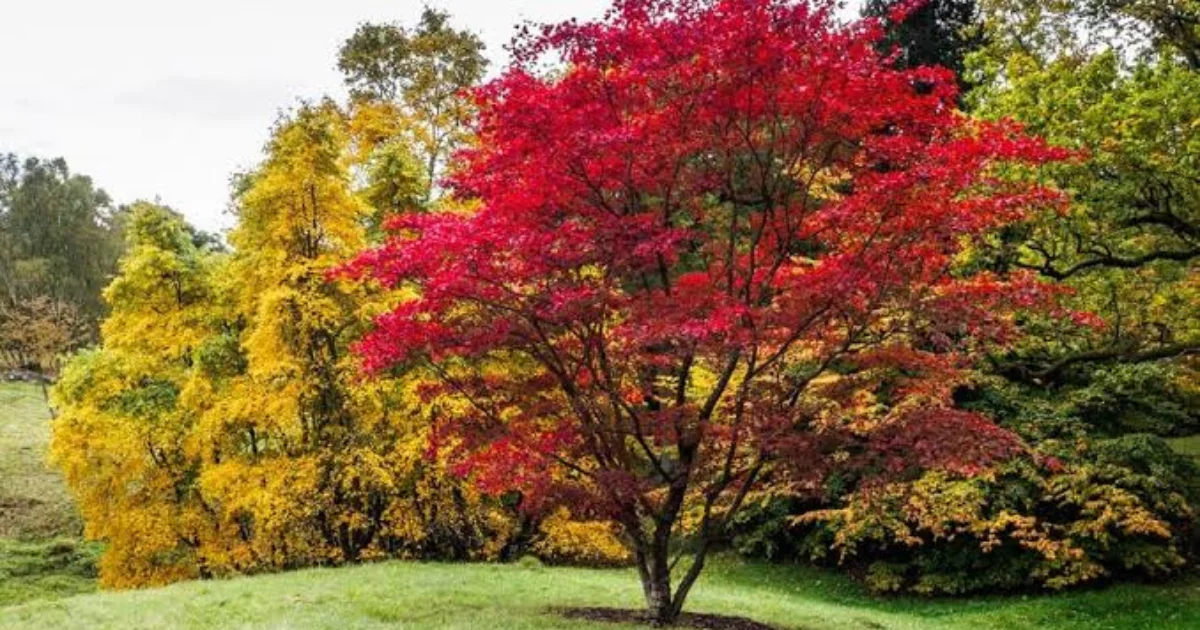
Japanese maples are famous for spectacular autumn displays.
Depending on the cultivar, leaves may turn:
- Bright yellow.
- Golden orange.
- Scarlet.
- Crimson.
- Deep red.
Color intensity varies with weather conditions, genetics, and local climate.
Winter
After leaf fall, the branching structure becomes the main feature.
Some cultivars, such as coral bark maple, also develop brightly colored young stems that provide winter interest.
Companion Plants
Japanese maples combine beautifully with plants that appreciate similar growing conditions.
Popular companions include:
- Hostas.
- Ferns.
- Heucheras.
- Astilbes.
- Hakone grass.
- Hydrangeas.
- Azaleas.
- Rhododendrons.
- Mosses.
These combinations emphasize the tree’s refined texture while extending seasonal interest.
Growing Japanese Maples in Containers
Many compact cultivars perform well in large containers.
Success depends on:
- Excellent drainage.
- Regular watering.
- High-quality potting mix.
- Winter protection in colder climates.
Container-grown trees generally require more frequent watering than those planted in the ground.
Common Pests and Diseases
Japanese maples are relatively resilient when grown under suitable conditions.
Occasional issues include:
- Aphids.
- Scale insects.
- Verticillium wilt.
- Root rot in poorly drained soils.
Maintaining healthy growing conditions is the best long-term defense against most problems.
Practical Tips
- Plant in well-drained, organically rich soil.
- Protect delicate cultivars from intense afternoon sun.
- Water deeply during establishment.
- Mulch every year.
- Prune lightly and selectively.
- Allow the tree to develop its natural shape.
- Be patient—Japanese maples improve steadily with age.
Common Mistakes
Planting in Full Afternoon Sun in Hot Climates
Leaf scorch becomes much more likely.
Over-Pruning
Removing too much growth destroys the tree’s graceful architecture.
Watering Too Frequently
Constantly wet soil encourages root problems.
Planting Too Deeply
The root flare should remain visible at the soil surface.
Expecting Rapid Growth
Japanese maples are naturally moderate growers.
Frequently Asked Questions
How fast does a Japanese maple grow?
Most cultivars grow about 12–24 inches (30–60 cm) per year under favorable conditions, although growth rates vary.
Can Japanese maples grow in full sun?
Many tolerate full sun in cooler climates, but in hotter regions they generally benefit from afternoon shade to reduce leaf scorch.
Do Japanese maples need much pruning?
No. They usually require only light structural pruning and removal of damaged or crossing branches.
How long do Japanese maples live?
With proper care, Japanese maples can live for many decades, and some specimens are known to survive for well over a century.
Can Japanese maples grow in pots?
Yes. Many dwarf and compact cultivars perform well in containers if provided with excellent drainage and regular watering.
Conclusion
A Japanese maple is one of the few garden trees that seems to become more beautiful with every passing year. Its value lies not in rapid growth but in gradual refinement. Each season adds another layer of branching, another year of trunk character, and another opportunity for spectacular autumn color.
Gardeners who understand this rhythm rarely feel disappointed by its pace. Instead, they appreciate that every spring brings a slightly fuller canopy, every autumn a richer display, and every decade a tree with greater presence than the one before.
In a world where many landscapes are designed for immediate impact, the Japanese maple offers something increasingly rare: beauty that deepens through patience. Planted in the right place and given thoughtful care, it becomes more than an ornamental tree—it becomes a permanent part of the garden’s story.
Internal Linking
Learn how to create a shaded garden beneath ornamental trees:
https://secretsofthegreengarden.com/best-shade-garden-plants/
Discover how heat stress affects ornamental trees and shrubs:
https://secretsofthegreengarden.com/heat-stress-in-plants/
Build healthy soil that supports long-lived trees:
https://secretsofthegreengarden.com/why-not-leave-bare-soil-winter/
Add timeless garden structure with a flowering wisteria tunnel:
https://secretsofthegreengarden.com/wisteria-tunnel-guide/
Recommended External Sources
- Royal Horticultural Society (RHS): https://www.rhs.org.uk
- Missouri Botanical Garden: https://www.missouribotanicalgarden.org
- Oregon State University Extension Service: https://extension.oregonstate.edu