
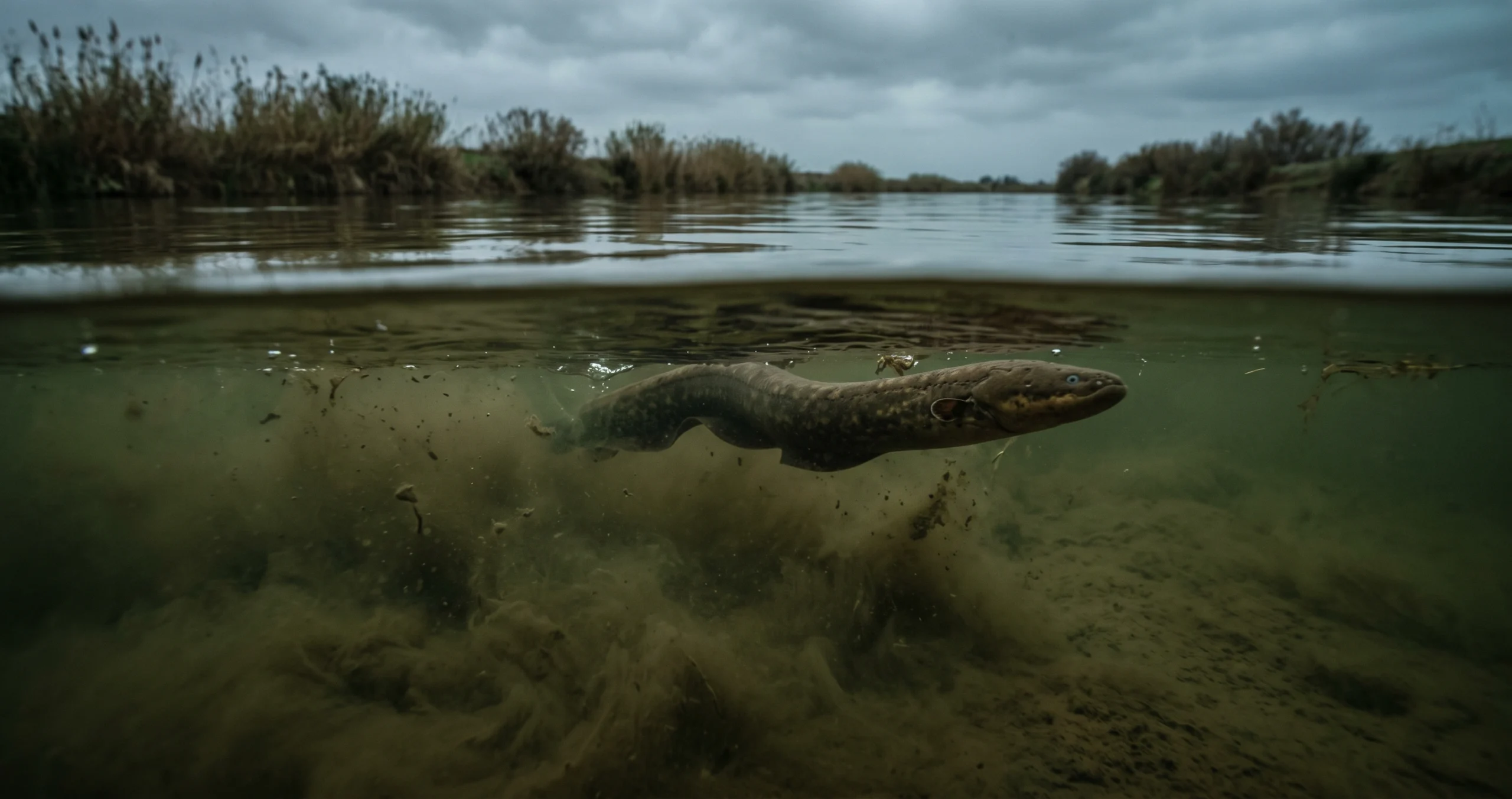
Electric eels are among the most extraordinary animals on Earth, capable of producing powerful electrical discharges that can stun prey, defend against predators, and even help them navigate through murky waters. Although they are commonly called eels, these fascinating freshwater fish are actually more closely related to knifefish than to true eels. The science behind electric eel voltage has fascinated biologists, engineers, and physicists for centuries because it represents one of nature’s most remarkable examples of biological electricity.
Modern research has revealed that electric eels possess not one but three specialized electric organs, each serving different purposes. They can generate gentle electrical pulses for navigation, powerful high-voltage shocks for hunting, and sophisticated electrical signals that help them sense their surroundings. Understanding how electric eel voltage works offers a fascinating glimpse into evolution, neurobiology, and bioelectricity while also highlighting important safety considerations for anyone exploring tropical rivers where these animals live.
Table of Contents
- Meet the Electric Eel
- What Is Electric Eel Voltage?
- The Three Electric Organs
- How Electric Organs Produce Electricity
- Low-Voltage Pulses and Electrolocation
- High-Voltage Shocks for Hunting and Defense
- The Physics Behind the Curling Behavior
- Why Electric Eels Need Electricity
- Safety Around Electric Eel Habitats
- Common Myths About Electric Eels
- Frequently Asked Questions
- Conclusion
Meet the Electric Eel
Electric eels belong to the genus Electrophorus and inhabit freshwater rivers, floodplains, and wetlands throughout the Amazon and Orinoco river basins in South America.
Despite their snake-like appearance, they are not true eels.
Instead, they belong to a group of freshwater fishes known as gymnotiform knifefishes.
Adult electric eels can exceed 2 meters (over 8 feet) in length and weigh more than 20 kilograms (44 pounds).
They frequently inhabit slow-moving, muddy waters where visibility is poor and oxygen levels are low.
To survive in these environments, electric eels breathe atmospheric air, surfacing regularly to gulp oxygen.
Their ability to generate electricity provides a major advantage in habitats where vision alone is often unreliable.
What Is Electric Eel Voltage?
Electric eel voltage refers to the electrical potential generated by specialized organs within the fish’s body.
Large individuals can produce discharges exceeding 600 volts, with some species capable of generating even higher voltages under certain conditions.
Voltage alone, however, does not determine how dangerous a shock may be.
The biological effects of electricity also depend on current, pulse duration, resistance, and how electricity travels through the body.
Electric eels carefully regulate both the strength and purpose of each electrical discharge.
Rather than constantly producing maximum voltage, they select different electrical signals depending on the situation.
The Three Electric Organs
One of the most surprising discoveries about electric eels is that they possess three separate electric organs.
Each performs a different function.
The Main Electric Organ
The main electric organ produces the powerful high-voltage discharges used during hunting and defense.
It occupies a large portion of the eel’s body and contains thousands of specialized electrocytes arranged like batteries connected in series.
When activated simultaneously, these cells generate the eel’s famous electric shock.
Hunter’s Organ
Hunter’s organ contributes to both high-voltage and intermediate-voltage discharges.
It works together with the main electric organ to increase electrical output when necessary.
Researchers believe it also plays roles in communication and environmental sensing.
Sachs’ Organ
Sachs’ organ primarily produces weak, low-voltage electrical pulses.
These gentle signals are not intended to stun prey.
Instead, they help the eel detect nearby objects and navigate through dark or muddy water.
Together, the three organs allow electric eels to switch seamlessly between sensing and attacking.
How Electric Organs Produce Electricity
Electric organs consist of specialized cells called electrocytes.
Unlike ordinary muscle cells, electrocytes have evolved to generate electricity rather than movement.
Each electrocyte produces only a small voltage.
Thousands of electrocytes stacked in long columns function much like batteries connected end-to-end.
When nerve signals activate every electrocyte simultaneously, their voltages combine into one powerful electrical discharge.
Precise nervous system control allows electric eels to activate different organs independently or together depending on the task.
Low-Voltage Pulses and Electrolocation
Living in muddy rivers presents obvious challenges.
Visibility is often limited to only a few centimeters.
Electric eels overcome this problem using electrolocation.
Sachs’ organ emits continuous weak electrical pulses into surrounding water.
Nearby objects distort the electrical field.
Specialized electroreceptors located across the eel’s skin detect these distortions.
From these tiny changes, the eel can determine:
- Object location
- Object size
- Movement
- Conductivity
Electrolocation functions somewhat like sonar, except that it relies on electricity instead of sound.
This system allows electric eels to navigate effectively even in complete darkness.
High-Voltage Shocks for Hunting and Defense
When hunting, the eel switches from gentle sensing pulses to powerful electrical attacks.
A rapid volley of high-voltage discharges overwhelms prey.
The electrical pulses activate motor neurons controlling muscles.
As a result, prey animals experience involuntary muscle contractions.
Small fish become temporarily immobilized.
The eel can then capture them easily.
High-voltage discharges also discourage predators.
Large mammals, reptiles, or other fish quickly learn to avoid attacking electric eels after experiencing powerful shocks.
The Physics Behind the Curling Behavior
One of the most fascinating hunting behaviors discovered in recent years involves curling.
When attacking struggling prey, electric eels sometimes bend their bodies so that the head and tail surround the victim.
This dramatically changes the electrical circuit.
Normally, electricity spreads outward into surrounding water.
During curling, both positive and negative electrical poles move closer together around the prey.
As a result, a much larger proportion of the electrical field passes directly through the target rather than dispersing into the surrounding water.
Researchers have shown that this behavior substantially increases the electrical intensity experienced by the prey.
Although it does not literally create additional voltage inside the eel, it effectively increases the electrical potential difference across the prey’s body, making each discharge considerably more effective.
This elegant use of physics allows the eel to maximize hunting efficiency without generating additional electrical energy.
Why Electric Eels Need Electricity
Electricity serves several essential functions.
Navigation
Weak electrical pulses support electrolocation in muddy environments.
Hunting
Powerful shocks immobilize prey almost instantly.
Defense
Large predators often abandon attacks after receiving painful electrical discharges.
Communication
Electric signals may also contribute to communication between individuals, although this area remains under active research.
These multiple functions explain why evolution favored increasingly sophisticated electric organs.
Safety Around Electric Eel Habitats
Most encounters between people and electric eels occur in remote regions of the Amazon and Orinoco basins.
Although attacks on humans are uncommon, caution remains essential.
If visiting electric eel habitats:
- Never attempt to handle wild electric eels.
- Avoid entering murky water where visibility is poor.
- Follow local guides and wildlife authorities.
- Do not provoke or corner the animal.
- Remain especially cautious after heavy rains when fish may move into flooded areas.
A powerful shock may cause temporary paralysis, loss of coordination, or involuntary muscle contractions.
The greatest danger often comes from drowning if a swimmer becomes incapacitated.
Responsible wildlife observation minimizes risk for both people and animals.
Why Scientists Study Electric Eels
Electric eels contribute to numerous scientific fields.
Their nervous systems help researchers understand bioelectricity.
Electrocytes provide valuable models for studying cellular electrical signaling.
Biomedical engineers investigate how biological electrical systems achieve remarkable efficiency.
Neuroscientists study the coordination required to activate thousands of electrocytes simultaneously.
Electric eels also continue inspiring advances in soft robotics, bioelectronics, and energy-storage research.
If you enjoy learning about remarkable animal adaptations, you may also enjoy our article explaining how platypuses detect prey using electroreception at secretsofthegreengarden.com.
For additional information about electric fish biology, the Smithsonian’s National Museum of Natural History provides reliable educational resources:
https://naturalhistory.si.edu/
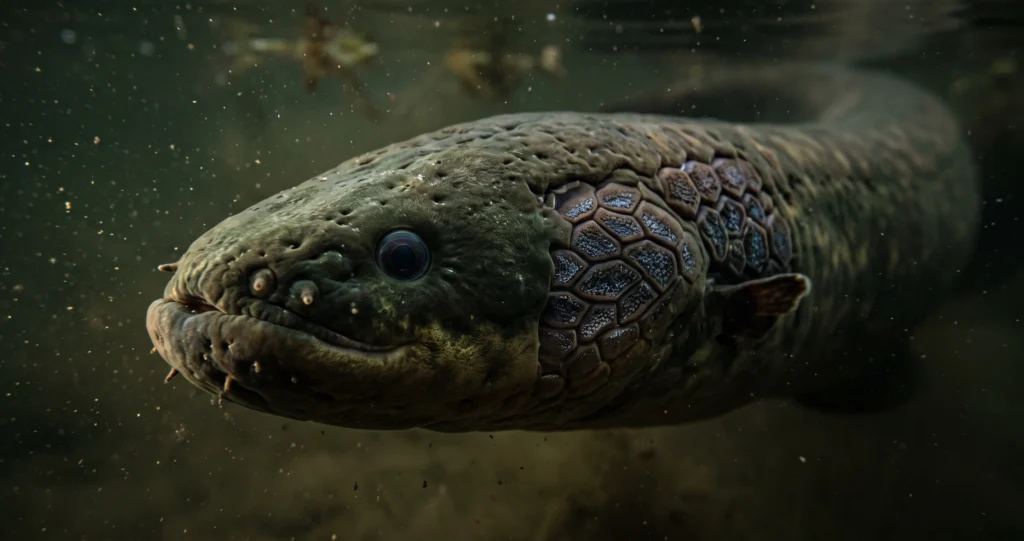
Common Myths About Electric Eels
Myth: Electric eels are true eels.
False.
They belong to the knifefish group, not the true eel family.
Myth: Electric eels constantly produce high-voltage electricity.
False.
Most of the time they emit weak pulses used for navigation and sensing.
Myth: Curling doubles the voltage produced by the eel.
Not exactly.
Curling increases the electrical potential difference experienced by the prey by altering the electrical pathway, making the shock more effective.
Myth: Every electric shock is deadly.
False.
The severity depends on voltage, current, pulse duration, and the circumstances of exposure.
Myth: Electric eels only use electricity to hunt.
False.
They also use electrical signals for navigation, defense, and communication.
Frequently Asked Questions
How much voltage can an electric eel produce?
Large individuals can produce discharges exceeding 600 volts, with some species capable of even higher peak voltages.
Why do electric eels have three electric organs?
Each organ specializes in different electrical functions, including sensing, communication, hunting, and defense.
What is electrolocation?
It is the ability to detect objects by sensing distortions in self-generated electrical fields.
Are electric eels dangerous to humans?
Serious encounters are uncommon, but powerful shocks can incapacitate swimmers and create drowning risks.
Do electric eels run out of electricity?
Repeated high-voltage discharges require recovery time, but healthy eels continuously regenerate the electrical gradients needed for future pulses.
Conclusion
The remarkable science of electric eel voltage demonstrates how evolution can transform ordinary muscle cells into one of the most sophisticated biological electrical systems on Earth. Through the coordinated action of the main electric organ, Hunter’s organ, and Sachs’ organ, electric eels generate gentle pulses for navigation, powerful shocks for hunting and defense, and finely controlled electrical signals that allow them to thrive in dark tropical rivers. Their recently discovered curling behavior further highlights the ingenious ways animals use physics to maximize survival.
Beyond their ecological importance, electric eels continue advancing scientific knowledge in neuroscience, physiology, engineering, and bioelectronics. By studying these extraordinary fish, researchers gain valuable insights into electricity, cellular biology, and biomimetic design, reminding us that nature often develops elegant solutions to complex engineering challenges long before humans recognize them.
2 Internal Link Suggestions:
- https://secretsofthegreengarden.com/how-platypuses-hunt-using-electroreception-while-blind-deaf-and-unable-to-smell/
- https://secretsofthegreengarden.com/how-woodpeckers-survive-12000-head-impacts-a-day-without-brain-damage/
3 External Dofollow Authoritative Sources with URLs:
- Smithsonian National Museum of Natural History: https://naturalhistory.si.edu/
- Encyclopaedia Britannica – Electric Eel: https://www.britannica.com/animal/electric-eel
- National Geographic – Electric Eel: https://www.nationalgeographic.com/animals/fish/facts/electric-eel