
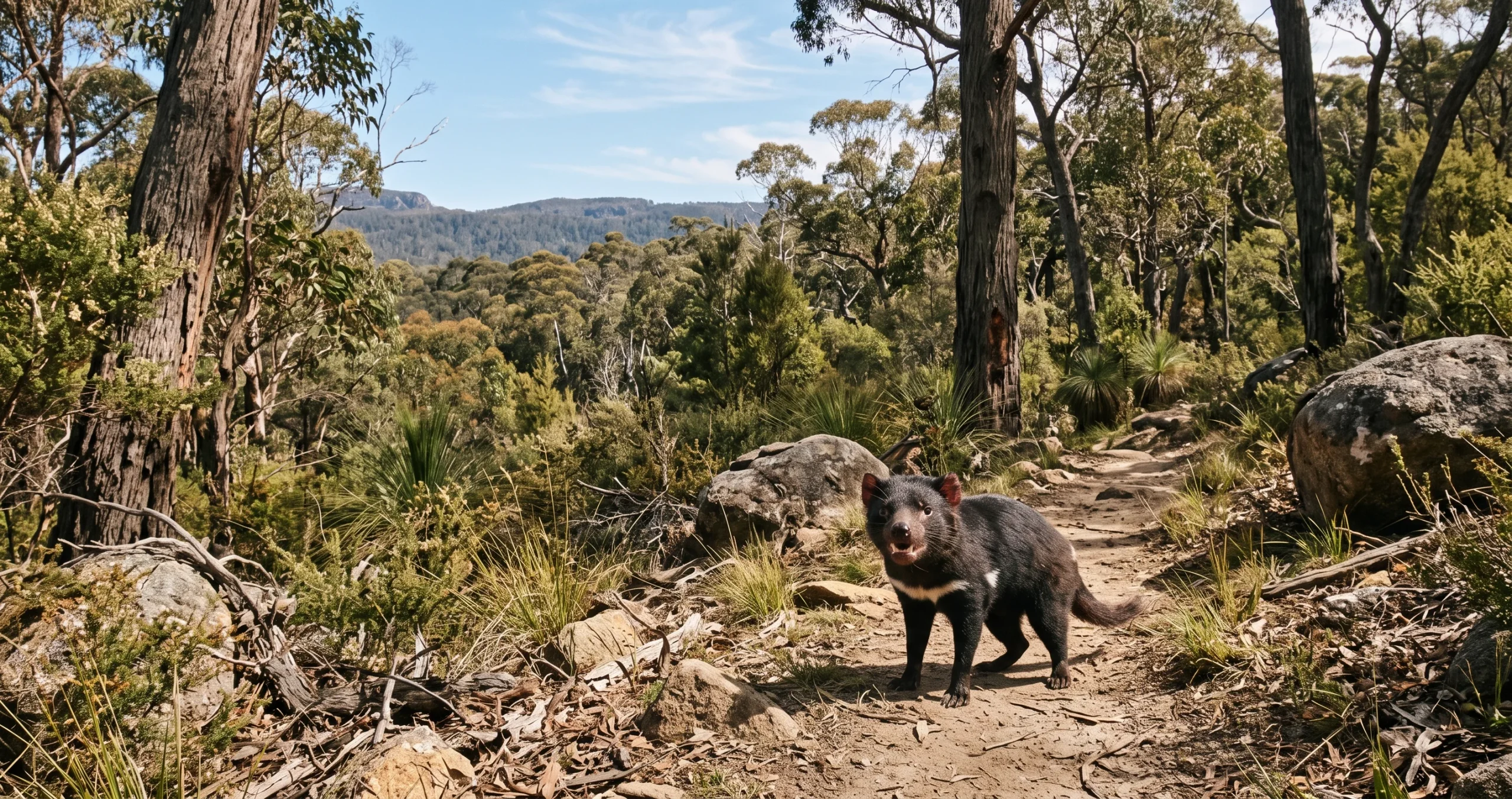
The Tasmanian devil may be roughly the size of a small dog, but its jaws are built for remarkably demanding work. Research comparing mammalian carnivores found that Tasmanian devil bite force, when adjusted for body mass, ranked exceptionally high among the living species examined. That strength helps the devil tear through tough skin, crush bones, and consume parts of carcasses that many animals would leave behind.
Its formidable jaws are also part of a more complicated survival story. Tasmanian devils are highly effective scavengers and opportunistic hunters, yet the species has suffered major declines because of Devil Facial Tumour Disease, or DFTD—a rare transmissible cancer that spreads between animals, often through biting.
Table of Contents
- How Powerful Is a Tasmanian Devil’s Bite?
- The Anatomy Behind Tasmanian Devil Bite Force
- Why Scavengers Need Powerful Jaws
- Crushing Bones and Reaching Marrow
- Devils Are Hunters as Well as Scavengers
- How Their Bite Compares With Other Carnivores
- The Strange Connection Between Biting and DFTD
- What Is Devil Facial Tumour Disease?
- How DFTD Changed Devil Populations
- Current Conservation Efforts
- Common Myths
- FAQ
- Conclusion
How Powerful Is a Tasmanian Devil’s Bite?
Claims about the “strongest bite” in the animal kingdom need careful interpretation.
A large crocodile, lion, or other massive predator can generate a greater absolute bite force than a Tasmanian devil simply because it is much larger.
What makes the devil exceptional is bite strength relative to body size.
A widely cited 2005 study led by Stephen Wroe compared predicted bite forces across living and extinct mammalian predators. Researchers calculated a bite force quotient, or BFQ, to compare biting performance after accounting for differences in body mass.
Among the living species included in that analysis, the Tasmanian devil had the highest relative predicted bite force.
That finding is much more scientifically meaningful than viral claims assigning the devil an unsupported PSI number.
Tasmania’s official Save the Tasmanian Devil Program similarly explains that absolute bite strength is difficult to measure reliably because researchers cannot simply know whether an animal is biting with its maximum possible force during a test. The exceptional feature is its relative biting power.
The Anatomy Behind Tasmanian Devil Bite Force
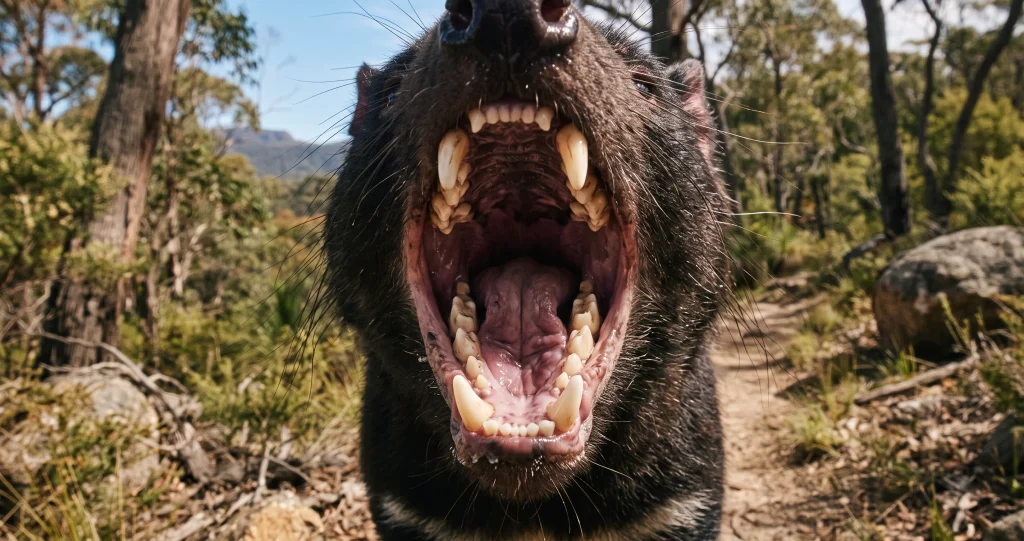
The impressive Tasmanian devil bite force begins with the skull.
Tasmanian devils have relatively large heads, particularly mature males. Their skulls provide substantial attachment areas for the muscles responsible for closing the jaws.
One conspicuous feature is the sagittal crest—a ridge along the upper part of the skull where powerful jaw muscles can attach.
Their skulls also possess broad zygomatic arches and robust facial bones. Anatomical research describes this architecture, together with a relatively short snout, as accommodating powerful chewing musculature capable of producing the forces necessary to crush bone.
A short jaw can provide mechanical advantages when generating force.
The teeth complete the system.
Devils possess carnassial teeth suited to processing flesh and hard material, along with incisors, premolars, and prominent canines. Tasmania’s official devil information specifically notes that their carnassial teeth are capable of crushing bone.
The result is not simply an animal with a large mouth.
It is an integrated feeding apparatus:
Robust skull → powerful muscles → strong jaws → specialized teeth → intensive carcass processing
Why Scavengers Benefit From Powerful Jaws
Tasmanian devils are famous scavengers.
A carcass contains far more potential nutrition than the obvious pieces of exposed muscle. Skin, connective tissues, organs, and skeletal material can all contain usable resources.
The problem is gaining access to them.
Thick skin can be difficult to tear. Bones protect marrow and can prevent access to remaining tissues. Tough connective material requires considerable mechanical processing.
This is where Tasmanian devil bite force becomes valuable.
The Tasmanian government describes devils as mainly scavengers and hunters that consume whatever animal material is available. Their powerful jaws and teeth allow them to consume carcasses remarkably thoroughly, including bones, fur, skin, organs, and offal.
That ability allows the animal to extract resources other scavengers may use less completely.
It also reduces the amount of edible material left behind.
Crushing Bones and Reaching Marrow
Bone looks like waste to many animals, but a carcass’s skeleton can still contain valuable nutrition.
Marrow inside bones is rich in fat and energy. Breaking skeletal material can expose this resource while also allowing a scavenger to consume smaller portions of bone itself.
Tasmanian devils possess the cranial architecture and teeth required to process surprisingly hard material.
The official Tasmanian wildlife information describes devils as capable of almost completely devouring suitable prey or carrion, including bones and fur.
That does not mean a devil can effortlessly crush every bone from every animal.
Large skeletal elements have different dimensions and mechanical properties, and bite performance depends on factors including the location of the bite and the size and condition of the material.
Even Tasmania’s official information notes limits. For example, devils may consume almost all of a sheep carcass while leaving some of its largest bones.
Their adaptation should therefore be understood as exceptional bone-processing ability rather than unlimited crushing power.
A useful comparison can be found in our article on how spotted hyenas crush and digest bones. Hyenas and Tasmanian devils belong to completely different mammalian lineages, but both demonstrate how powerful jaws can allow carnivores to exploit hard parts of carcasses.
Devils Are Hunters as Well as Scavengers
Calling Tasmanian devils scavengers does not mean they depend entirely on animals killed by something else.
They can hunt.
Their diet includes mammals, birds, reptiles, amphibians, insects, and other animal foods. Wallabies, possums, and wombats can feature in their diet, depending on availability.
Scavenging is often simply an efficient option.
A dead animal does not have to be chased, subdued, and killed. When carrion is available, feeding on it can save energy.
The powerful jaws are useful in both situations.
A devil that finds a carcass can break through resistant tissues. A devil handling prey can use the same muscular jaws and specialized teeth to kill and process it.
The Tasmanian devil bite force therefore belongs to a broader feeding strategy based on flexibility.
How Does the Devil Compare With Other Carnivores?
This is where bite-force statistics can easily become misleading.
Comparing raw bite force favors large animals.
Comparing bite force relative to body mass asks a different biological question: how powerful is an animal’s bite for an animal of its size?
The 2005 comparative study calculated estimated bite force and then adjusted the results for body mass. It found that marsupial carnivores tended to have higher body-mass-adjusted estimates than placental carnivores in the sample, with the Tasmanian devil producing the highest relative estimate among the living taxa examined.
The Tasmanian government’s FAQ puts this into more intuitive terms, explaining that a roughly 10-kilogram devil can have biting power comparable, in relative terms, to a much larger dog.
This does not mean a devil would generate a greater absolute force than every tiger, lion, hyena, or bear.
Body size still matters.
The remarkable fact is how much biting performance is packed into a relatively small marsupial.
When Powerful Biting Becomes Dangerous for the Species
The devil’s bite is perfectly suited to its lifestyle, but biting also plays a role in one of the species’ greatest modern threats.
Tasmanian devils can interact aggressively.
They may bite one another during competition, social encounters, and mating behavior.
Normally, a bite wound is simply an injury.
With Devil Facial Tumour Disease, however, biting can become a route through which living cancer cells move from one devil to another.
This makes DFTD extraordinarily unusual.
It is not merely a virus that causes cancer.
The cancer cells themselves form a transmissible cell lineage capable of passing between animals.
What Is Devil Facial Tumour Disease?
DFTD produces tumors commonly found around the mouth, face, and neck.
The tumors may begin as relatively small lesions or lumps before becoming much larger. In severely affected animals, cancer can also spread elsewhere in the body.
Large facial tumors can interfere with feeding.
An animal equipped with extraordinary jaws may eventually become unable to use them effectively because tumors around or inside the mouth obstruct feeding and damage tissues.
The disease is usually fatal.
The Tasmanian government reports that affected devils commonly die within months after tumors become visible, often because feeding becomes increasingly difficult and the animal’s physical condition deteriorates.
Even more remarkably, scientists now recognize two independently arisen transmissible devil cancers, known as DFT1 and DFT2.
DFT1 was first recorded in 1996 and has spread widely. DFT2 was first identified in 2014 and has had a more restricted documented distribution.
How DFTD Changed Tasmanian Devil Populations
The effect has been severe.
Tasmania’s Parks and Wildlife Service reports that the species has suffered major population losses associated with facial tumor disease and is listed as endangered under Tasmania’s Threatened Species Protection Act.
In populations where DFTD has persisted for years, government monitoring has documented declines of up to approximately 80 percent, although estimates vary among areas and sampling periods.
Disease also changes population structure.
Because many mature adults become infected, populations in heavily affected regions can contain proportionally more young animals. Some females have also been documented breeding earlier than would otherwise be typical.
These changes demonstrate why conservation requires more than simply counting animals.
Researchers need to monitor disease prevalence, breeding, survival, genetics, and population structure over time.
Current Tasmanian Devil Conservation Efforts
Conservation efforts continue through the Save the Tasmanian Devil Program, the official government response to DFTD.
Its central goal is an enduring, ecologically functional wild devil population in Tasmania.
Save the Tasmanian Devil Program
One important strategy has been maintaining healthy insurance populations.
These managed populations provide protection against catastrophic losses in the wild and help preserve genetic diversity for long-term conservation. A disease-free devil population has also been established on Maria Island.
Field monitoring remains essential.
Wildlife teams trap devils, collect measurements and biological samples, check individuals for signs of DFTD, microchip animals, and release them again. These surveys help scientists estimate population density, breeding output, and disease prevalence.
Research into the disease itself continues as well, including work aimed at understanding immunity and developing tools that could reduce the impact of transmissible cancer.
Road mortality is another conservation concern. Tasmania’s program operates a roadkill project that identifies hotspots, contributes to disease monitoring, and supports efforts to reduce vehicle-related deaths.
Conservation is therefore not one intervention.
It combines disease research, insurance populations, genetic management, wild-population monitoring, habitat management, roadkill reduction, and long-term field research.
Why Tasmanian Devils Matter Ecologically
Scavengers perform an important ecological service.
By consuming carcasses, they move nutrients through food webs and remove animal remains from landscapes.
Tasmanian devils can process carcasses particularly thoroughly because of their powerful feeding anatomy.
Their ability to consume skin, organs, fur, and substantial skeletal material means a dead animal can be converted into biological energy rather than remaining unused.
The Tasmanian government also notes a practical benefit in agricultural landscapes: carcass removal can reduce resources available to blowfly larvae around dead livestock.
The devil is therefore more than an animal with a spectacular bite.
Its feeding behavior forms part of Tasmania’s ecological recycling system.
Common Myths About Tasmanian Devil Bite Force
“Tasmanian devils have the strongest bite of any animal.”
This is misleading.
Their remarkable ranking concerns bite force relative to body size among the living mammalian predators included in a comparative study. Larger animals can produce much greater absolute forces.
“Their jaws can crush any bone.”
No biological jaw is unlimited.
Devils can process substantial skeletal material, but very large bones may remain after feeding.
“Tasmanian devils only eat dead animals.”
They are highly effective scavengers, but they can also hunt live prey.
“DFTD is caused by their powerful bite.”
No. Their bite does not create the cancer.
Biting is important because direct contact can transfer living tumor cells from an infected devil to another animal.
“DFTD is an ordinary contagious infection.”
It is far stranger. DFTD is a transmissible cancer in which cancer cells themselves can spread between animals.
Frequently Asked Questions
How strong is the Tasmanian devil bite force?
There is no universally reliable maximum bite-force number for every devil. The important scientific result is comparative: a major study found the Tasmanian devil had the highest estimated bite force relative to body mass among the living mammalian carnivores included in its analysis.
Why does a Tasmanian devil need such powerful jaws?
Powerful jaws allow devils to process tough carcasses, including skin and substantial skeletal material. This helps them exploit carrion efficiently while also supporting their ability to hunt and process prey.
Can Tasmanian devils really crush bones?
Yes. Their robust skulls, powerful jaw musculature, and specialized teeth allow them to break and consume bone. However, the largest bones can exceed what they routinely process.
Do Tasmanian devils eat bone marrow?
Their bone-crushing ability can expose nutrient-rich marrow while allowing them to consume substantial portions of smaller bones. Their feeding strategy is notable for using carcasses far more completely than animals restricted mainly to soft tissue.
How is Devil Facial Tumour Disease transmitted?
DFTD can spread when living tumor cells are transferred between devils during direct contact, particularly biting associated with fighting and mating.
Are Tasmanian devils endangered?
Yes. The Tasmanian devil is listed as endangered under both Tasmania’s Threatened Species Protection Act and Australia’s federal Environment Protection and Biodiversity Conservation Act.
Are scientists still trying to save Tasmanian devils?
Yes. Current conservation includes wild-population monitoring, managed insurance populations, disease research, a disease-free population on Maria Island, roadkill mitigation work, and other measures coordinated through the Save the Tasmanian Devil Program.
Conclusion
The Tasmanian devil bite force is remarkable not because this small marsupial produces the greatest absolute bite in nature, but because its jaws are exceptionally powerful relative to its body size.
A robust skull, large jaw-muscle attachment areas, a short muzzle, and specialized teeth form a feeding system capable of tearing resistant tissue and crushing substantial skeletal material. That lets devils exploit carrion remarkably thoroughly, accessing resources such as marrow while consuming much of a carcass that less specialized feeders might leave behind.
Yet the same species now faces an extraordinary biological threat.
DFTD has caused severe population declines, and biting can transfer the living cancer cells responsible for the disease between devils. Conservationists are responding with long-term monitoring, disease research, insurance populations, and management of wild populations.
The devil’s jaws remain one of its most impressive adaptations.
Understanding them properly reveals something more interesting than a simple “strongest bite” record: they are part of a specialized scavenging system that allows a relatively small marsupial to extract extraordinary value from a carcass.
Internal sources :
- How Spotted Hyenas Crush and Digest Bones — a closely related article explaining another mammal’s adaptations for processing bones.
- Vulture Stomach Acid: How Vultures Survive Eating Carrion — useful for connecting the devil’s mechanical carcass-processing adaptations with a specialized scavenger’s digestive adaptations.
External Sources :