
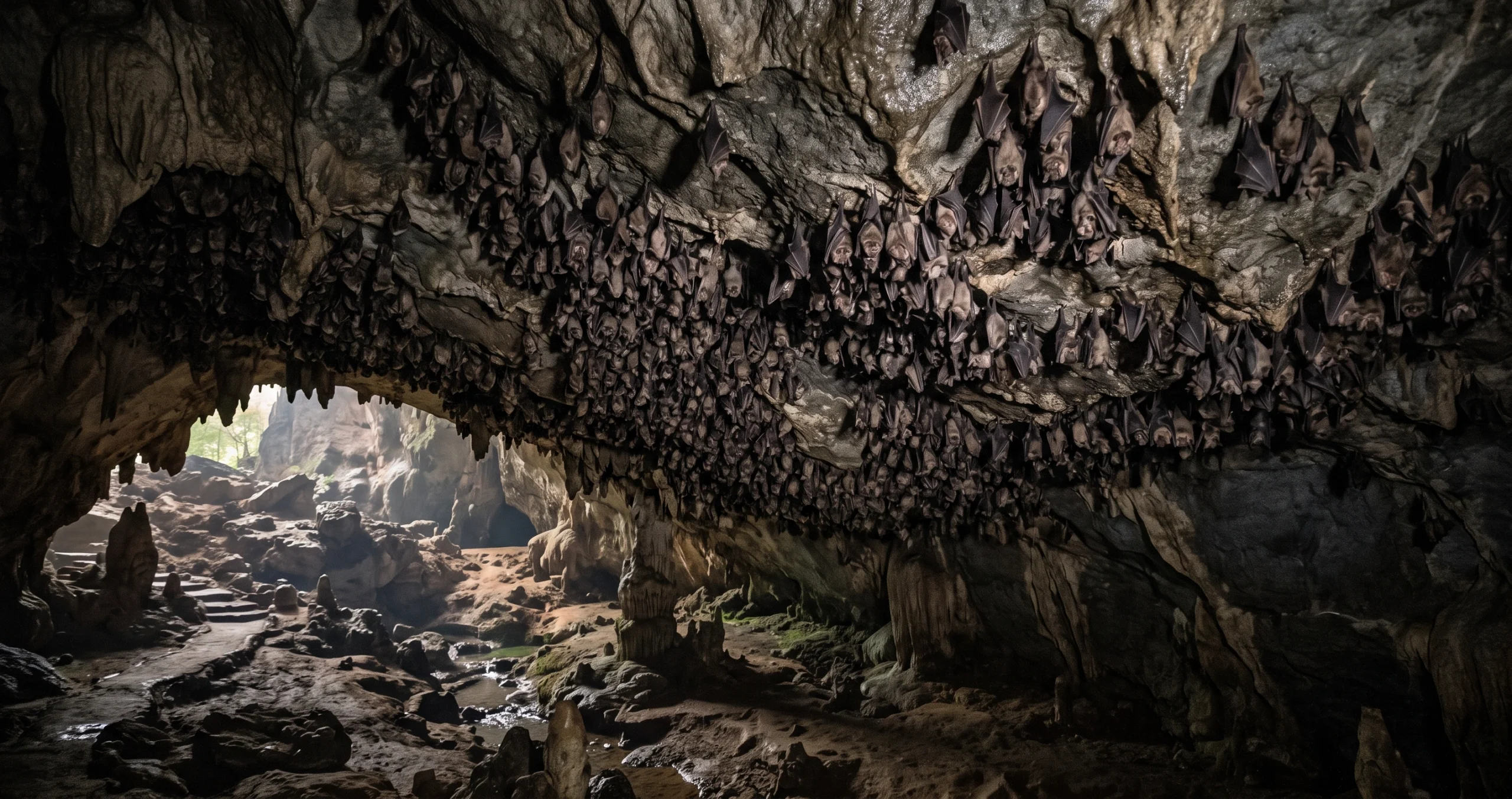
Bats present biologists with a remarkable puzzle. Many species are tiny, maintain demanding metabolisms, encounter numerous pathogens, and yet can live far longer than similarly sized mammals. New research on bat longevity cancer resistance suggests that part of the answer may lie in an unusual combination: powerful evolutionary changes in immune pathways together with a willingness to eliminate badly damaged cells before those cells become dangerous.
The study behind the September 2026 science coverage was published in Nature on August 26, 2026. Researchers compared genomes from closely related Myotis bats with dramatically different lifespans and then tested living bat cells in the laboratory. Their findings connect three traits that once seemed like separate mysteries—longevity, antiviral defenses, and resistance to age-related diseases such as cancer.
The result does not mean bats never get cancer. They do. Instead, the research provides new clues about why some exceptionally long-lived bats appear so good at keeping cellular damage under control.
Table of Contents
- Why Bats Are a Longevity Puzzle
- What the New 2026 Bat Research Studied
- Bat Longevity Cancer Resistance and the Genome
- What Happened When Researchers Damaged Bat Cells
- Why Killing Damaged Cells Could Prevent Cancer
- The Surprising Connection Between Viruses and Longevity
- How Bats Can Carry Viruses Without Always Becoming Sick
- Why Flight May Have Helped Shape Bat Biology
- What This Means for Peto’s Paradox
- Could Bat Biology Help Humans Live Longer?
- What the Study Does Not Prove
- Common Myths
- FAQ
- Conclusion
Why Bats Are a Longevity Puzzle
In mammals, body size and lifespan usually show a broad relationship.
Large mammals often live longer than small ones. A mouse has a much shorter expected lifespan than an elephant, for example.
Bats are spectacular exceptions.
The new study focused heavily on the genus Myotis, a large group of small insect-eating bats. Some closely related Myotis species have evolved radically different lifespans despite remaining similar in body size.
The researchers highlighted Brandt’s myotis (Myotis brandtii), with a documented maximum lifespan exceeding 40 years, while another member of the genus, Myotis nigricans, has a reported maximum lifespan of about seven years.
That difference creates an unusually useful natural experiment.
Instead of comparing something as biologically different as a mouse and an elephant, researchers can compare related bats whose bodies remain relatively similar while longevity has changed dramatically during evolution.
This makes Myotis particularly valuable for investigating bat longevity cancer resistance.
![“bat longevity cancer resistance research examining long-lived Myotis bats and their cellular defenses”]](https://secretsofthegreengarden.com/wp-content/uploads/2026/09/Gemini_Generated_Image_zszezszezszezsze-1024x541.webp)
What the New 2026 Bat Research Studied
The international research team generated near-complete genome assemblies for eight closely related Myotis species and established primary cell resources that allowed some genomic predictions to be tested experimentally.
The original study published in Nature examined patterns of natural selection, changes in gene copy number, virus-interacting proteins, cancer-related pathways, and cellular responses to DNA damage.
That combination is important.
A genomic pattern can suggest that evolution repeatedly acted on a biological pathway, but laboratory experiments can help researchers determine whether cells from different species actually behave differently.
The scientists found signatures connecting longevity with genes involved in cancer, immunity, aging, and interactions with viruses.
Rather than revealing one magical “longevity gene,” the results point toward a network of adaptations.
Bat Longevity Cancer Resistance: What the Genomes Revealed
One of the clearest results concerned cancer-related biological pathways.
The researchers reconstructed evolutionary changes in lifespan across Myotis lineages and examined genes showing evidence of positive selection.
Long-lived lineages showed enrichment in pathways associated with cancer biology.
That pattern was particularly noticeable in evolutionary branches associated with some of the greatest increases in lifespan.
This makes evolutionary sense.
Cancer risk is influenced by the accumulation and survival of abnormal cells. A mammal that lives for decades gives its cells much more time to acquire potentially harmful changes than a similar animal living only a few years.
When lifespan increases rapidly during evolution, natural selection may therefore favor stronger mechanisms for preventing damaged cells from becoming tumors.
The new bat longevity cancer resistance results are consistent with that prediction.
What Happened When Researchers Damaged Bat Cells
The study went beyond genome comparisons.
Researchers exposed primary skin fibroblasts from several bat species to neocarzinostatin, a compound that produces DNA double-strand breaks.
These are serious forms of DNA damage.
The response of cells from the long-lived little brown bat, Myotis lucifugus, was especially interesting.
At relatively low levels of experimentally induced DNA damage, M. lucifugus cells showed reduced viability alongside increased apoptosis compared with the other bats tested.
At high doses, they showed the greatest apoptotic response and the largest decline in viable cells among the tested species.
Apoptosis is programmed cell death.
Rather than allowing a badly damaged cell to continue dividing, the organism activates molecular pathways that cause the cell to shut itself down in a controlled way.
In this context, losing a damaged cell can be protective.
Why Killing Damaged Cells Could Prevent Cancer
Cancer fundamentally depends on abnormal cells surviving and continuing to reproduce.
DNA is damaged routinely through normal metabolism, environmental exposure, replication errors, and other processes. Most damage is repaired or causes no lasting problem.
Trouble begins when harmful changes accumulate in cells that continue dividing.
One defense is therefore to repair damage accurately.
Another is more drastic: if damage is severe enough, eliminate the cell.
The 2026 research suggests that long-lived M. lucifugus may lean strongly on this second strategy under certain kinds of DNA damage.
Researchers also observed changes in gene activity associated with cell-cycle arrest and programmed cell death after damaging the bat cells.
Genes associated with processes including cell division and growth were suppressed, while important stress-response pathways changed.
This does not establish a complete explanation for cancer resistance in living bats.
The experiments used cultured cells and an artificial DNA-damaging treatment.
Still, the result provides a functional mechanism consistent with the evolutionary genomic evidence: long-lived bats may be unusually effective at preventing severely damaged cells from remaining in circulation long enough to become dangerous.
Bats Are Not the Only Long-Lived Animals With This Strategy
The finding becomes even more interesting when compared with other unusually long-lived or cancer-resistant mammals.
Elephants, naked mole rats, and bowhead whales have all attracted attention for biological mechanisms associated with cancer suppression and cellular maintenance.
The mechanisms are not identical.
Evolution can arrive at different solutions to the same problem.
But researchers studying comparative oncology repeatedly encounter a similar challenge: if an animal becomes very large or very long-lived, its biology must somehow manage the additional opportunities for cancer-causing cellular changes.
The bat study suggests that efficient clearance of damaged cells belongs in that broader discussion.
The Surprising Connection Between Viruses and Longevity
The most interesting part of the new research may be that cancer defense did not appear isolated from immunity.
Researchers found extensive evolutionary changes involving proteins that interact with viruses.
Bats showed distinctive patterns involving both DNA and RNA viruses.
For DNA-virus-interacting proteins, researchers found an unusually strong signal of positive selection.
RNA-virus-interacting proteins, meanwhile, showed elevated rates of copy-number variation.
One particularly interesting example involved EIF2AK2, better known as PKR.
PKR is an important component of antiviral defense. The researchers identified Myotis-specific duplications involving this immune factor, suggesting a long evolutionary history of changes in the machinery bats use during host-virus conflicts.
The broader interpretation is intriguing.
Genes originally shaped by repeated battles with viruses may also influence inflammation, DNA damage responses, cellular stress, cancer suppression, or aging.
One genetic adaptation can affect several biological traits.
Scientists call this pleiotropy.
How Bats Can Carry Viruses Without Always Becoming Sick
Bats have attracted enormous scientific attention because they can serve as reservoir hosts for diverse viruses.
This is sometimes simplified into the claim that bats “don’t get sick from viruses.”
That is false.
Bats can become infected, develop disease, and die from infectious diseases. White-nose syndrome, although caused by a fungus rather than a virus, dramatically demonstrates that bats are certainly not immune to disease.
What makes their antiviral biology interesting is the way some bat species appear capable of controlling or tolerating particular infections without producing the same damaging disease processes seen in other mammals.
A successful immune response involves balance.
An immune system that responds too weakly allows a pathogen to multiply unchecked.
But an excessively inflammatory response can also damage the host’s own tissues.
Previous bat research has therefore focused heavily on antiviral signaling, inflammation control, DNA sensing, cellular stress, and mechanisms that allow bats to coexist with certain viruses.
The new study adds another layer: some of the same evolutionary pressures shaping viral defense may have influenced bat longevity cancer resistance as well.
Why Flight May Be Part of the Story
Bats are the only mammals capable of sustained powered flight.
Flight is metabolically demanding and exposes tissues to substantial physiological stress.
Scientists have long investigated whether adaptations associated with flight helped reshape bat metabolism, DNA-damage responses, inflammation, and immunity.
The 2026 study does not establish a simple chain in which flight directly caused cancer resistance.
Bat longevity also evolved repeatedly, meaning different lineages have extended their lifespans independently.
That makes the story more complex—and scientifically more useful.
Researchers can compare related species to identify which genetic changes track specifically with longer life rather than assuming every unusual bat characteristic originated with flight.
For another look at the remarkable biology surrounding bats, see our article on how giant centipedes can hunt bats from cave ceilings.
What This Means for Peto’s Paradox
The bat findings also connect with a famous problem called Peto’s paradox.
Within a species, having more cell divisions and living longer can increase opportunities for cancer.
Across different species, however, cancer incidence does not simply rise in proportion to body size and lifespan.
If it did, elephants and whales should experience overwhelming cancer rates simply because they possess so many cells.
They do not.
Evolution appears to compensate.
When a lineage evolves a larger body or longer lifespan, stronger tumor-suppression mechanisms can evolve alongside it.
Bats offer a particularly useful version of this problem because their extraordinary longevity evolved without enormous increases in body size.
That means bat longevity cancer resistance can help scientists examine how cancer defenses respond specifically to evolutionary increases in lifespan.
Could Bat Biology Help Humans Live Longer?
This is where exciting research can easily become exaggerated.
The new study does not provide an anti-aging treatment.
It does not show that inserting a “bat gene” into humans would prevent cancer, and it certainly does not mean scientists are close to making people live as long, proportionally, as bats.
What it does provide is a biological roadmap.
Comparative genomics can identify pathways repeatedly altered when species naturally evolve exceptional longevity.
Those pathways can then become candidates for deeper research.
For example, researchers may investigate how bat cells decide between DNA repair, temporary cell-cycle arrest, and apoptosis.
They can study how antiviral genes interact with cancer pathways.
They can also ask whether some bat strategies preserve strong immune defenses while avoiding the chronic inflammation associated with aging in humans.
Eventually, specific mechanisms could inspire therapeutic targets.
But moving from bat cells to safe human medicine requires years of experimental validation.
The most valuable immediate contribution is not a treatment.
It is knowing where to look.
What the Study Does Not Prove
The headline “why bats rarely get cancer” needs an important qualification.
Cancer does occur in bats.
Reliable population-wide cancer rates are also difficult to establish in wild animals because sick individuals may disappear, die unnoticed, or never undergo veterinary examination.
The 2026 study therefore did not prove that every bat species has extremely low cancer incidence.
Nor did it test all bats.
The genomic analysis centered on eight closely related Myotis species, while cellular DNA-damage experiments involved a smaller set of bat species.
Researchers identified mechanisms and evolutionary patterns consistent with cancer resistance and exceptional longevity.
That is scientifically important without turning it into a universal claim about more than 1,400 bat species.
Common Myths About Bat Longevity and Cancer
Myth 1: Bats Never Get Cancer
They can develop cancer.
The scientific question is why some long-lived bats appear to have evolved unusually effective cancer-suppression mechanisms despite living much longer than expected for their size.
Myth 2: Scientists Found One Gene That Makes Bats Live Longer
The 2026 research found changes across multiple pathways involving immunity, viruses, cancer, aging, and DNA-damage responses.
Longevity is a complex trait, not a single-gene switch.
Myth 3: Bat Cells Repair Every Mutation Perfectly
No cell has perfect DNA maintenance.
The new experiments suggest that one important strategy may be eliminating severely damaged cells through apoptosis rather than allowing them to survive.
Myth 4: Bats Cannot Get Sick From Viruses
Bats are not invulnerable to viral disease.
Some species have evolved unusual tolerance and antiviral defenses that allow them to coexist with particular pathogens more effectively than might otherwise be expected.
Myth 5: Carrying Viruses Makes Bats Dangerous to Approach
Disease ecology is more complicated than that.
Wild bats should not be handled because of legitimate wildlife and health considerations, but their ecological importance should not be replaced by fear. Bats provide major ecosystem services, including insect consumption, pollination, and seed dispersal.
Myth 6: The Research Has Already Found a Human Anti-Aging Therapy
It has not.
The findings identify biological mechanisms worth investigating; translating comparative biology into human medicine is a separate and much longer process.
FAQ
Why do bats live so long for their size?
There is probably no single explanation.
Genetics, immune regulation, cellular maintenance, DNA-damage responses, metabolism, hibernation in some species, and other life-history traits may all contribute.
How long can bats live?
Lifespan varies enormously among species.
Some Myotis bats can survive for several decades, with Brandt’s myotis documented beyond 40 years, an extraordinary lifespan for such a small mammal.
What did the 2026 bat study discover?
Researchers compared near-complete genomes from eight Myotis species and found evolutionary signals connecting longevity with cancer-related and immune pathways.
Laboratory experiments also showed that cells from the long-lived little brown bat responded strongly to serious DNA damage by activating apoptosis.
Does apoptosis protect bats from cancer?
Apoptosis is one important defense against cancer because it can remove badly damaged cells before they continue dividing.
The study suggests unusually strong damaged-cell clearance may contribute to cancer resistance in some long-lived bats, but it is not the only mechanism involved.
Do bats really rarely get cancer?
Cancer has been documented in bats, and precise wild-population incidence is difficult to measure.
The stronger scientific claim is that exceptionally long-lived bats appear to possess evolved cancer-suppression mechanisms that help compensate for their long lives.
Why can bats carry viruses?
Bat-virus relationships differ among species and pathogens.
Research suggests bats have evolved distinctive antiviral and immune-regulatory mechanisms that can permit tolerance of some infections while limiting harmful immune responses.
Are virus resistance and cancer resistance connected?
The new study suggests they may be evolutionarily intertwined.
Many genes can affect multiple processes, so adaptations driven by ancient host-virus conflicts may also influence cellular stress, cancer suppression, and aging.
Could this research prevent cancer in humans?
Not yet.
It may identify pathways and cellular strategies that eventually inspire cancer or healthy-aging research, but human therapies would require extensive additional testing.
Conclusion
The emerging story of bat longevity cancer resistance is not that bats possess one miraculous defense against aging.
It is that evolution appears to have connected several defenses that humans usually study separately.
Long-lived Myotis bats show evolutionary changes in cancer-associated pathways. Their genomes also contain distinctive adaptations involving proteins that interact with viruses.
And when researchers experimentally damaged cells from the long-lived little brown bat, those cells showed a particularly strong tendency to activate programmed cell death.
Taken together, the findings suggest an elegant strategy.
Maintain powerful defenses against biological threats, carefully control damaged cells, and remove cells that become too dangerous to keep.
That combination could help explain how a tiny mammal can survive for decades without experiencing the level of age-related disease we might predict from its body size.
The connection with viruses makes the story even more interesting.
Millions of years of evolutionary conflict with pathogens may have shaped immune systems that also influence cancer suppression, cellular maintenance, and longevity.
But the findings deserve the same caution as any new biomedical research.
Bats are not cancer-proof. They are not immune to disease. And scientists have not discovered a shortcut to human longevity.
What researchers have found is arguably more useful: a natural experiment that evolution has been running for millions of years.
By comparing bats that live seven years with close relatives capable of surviving for several decades, scientists can begin identifying the molecular changes that accompany exceptional longevity.
Those discoveries may eventually teach us something important about our own cells—how to preserve healthy ones, how to recognize dangerous damage, and when a cell is better eliminated than repaired.
For now, bats remain one of biology’s most compelling demonstrations that small bodies do not necessarily require short lives.
Related Reading
Explore more unusual bat interactions and the important role bats play in nighttime ecosystems:
- How Giant Centipedes Can Hunt Bats From Cave Ceilings — Discover an extraordinary predator-prey interaction in which large centipedes can capture bats and other vertebrate prey in cave environments.
- How Insect-Eating Bats Use Freshwater Habitats After Dark — Explore the hidden nighttime activity around ponds and how bats become part of the ecosystem after daylight disappears.
References and Further Reading
For additional scientific information about bat longevity, cancer resistance, viral adaptation, genomics, and responses to cellular damage:
- Nature — Insights into Longevity and Virus-Driven Adaptation from Myotis Bat Genomes — The original 2026 peer-reviewed study examining genomes from eight Myotis species and investigating genetic pathways associated with longevity, viral interactions, cancer biology, and responses to DNA damage.
- Penn State Eberly College of Science — The Secret to Bats’ Longevity Linked to Immune Response to Viruses and Cancer — University research coverage explaining the study’s findings and their potential implications for understanding bat longevity, cancer resistance, and antiviral defenses.
- Dryad — Research Data for Insights into Longevity and Virus-Driven Adaptation from Myotis Bat Genomes — Open research-data repository containing genomic datasets and supporting materials associated with the 2026 Nature study.