
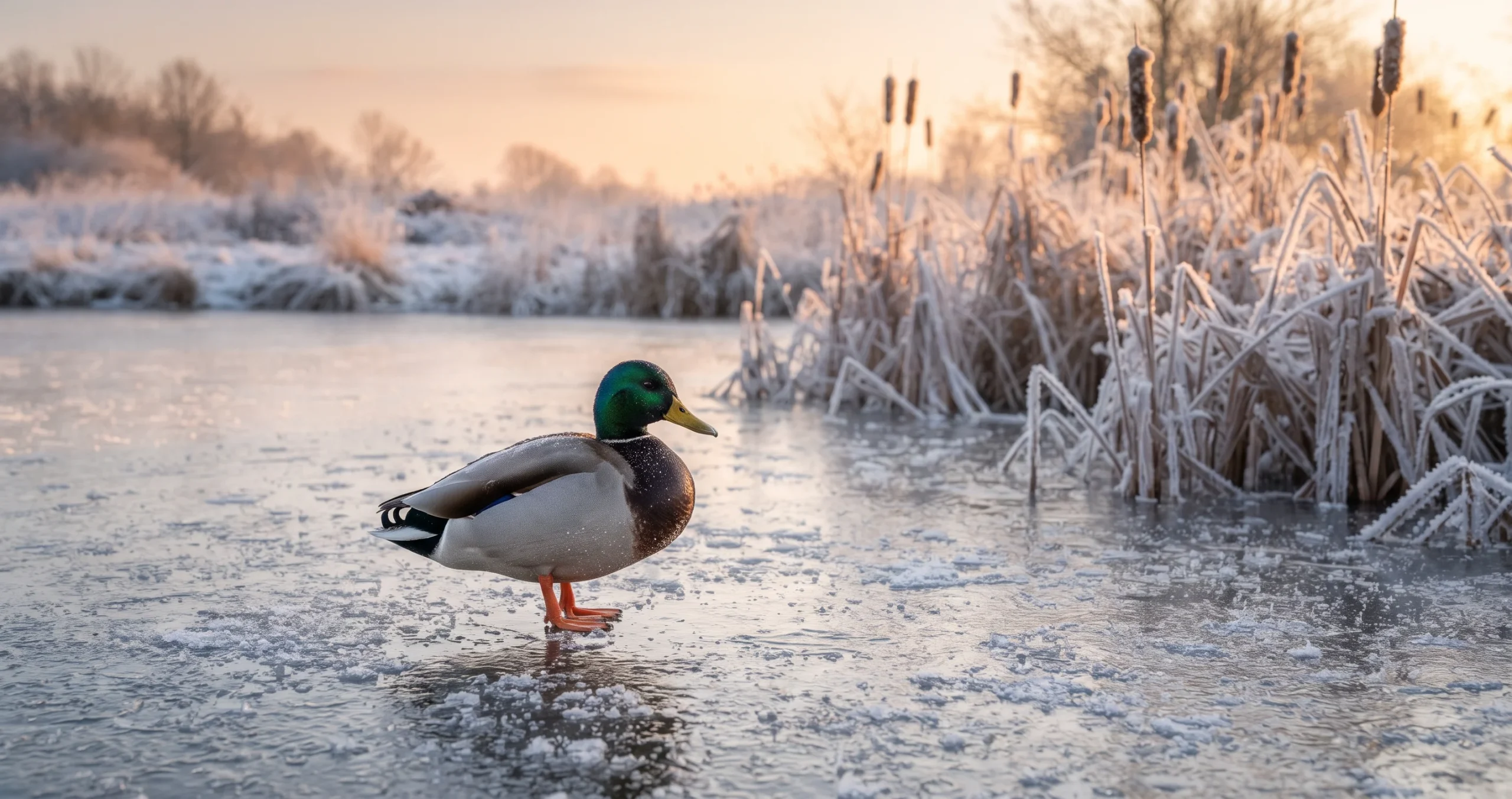
Watching ducks paddle through icy water or stand barefoot on a frozen pond is one of winter’s most fascinating wildlife sights. While humans need insulated boots to protect their feet, ducks can remain active in conditions that would quickly become uncomfortable and potentially dangerous for us.
Understanding why ducks feet dont freeze begins with a remarkable biological adaptation called countercurrent heat exchange. This specialized circulatory system allows ducks to conserve body heat while maintaining sufficient blood flow to their exposed feet.
Their winter survival also depends on insulating feathers, energy reserves, specialized anatomy, and protective behaviors. Together, these adaptations demonstrate how remarkably well waterfowl are equipped for life in cold environments.
Table of Contents
- Why Ducks Feet Dont Freeze in Winter
- How Countercurrent Heat Exchange Works
- Why Cold Feet Help Ducks Conserve Energy
- The Special Anatomy of Duck Feet
- Other Adaptations That Keep Ducks Warm
- Why Ducks Stand on One Leg
- How Ducks Swim in Freezing Water
- Other Birds That Use Countercurrent Heat Exchange
- Can Ducks Develop Frostbite?
- How to Feed Ducks Responsibly During Winter
- Supporting Waterfowl and Winter Wildlife
- Frequently Asked Questions
Why Ducks Feet Dont Freeze in Winter
Ducks have evolved to live in environments where their feet regularly encounter cold water, snow, and ice. Instead of maintaining their feet at the same temperature as the rest of their bodies, they allow their extremities to become considerably cooler.
This reduces the temperature difference between their feet and the surrounding environment. Consequently, less body heat escapes through these exposed surfaces.
The main explanation for why ducks’ feet don’t freeze under normal winter conditions lies in the arrangement of their blood vessels. Arteries and veins positioned close together exchange heat before blood reaches the feet or returns to the body’s core.
The feet still receive oxygen and nutrients through circulating blood, but much of the warmth remains within the body.
How Countercurrent Heat Exchange Works
Countercurrent heat exchange is a natural process in which two fluids moving in opposite directions transfer heat between them. In ducks, these fluids are the blood traveling toward and away from the feet.
Warm arterial blood flows downward from the body’s core. Cooler venous blood travels upward from the feet toward the heart.
Because these vessels run close together, heat moves from the warmer arterial blood into the cooler returning blood. The blood does not need to mix for this transfer to occur.
The Four Main Stages
- Warm, oxygen-rich blood leaves the body’s core and travels toward the legs.
- Heat passes from the arteries into nearby veins carrying cooler blood.
- Relatively cool arterial blood reaches the feet, providing oxygen and nutrients while limiting heat loss.
- Returning venous blood becomes warmer before reaching the body’s core.
This continuous exchange helps ducks retain valuable body warmth without completely restricting circulation to their extremities.
Understanding why ducks feet dont freeze becomes easier when you recognize that their circulatory system functions like a biological heat-recovery mechanism.
Why Cold Feet Help Ducks Conserve Energy
It might seem logical that ducks would need exceptionally warm feet to prevent freezing. However, maintaining warm feet would increase the amount of energy lost to icy water or frozen ground.
A duck’s core body temperature is generally around 100°F or slightly higher, while the temperature of its feet can remain only slightly above freezing in cold conditions.
This substantial difference allows the bird to protect its internal organs while avoiding unnecessary heat loss through exposed extremities.
Imagine placing a warm object and a cooler object on ice. The warmer object initially transfers heat more rapidly because the temperature difference is greater.
Ducks benefit from a similar physical principle. Their relatively cool feet transfer less heat into their surroundings than continuously warmed feet would.
Energy conservation is particularly important during winter, when food can become difficult to find and birds must maintain essential bodily functions despite challenging weather.
The Special Anatomy of Duck Feet
The structure of a duck’s feet also contributes to its ability to tolerate cold environments.
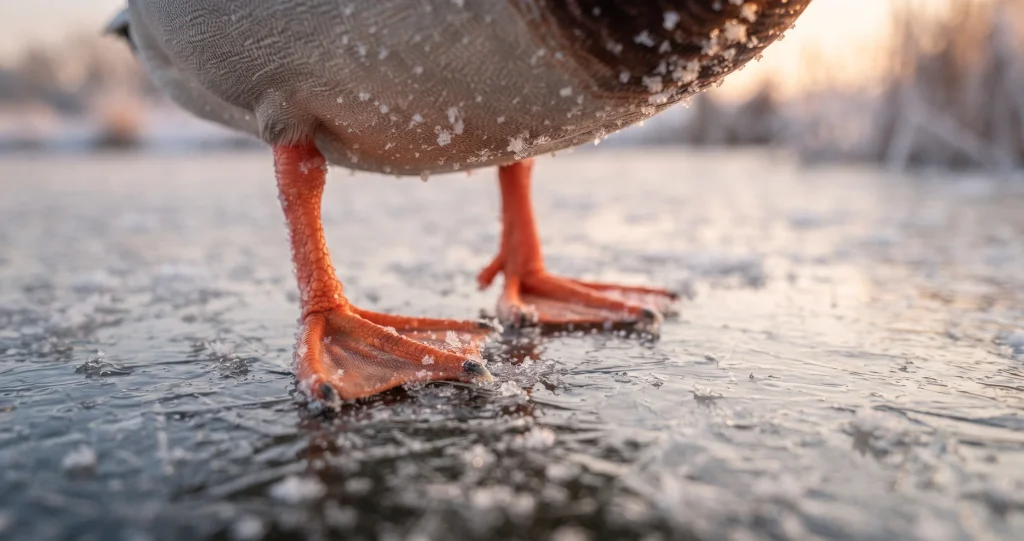
Unlike the feather-covered body, duck feet have relatively little insulating material. They consist largely of bones, tendons, connective tissues, skin, blood vessels, and relatively small amounts of muscle.
Relatively Little Muscle and Nerve Tissue
Much of the muscle responsible for moving the toes is located farther up the leg. Tendons transmit muscular force to the feet, allowing ducks to walk, swim, and maintain their balance.
The feet also contain relatively little nerve tissue compared with more sensitive and muscular parts of the body. This anatomical arrangement helps them tolerate low temperatures.
However, ducks have functioning nerves and sensory receptors in their feet. They can experience discomfort and injury, and they are not immune to frostbite.
Webbed Feet and Efficient Movement
The webbing between a duck’s toes creates a broad surface that pushes against water during swimming.
Although these exposed surfaces can lose heat, the specialized circulation within the legs helps limit the amount of warmth transferred into cold water.
This combination of movement efficiency and temperature regulation is another important part of understanding why ducks feet dont freeze during many ordinary winter conditions.
Other Adaptations That Keep Ducks Warm
Countercurrent circulation is only one component of a duck’s winter survival strategy. Several physical and behavioral adaptations work together to protect the bird against low temperatures.
1. Insulating Down Feathers
Beneath their outer plumage, ducks possess soft down feathers that trap pockets of air close to the skin. This layer reduces heat transfer between the body and the surrounding environment.
During cold weather, ducks may fluff their feathers to increase the insulating air space. This natural insulation helps maintain a stable core temperature.
2. Water-Resistant Outer Feathers
A duck’s outer feathers form a protective covering that helps prevent water from penetrating its insulating down.
Ducks regularly preen their plumage, using their bills to maintain feather alignment and distribute secretions from the preen gland near the base of the tail.
The physical structure of the feathers, together with regular preening, helps maintain their water resistance. Healthy plumage is especially important for birds spending extended periods on cold water.
3. Body Fat and Energy Reserves
Fat provides an additional layer of insulation and serves as an important energy reserve.
During periods of severe cold, ducks use energy to maintain their internal temperature and support movement, feeding, and other essential activities.
Adequate nutrition is therefore closely connected to winter survival.
4. Adjustable Blood Circulation
Birds can adjust blood flow to their extremities in response to changing temperatures and physiological needs.
This flexibility helps balance heat conservation with the oxygen requirements of living tissues. Together with countercurrent heat exchange, it contributes to the explanation of why ducks’ feet don’t freeze under many winter conditions.
Why Ducks Stand on One Leg
If you visit a pond during winter, you may notice ducks resting on one leg while the other disappears beneath their feathers.
This behavior reduces the amount of exposed skin. The tucked foot benefits from the warmth retained by the bird’s insulated body.
Ducks can alternate between their feet, reducing prolonged exposure of either extremity. They may also settle onto the ground and cover both feet with their body feathers.
These behaviors complement countercurrent heat exchange rather than replacing it. Observing them provides a practical way to understand how ducks manage heat loss throughout the day.
How Ducks Swim in Freezing Water
Water draws heat away from the body more efficiently than still air at a similar temperature. For animals living in aquatic habitats, effective insulation is particularly important.
Ducks rely on their dense plumage to protect most of their bodies from direct contact with cold water. Their exposed feet use specialized circulation to limit additional heat loss.
However, ducks still need access to suitable habitat and sufficient food. When ponds become completely frozen or food becomes unavailable, many waterfowl move to rivers, lakes, coastal waters, or other locations where conditions are more favorable.
Together, these natural processes help explain how aquatic ecosystems continue supporting wildlife during winter.
Other Birds That Use Countercurrent Heat Exchange
The biological mechanism behind why ducks’ feet don’t freeze is not unique to ducks. Many birds possess comparable circulatory adaptations that help them manage heat loss.
| Bird | Cold-weather adaptation |
|---|---|
| Canada goose | Specialized circulation and foot-tucking behavior |
| Swan | Heat conservation through circulation in exposed legs |
| Gull | Countercurrent heat exchange while resting on cold surfaces |
| Penguin | Specialized blood vessel arrangements that reduce heat loss |
| Chickadee | Heat-conserving circulation and protective resting behaviors |
These species occupy different habitats, but they face a common challenge: maintaining internal warmth while exposed extremities encounter colder surroundings.
Can Ducks Develop Frostbite?
Despite their remarkable adaptations, ducks are not completely protected against freezing injuries.
Extreme temperatures, illness, inadequate nutrition, damaged plumage, or prolonged exposure without suitable shelter can increase their vulnerability.
Domestic ducks may be particularly dependent on appropriate housing and management. They should have access to dry bedding, suitable shelter, balanced nutrition, and clean drinking water.
Understanding why ducks feet dont freeze should never lead to the assumption that they can tolerate every winter condition without consequences.
If a wild duck appears injured, unable to move normally, or trapped in ice, contact a licensed wildlife rehabilitator or local wildlife authority. Never walk onto uncertain ice to attempt a rescue.
How to Feed Ducks Responsibly During Winter
Many people enjoy visiting ducks at neighborhood ponds, especially during the colder months. Offering bread may seem like a friendly gesture, but it is generally not recommended.
Bread does not provide the balanced nutrition waterfowl require. Repeated feeding can also encourage overcrowding, increase disease transmission, and contribute to poor water quality when uneaten food accumulates.
What Do Wild Ducks Naturally Eat?
Depending on the species and habitat, ducks may consume aquatic plants, seeds, grasses, insects, mollusks, and other small aquatic organisms.
Natural foraging allows birds to obtain nutrients while maintaining behaviors suited to their environment.
Should You Feed Wild Ducks?
Where managed facilities explicitly permit feeding, follow their instructions and use only approved foods, such as suitable waterfowl pellets.
Never offer moldy food, bread, crackers, salty snacks, or processed leftovers. Always respect local wildlife regulations.
Supporting Waterfowl and Winter Wildlife
Protecting natural habitats is one of the most valuable ways to support waterfowl throughout the year.
Gardeners and homeowners can contribute by growing native vegetation, reducing chemical runoff, maintaining healthy pond ecosystems, and avoiding unnecessary disturbance around wetlands.
Responsible wildlife observation is equally important. Keep a respectful distance from resting birds, especially during severe weather when unnecessary movement can consume valuable energy.
Learning why ducks’ feet don’t freeze can encourage a greater appreciation for the specialized adaptations that allow wildlife to survive difficult seasonal conditions.
Frequently Asked Questions
Do ducks actually have cold feet?
Yes. Their feet can become considerably colder than their bodies. Countercurrent circulation allows them to conserve warmth while maintaining essential blood flow.
Why don’t ducks need feathers on their feet?
Their specialized circulation and foot anatomy help them tolerate low temperatures without the thick feather insulation covering the rest of their bodies.
Can ducks feel cold in their feet?
Yes. Although their feet contain relatively little nerve tissue compared with some other body regions, ducks possess sensory structures and can experience discomfort and injury.
What temperature are ducks’ feet in winter?
Their feet may remain only slightly above freezing, even while their core temperature stays around 100°F or higher. Actual temperatures depend on environmental conditions and physiological regulation.
Why do ducks tuck one foot under their feathers?
Tucking a foot against the insulated body reduces its exposure to cold air, ice, and wind. Alternating feet helps limit heat loss.
Can ducks survive if a pond freezes completely?
Many ducks relocate when ice prevents access to food or suitable open water. Their ability to survive depends on available habitat, energy reserves, and environmental conditions.
Does bread help ducks stay warm in winter?
Bread is not an appropriate substitute for a balanced natural diet. Maintaining healthy wetlands and avoiding unnecessary feeding are generally better ways to support wild waterfowl.
Conclusion
The explanation of why ducks feet dont freeze reveals an extraordinary example of natural biological engineering.
Through countercurrent heat exchange, ducks transfer warmth between nearby blood vessels, reducing heat loss through their exposed feet while protecting their body’s core temperature.
Their insulating down, water-resistant plumage, energy reserves, and protective behaviors provide additional support during cold weather. Nevertheless, these adaptations have limits, and suitable habitat remains essential.
The next time you observe ducks standing on a frozen pond, remember that their apparently simple behavior is supported by a sophisticated combination of anatomy, physics, and biological adaptation.
Nature has developed remarkably effective solutions to the challenges of winter.
External Sources
1. How Birds Keep Their Feet From Freezing in Frigid Temperatures
Support the explanation of countercurrent heat exchange, temperature regulation, and cold-weather adaptations in birds. National Audubon Society. https://www.audubon.org/magazine/how-birds-keep-their-feet-freezing-frigid-temperatures
2. How Do Gulls Deal With Cold Feet?
Explain heat transfer between arteries and veins, the anatomical structure of bird feet, and their ability to tolerate cold temperatures. Cornell Lab of Ornithology — All About Birds. https://www.allaboutbirds.org/news/how-do-gulls-deal-with-cold-feet/
3. Safe Bird Feeding
Provide authoritative guidance on responsible wildlife observation, avoiding bread, and the ecological and nutritional risks associated with feeding wild waterfowl. Virginia Department of Wildlife Resources. https://dwr.virginia.gov/wildlife/safe-bird-feeding/