
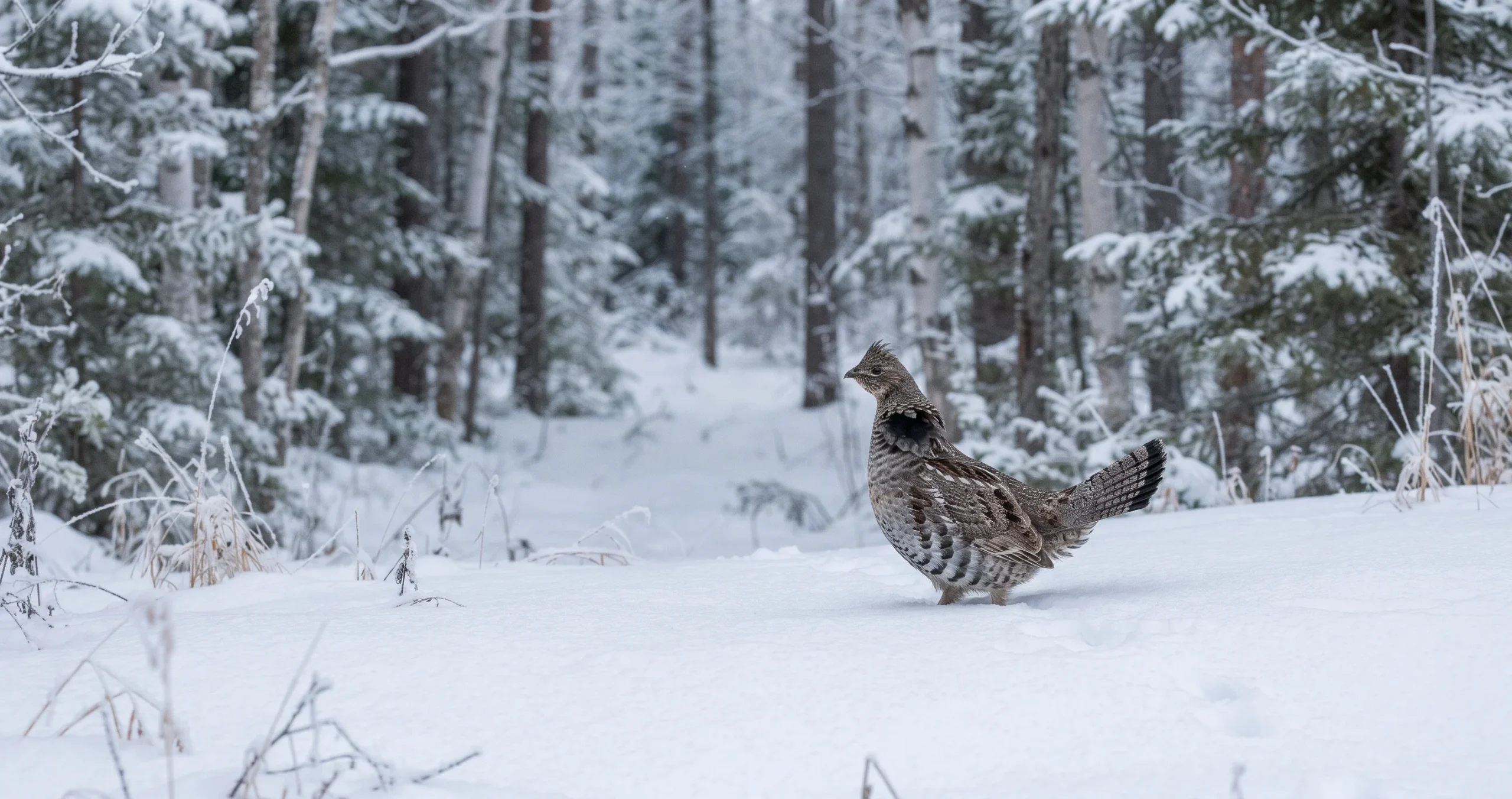
While many birds migrate south when temperatures drop, the ruffed grouse has developed a remarkable strategy for surviving winter. Instead of escaping the snow, it uses it as a natural shelter against freezing temperatures, strong winds, and some predators.
Ruffed grouse snow roosting is a fascinating example of how wildlife adapts to challenging seasonal conditions. By burrowing beneath soft snow, these woodland birds can conserve valuable energy and reduce their exposure to extreme cold.
Their seasonal adaptations, including insulating feathers and specially fringed toes, make them well suited to snowy environments across North America. Understanding this behavior also reveals why snow is an important part of healthy winter ecosystems.
Table of Contents
- What Is Ruffed Grouse Snow Roosting?
- How Ruffed Grouse Sleep Under Snow
- Why Snow Provides Natural Insulation
- Fringed Toes: Nature’s Snowshoes
- Ideal Snow Conditions for Roosting
- The Dangers of Ice Crusts and Changing Winters
- What Ruffed Grouse Eat During Winter
- Where Ruffed Grouse Live
- Other Animals That Use Snow Shelters
- How to Support Winter Wildlife
- Frequently Asked Questions
What Is Ruffed Grouse Snow Roosting?
Snow roosting is a winter survival behavior in which certain birds burrow into snow to create temporary resting chambers. These shelters reduce exposure to cold air and help birds maintain their body temperature.
The ruffed grouse (Bonasa umbellus) is particularly well adapted to this behavior. Unlike migratory birds that travel toward warmer regions, it generally remains within its woodland habitat throughout the year.
When snow conditions are favorable, a grouse can spend the night beneath the snow rather than resting on an exposed branch. It may also use snow shelters during particularly cold days.
According to the Cornell Lab of Ornithology, soft snow provides important winter shelter for ruffed grouse living in northern regions.
Ruffed grouse snow roosting demonstrates that surviving winter is not always about avoiding the cold. Sometimes, survival depends on using the surrounding environment in unexpected ways.
How Ruffed Grouse Sleep Under Snow
When the snow becomes sufficiently deep and loose, a ruffed grouse may dive directly into a snowdrift. It can also enter the snow from ground level and work its way beneath the surface.
Using its body and feet, the bird moves through the snow until it creates a small resting space. Loose snow can fall back behind the bird, concealing the entrance and forming an insulated chamber.
Inside this shelter, the grouse settles down and rests. The surrounding snow reduces air movement and limits the amount of body heat lost to the outside environment.
Unlike hibernating mammals, ruffed grouse remain active throughout winter. They eventually leave their snow chambers to search for food before returning to suitable shelter when necessary.
Ruffed grouse snow roosting is a flexible behavior rather than a permanent living arrangement. When snow is unavailable or unsuitable, these birds may rest among evergreen branches, beneath dense shrubs, or in other protected locations.
Why Snow Provides Natural Insulation
Snow may feel extremely cold to humans, but its physical structure makes it an effective natural insulator. Fresh, powdery snow contains numerous small spaces filled with air.
Because still air transfers heat relatively slowly, these pockets reduce heat movement through the snowpack. This is similar to the principle behind insulated winter clothing.
The temperature inside a snow shelter can therefore be considerably more stable than the temperature outside. Snow also blocks much of the wind that would otherwise accelerate heat loss.
Research published in the scientific journal Oecologia has linked snow roosting with reduced temperature-related physiological stress in wintering ruffed grouse.
Conserving Energy During Winter
Birds must consume enough food to maintain their body temperature, support essential functions, and remain active. During winter, limited daylight and difficult feeding conditions can make this increasingly challenging.
By reducing exposure to freezing winds, ruffed grouse snow roosting helps limit the energy required to stay warm.
That energy can instead support movement, feeding, and other essential activities. A suitable snow shelter becomes especially valuable during prolonged periods of severe cold.
Fringed Toes: Nature’s Snowshoes
One of the ruffed grouse’s most interesting winter adaptations is found on its feet.
During fall, the birds develop small projections along the sides of their toes. These seasonal structures are known as pectinations.
They increase the effective surface area of the feet, helping distribute the bird’s weight when walking across snow. Their function resembles that of miniature snowshoes, although grouse can still sink into particularly soft snow.
As warmer conditions return, the seasonal fringes are shed. This natural cycle allows the birds to adapt their feet to changing environmental conditions.
Although these structures do not create the snow chamber by themselves, they complement the other adaptations that make ruffed grouse snow roosting possible.
Ideal Snow Conditions for Roosting
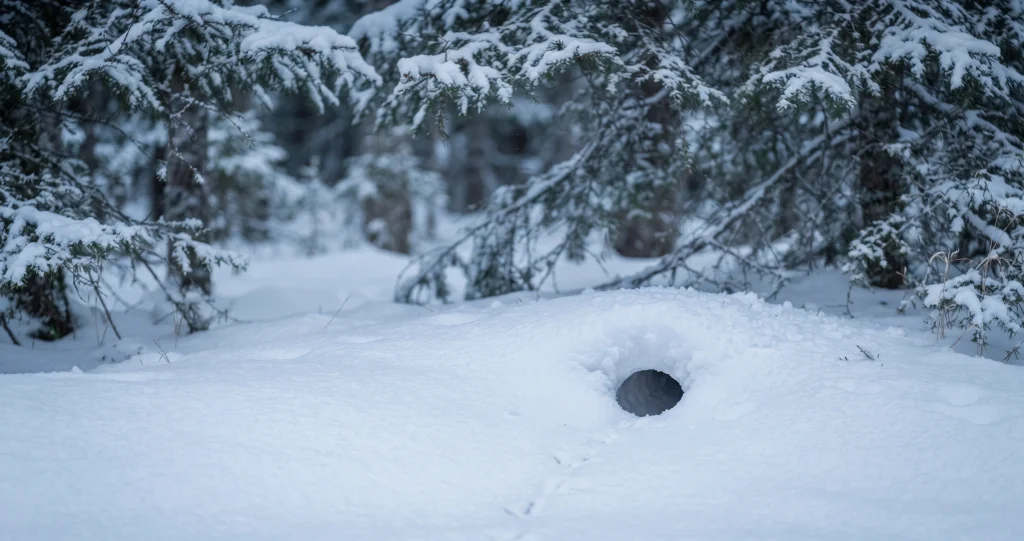
Not every snowdrift makes a suitable winter shelter. Snow depth, density, moisture, and surface conditions all influence whether a grouse can successfully burrow beneath it.
The USDA Forest Service’s ruffed grouse species review identifies approximately 8–10 inches of snow as a useful minimum depth for snow roosting, provided the snow is free of a restrictive crust.
This is a general guideline rather than a universal requirement. Actual suitability depends on local conditions and the physical characteristics of the snowpack.
| Snow condition | Suitability for roosting |
|---|---|
| Deep, powdery snow | Highly favorable |
| Loose snow without an ice crust | Favorable |
| Shallow snow cover | Limited protection |
| Dense, wet snow | Generally less suitable |
| Thick, frozen surface crust | Potentially hazardous |
The best conditions for ruffed grouse snow roosting generally develop when cold weather produces a lasting layer of soft snow.
Snow depth alone does not determine whether a location is suitable. A deep but heavily frozen snowdrift may provide fewer shelter opportunities than a softer accumulation nearby.
The Dangers of Ice Crusts and Changing Winters
Although snow offers important protection, changing weather can transform a useful shelter into a potential hazard.
When temperatures rise, snow begins to melt. Rain can also penetrate the snowpack, increasing its moisture content before colder temperatures return.
Refreezing may create a hard surface crust that prevents grouse from entering the snow. Under certain circumstances, ice formation may also interfere with a bird’s ability to escape an existing shelter.
Reduced snow cover presents another challenge. Without suitable drifts, birds must rely more heavily on alternative shelter, including evergreen vegetation.
Researchers studying winter roost selection have found that snow characteristics influence the availability of different resting strategies. These findings highlight the importance of snow quality rather than snowfall totals alone.
Ruffed grouse snow roosting is particularly relevant when considering changing winter weather patterns. Warmer winters do not necessarily make life easier for birds that depend on reliable snow cover.
What Ruffed Grouse Eat During Winter
Finding enough food is another essential part of winter survival. As snow covers the forest floor, ruffed grouse shift their feeding habits toward food sources available above ground.
Their winter diet commonly includes:
- Aspen buds and catkins
- Birch buds
- Willow buds
- Cherry tree buds
- Available fruits and berries
Aspen trees are particularly valuable in many northern woodland habitats. Their buds provide an accessible food source even when deep snow covers ground vegetation.
Ruffed grouse can fly into trees to feed before returning to sheltered areas. This combination of accessible food and energy-efficient resting behavior helps them cope with demanding winter conditions.
Where Ruffed Grouse Live
Ruffed grouse are native to North America and occupy a wide range of forested environments. Their distribution extends across much of Canada, parts of Alaska, the northern United States, and portions of the Appalachian Mountains.
They are particularly associated with woodland landscapes that contain a mixture of young trees, mature forest, dense shrubs, and natural openings.
Suitable habitats often include regenerating aspen forests, mixed hardwood and conifer woodlands, mountain forests, and thick vegetation along forest edges.
Northern populations frequently encounter conditions favorable for ruffed grouse snow roosting. Birds living in milder regions depend more heavily on other forms of shelter.
Maintaining diverse forest habitats is important because grouse require more than suitable winter resting sites. They also need reliable food sources, protective vegetation, and appropriate breeding habitat.
Other Animals That Use Snow Shelters
Ruffed grouse are not the only animals that benefit from snow’s insulating properties. Beneath the winter landscape, an entire community of wildlife takes advantage of protected spaces.
The sheltered environment between the ground and the overlying snowpack is commonly known as the subnivium.
Ptarmigans
Ptarmigans are close relatives of grouse that inhabit cold northern and mountainous regions. They can burrow into soft snow for temporary protection against harsh weather.
Their feather-covered feet also help them cope with snowy terrain.
Voles and Mice
Small rodents create networks of tunnels beneath the snow. These passageways allow them to travel between feeding and resting areas while remaining relatively protected from severe surface temperatures.
However, predators capable of locating or entering these tunnels still pose a threat.
Shrews
Shrews remain active during winter and require frequent access to food. The protected spaces beneath snow allow them to search for small invertebrates while reducing direct exposure to freezing winds.
Wolverines
Female wolverines may use snow-covered dens when raising their young. Their broad feet and insulating fur also help them function in cold environments.
How to Support Winter Wildlife
Although ruffed grouse primarily inhabit forests rather than typical residential gardens, homeowners can still support local wildlife by preserving natural winter shelter.
Consider incorporating these wildlife-friendly practices into your outdoor space:
- Retain native shrubs and evergreen vegetation.
- Leave some fallen leaves beneath established trees.
- Maintain undisturbed areas of natural vegetation.
- Avoid unnecessary disturbance of snow-covered wildlife habitats.
- Preserve existing woodland edges where appropriate.
- Keep dogs away from potential wildlife resting areas.
If you encounter a grouse-sized opening in a snowdrift while walking through the woods, observe it from a distance. Never excavate a suspected snow roost simply to see whether a bird is inside.
You can also learn to recognize wildlife activity without disturbing animals by reading our guide to identifying animal tracks.
Protecting natural habitats allows wildlife to use the seasonal adaptations it has developed over generations.
Frequently Asked Questions
Do ruffed grouse really sleep under snow?
Yes. When suitable powdery snow is available, ruffed grouse can create sheltered resting chambers beneath the surface. This behavior helps reduce heat loss and exposure to winter winds.
How much snow do ruffed grouse need for snow roosting?
About 8–10 inches of soft, crust-free snow can provide suitable conditions. However, snow density, moisture, and surface hardness also influence whether a bird can use it successfully.
How do ruffed grouse breathe under snow?
Loose snow contains interconnected air spaces that allow gases to move through it. A suitable snow chamber is therefore not an airtight enclosure, although changing snow conditions can affect ventilation.
Can ruffed grouse become trapped under snow?
Yes, under certain circumstances. Rain, melting snow, and subsequent freezing can produce a hard crust that makes leaving a snow shelter difficult.
Do ruffed grouse hibernate during winter?
No. Ruffed grouse remain active throughout winter, regularly leaving their resting areas to feed. Snow roosting is a temporary sheltering behavior, not hibernation.
Do all grouse sleep beneath the snow?
Not necessarily. Several grouse species use snow shelters, but their behavior depends on their habitat, local weather, and available alternatives.
Does snow roosting protect grouse from predators?
Snow can conceal birds from some predators, particularly those searching from above. However, snow shelters do not eliminate predation risks.
What happens when there is not enough snow?
When conditions are unsuitable for ruffed grouse snow roosting, birds may seek protection in dense vegetation, evergreen trees, or other sheltered locations.
Conclusion
Ruffed grouse snow roosting is one of North America’s most fascinating examples of wildlife adapting to winter. By using soft snow as a temporary shelter, these woodland birds reduce heat loss and conserve energy during challenging weather.
Their insulating plumage, seasonal toe fringes, flexible feeding habits, and ability to select protected resting locations all contribute to winter survival.
However, the benefits of snow depend on its depth, structure, and stability. Ice crusts, inconsistent snowfall, and habitat changes can limit access to suitable shelters.
Understanding these adaptations reminds us that a snow-covered landscape is far from lifeless. Beneath its quiet surface, wildlife continues to survive, feed, rest, and prepare for the return of spring.
External Sources
1. Ruffed Grouse – Life History
Provide reliable information about ruffed grouse habitat, feeding habits, winter behavior, and natural survival adaptations. https://www.allaboutbirds.org/guide/Ruffed_Grouse/lifehistory