
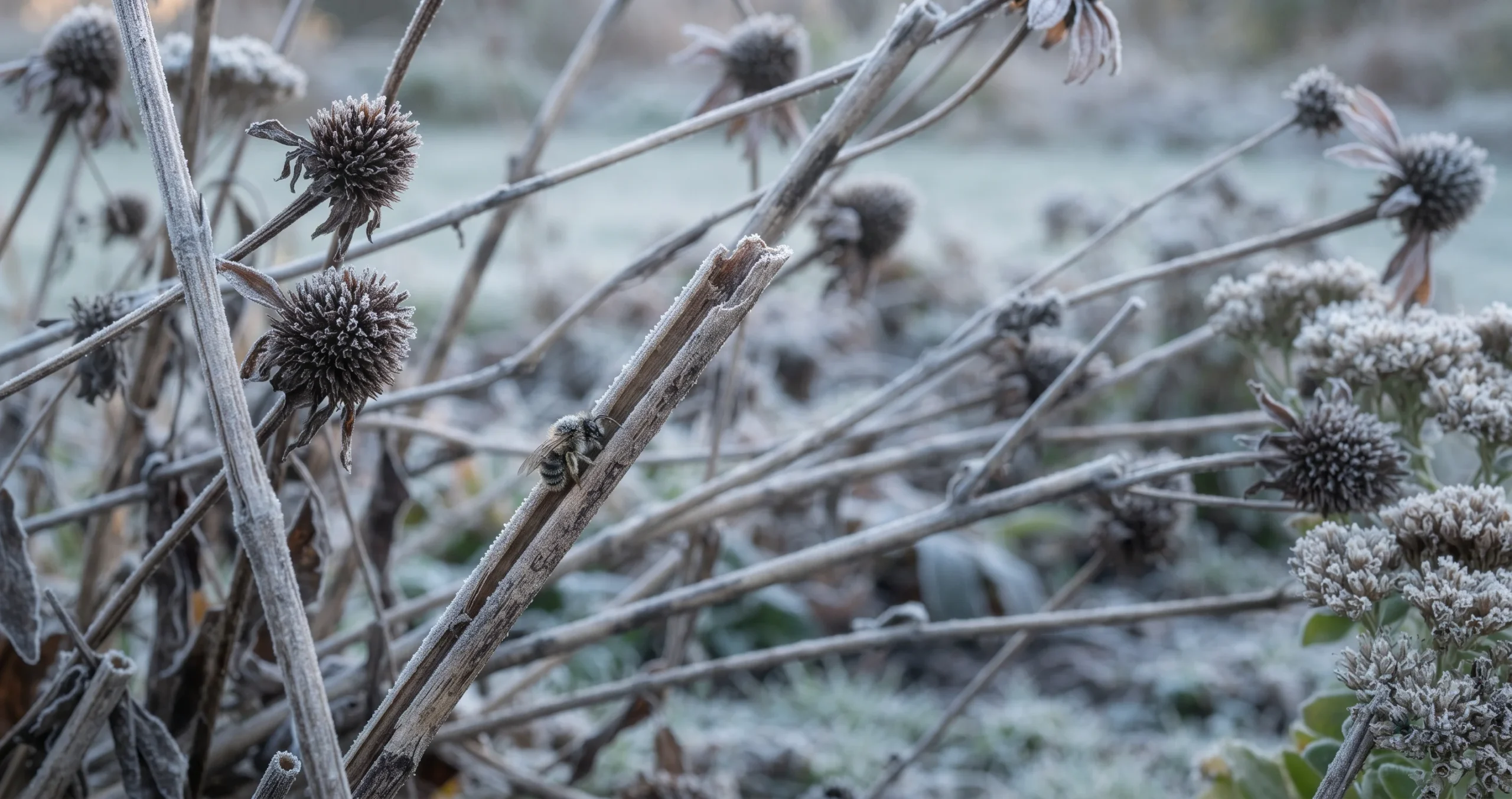
When autumn arrives, many gardeners reach for their pruning shears and begin removing dried flowers, dead stalks, and fallen leaves. Although a freshly cleaned garden may look attractive, some of those seemingly lifeless plant materials provide important shelter for wildlife.
Choosing to leave stems standing for native bees is one of the simplest ways to make your garden more pollinator-friendly throughout the year.
Hollow and soft-centered plant stems can provide nesting chambers for solitary bees, protecting their developing offspring during colder months. Combined with native flowers, undisturbed soil, and natural leaf litter, standing stems help create a more complete wildlife habitat.
Best of all, this gardening practice requires very little equipment, expense, or additional effort.
Table of Contents
- Why Standing Plant Stems Matter to Native Bees
- Ground-Nesting vs. Stem-Nesting Bees
- How Stem-Nesting Bees Build Their Nests
- How Native Bees Survive Winter Inside Plant Stems
- Why You Should Leave Stems Standing for Native Bees
- Best Garden Plants for Stem-Nesting Bees
- When to Cut Back Garden Stems in Spring
- Recommended Cutting Heights for Native Bee Habitat
- How Fallen Leaves Protect Other Beneficial Insects
- Creating a Wildlife-Friendly Fall Cleanup Plan
- Common Garden Cleanup Mistakes
- Frequently Asked Questions
Why Standing Plant Stems Matter to Native Bees
A pollinator-friendly garden needs more than flowers. Bees also require suitable locations to reproduce, shelter from unfavorable weather, and complete their life cycles.
Many gardeners provide abundant nectar and pollen during summer but remove potential nesting habitat when autumn arrives.
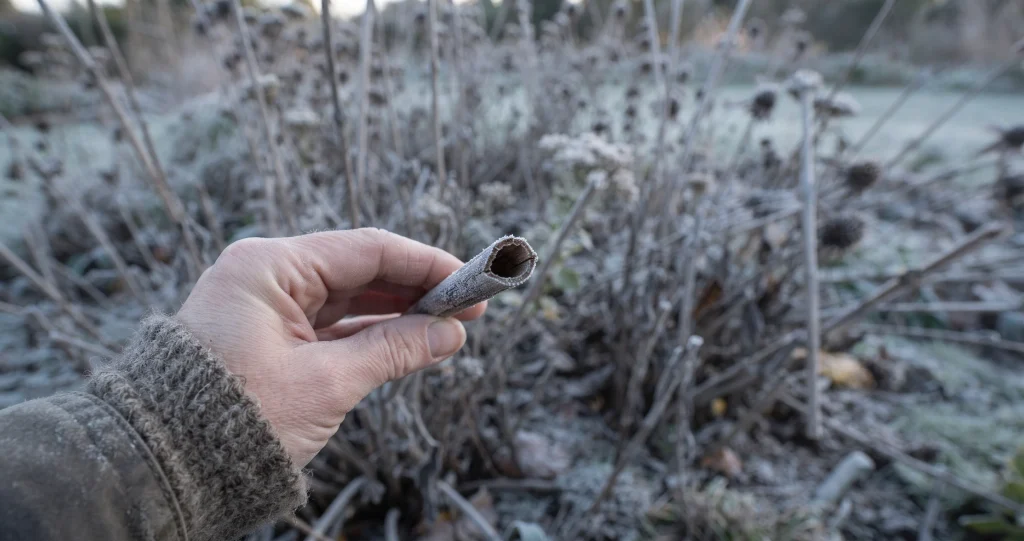
Dried perennial stems may contain hollow centers or soft inner tissue called pith. Certain native bee species use these natural structures to establish protected nesting chambers.
When you leave stems standing for native bees, you preserve resources that would otherwise disappear during routine garden cleanup.
Ground-Nesting vs. Stem-Nesting Bees
Native bees use several different nesting strategies. Understanding these differences helps gardeners provide suitable habitat rather than relying on a single conservation technique.
Ground-nesting bees
Roughly 70 percent of North American native bee species nest underground, although estimates vary depending on how species and nesting categories are classified.
These bees excavate tunnels in suitable soil or use existing underground cavities. Some prefer sunny, relatively dry locations with limited vegetation.
Mining bees, many sweat bees, and various other solitary species use underground nesting sites.
Stem-nesting bees
Certain native bees establish their nests inside hollow plant stems or excavate tunnels through soft pith.
Small carpenter bees, some leafcutter bees, and certain mason bee species can use suitable aboveground cavities.
Preserving stems provides opportunities for these bees, while maintaining undisturbed soil benefits many ground-nesting species.
| Characteristic | Ground-nesting bees | Stem-nesting bees |
|---|---|---|
| Nesting location | Underground tunnels | Hollow or soft-centered stems |
| Suitable habitat | Undisturbed soil | Standing dried vegetation |
| Main garden threats | Tilling, excessive mulch, soil disturbance | Cutting, shredding, removing stems |
| Conservation approach | Preserve suitable exposed soil | Retain stems across growing seasons |
| Common examples | Mining bees and many sweat bees | Small carpenter bees and some leafcutter bees |
Both groups benefit from nearby flowers that provide suitable pollen and nectar.
How Stem-Nesting Bees Build Their Nests
Most stem-nesting bees are solitary. Unlike honey bees, they do not depend on large colonies of workers to raise their offspring.
A female bee selects a suitable stem and prepares a nesting tunnel. Some species occupy existing hollow spaces, while others excavate soft plant material.
She collects pollen and nectar, places these provisions inside a chamber, and deposits an egg. Depending on the species, partitions may be made from plant material, mud, resin, or other natural substances.
Several chambers can develop within a single stem. Each provides a protected environment where a young bee can develop.
A dried garden stem may therefore contain several developing insects without showing obvious signs from the outside.
How Native Bees Survive Winter Inside Plant Stems
Native bees have evolved different strategies for surviving unfavorable seasonal conditions.
Some stem-nesting species spend winter as immature insects, while others overwinter as fully developed adults inside their nesting chambers.
The stem provides physical shelter and reduces direct exposure to weather. The insects’ seasonal physiological adaptations also contribute to their ability to tolerate cold conditions.
Why dried stems should remain undisturbed
An occupied stem can appear completely lifeless from the outside. Its inhabitants may remain hidden for months.
Cutting through the nest, shredding the stem, or placing it in an active compost pile can damage developing bees.
This is an important reason to leave stems standing for native bees until their life cycles are complete.
Emergence timing varies considerably. Some species become active in spring, while others emerge later in summer.
Gardeners should avoid assuming that every overwintering bee has emerged after the first warm day.
Why You Should Leave Stems Standing for Native Bees
Preserving some standing vegetation offers several practical advantages for wildlife-friendly gardens.
Providing natural nesting opportunities
Suitable perennial stems distribute nesting locations throughout the garden. Unlike large artificial bee hotels, naturally scattered stems avoid concentrating all nesting activity in one small structure.
Reducing unnecessary garden work
Leaving selected stems in place means less cutting, shredding, and removal during autumn.
The time saved can be used for other seasonal gardening activities, such as planting native perennials or preparing vegetable beds.
Supporting pollinator diversity
Different plant structures can accommodate different bee species. Maintaining a mixture of hollow stems, soft-centered stalks, dead wood, and suitable soil creates a wider variety of potential nesting locations.
However, leaving stems does not guarantee that bees will occupy them. Local insect populations, plant characteristics, and environmental conditions all influence nesting activity.
Best Garden Plants for Stem-Nesting Bees
Not every perennial produces stems suitable for nesting insects. Some have solid, dense stalks, while others develop hollow centers or soft interiors that bees can excavate.
Growing a variety of regionally appropriate native plants increases the range of nesting structures available in your garden.
| Plant | Potential nesting feature |
|---|---|
| Bee balm (Monarda) | Suitable dried stems |
| Goldenrod (Solidago) | Soft-centered stems in some species |
| Anise hyssop (Agastache) | Persistent perennial stalks |
| Elderberry (Sambucus) | Soft, pith-filled branches |
| Native sunflowers (Helianthus) | Sturdy, persistent stalks |
| Raspberry (Rubus) | Dried canes with accessible pith |
| Joe-Pye weed (Eutrochium) | Tall, persistent stems |
Plant suitability varies by species and region. Observe which stems attract insects in your own garden rather than assuming every plant will become occupied.
Combine nesting plants with flowering plants
A successful pollinator garden provides food as well as nesting habitat.
Choose native plants that flower at different times, beginning in spring and continuing through fall. This helps support bees with different emergence periods and feeding requirements.
When to Cut Back Garden Stems in Spring
One of the most important decisions is determining when and how to resume garden maintenance after winter.
Leaving vegetation standing throughout autumn and winter protects existing habitat. Spring pruning can then create new nesting entrances in previously unoccupied stems.
Wait for consistently warmer weather
A useful starting point is to wait until spring temperatures regularly reach the 50s Fahrenheit before trimming suitable stems.
However, this temperature guideline does not mean every overwintering insect has emerged. Some native bees remain inside their nests until considerably later in the growing season.
Distinguish between fresh nesting material and older stems that may already contain developing insects.
Protect previously occupied stems
If a stem was cut during an earlier growing season, it may already contain a nest.
Avoid cutting these older stems shorter or removing them during routine spring maintenance. Instead, allow them to remain while preparing additional nesting sites elsewhere.
This rotating approach helps maintain continuous habitat from one generation of bees to the next.
Recommended Cutting Heights for Native Bee Habitat
When preparing new nesting sites in spring, cut suitable dead perennial stalks to varying heights of about 8–24 inches above the ground.
The Xerces Society recommends this range to provide a variety of natural nesting opportunities. Existing occupied stems should remain undisturbed rather than being repeatedly shortened.
Practical cutting height guide
| Stem height | Potential garden application |
|---|---|
| 8–12 inches | Short perennial borders |
| 12–18 inches | Mixed flower beds |
| 18–24 inches | Taller perennial plantings |
| Uncut stems | Potentially occupied stalks and wildlife cover |
These heights are flexible habitat recommendations, not strict requirements for individual bee species.
Use sharp pruning shears to create clean openings. As new vegetation develops, it will often conceal the older stems naturally.
How Fallen Leaves Protect Other Beneficial Insects
Standing plant stems are only one component of a wildlife-friendly winter garden. Fallen leaves, loose bark, dead wood, and undisturbed soil also provide valuable shelter.
Different insects spend winter in different developmental stages and locations.
Ladybugs and lacewings
Some lady beetles and lacewings overwinter in sheltered locations beneath vegetation, inside bark crevices, or among natural garden debris.
Preserving these areas can help maintain populations of insects that feed on common garden pests during warmer months.
Butterflies and moths
Certain butterflies and moths spend winter as eggs, caterpillars, pupae, or adults, depending on their species.
Removing every fallen leaf and dried stalk may unintentionally destroy some of these sheltered insects.
Ground beetles and spiders
Natural leaf litter provides hiding places for numerous ground-dwelling invertebrates.
Ground beetles and spiders participate in garden food webs and contribute to natural regulation of other invertebrate populations.
Creating a Wildlife-Friendly Fall Cleanup Plan
You do not need to abandon garden maintenance completely to support native bees. A selective approach allows you to maintain an organized landscape while preserving useful wildlife habitat.
Step 1: Identify healthy perennial stems
Before pruning, examine your flower beds and identify suitable plants with sturdy, hollow, or soft-centered stems.
Leave healthy dried stalks in place, especially those located in sheltered garden areas.
Step 2: Remove seriously diseased vegetation
Plants affected by significant diseases may require removal to reduce the risk of problems returning next season.
Wildlife conservation should be balanced with appropriate plant health management.
Step 3: Preserve some fallen leaves
Keep loose leaf litter beneath suitable trees, shrubs, and perennial plants.
Clear sidewalks, drainage channels, and other areas where excessive leaf accumulation could cause problems.
Step 4: Maintain patches of exposed soil
Avoid covering every garden surface with mulch or landscape fabric.
Small, undisturbed areas of suitable soil provide important nesting opportunities for ground-nesting bees.
Step 5: Plan spring pruning carefully
Prepare new nesting entrances in suitable dead stems when spring conditions become appropriate.
Retain previously occupied stems and allow older nesting material to break down naturally.
Common Garden Cleanup Mistakes
Even well-intentioned gardeners can accidentally remove important insect habitat.
The most common mistakes include:
- Cutting every perennial stem to ground level in autumn.
- Shredding potentially occupied stems.
- Assuming all insects emerge during early spring.
- Covering every exposed soil surface with thick mulch.
- Removing all natural leaf litter.
- Applying unnecessary insecticides near nesting areas.
When you leave stems standing for native bees, aim for a balanced landscape that provides diverse habitats rather than focusing exclusively on one nesting strategy.
Frequently Asked Questions
Should I leave dead flower stems standing all winter?
Yes. Retaining selected healthy perennial stems can preserve existing insect habitat and provide material for future nesting sites.
Remove seriously diseased vegetation when appropriate.
How high should I cut perennial stems for native bees?
A useful recommendation is about 8–24 inches above ground when creating new nesting sites in spring.
Do not shorten stems already suspected of containing nests.
Do all native bees nest inside plant stems?
No. Most native bee species nest underground, while others use plant stems, wood cavities, or alternative nesting locations.
How can I tell if a plant stem contains a bee nest?
A stem entrance sealed with mud, leaf fragments, resin, or other natural material may indicate nesting activity.
However, an open entrance does not guarantee that the stem is empty.
Can I leave stems standing for native bees for two years?
Yes. Retaining stems across multiple growing seasons helps accommodate differences in nesting and emergence schedules.
Previously occupied stems should remain until their inhabitants have completed development.
Do I need a bee hotel if I leave natural stems?
Not necessarily. Natural nesting habitat can provide suitable opportunities for many cavity-nesting bees without requiring the regular maintenance associated with artificial bee hotels.
Will leaving dead stems make my garden unhealthy?
Healthy dormant stems generally do not need immediate removal. However, seriously diseased plant material and vegetation creating safety problems should be managed appropriately.
Conclusion
Choosing to leave stems standing for native bees is a simple way to support pollinators beyond the flowering season.
By preserving selected perennial stalks, delaying unnecessary cleanup, and providing new nesting entrances during spring, gardeners can maintain habitat across successive generations.
Combining standing vegetation with native flowers, exposed soil, natural leaf litter, and responsible pesticide management supports a broader diversity of garden wildlife.
A winter garden may appear dormant, but inside its dried stems and beneath its fallen leaves, many small creatures are preparing for another growing season.
Internal Sources
1. Four Native Fall Flowers That Support Bees and Other Pollinators
Explain how native asters and goldenrods provide late-season pollen and nectar, and how combining flowering plants with natural nesting habitats supports native bees throughout their life cycles. Secrets of the Green Garden. https://secretsofthegreengarden.com/native-fall-flowers-for-pollinators/
External Sources
1. Moving Beyond Flowers: Natural Nesting Habitat for Bees and Other Insects
Provide expert recommendations on preserving standing perennial stems, spring cutting heights, natural nesting sites, and pollinator conservation. The Xerces Society for Invertebrate Conservation. https://xerces.org/blog/moving-beyond-flowers-natural-nesting-habitat-for-bees-and-other-insects?utm_source
2. New Jersey Pollinators — Pollinator Habitat and Conservation
Explain ground-nesting and stem-nesting bee behavior, overwintering protection, beneficial insects, and essential pollinator habitat requirements. USDA Natural Resources Conservation Service. https://www.nrcs.usda.gov/state-offices/new-jersey/new-jersey-pollinators?utm_source
3. Nests for Pollinators
Provide university-backed recommendations for natural bee nesting habitats, preserving plant stems across multiple seasons, and wildlife-friendly garden maintenance. University of Minnesota Extension. https://extension.umn.edu/garden-and-home/yard-and-garden/lawns-and-landscapes-in-minnesota/pollinator-nests?utm_source