
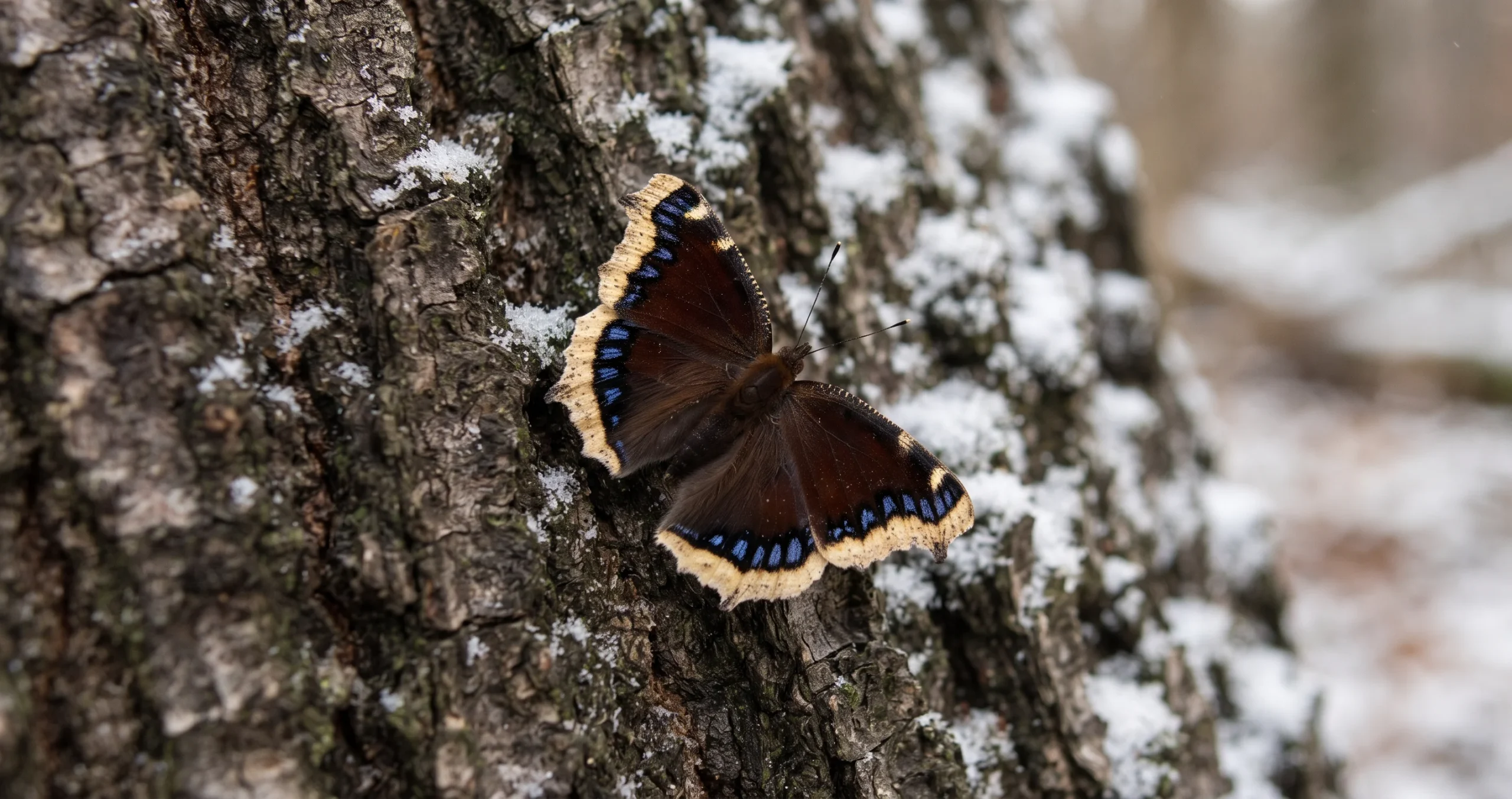
A butterfly resting beneath tree bark in the middle of winter might sound unusual, but that is exactly how the mourning cloak survives the coldest months of the year. Unlike butterflies that migrate south or spend winter as caterpillars, this remarkable insect can overwinter as a fully developed adult.
The mourning cloak butterfly winter survival strategy combines seasonal dormancy, protective coloration, physiological adaptations, and carefully selected natural shelters.
For gardeners and nature enthusiasts, understanding this butterfly’s life cycle offers a valuable lesson: supporting butterflies requires more than planting flowers. Trees, fallen leaves, old logs, and undisturbed garden spaces are equally important.
Table of Contents
- What Is a Mourning Cloak Butterfly?
- Mourning Cloak Butterfly Winter Survival Explained
- Where Mourning Cloak Butterflies Shelter in Winter
- Why Mourning Cloaks Appear So Early in Spring
- What Do Mourning Cloak Butterflies Eat?
- How Long Do Mourning Cloak Butterflies Live?
- Host Trees for Mourning Cloak Caterpillars
- Understanding Their Seasonal Life Cycle
- How to Help Mourning Cloak Butterflies in Your Garden
- Common Mistakes to Avoid
- Frequently Asked Questions
What Is a Mourning Cloak Butterfly?
The mourning cloak butterfly (Nymphalis antiopa) belongs to the brush-footed butterfly family, Nymphalidae. It is found throughout much of North America and also occurs in parts of Europe and Asia, where it is commonly known as the Camberwell beauty.
Its distinctive appearance makes it relatively easy to identify, particularly when its wings are fully open.
Physical Characteristics
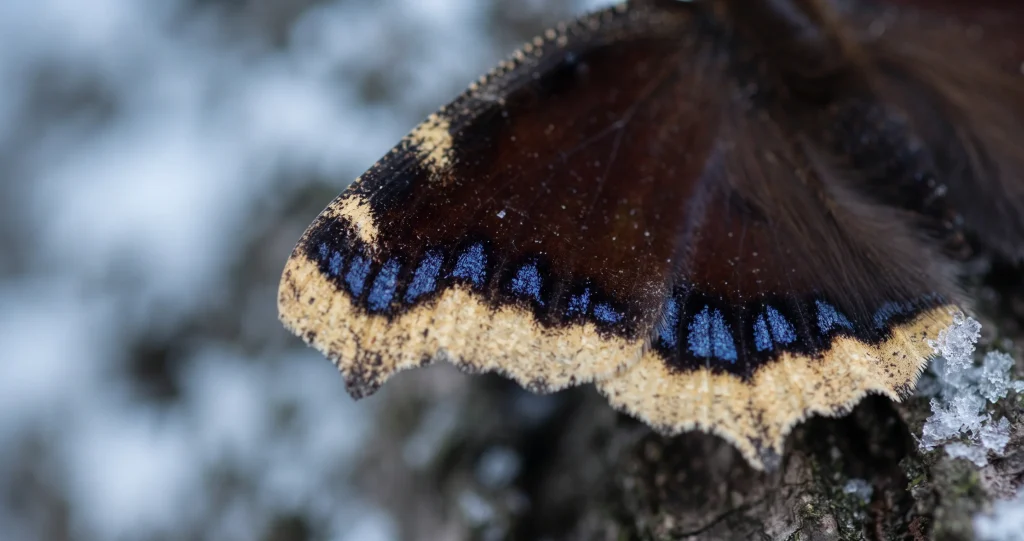
An adult mourning cloak typically displays deep reddish-brown or burgundy wings surrounded by a pale cream or yellow border. A row of blue spots lies along the dark band inside the lighter outer edge.
The underside of its wings is considerably darker, with patterns resembling rough tree bark. This coloration makes a resting butterfly difficult to notice when its wings are folded.
Its common name reflects the resemblance of its dark wings to traditional mourning clothing. The combination of muted colors and contrasting borders gives this species an unmistakable appearance.
Mourning Cloak Butterfly Winter Survival Explained
One of the most remarkable characteristics of the mourning cloak is its ability to survive winter in its adult form. Many other temperate butterflies pass the cold season as eggs, caterpillars, or chrysalises.
Mourning cloaks instead enter a period of seasonal dormancy. During this time, their activity and energy requirements decrease considerably.
What Happens During Winter Dormancy?
Insects are ectothermic, meaning their body temperature depends largely on environmental conditions. When temperatures fall, their ability to move, feed, and perform other activities becomes limited.
Seasonal dormancy helps insects conserve their resources until conditions become favorable again. This is particularly important during winter, when food is scarce and temperatures may remain unsuitable for flight.
The mourning cloak butterfly winter survival process therefore depends on both internal physiological changes and external environmental protection.
How Do They Tolerate Freezing Temperatures?
Cold-adapted insects can undergo biochemical changes that improve their tolerance of low temperatures. Protective compounds and adjustments in their physiology can reduce the risk of damaging ice formation.
However, mourning cloaks are not completely immune to freezing injuries. Their survival also depends on the duration and severity of cold exposure, their physical condition, and the quality of their shelter.
The University of Minnesota Department of Entomology identifies adult overwintering as a defining feature of this species. Its ability to remain dormant through winter allows it to become active unusually early in the following spring.
Where Mourning Cloak Butterflies Shelter in Winter
Finding a suitable hiding place is an essential part of surviving the colder months. Mourning cloaks seek protected spaces where they can remain relatively undisturbed.
Common winter shelters include:
- Spaces beneath loose tree bark.
- Natural crevices in mature trees.
- Hollow logs and decaying wood.
- Sheltered openings within woodpiles.
- Protected rock crevices.
These locations can reduce direct exposure to wind, precipitation, and sudden environmental changes.
The dark underside of the butterfly’s folded wings also provides effective camouflage against woody surfaces. A dormant butterfly may resemble a small fragment of bark rather than a living insect.
Preserving these natural features is particularly important when creating a mourning cloak butterfly winter habitat.
Gardeners should avoid peeling loose bark from trees or dismantling established woodpiles during cold weather. Such activities may disturb insects that have already settled into their seasonal shelters.
Why Mourning Cloaks Appear So Early in Spring
A sunny afternoon in late winter can occasionally bring an unexpected sight: a butterfly flying through a landscape where patches of snow remain.
Because mourning cloaks overwinter as adults, they do not need to complete their caterpillar and chrysalis stages before becoming active in spring. They can emerge from their shelters when weather conditions permit flight.
In northern regions, sightings frequently occur during March or April, although unusually warm conditions may encourage earlier activity.
The Importance of Sunlight
Mourning cloaks often rest on sunlit tree trunks, exposed branches, rocks, and other surfaces that absorb warmth.
Opening their wings can help them capture solar energy and raise their body temperature sufficiently for activity.
This explains why sheltered woodland openings and sunny garden edges are promising locations for early-season observations.
A temporary warm spell does not necessarily indicate that winter has ended. Butterflies may become inactive again when temperatures decline.
What Do Mourning Cloak Butterflies Eat?
Unlike many butterflies commonly associated with flowering gardens, mourning cloaks frequently obtain their food from sources other than flower nectar.
Their feeding behavior is particularly useful during early spring, when relatively few plants are blooming.
Tree Sap
Sap provides an important source of carbohydrates for adult mourning cloaks. They may visit naturally occurring sap flows on oaks and other suitable trees.
Their feeding opportunities depend on the availability of accessible sap, which can emerge through natural wounds or openings created by other organisms.
There is no need to deliberately injure trees to attract butterflies.
Overripe and Decaying Fruit
Adult mourning cloaks may also feed on the sugary liquids produced by soft, fermenting fruit.
Naturally fallen fruit can provide temporary feeding opportunities in orchards and wooded gardens. However, homeowners should manage fallen fruit responsibly to avoid unwanted pests and sanitation problems.
Flower Nectar
Although nectar is not always their preferred food, mourning cloaks occasionally visit flowers. Early-flowering native plants can therefore contribute to a diverse butterfly-friendly landscape.
How Long Do Mourning Cloak Butterflies Live?
The mourning cloak is among the longest-lived adult butterflies in North America. Its adult lifespan can reach about 10–11 months, considerably longer than that of many familiar garden butterflies.
This extended lifespan allows an individual butterfly to experience several seasons. An adult emerging during summer may survive autumn, remain dormant throughout winter, and reproduce the following spring.
However, a long potential lifespan does not guarantee survival. Predation, habitat disturbance, extreme weather, and limited food availability can shorten an individual butterfly’s life.
The mourning cloak butterfly winter dormancy period accounts for a significant portion of its unusually long adult lifespan.
Host Trees for Mourning Cloak Caterpillars
Creating a butterfly-friendly garden requires understanding the difference between adult food sources and caterpillar host plants.
While adult mourning cloaks frequently feed on sap and fruit, their caterpillars depend on the leaves of suitable trees and shrubs.
| Host tree | Scientific name |
|---|---|
| Black willow | Salix nigra |
| Silky willow | Salix sericea |
| American elm | Ulmus americana |
| Eastern cottonwood | Populus deltoides |
| Quaking aspen | Populus tremuloides |
| Paper birch | Betula papyrifera |
| Common hackberry | Celtis occidentalis |
These trees provide feeding opportunities for developing caterpillars and contribute to structurally diverse wildlife habitats. Butterflies and Moths of North America
Recognizing Mourning Cloak Caterpillars
The caterpillars have dark bodies, small pale markings, reddish-orange spots along their backs, and prominent black spines. They are sometimes called spiny elm caterpillars.
Young caterpillars often feed together on their host trees. Although this can result in noticeable leaf loss, established healthy trees generally tolerate their feeding without lasting damage.
Avoid automatically treating these caterpillars as destructive garden pests. Their presence may indicate that your landscape supports butterfly reproduction.
Understanding Their Seasonal Life Cycle
The mourning cloak butterfly winter strategy becomes even more interesting when viewed as part of its annual life cycle.
Although timing varies geographically, a typical seasonal pattern includes the following stages.
| Season | Butterfly activity |
|---|---|
| Early spring | Adults emerge, feed, and reproduce. |
| Late spring | Eggs hatch and caterpillars feed. |
| Early summer | Caterpillars pupate and new adults emerge. |
| Summer | Adults feed and may enter temporary dormancy. |
| Fall | Adults resume feeding and prepare for winter. |
| Winter | Adults remain dormant in protected locations. |
Summer dormancy, also called estivation, can help mourning cloaks remain inactive during unfavorable warm-season conditions. Illinois
This seasonal pattern explains why mourning cloaks may appear abundant during certain months and unexpectedly disappear during others.
How to Help Mourning Cloak Butterflies in Your Garden
You do not need a large woodland property to contribute to butterfly conservation. Even a modest backyard can provide useful habitat when managed thoughtfully throughout the year.
1. Create an Undisturbed Log Pile
A small collection of untreated logs and branches can create sheltered spaces for overwintering insects.
Position the pile in a quiet garden corner where it will remain undisturbed. Keep it away from buildings and consider local fire-safety recommendations.
Natural woody materials offer habitat for numerous beneficial organisms in addition to butterflies.
2. Leave Some Fallen Leaves
Instead of removing every fallen leaf during autumn cleanup, retain some leaf litter beneath trees and shrubs.
Leaves create protected spaces for insects and other small animals while gradually contributing organic matter to the soil.
Although tree crevices and woody shelters are particularly important for mourning cloaks, retaining leaves supports the wider overwintering insect community.
3. Plant Suitable Native Host Trees
Where sufficient space is available, consider planting native willows, elms, or other locally appropriate host trees.
Select species according to your climate, soil conditions, available space, and regional ecological recommendations.
Preserving mature native trees can be just as valuable as planting new ones.
4. Avoid Unnecessary Pesticides
Broad-spectrum insecticides can affect butterflies and other beneficial insects alongside their intended targets.
Choose gardening practices that minimize pesticide use, such as monitoring plants, encouraging natural predators, and tolerating reasonable levels of insect feeding.
5. Delay Intensive Spring Cleanup
The first warm afternoon does not mean every dormant insect has become active.
Avoid immediately dismantling log piles, removing loose bark, or clearing every sheltered garden corner as temperatures begin to rise.
Maintaining permanent refuge areas offers protection regardless of seasonal timing. It is one of the simplest ways to improve mourning cloak butterfly winter habitat.
6. Preserve Natural Garden Diversity
A combination of mature trees, native shrubs, flowering plants, leaf litter, and natural woody materials supports more species than a garden containing flowers alone.
Common Mistakes to Avoid
Butterfly conservation does not require complicated equipment, but several common gardening habits can unintentionally reduce available habitat.
Avoid excessive autumn cleanup, unnecessary insecticide applications, disturbing dormant butterflies, and replacing diverse native vegetation with large areas of closely maintained lawn.
If you discover a dormant mourning cloak beneath loose bark or inside a sheltered space, avoid handling it or bringing it into a heated room. Artificial warmth may trigger activity when outdoor conditions and food availability remain unsuitable.
In many situations, leaving the butterfly undisturbed is the most helpful response.
Frequently Asked Questions
Do mourning cloak butterflies survive winter as adults?
Yes. Adult overwintering is one of their defining characteristics, allowing them to become active unusually early in spring.
Where do mourning cloak butterflies go in winter?
They typically seek protected locations beneath loose bark, inside tree cavities, within woodpiles, and in other sheltered natural crevices.
Can mourning cloak butterflies fly during winter?
They may become temporarily active during unusually warm, sunny winter days. Their ability to fly depends on suitable environmental conditions.
How long does a mourning cloak butterfly live?
Adults can live for about 10–11 months, although individual lifespans vary.
What attracts mourning cloak butterflies?
Accessible tree sap, suitable host trees, sheltered woodland edges, and occasionally flowers or decaying fruit can attract these butterflies.
Are mourning cloak caterpillars harmful to trees?
They can remove foliage from individual branches, particularly when feeding in groups. However, healthy established trees generally tolerate this activity.
Should I bring a dormant butterfly indoors?
Generally, no. A heated indoor environment may interrupt its natural dormancy. Avoid disturbing a butterfly occupying a suitable winter shelter.
How can I improve mourning cloak butterfly winter habitat?
Preserve native trees, retain some leaf litter, maintain undisturbed woody shelters, and avoid unnecessary pesticide use.
Conclusion
The mourning cloak butterfly winter survival strategy demonstrates the extraordinary adaptability of insects. By overwintering as an adult, this butterfly can remain sheltered through the coldest months and return to activity before many other butterflies appear.
Its distinctive wings, extended lifespan, feeding preferences, and dependence on host trees make it a fascinating addition to North America’s natural landscapes.
For gardeners, supporting mourning cloaks begins with preserving the ordinary natural features that are often overlooked: old logs, fallen leaves, mature trees, and quiet garden corners.
A butterfly-friendly garden is not simply a collection of beautiful flowers. It is a living habitat that provides food, shelter, and opportunities for reproduction throughout the year.
External Sources
1. Mourning Cloak
Provide scientifically reliable information about butterfly identification, adult overwintering, caterpillar host plants, feeding behavior, and lifespan.
University of Minnesota — Department of Entomology. https://entomology.umn.edu/mourning-cloak
2. The Mourning Cloak Butterfly
Support information about seasonal dormancy, early spring emergence, caterpillar development, host trees, adult feeding preferences, and lifespan.
University of Illinois Extension. https://extension.illinois.edu/blogs/good-growing/2023-02-16-mourning-cloak-butterfly
3. Leave the Leaves!
Provide authoritative conservation guidance on protecting overwintering butterflies and beneficial insects by preserving natural garden habitats and fallen leaves.
Xerces Society for Invertebrate Conservation. https://www.xerces.org/blog/leave-the-leaves