
Introduction
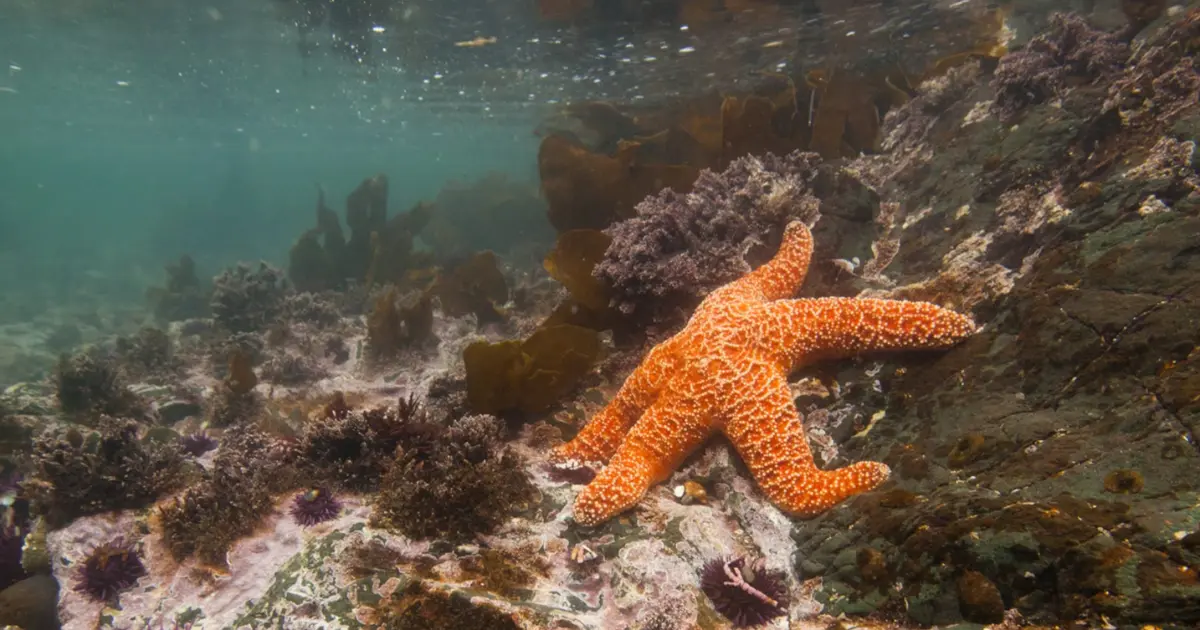
At first glance, a rocky tide pool may appear calm and peaceful. Small pools of seawater left behind by the receding tide reveal colorful sea stars, mussels, barnacles, sea anemones, crabs, and algae clinging to the rocks. To many visitors, it looks like a miniature aquarium created by nature.
In reality, every square inch of a tide pool is the site of constant competition. Space is one of the most valuable resources on the rocky shore, and nearly every organism is competing to secure or defend it. Barnacles cement themselves permanently to rocks, mussels grow into dense beds that can cover entire surfaces, and sea stars hunt some of the most successful competitors, helping prevent any one species from dominating the ecosystem.
Because so many ecological interactions occur in such a small area, tide pools have become one of the world’s most important natural laboratories for studying biodiversity, competition, and ecosystem balance.
What Is a Tide Pool?
A tide pool is a shallow depression in rocky coastal areas that traps seawater when the tide recedes.
These pools experience dramatic environmental changes every day as ocean tides rise and fall.
Depending on the time of day, organisms living inside a tide pool may experience:
- Full submersion underwater.
- Exposure to open air.
- Changing temperatures.
- Fluctuating salinity.
- Strong waves.
- Intense sunlight.
Only highly adapted species can survive these constantly changing conditions.
Why Space Is the Most Valuable Resource
Unlike fish that can swim freely through open water, many tide pool organisms remain attached to rocks for most or all of their lives.
Because hard surfaces are limited, available attachment space becomes one of the most valuable resources in the ecosystem.
Once an organism secures a suitable location, it must compete continuously to keep it.
Every exposed rock surface represents valuable real estate.
The Battle Between Barnacles and Mussels
Two of the most successful tide pool residents are barnacles and mussels.
Barnacles
Although they resemble tiny shells, barnacles are actually crustaceans related to crabs and lobsters.
Young barnacles drift through the ocean as larvae before permanently attaching themselves to rocks using one of the strongest natural adhesives known.
Once attached, they remain in the same location for life.
Mussels
Mussels anchor themselves using strong protein fibers called byssal threads, allowing them to form dense colonies that can blanket large sections of rock.
These tightly packed beds often leave little room for other species to settle.
As mussels grow, they may overtake areas previously occupied by barnacles and other attached organisms.
Why Sea Stars Are So Important
One of the tide pool’s most influential predators is the sea star.
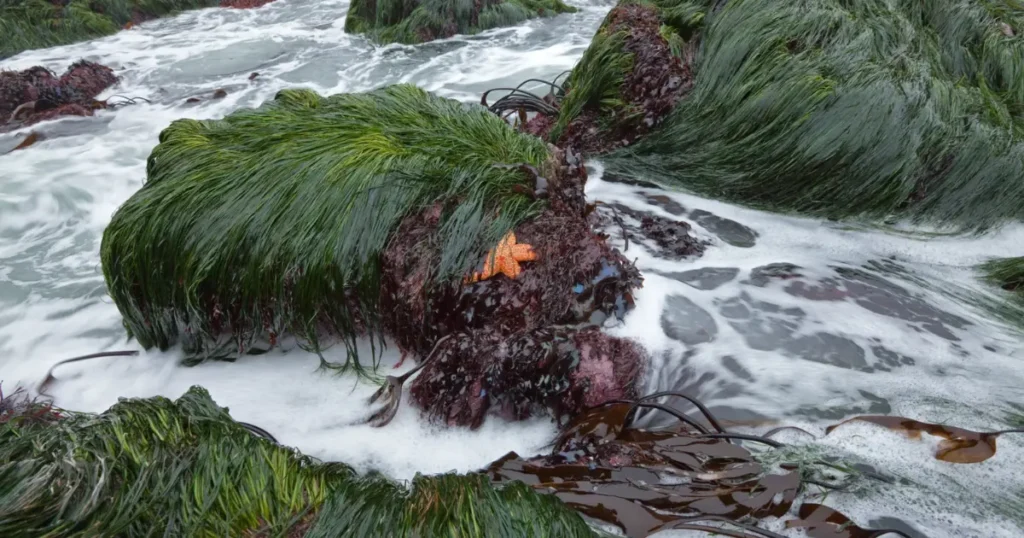
Species such as the ochre sea star (Pisaster ochraceus) feed primarily on mussels and other shellfish.
By consuming mussels, sea stars prevent them from monopolizing available space.
This creates opportunities for many other organisms, including:
- Barnacles.
- Sea anemones.
- Limpets.
- Small algae.
- Sponges.
- Marine worms.
Without predators limiting dominant competitors, biodiversity often declines.
What Is a Keystone Species?
Sea stars became famous in ecology because of research conducted by zoologist Robert T. Paine during the 1960s.
Paine introduced the concept of the keystone species after experimentally removing sea stars from sections of rocky shoreline.
Over time, mussels rapidly expanded and displaced many other organisms.
Species diversity decreased significantly because one highly competitive species came to dominate the habitat.
A keystone species is one whose influence on an ecosystem is much greater than its abundance alone would suggest.
The classic tide pool studies remain one of ecology’s most influential demonstrations of this principle.
Ecological Succession Never Stops
Tide pools are constantly changing.
Storms remove organisms.
New larvae settle.
Predators feed.
Algae grow.
Competition reshapes available space.
Rather than reaching a permanent balance, tide pool communities continuously reorganize through ecological succession.
Every season brings new changes to the community.
Why Tide Pools Support So Much Life
Although tide pools occupy relatively small areas, they provide habitats for an extraordinary variety of organisms.
Common residents include:
- Sea stars.
- Mussels.
- Barnacles.
- Sea anemones.
- Hermit crabs.
- Shore crabs.
- Limpets.
- Snails.
- Sea urchins.
- Small fish.
- Seaweeds.
- Sponges.
Each species occupies a specific ecological niche while interacting with dozens of others.
Surviving an Extreme Environment
Life in a tide pool is far from easy.
Organisms must withstand:
Powerful Waves
Breaking waves can generate tremendous force capable of dislodging poorly attached organisms.
Temperature Swings
Pools may become much warmer during sunny afternoons and much cooler at night.
Salinity Changes
Rainfall dilutes seawater, while evaporation increases salt concentrations.
Drying Out
During exceptionally low tides, organisms may remain exposed to air for several hours.
Specialized adaptations allow different species to survive these fluctuating conditions.
Why Scientists Love Tide Pools
Because ecological interactions occur in such a small and accessible area, tide pools have become classic research sites.
Scientists study:
- Competition.
- Predator-prey relationships.
- Climate change.
- Species diversity.
- Ecological succession.
- Adaptation.
- Ocean acidification.
Many foundational discoveries in modern ecology originated from tide pool research.
Threats Facing Tide Pool Ecosystems
Although tide pools are naturally resilient, they face growing environmental pressures.
Major threats include:
Climate Change
Increasing ocean temperatures can stress marine organisms and alter species distributions.
Ocean Acidification
More acidic seawater makes it harder for shell-building organisms to produce calcium carbonate shells.
Pollution
Plastic waste, oil, chemicals, and runoff degrade water quality.
Human Disturbance
Walking on organisms, collecting wildlife, or overturning rocks can damage fragile habitats.
How to Explore Tide Pools Responsibly
Visiting tide pools can be an unforgettable experience when done carefully.
Follow these simple guidelines:
- Walk only on bare rocks whenever possible.
- Never remove animals from pools.
- Return overturned rocks exactly as you found them.
- Avoid touching sea stars and anemones.
- Observe wildlife without disturbing it.
- Check local tide schedules before visiting.
Responsible exploration helps preserve these ecosystems for future visitors.
Practical Tips
- Visit during the lowest tides for the best wildlife viewing.
- Wear shoes with good grip on slippery rocks.
- Bring a field guide to identify marine species.
- Photograph animals without handling them.
- Leave shells, rocks, and living organisms where you find them.
- Respect protected marine reserves.
Common Mistakes
Thinking Tide Pools Are Small Aquariums
Tide pools are active ecosystems where every organism plays an important ecological role.
Removing Animals
Many tide pool species depend on very specific locations and environmental conditions for survival.
Walking Through Pools
Stepping directly into pools may crush tiny organisms hidden beneath the water.
Believing One Species Controls Everything
Although sea stars are classic keystone species, healthy tide pools depend on interactions among many organisms, environmental conditions, and natural disturbances.
Frequently Asked Questions
Why are tide pools so diverse?
They provide numerous small habitats that support many specialized species while constant ecological interactions maintain biodiversity.
What is a keystone species?
A keystone species has a disproportionately large influence on ecosystem structure relative to its abundance. Sea stars are one of the best-known examples.
Why don’t mussels cover every rock?
Predators such as sea stars help limit mussel populations, allowing many other organisms to coexist.
Can you touch animals in tide pools?
It is best not to. Handling marine organisms may damage delicate tissues or cause unnecessary stress.
When is the best time to visit a tide pool?
Low tide provides the safest and best opportunity to observe tide pool wildlife.
Conclusion
A tide pool may occupy only a few square meters of rocky shoreline, but it contains one of the most complex ecosystems on Earth. Every inch of rock is contested as barnacles, mussels, algae, sea stars, and countless other organisms compete for space, food, and survival.
Research conducted in these seemingly simple habitats has transformed our understanding of ecology, revealing how predators, competitors, and environmental conditions work together to maintain biodiversity. Rather than being miniature versions of the ocean, tide pools are complete ecosystems where some of nature’s most important ecological principles can be observed in a single step along the shoreline.
Internal Linking
Learn how predators shape entire ecosystems:
https://secretsofthegreengarden.com/yellowstone-wolves-ecosystem-restoration/
Discover how coral reefs become bustling underwater cities after dark:
https://secretsofthegreengarden.com/coral-polyps-night-feeding/
Explore another hidden natural network beneath our feet:
https://secretsofthegreengarden.com/wood-wide-web-mycorrhizal-networks/
Recommended External Sources
- National Oceanic and Atmospheric Administration (NOAA): https://oceanservice.noaa.gov
- Smithsonian Ocean: https://ocean.si.edu
- Monterey Bay Aquarium: https://www.montereybayaquarium.org