
Introduction
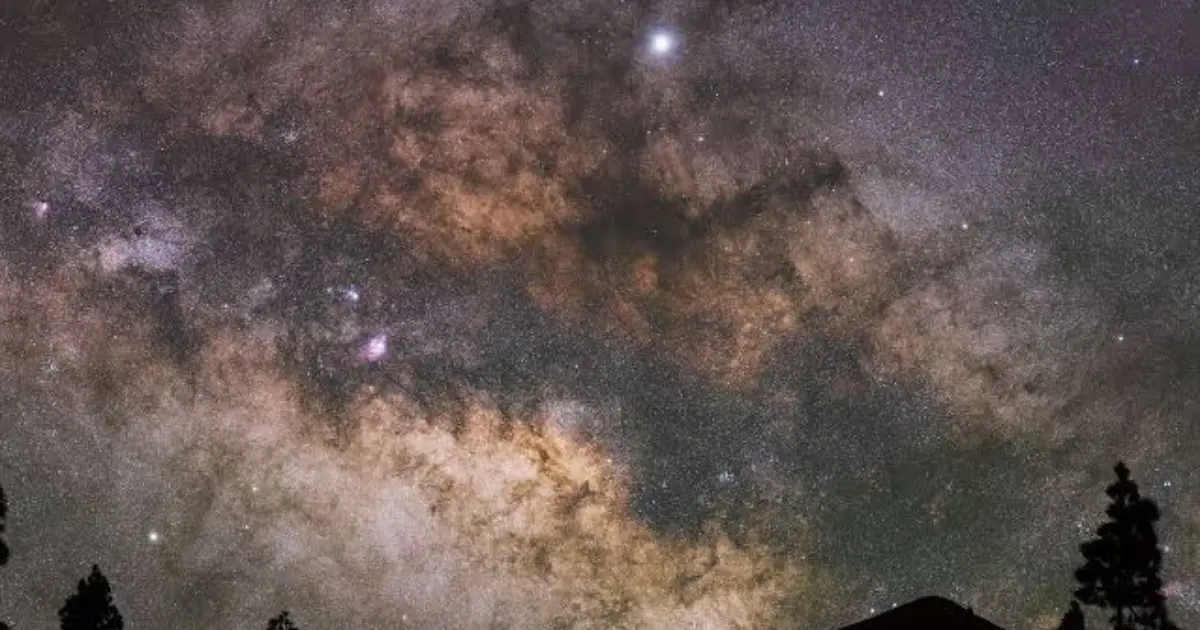
For thousands of years, the night sky was one of humanity’s greatest shared experiences. On a clear evening, people across nearly the entire planet could look up and see thousands of stars stretching across the sky, along with the glowing band of the Milky Way arching overhead.
That view inspired mythology, navigation, scientific discovery, agriculture, and countless works of art. It was simply part of everyday life.
Today, however, much of that natural spectacle has disappeared for billions of people. Artificial lighting from cities, roads, buildings, and outdoor infrastructure has brightened the night sky so much that many stars—and even the Milky Way—are no longer visible from heavily populated areas.
This phenomenon, known as light pollution, is one of the fastest-growing forms of environmental change. While outdoor lighting has brought enormous benefits for safety and modern life, excessive or poorly designed lighting has also transformed the way humans experience the night.
What Is Light Pollution?
Light pollution is the excessive, misdirected, or unnecessary use of artificial outdoor lighting.
Instead of illuminating only the areas where light is needed, poorly shielded lighting sends large amounts of light upward and sideways into the atmosphere.
Dust particles, water vapor, and other molecules scatter this light, creating a bright glow over towns and cities known as skyglow.
This artificial brightness washes out faint stars and makes the night sky appear much lighter than it naturally would.
What Did the Night Sky Look Like Before Electric Lighting?
Before widespread electric lighting became common in the late nineteenth century, most people lived under naturally dark skies.
On a clear, moonless night, observers in areas free from smoke or heavy cloud cover could typically see:
- Thousands of individual stars.
- The bright band of the Milky Way.
- Meteor showers.
- Satellites were absent because they did not yet exist.
- Occasional comets visible to the naked eye.
- The zodiacal light under ideal conditions.
Astronomers estimate that under exceptionally dark skies, people with good eyesight can see approximately 3,000 stars at one time, or roughly 5,000–6,000 stars across the entire celestial sphere over the course of a night.
When Did the Sky Begin to Change?
The transformation occurred gradually.
Gas streetlights appeared in many cities during the nineteenth century, but the largest changes followed the spread of electric lighting in the late 1800s and throughout the twentieth century.
As cities expanded, outdoor lighting increased dramatically.
Major contributors included:
- Streetlights.
- Commercial buildings.
- Sports facilities.
- Parking lots.
- Billboards.
- Residential developments.
- Industrial sites.
Today, satellite observations show that artificial lighting continues to expand across much of the world.
Can You Still See the Milky Way?
That depends on where you live.
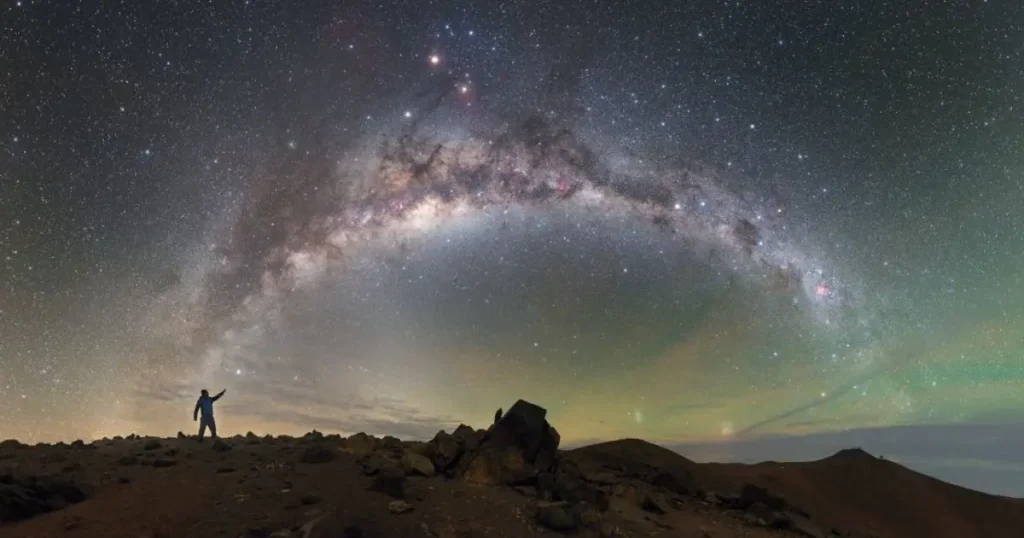
In remote areas with little artificial lighting, the Milky Way remains one of the brightest and most spectacular features of the night sky.
However, in many cities and suburbs, skyglow overwhelms its faint light.
Research published in Science Advances estimated that more than 80% of the world’s population and over 99% of people in the United States and Europe live under light-polluted skies.
For many of these people, the Milky Way is no longer visible without traveling to darker locations.
How Many Stars Can We See Today?
The difference between dark skies and urban skies can be dramatic.
Under Dark Rural Skies
Observers may see:
- Around 3,000 stars at once.
- The Milky Way.
- Faint star clusters.
- Numerous satellites.
- Bright planets.
- Meteors.
In Suburban Areas
Observers often see only a few hundred stars, depending on local lighting conditions.
In Major Cities
In heavily light-polluted areas, only the brightest stars and planets may remain visible.
Sometimes fewer than 50 stars can be seen with the naked eye.
Why Does Artificial Light Hide the Stars?
Stars themselves have not become dimmer.
Instead, the sky has become brighter.
When artificial light scatters through the atmosphere, it creates a glowing background that reduces the contrast between stars and the surrounding sky.
Faint stars disappear first because their light becomes indistinguishable from the brightened background.
This is similar to trying to see a flashlight during the day—it still shines, but the surrounding brightness overwhelms it.
Why Dark Skies Matter
Losing the stars is more than an aesthetic issue.
Natural darkness supports many aspects of life.
Wildlife
Many animals depend on darkness for:
- Migration.
- Hunting.
- Navigation.
- Reproduction.
Artificial lighting can disrupt birds, sea turtles, bats, insects, amphibians, and many other species.
Astronomy
Professional and amateur astronomers require dark skies to observe faint celestial objects.
Light pollution limits scientific observations and often forces observatories to be built in remote locations.
Human Health
Research suggests that excessive nighttime light can interfere with natural circadian rhythms by reducing melatonin production.
Scientists continue studying the long-term health effects of artificial nighttime lighting.
Cultural Heritage
For thousands of years, every civilization looked to the stars for navigation, storytelling, religion, and scientific discovery.
Preserving dark skies helps protect an important part of human cultural history.
Can Light Pollution Be Reduced?
Yes.
Unlike many environmental problems, light pollution can often be reduced quickly through better lighting design.
Effective solutions include:
Use Fully Shielded Lights
Direct light downward instead of allowing it to shine into the sky.
Use Only the Light You Need
Avoid excessively bright outdoor lighting.
Turn Off Unnecessary Lights
Lights that are not needed waste energy and contribute to skyglow.
Choose Warmer-Colored Lighting
Lights with lower color temperatures generally produce less blue light, which scatters more readily in the atmosphere.
Install Motion Sensors
Motion-activated lighting provides illumination only when necessary.
Dark Sky Parks
Around the world, protected areas preserve natural nighttime environments.
Organizations such as DarkSky International certify parks and reserves that meet strict standards for reducing light pollution.
These locations provide outstanding opportunities to observe:
- The Milky Way.
- Meteor showers.
- Constellations.
- Planets.
- Deep-sky objects.
They also support wildlife that depends on natural darkness.
Practical Tips
- Turn off unnecessary outdoor lights before bedtime.
- Use shielded fixtures that direct light downward.
- Choose warm-white outdoor bulbs when possible.
- Visit a certified dark sky park at least once.
- Allow your eyes 20 to 30 minutes to adapt to darkness before stargazing.
- Use a red flashlight instead of a white one when observing the night sky.
Common Mistakes
Believing Brighter Always Means Safer
Well-designed lighting often improves visibility more effectively than simply increasing brightness.
Pointing Lights Upward
Upward-facing lights contribute significantly to skyglow while providing little practical benefit.
Assuming Light Pollution Only Affects Astronomy
It also influences wildlife, ecosystems, energy consumption, and human health.
Thinking Stars Have Become Dimmer
The stars remain unchanged—the background sky has become brighter.
Frequently Asked Questions
What is light pollution?
It is the excessive or poorly directed use of artificial outdoor lighting that brightens the night sky and reduces visibility of stars.
Can you still see the Milky Way?
Yes, but mainly from locations with very little light pollution, such as rural areas and certified dark sky parks.
Why do cities have fewer visible stars?
Artificial lighting creates skyglow, reducing the contrast needed to see faint stars.
Does light pollution affect animals?
Yes. Many species rely on natural darkness for navigation, migration, feeding, and reproduction.
Can light pollution be reversed?
Yes. Improved lighting design, shielded fixtures, reduced brightness, and turning off unnecessary lights can significantly improve night skies.
Conclusion
For most of human history, the stars were a constant presence overhead. They guided travelers, inspired civilizations, and connected generations through a shared view of the universe.
Today, artificial lighting has transformed that experience for much of the world’s population. While modern lighting remains essential for daily life, thoughtful design can reduce unnecessary skyglow without sacrificing safety or convenience.
Protecting dark skies is about more than preserving beautiful views. It supports wildlife, improves energy efficiency, advances scientific research, and ensures future generations can experience the same breathtaking night sky that humanity has admired for thousands of years.
Internal Linking
Discover how another ancient natural wonder has survived for nearly 5,000 years:
https://secretsofthegreengarden.com/the-oldest-living-tree-on-earth/
Learn how forests function through hidden underground networks:
https://secretsofthegreengarden.com/wood-wide-web-mycorrhizal-networks/
Explore another fascinating example of nature’s adaptations:
https://secretsofthegreengarden.com/scarlet-pimpernel-poor-mans-weather-glass/
Recommended External Sources
- DarkSky International: https://darksky.org
- National Optical-Infrared Astronomy Research Laboratory (NOIRLab): https://noirlab.edu
- National Aeronautics and Space Administration (NASA): https://science.nasa.gov