
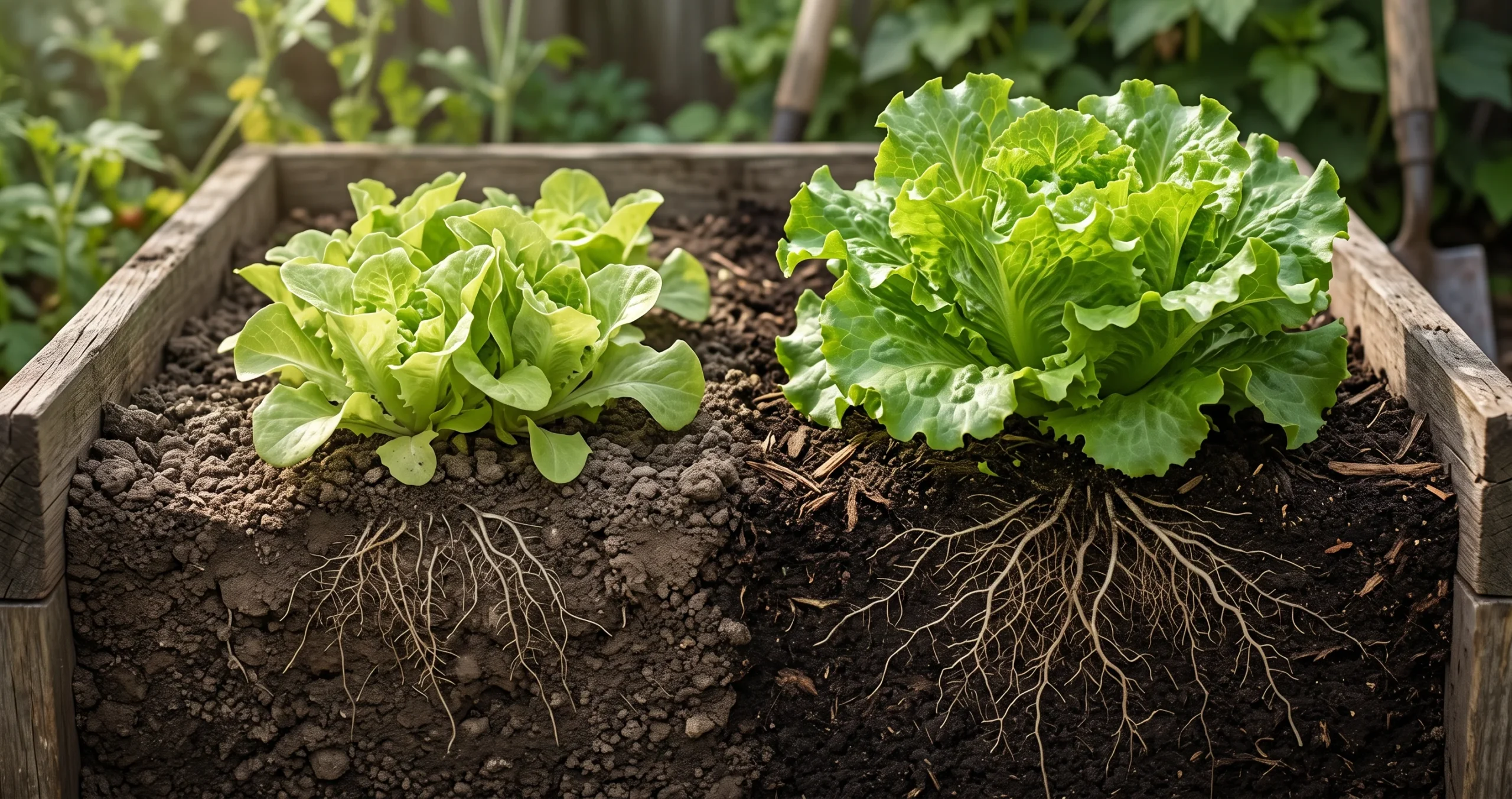
Two lettuce plants can receive nearly identical sunlight, yet one develops into a large, healthy head while the other remains small, pale, or weak. The difference often begins beneath the soil.
Understanding how to grow bigger lettuce involves more than adding fertilizer or watering more frequently. Healthy growth depends on root development, soil structure, adequate spacing, consistent moisture, suitable temperatures, and proper nutrition.
Fortunately, improving lettuce growth doesn’t require expensive equipment or complicated techniques. With a few practical adjustments, home gardeners can create conditions that encourage stronger roots, fuller leaves, and more reliable harvests.
This guide explains the science behind healthy lettuce growth and the simple gardening practices that make the biggest difference.
Table of Contents
- Why Some Lettuce Plants Grow Bigger Than Others
- Understanding Lettuce Roots
- How to Grow Bigger Lettuce With Better Soil
- Proper Lettuce Plant Spacing
- Watering Lettuce for Healthy Growth
- Using Mulch to Protect Soil Moisture
- Fertilizing Lettuce Correctly
- Temperature, Sunlight, and Bolting
- Growing Lettuce in Raised Beds and Containers
- Common Lettuce Growing Problems
- Step-by-Step Guide to Improving Small Lettuce Plants
- Harvesting for Better Results
- Frequently Asked Questions
- Conclusion
Why Some Lettuce Plants Grow Bigger Than Others
Lettuce growth depends on several environmental factors working together. Even when two plants receive the same sunlight, their roots may experience very different growing conditions.
One plant might have loose, fertile soil with adequate moisture, while another struggles in compacted ground where neighboring plants compete for nutrients and water.
Variety also matters. Loose-leaf lettuce, butterhead, romaine, and crisphead types naturally develop different shapes, sizes, and growth patterns.
A compact lettuce variety isn’t necessarily unhealthy simply because it remains smaller than a large romaine plant.
The goal is to help each variety reach its healthy potential rather than force every plant to produce oversized leaves.
Understanding Lettuce Roots: The Foundation of Healthy Growth
Lettuce has a relatively shallow root system compared with many other vegetables.
Much of its active root growth occurs near the soil surface, although roots can extend deeper when conditions allow.
These roots absorb the water and dissolved nutrients needed to support leaf development.
How Roots Affect Leaf Size
Healthy roots provide a steady supply of moisture and essential minerals.
When soil becomes dry, compacted, or poorly aerated, root activity may decline. This can limit the plant’s ability to produce new leaves.
Crowded lettuce plants also compete for the same resources, particularly when their root systems overlap.
Giving roots adequate space and favorable soil conditions supports healthier aboveground growth.
Why Compacted Soil Causes Problems
Compacted soil contains fewer large air spaces, making it harder for water to infiltrate and roots to expand.
Poor aeration can also interfere with normal root function.
Avoid stepping directly on planting beds, especially when the soil is wet.
Raised beds and designated walking paths can help preserve a loose growing environment.
How to Grow Bigger Lettuce With Better Soil
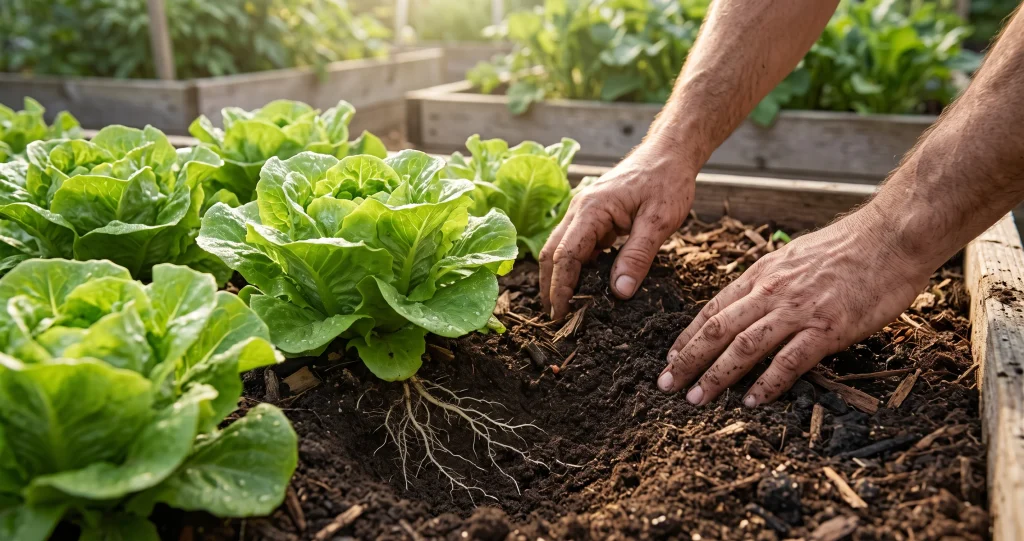
Soil preparation is one of the most effective ways to improve lettuce growth.
Lettuce generally performs best in fertile, well-drained soil that retains moisture without remaining waterlogged.
Improve Soil With Finished Compost
Finished compost can improve soil structure, support moisture retention, and contribute nutrients.
Before planting, spread approximately 1–2 inches of mature compost over the bed and incorporate it gently into the upper soil layer when appropriate.
Avoid excessive amendment, particularly in beds that already contain substantial organic matter.
Well-decomposed compost is preferable to fresh manure, which can introduce food safety concerns and create unpredictable nutrient conditions.
Maintain Good Drainage
Healthy soil should hold enough moisture for roots without staying saturated.
If water collects on the surface or drains very slowly, investigate compaction, soil texture, and bed drainage.
Adding organic matter over time may improve soil structure, but severely waterlogged sites may require raised beds or other drainage improvements.
Check Soil Fertility
Lettuce benefits from adequate nitrogen, phosphorus, potassium, and other essential nutrients.
However, adding fertilizer without knowing what the soil needs can waste money and contribute to nutrient imbalances.
A soil test is the best starting point for evaluating fertility and pH.
Proper Lettuce Plant Spacing for Bigger Leaves
One of the most common lettuce-growing mistakes is allowing too many plants to develop in a small area.
Young seedlings may appear comfortable when only a few inches tall, but mature plants need considerably more room.
Recommended Lettuce Spacing
| Lettuce type | Approximate spacing |
|---|---|
| Loose-leaf lettuce | 6–10 inches |
| Butterhead lettuce | 8–12 inches |
| Romaine lettuce | 10–12 inches |
| Crisphead lettuce | 12–18 inches |
These are general home-garden ranges, not universal requirements. Always check the seed packet or cultivar recommendations, especially for miniature varieties and baby-leaf production.
Why Crowding Reduces Growth
Closely spaced plants compete for light, water, and nutrients.
Their leaves may overlap, reducing airflow and making it more difficult for individual plants to develop fully.
Thin crowded seedlings while they are still young. Carefully transplant suitable seedlings or use healthy thinnings as baby greens.
Providing adequate space is particularly important when growing lettuce for full-size heads rather than repeated baby-leaf harvests.
Watering Lettuce for Healthy Growth
Lettuce leaves contain a high proportion of water, making consistent soil moisture particularly important.
Irregular watering can contribute to slow growth, wilting, and reduced leaf quality.
Keep Soil Consistently Moist
The goal is soil that remains evenly moist but never saturated.
Check moisture by inserting a finger about an inch into the soil.
If the upper soil feels dry and moisture is declining in the root zone, watering may be needed.
If the soil remains wet, allow excess moisture to drain before watering again.
How Much Water Does Lettuce Need?
A common starting guideline for vegetable gardens is approximately 1 inch of water per week from rainfall and irrigation combined.
Actual requirements vary with temperature, soil texture, plant size, wind, and evaporation.
Lettuce growing in containers or during warm, dry weather may require more frequent watering.
Instead of following a rigid daily schedule, monitor soil moisture and adjust accordingly.
Water the Soil, Not Just the Leaves
Apply water gently around the base of the plants.
Drip irrigation or a watering wand can help deliver moisture to the root zone without disturbing seedlings.
Watering early in the day is often convenient and allows wet foliage to dry more quickly.
Avoid repeatedly soaking the soil when it is already moist.
Using Mulch to Maintain Soil Moisture
Mulch helps reduce evaporation and moderate fluctuations in soil temperature.
A light layer of clean straw or another suitable organic mulch can be useful around established lettuce plants.
Keep mulch slightly away from the crowns to avoid trapping excessive moisture against the stems.
Mulch is particularly helpful in raised beds that dry quickly.
However, heavy mulch over cold spring soil may slow warming, so timing and thickness should reflect local conditions.
Fertilizing Lettuce Without Overdoing It
Lettuce is grown primarily for its leaves, so nitrogen plays an important role in healthy foliage development.
Insufficient nitrogen may cause pale leaves and slow growth, but excessive fertilizer is not the solution.
Choose Fertilizer Based on Soil Needs
Use soil test results to determine whether additional nutrients are necessary.
When fertilization is recommended, apply an appropriate vegetable fertilizer according to its label.
Avoid placing concentrated fertilizer directly against young roots.
Too much nitrogen can produce overly soft growth and may increase nutrient losses into the environment.
Compost Is Helpful but Not Always Enough
Compost improves soil properties and contributes nutrients, but its nutrient content varies.
Some soils require supplemental fertilization, while others already contain sufficient nutrients.
The best approach combines compost, soil testing, and targeted fertilizer applications.
Temperature, Sunlight, and Lettuce Bolting
Lettuce is a cool-season vegetable that generally grows best during mild weather.
Many varieties perform well when daytime temperatures are roughly 60–70°F, although tolerance varies.
Prolonged heat can accelerate bolting, the process in which lettuce begins producing a flowering stalk.
How Heat Changes Lettuce Growth
As temperatures rise, lettuce may become bitter, develop elongated stems, or stop producing desirable leaves.
Bolting is influenced by temperature, day length, and variety.
Once a plant has begun bolting, pruning the flowering stalk will not reliably restore its earlier leaf quality.
Provide Suitable Sunlight
Lettuce generally grows well with several hours of direct sunlight, particularly in cool weather.
In warmer regions, some afternoon shade can reduce heat stress.
However, excessive shade may produce weak, elongated plants with reduced growth.
For reliable harvests, choose varieties and planting dates suited to your local climate.
Growing Lettuce in Raised Beds and Containers
Raised beds can provide good drainage, convenient access, and protection from foot traffic.
However, elevated beds may dry faster than surrounding garden soil.
Monitor moisture carefully, especially during windy or warm weather.
Growing Lettuce in Containers
Choose containers with drainage holes and enough room for the mature variety.
Many leaf lettuce varieties grow successfully in containers approximately 6–8 inches deep, although larger containers provide a more stable moisture supply.
Head-forming varieties may benefit from deeper and wider containers.
Use a quality potting mix rather than dense garden soil, and avoid overcrowding.
Common Lettuce Growing Problems
Recognizing symptoms early can prevent minor growing problems from becoming serious.
Small, Slow-Growing Leaves
Possible causes include overcrowding, insufficient nutrients, cool soil, inadequate light, or moisture stress.
Check growing conditions before applying fertilizer.
Wilting Leaves
Wilting can indicate insufficient water, but saturated soil and damaged roots may produce similar symptoms.
Inspect soil moisture before watering.
Yellowing Leaves
Yellow leaves can result from nutrient deficiencies, root stress, natural aging, or disease.
Yellowing alone does not identify a specific nutrient problem.
Bitter Leaves
Heat, plant maturity, bolting, and genetic differences can influence bitterness.
Growing lettuce during cooler weather and harvesting at the appropriate stage can help preserve leaf quality.
Step-by-Step Guide to Improving Small Lettuce Plants
If your lettuce plants appear stunted, begin with a simple inspection rather than immediately adding fertilizer.
- Check spacing. Thin crowded seedlings according to the variety’s mature size.
- Examine soil moisture. Water when needed, but avoid saturated conditions.
- Inspect soil structure. Look for crusting, compaction, and poor drainage.
- Evaluate fertility. Use a soil test before making major fertilizer adjustments.
- Check sunlight and temperature. Protect plants from excessive heat while maintaining sufficient light.
- Monitor new growth. Healthy new leaves are a better indicator of improvement than expecting damaged older leaves to recover.
Avoid disturbing established lettuce roots unnecessarily.
When conditions improve, new growth may become healthier, but severely stressed or bolting plants may be better replaced.
Harvesting Lettuce for Better Results
Harvesting methods depend on the lettuce variety and intended use.
Loose-leaf lettuce can often be harvested by removing mature outer leaves while leaving the central growing point intact.
This allows the plant to continue producing leaves under favorable conditions.
Butterhead, romaine, and crisphead lettuce are frequently harvested as complete heads once they reach the desired size and maturity.
Harvest Before Quality Declines
Check plants regularly during warm weather.
Lettuce may become bitter or develop tough leaves as it approaches bolting.
Harvesting in the cool morning can help preserve freshness.
For food safety, use clean tools, avoid contaminating edible leaves with soil or manure, and refrigerate harvested lettuce promptly.
Frequently Asked Questions
What is the secret to growing bigger lettuce?
The most important factors are suitable varieties, fertile well-drained soil, adequate spacing, consistent moisture, and cool growing conditions.
How far apart should lettuce plants be?
Spacing depends on the variety. Loose-leaf lettuce may need 6–10 inches, while large crisphead varieties often require 12–18 inches for full-head production.
Should lettuce be watered every day?
Not necessarily. Watering frequency depends on soil moisture, weather, and container size. Check the soil rather than following a fixed schedule.
Does lettuce grow better in raised beds?
Lettuce can grow well in raised beds when drainage, soil fertility, and moisture are properly managed. Raised beds are helpful but not essential.
Can compost make lettuce grow bigger?
Finished compost can improve soil structure and contribute nutrients. However, growth also depends on spacing, moisture, temperature, sunlight, and the plant’s genetic potential.
Why is my lettuce growing tall instead of forming leaves?
Tall growth may indicate bolting caused by heat, long days, or plant maturity. Some plants also become elongated under insufficient light.
Can small lettuce plants recover?
Yes, some stunted plants recover when the underlying problem is corrected. Recovery depends on the severity of stress, plant age, and whether bolting has begun.
Conclusion:
Learning how to grow bigger lettuce starts with understanding what happens beneath the soil surface.
Healthy roots need moisture, oxygen, nutrients, and enough space to function effectively. When these conditions are balanced, lettuce plants are better able to develop strong, attractive foliage.
Soil preparation, correct spacing, consistent watering, and suitable growing temperatures are more reliable than miracle fertilizers or complicated gardening tricks.
Remember that lettuce varieties naturally differ in size. A healthy compact butterhead may never match the dimensions of a large romaine, and that is perfectly normal.
Focus on creating the right growing environment, monitoring plant health, and harvesting at the appropriate stage. Those habits can help turn disappointing lettuce beds into productive sources of fresh homegrown greens.
External sources :
1. University of Minnesota Extension — Growing Lettuce, Endive and Radicchio. Detailed guidance on lettuce root development, soil fertility, spacing, watering, and temperature.
2. University of Maryland Extension — Growing Lettuce in a Home Garden. Practical recommendations for lettuce varieties, planting distances, irrigation, mulching, and harvesting.
3. University of Minnesota Extension — Raised Bed Gardens. Research-based guidance on raised-bed soil conditions, compaction, and moisture management.