
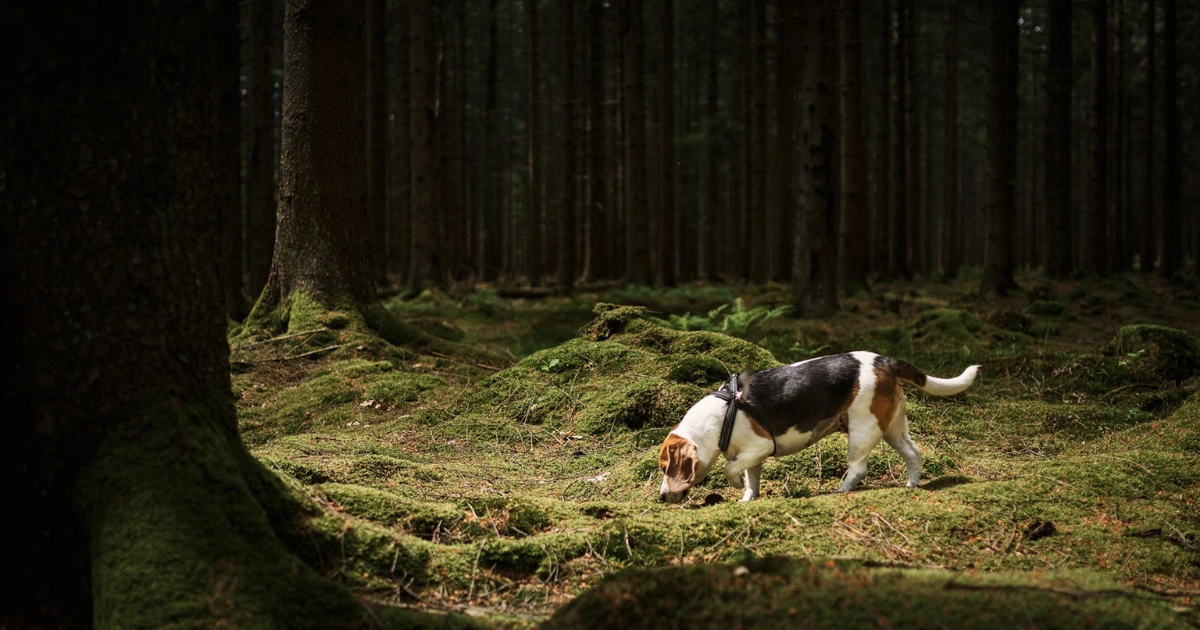
The sense of smell is one of the most powerful survival tools in the animal kingdom. While humans rely heavily on vision, many animals experience the world primarily through scent. Some species can detect odors from only a few feet away, while others can follow scent trails across entire landscapes.
From domestic dogs tracking missing people to elephants sensing water miles away, animals use smell for hunting, navigation, communication, reproduction, and survival.
This article explores how far different animals can detect scents, why their noses are so powerful, and what science reveals about the remarkable biology behind animal olfaction.
Why Animal Sense of Smell Is So Powerful
The primary keyword for this article is animal sense of smell.
An animal’s ability to detect scent depends on several factors:
- Number of scent receptors
- Brain processing power
- Airflow through the nose
- Moisture levels in nasal tissues
- Environmental conditions such as humidity and wind
Humans have roughly 5 to 6 million olfactory receptors. Many animals possess tens or even hundreds of millions more.
For comparison:
- Dogs may have up to 300 million scent receptors
- Bears possess one of the strongest smelling abilities among mammals
- Elephants have the largest known number of smell-related genes ever discovered in animals
According to National Institutes of Health, smell plays a major role in animal communication, navigation, food detection, and predator avoidance.
Human Smell Detection: Limited Compared to Animals
Humans can detect some odors only within a short range, often just a few feet under normal conditions.
Although the human nose is relatively weak compared to many mammals, people can still distinguish thousands of different odors.
Human scent detection mainly supports:
- Food recognition
- Hazard detection
- Emotional memory
- Social perception
However, humans rely far more on sight and hearing than on smell for survival.
Cats: Sensitive Hunters With Strong Scent Recognition
Domestic cats possess a far stronger sense of smell than humans.
Cats use scent to:
- Identify territory
- Recognize owners
- Detect prey
- Sense danger
- Locate food
A cat’s sense of smell is estimated to be around 9 to 14 times stronger than a human’s.
Cats also possess a specialized organ called the vomeronasal organ, or Jacobson’s organ, which helps detect chemical signals and pheromones.
Deer: Masters of Wind and Air Currents
Deer are extremely dependent on scent for survival.
Whitetail deer, for example, constantly monitor wind direction to detect predators and human presence. Hunters often struggle against a deer’s ability to detect faint odors carried over long distances.
Under favorable conditions, deer may detect human scent from more than 1,000 feet away.
Why Deer Smell So Well
Deer survive by constantly scanning for danger.
Their scent system helps them:
- Detect predators early
- Identify mating opportunities
- Recognize territorial markings
- Find food sources
Environmental conditions such as humidity and air movement strongly influence scent travel distance.
Wild Boars: Exceptional Ground Scent Detection
Wild boars and pigs are famous for their powerful noses.
They use scent to locate:
- Roots
- Insects
- Underground fungi
- Carrion
- Water sources
Pigs are even trained in some regions to locate valuable truffles buried beneath the soil.
Their strong sense of smell helps them forage efficiently in forests and grasslands.
Dogs: One of the Best Known Scent Trackers
Dogs are among the most famous scent-detection animals in the world.
Some breeds can follow scent trails that are days old under ideal conditions.
Why Dogs Smell So Much Better Than Humans
Dogs possess:
- Up to 300 million olfactory receptors
- Specialized airflow structures
- Large scent-processing brain regions
According to Smithsonian Magazine, a dog’s sense of smell may be tens of thousands of times more sensitive than that of humans.
Real-World Uses of Canine Scent Detection
Dogs are used worldwide for:
- Search and rescue operations
- Medical detection
- Narcotics detection
- Explosives detection
- Wildlife tracking
Bloodhounds are especially famous for their long-distance scent tracking abilities.
Wolves: Long-Distance Scent Communication
Wolves rely heavily on scent for pack coordination and territorial behavior.
They use urine marking and scent trails to communicate across large distances.
A wolf can often detect prey or rival packs from miles away depending on terrain and weather conditions.
Scent and Pack Survival
Wolves use smell to:
- Track prey movement
- Locate pack members
- Detect rival wolves
- Identify breeding status
This ability is critical in large wilderness territories where visual contact may be impossible.
Elephants: Among the Greatest Smellers on Earth
Elephants possess one of the strongest known senses of smell in the animal kingdom.
Research suggests elephants may detect water sources from many miles away.
Why Elephant Smell Is Extraordinary
Elephants have an enormous number of smell-related genes, giving them exceptional scent discrimination abilities.
Their trunks combine:
- Smell detection
- Touch sensitivity
- Breathing functions
- Water manipulation
According to Nature Genetics, elephants possess more olfactory receptor genes than any other studied mammal species.
This powerful smell system helps elephants survive across vast landscapes where locating water and food is essential.
Bears: The Ultimate Long-Distance Smellers
Bears are widely considered among the strongest smellers in the mammal world.
Some estimates suggest bears can detect food scents from over 15 miles away under favorable conditions.
How Bears Use Smell
Bears depend on scent to:
- Locate carcasses
- Find berries and plants
- Detect mates
- Avoid danger
- Navigate large territories
A bear’s sense of smell is believed to be several times stronger than that of bloodhounds.
Their large nasal surface area and powerful scent-processing abilities make them highly efficient foragers.
Environmental Factors That Affect Scent Travel
Animal scent detection distances vary greatly depending on environmental conditions.
Wind Direction
Wind carries scent molecules across long distances. Animals often position themselves strategically to analyze airflow.
Humidity
Moist air tends to preserve scent particles better than extremely dry conditions.
Temperature
Cool air may allow scent trails to remain stable longer, while heat can disperse odors more rapidly.
Terrain
Forests, mountains, water, and open plains all influence how scents move through the environment.
How Scientists Study Animal Smell
Researchers study animal olfaction using:
- Brain imaging
- Genetic analysis
- Behavioral experiments
- Scent-tracking tests
Modern studies continue to reveal how animals process chemical information in ways humans can barely imagine.
Some animals can even detect tiny chemical changes associated with disease, stress, or reproductive status.
Frequently Asked Questions About Animal Sense of Smell
Which animal has the strongest sense of smell?
Bears and elephants are often considered among the strongest smellers in the animal kingdom, though exact rankings vary depending on how smell ability is measured.
Can dogs really smell emotions?
Dogs may detect chemical changes associated with stress, fear, or emotional states through body odor and hormonal shifts.
How far away can a bear smell food?
Under ideal conditions, bears may detect food scents from more than 15 miles away.
Why do cats smell everything?
Cats gather environmental information through scent. Smelling objects helps them recognize territory, identify individuals, and assess safety.
Do animals smell better than humans?
Many mammals possess vastly superior smell abilities due to higher numbers of olfactory receptors and larger scent-processing brain regions.
Internal Linking Suggestions for secretsofthegreengarden.com
To improve topical authority and user engagement, consider linking internally to related content such as:
- “Why Wildlife Visits Your Backyard at Night”
- “How Animals Survive Extreme Weather”
- “The Hidden Communication Systems of Wild Animals”
These related articles can help build stronger SEO relevance across animal and wildlife topics.
Recommended External Resources
For readers interested in learning more about animal olfaction and sensory biology, consider referencing:
Final Thoughts
The animal sense of smell is one of nature’s most extraordinary biological systems. While humans experience the world mainly through sight, many animals navigate life through invisible scent landscapes that stretch across forests, plains, mountains, and oceans.
From dogs tracking a missing person to elephants locating distant water and bears detecting food miles away, scent is often the key to survival.
As scientists continue studying animal olfaction, researchers are discovering that the natural world is far more chemically connected than humans once imagined.