
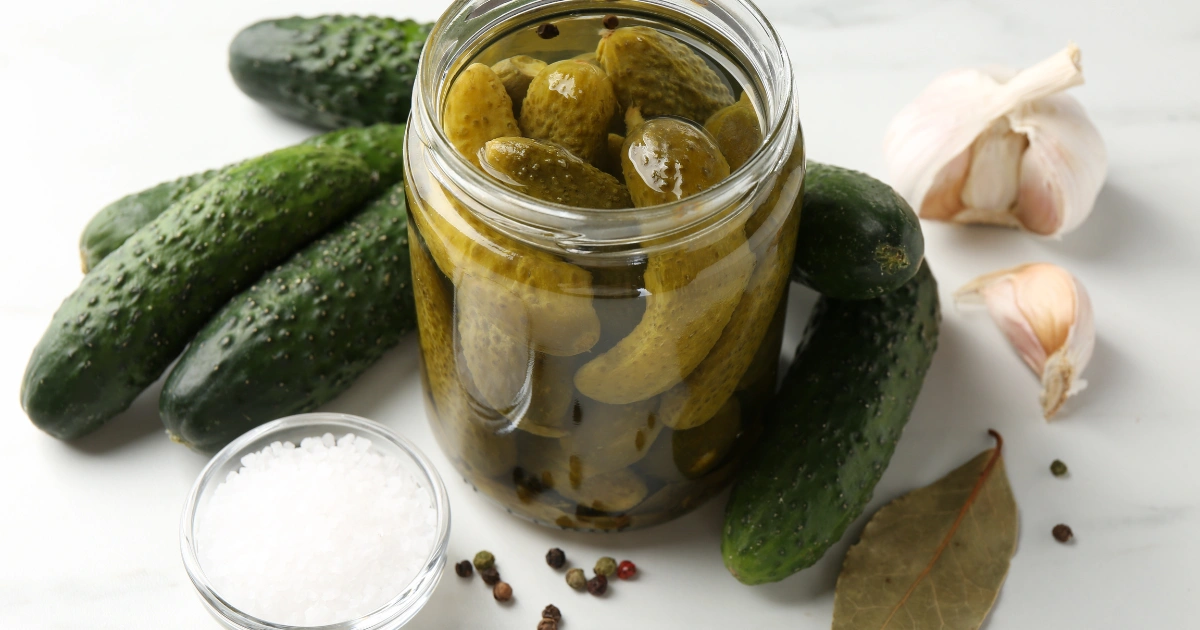
Pickles are one of the oldest preserved foods in the world, but not all pickles are made the same way. Many grocery store jars labeled “pickles” are actually vinegar pickles, while traditional fermented pickles rely on natural bacteria and salt to create their tangy flavor.
Understanding the difference between fermented pickles and vinegar pickles can help home cooks choose the best option for flavor, nutrition, shelf life, and digestive health. While both methods preserve cucumbers, the science, taste, texture, and health benefits are surprisingly different.
This guide explains how each type works, how fermentation changes food naturally, and how to make authentic fermented pickles at home.
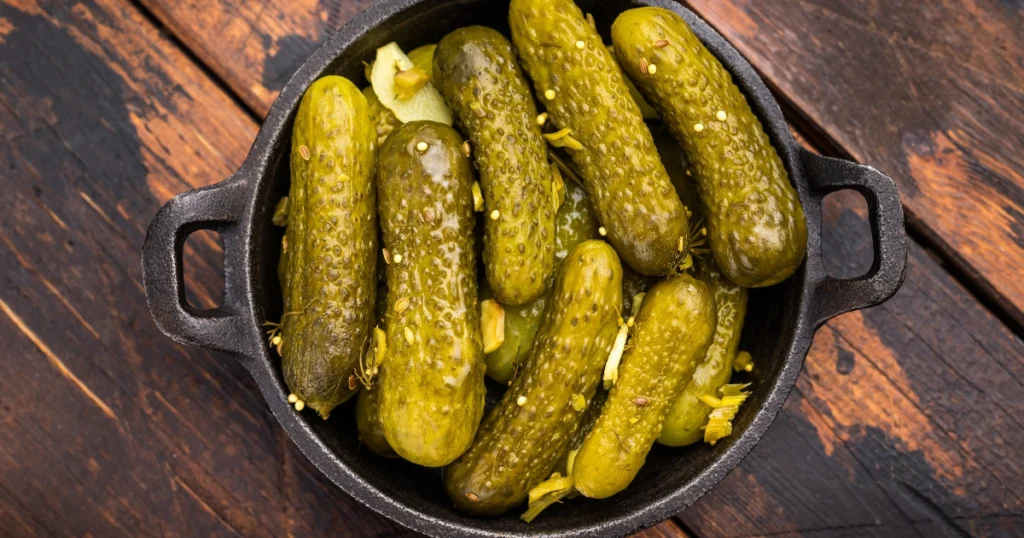
What Are Fermented Pickles?
Fermented pickles are cucumbers preserved using a saltwater brine and naturally occurring beneficial bacteria.
During fermentation:
- Natural sugars break down
- Lactic acid bacteria grow
- Acidity increases naturally
- The cucumbers become preserved
This process is known as lacto-fermentation.
Unlike vinegar pickles, fermented pickles do not initially rely on vinegar for preservation.
How Fermentation Works
Fermentation occurs when beneficial bacteria consume sugars and produce lactic acid.
The key bacteria involved are usually:
- Lactobacillus plantarum
- Lactobacillus brevis
- Other naturally occurring lactic acid bacteria
These bacteria thrive in:
- Oxygen-poor environments
- Salt brine
- Moderate temperatures
As the acid level rises, harmful bacteria struggle to survive, making the food safer and more stable.
What Are Vinegar Pickles?
Vinegar pickles are made by soaking cucumbers in vinegar-based brine.
The acidity comes directly from:
- White vinegar
- Apple cider vinegar
- Distilled vinegar
This method creates instant preservation without requiring bacterial fermentation.
Commercial pickles are often vinegar pickles because:
- They are faster to produce
- Flavor is easier to standardize
- Shelf stability is predictable
Main Differences Between Fermented and Vinegar Pickles
Fermented Pickles
- Use salt brine
- Develop natural probiotics
- Taste more complex
- Require time to ferment
- Usually refrigerated after fermentation
Vinegar Pickles
- Use vinegar for acidity
- Usually contain no live probiotics
- Have sharper acidity
- Can be made quickly
- Often shelf stable
Flavor Comparison
Fermented Pickles
Fermented pickles usually taste:
- More complex
- Earthier
- Slightly sour
- Naturally tangy
Their flavor develops gradually over several days.
Vinegar Pickles
Vinegar pickles often taste:
- Sharper
- Brighter
- More acidic
- Cleaner and more direct
The vinegar flavor dominates immediately.
Texture Differences
Texture depends heavily on fermentation time and preparation.
Fermented Pickles
Usually:
- Crunchy at first
- Slightly softer over time
- Juicier internally
Vinegar Pickles
Often:
- Firm
- Snappy
- More uniform in texture
Commercial additives sometimes help maintain crunch.
The Health Benefits of Fermented Pickles
One reason fermented foods have become popular is their probiotic content.
Properly fermented pickles may contain:
- Beneficial bacteria
- Organic acids
- Digestive-support compounds
Some research suggests fermented foods may support:
- Gut health
- Digestion
- Microbial diversity
However, probiotic levels vary depending on:
- Fermentation method
- Storage
- Heat processing
Why Most Store Pickles Are Not Fermented
Many commercial pickles are pasteurized after packaging.
Pasteurization:
- Kills harmful microbes
- Extends shelf life
- Also destroys beneficial bacteria
As a result, many supermarket pickles contain:
- Vinegar
- Preservatives
- Artificial flavorings
- No live cultures
Labels such as:
- “Naturally fermented”
- “Raw”
- “Contains live cultures”
usually indicate genuine fermentation.
Ingredients for Traditional Fermented Pickles
Authentic fermented pickles typically use:
- Fresh cucumbers
- Filtered water
- Non-iodized salt
- Garlic
- Dill
- Peppercorns
Optional additions include:
- Mustard seeds
- Chili flakes
- Bay leaves
- Grape leaves
Why Salt Matters
Salt is essential because it:
- Controls harmful bacteria
- Encourages beneficial microbes
- Draws moisture from cucumbers
- Helps maintain texture
Non-iodized salt is recommended because iodine may interfere with fermentation.
Step-by-Step Fermentation Timeline
Days 1–2
- Brine becomes cloudy
- Fermentation begins
- Small bubbles appear
Days 3–4
- Active bubbling increases
- Sour aroma develops
- Acidity rises
Days 5–7
- Flavor deepens
- Pickles become tangy
- Fermentation stabilizes
Longer fermentation produces stronger flavor.
How to Make Fermented Pickles at Home
Ingredients
- 1 pound pickling cucumbers
- 2 cups filtered water
- 1 tablespoon sea salt
- Garlic cloves
- Fresh dill
- Peppercorns
Instructions
1. Prepare the Brine
Dissolve salt in filtered water.
2. Pack the Jar
Place cucumbers, garlic, and herbs into a clean jar.
3. Add Brine
Pour brine until cucumbers are fully submerged.
4. Weigh Down the Cucumbers
Use a fermentation weight or small glass weight.
5. Ferment at Room Temperature
Leave the jar at room temperature for 5–7 days.
6. Refrigerate
Once flavor reaches desired sourness, refrigerate the pickles.
Common Fermentation Mistakes
Using Tap Water
Chlorine may inhibit beneficial bacteria.
Exposing Cucumbers to Air
Floating cucumbers may develop mold.
Too Much Salt
Fermentation may slow dramatically.
Too Little Salt
Unsafe bacteria may grow.
Signs of Healthy Fermentation
Healthy fermentation usually includes:
- Cloudy brine
- Pleasant sour aroma
- Small bubbles
- Mild tanginess
Signs Something Went Wrong
Discard the batch if you notice:
- Fuzzy mold
- Rotten smell
- Pink or black discoloration
- Slimy texture
Are Fermented Pickles Better Than Vinegar Pickles?
Neither is universally “better.” The best choice depends on:
- Flavor preference
- Nutrition goals
- Convenience
- Storage needs
Choose Fermented Pickles If You Want:
- Traditional flavor
- Potential probiotics
- Complex sourness
Choose Vinegar Pickles If You Want:
- Fast preparation
- Strong acidity
- Shelf stability
Best Cucumbers for Pickling
Pickling cucumbers are ideal because they:
- Have thinner skin
- Contain fewer seeds
- Stay crunchier
Popular varieties include:
- Kirby cucumbers
- Persian cucumbers
- Gherkins
Frequently Asked Questions
Are fermented pickles probiotic?
Yes, if they are naturally fermented and unpasteurized.
Why are my fermented pickles cloudy?
Cloudiness is usually normal and caused by beneficial bacteria.
Can fermented pickles go bad?
Yes. Improper fermentation can allow spoilage or mold.
Do vinegar pickles contain probiotics?
Usually not, especially if pasteurized.
How long do fermented pickles last?
Refrigerated fermented pickles can last several months.
Final Thoughts
Fermented pickles and vinegar pickles may look similar, but they are created through completely different preservation methods. Fermented pickles rely on beneficial bacteria and natural lactic acid production, while vinegar pickles depend on added acidity for preservation.
Each style offers unique flavor, texture, and culinary benefits. Fermented pickles provide deeper complexity and potential probiotic advantages, while vinegar pickles offer convenience and consistency. Understanding how each method works allows home cooks to choose the right pickle for every meal and even experiment with traditional fermentation at home.