
Table of Contents
- Introduction
- What Is the Argentine Ant Supercolony?
- How Scientists Discovered a Colony Spanning Three Continents
- How Researchers Tested Chemical Recognition Between Distant Populations
- How Global Shipping Helped Spread Argentine Ants
- Why the Argentine Ant Supercolony Is Such a Successful Invader
- Ecological Impacts on Native Ant Species and Ecosystems
- Practical Pest Management Tips for Homeowners
- Common Myths About Argentine Ants
- Frequently Asked Questions
- Conclusion
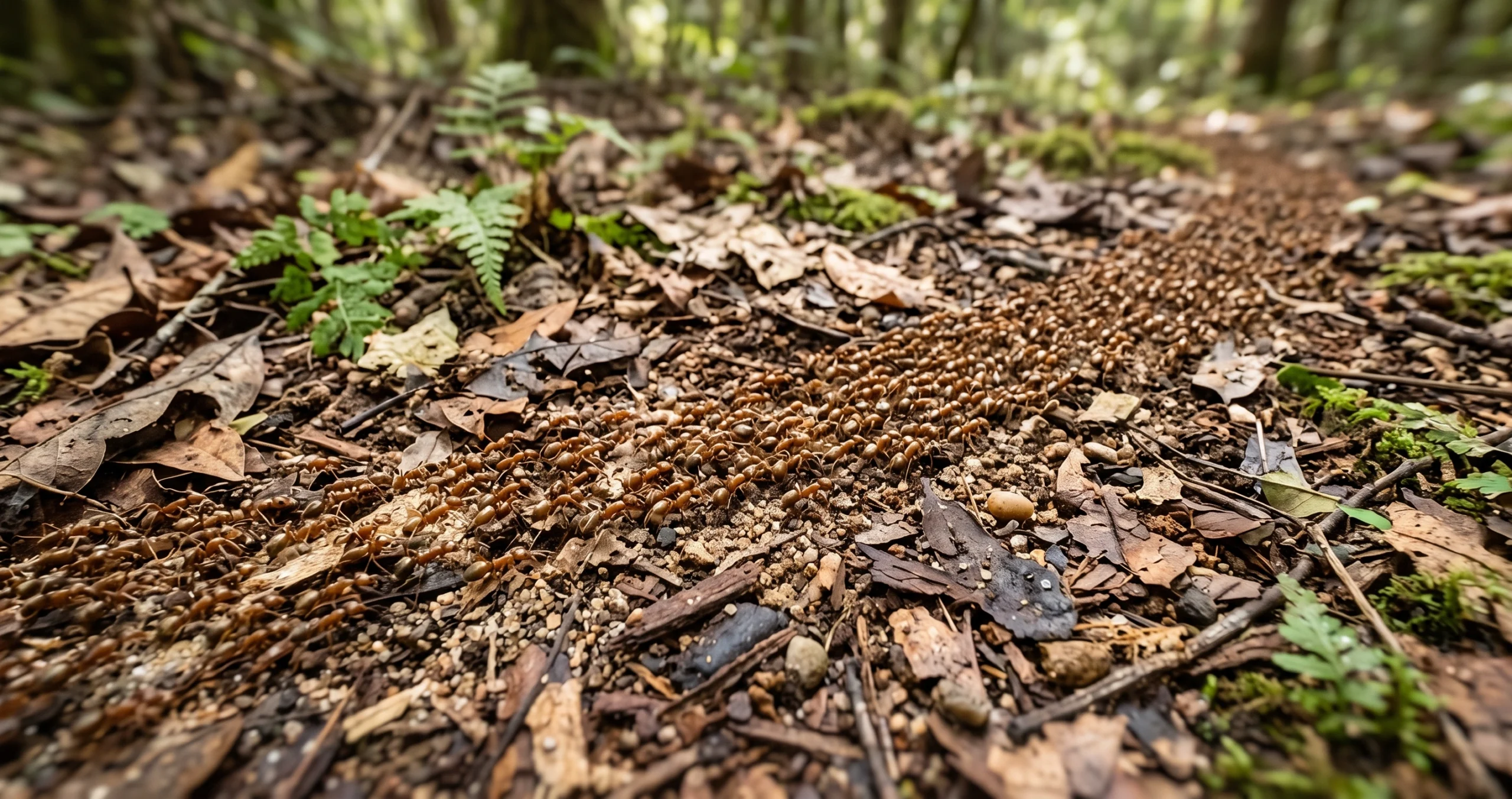
The Argentine ant supercolony is one of the most astonishing examples of biological cooperation ever discovered. Unlike most ant species, whose neighboring colonies wage fierce territorial wars, millions of Argentine ants spread across Europe, North America, and parts of Asia often behave as though they belong to one enormous family. Workers collected thousands of miles apart may peacefully interact instead of attacking one another—a phenomenon almost unheard of in the insect world.
This extraordinary level of cooperation has helped Argentine ants become one of the world’s most successful invasive species. Their colonies have spread through international trade, disrupted native ecosystems, and become persistent household pests in many regions. Scientists studying these ants have uncovered remarkable insights into chemical communication, genetics, and invasion biology while also developing better strategies for controlling their spread.
Understanding how this supercolony formed provides valuable lessons not only about ants but also about globalization, ecology, and invasive species management.
If you enjoy learning about remarkable insect behavior, you may also enjoy our article Why Periodical Cicadas Wait Exactly 17 Years to Emerge here on secretsofthegreengarden.com.
What Is the Argentine Ant Supercolony?
The Argentine ant (Linepithema humile) is native to parts of northern Argentina, Uruguay, Paraguay, southern Brazil, and neighboring regions of South America.
Within its native range, colonies behave much like those of other ants.
Different colonies defend territories aggressively.
Workers readily attack unrelated colonies.
Queens remain associated with individual colony networks.
Outside South America, however, something remarkable happened.
After accidental introduction into many countries, enormous interconnected colonies formed that no longer display the intense territorial aggression normally expected between neighboring nests.
Instead of thousands of independent colonies competing with one another, entire populations cooperate.
Researchers refer to these giant social networks as supercolonies.
Some stretch for hundreds or even thousands of miles across landscapes.
How Scientists Discovered a Colony Spanning Three Continents
The idea that ants from different countries might belong to the same cooperative network initially seemed almost impossible.
Traditional ant biology predicted that colonies separated by such vast distances should attack each other immediately.
Instead, behavioral experiments produced a surprising result.
Workers collected from California often accepted workers from southern Europe.
European ants tolerated Japanese ants.
Japanese ants behaved peacefully toward Californian ants.
Rather than fighting, they groomed one another, exchanged food, and moved freely together.
These observations suggested that populations across three continents recognized each other as members of the same enormous social system.
Although these populations are geographically isolated and cannot physically exchange workers across oceans, they retain strikingly similar colony-recognition systems that greatly reduce aggression.
How Researchers Tested Chemical Recognition Between Distant Populations
The Argentine Ant Supercolony Depends on Chemical Identity
Ants recognize nestmates primarily through chemicals known as cuticular hydrocarbons.
These waxy compounds coat the outer surface of the body.
Each colony normally possesses its own characteristic chemical signature.
When two ants meet, they touch one another with their antennae.
This brief contact allows them to compare chemical profiles.
If the scent differs substantially, aggressive behavior often follows almost immediately.
Researchers investigating Argentine ants collected workers from California, Europe, Japan, Australia, and South America.
They then paired ants from different locations inside laboratory arenas and carefully recorded their interactions.
The results surprised scientists.
Workers from invasive populations usually showed little or no aggression toward one another despite originating thousands of miles apart.
In contrast, ants collected from the native South American range frequently fought intensely with ants from neighboring colonies.
Genetic analyses suggested that introduced populations experienced a reduction in genetic diversity during invasion.
This “genetic bottleneck” likely reduced variation in colony-recognition chemicals, allowing workers from distant invasive populations to recognize one another more readily.
How Global Shipping Helped Spread Argentine Ants
The worldwide expansion of Argentine ants closely mirrors the history of international commerce.
Beginning in the late nineteenth century, increasing global trade transported soil, nursery plants, timber, agricultural products, and cargo between continents.
Unlike many insects that travel as eggs or larvae, Argentine ants often survive transport because colonies contain numerous queens.
Even small fragments containing workers, brood, and a few queens can establish entirely new populations after arrival.
Ports became major introduction points.
From coastal cities, colonies gradually expanded inland through urban landscapes, agricultural fields, parks, and suburban neighborhoods.
Today, Argentine ants occur on every continent except Antarctica.
Human transportation networks—not natural migration—made this extraordinary expansion possible.
Why the Argentine Ant Supercolony Is Such a Successful Invader
Several biological characteristics contribute to the remarkable success of Argentine ants.
Multiple Queens
Unlike many ant species with only one reproductive queen, Argentine ant colonies often contain numerous queens.
This greatly increases colony growth and resilience.
Cooperative Colonies
Minimal aggression between neighboring nests allows resources to be shared across enormous areas.
Instead of wasting energy fighting one another, workers cooperate.
Flexible Nesting
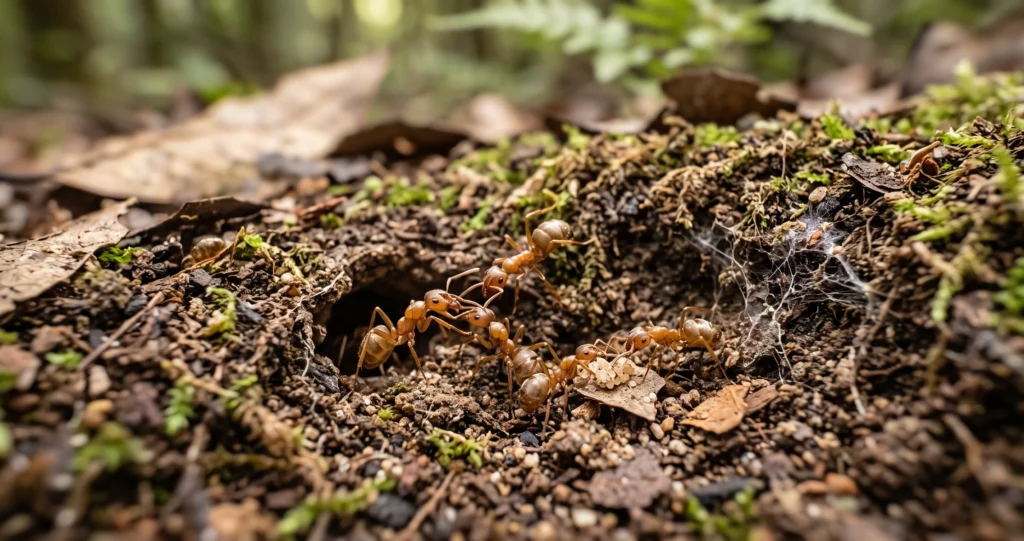
Argentine ants readily establish nests beneath stones, logs, sidewalks, mulch, landscape timbers, flowerpots, irrigation systems, and building foundations.
They relocate easily when conditions change.
Generalist Diet
These ants consume nectar, honeydew, insects, seeds, household foods, pet food, and many other resources.
Dietary flexibility allows them to thrive in both natural and urban environments.
Rapid Recruitment
When workers discover food, chemical trails quickly recruit hundreds or thousands of nestmates.
Large numbers overwhelm competitors efficiently.
Ecological Impacts on Native Ant Species and Ecosystems
The Argentine ant supercolony does more than invade gardens.
Its arrival often transforms entire ecosystems.
Native ant species frequently disappear after Argentine ants establish themselves.
Because native ants play important ecological roles—including seed dispersal, soil aeration, and insect predation—their loss affects many other organisms.
Some native plants rely on ants to disperse seeds.
When local ant communities decline, seed dispersal patterns may change dramatically.
Argentine ants also protect honeydew-producing insects such as aphids, scale insects, and mealybugs.
By defending these sap-feeding pests from natural predators, Argentine ants may indirectly increase plant damage in gardens, orchards, and agricultural systems.
Researchers have also documented cascading effects involving reptiles, spiders, beetles, and other arthropods whose ecological relationships depend on native ants.
The International Union for Conservation of Nature identifies Argentine ants among the world’s most damaging invasive species.
Practical Pest Management Tips for Homeowners
Although eliminating an entire supercolony is unrealistic, homeowners can significantly reduce local infestations.
Eliminate Food Sources
Store food in sealed containers.
Clean spills promptly.
Avoid leaving pet food outdoors overnight.
Rinse recyclable containers before disposal.
Reduce Moisture
Argentine ants require reliable water sources.
Repair leaking faucets, irrigation systems, and outdoor plumbing.
Improve drainage around foundations.
Trim Vegetation
Tree branches and shrubs touching buildings often serve as ant highways.
Pruning vegetation reduces easy access.
Manage Honeydew-Producing Insects
Control aphids, scale insects, and mealybugs on landscape plants.
Reducing honeydew removes one of the ants’ favorite food sources.
Use Slow-Acting Baits
Because colonies contain many queens, contact sprays often kill only visible workers.
Professionally recommended slow-acting bait products allow workers to transport toxic food back through the colony, improving long-term control.
Integrated Pest Management (IPM) approaches generally outperform repeated broad-spectrum insecticide applications.
Seal Entry Points
Caulk cracks around windows, doors, utility penetrations, and foundations to reduce indoor access.
Common Myths About Argentine Ants
Myth 1: All Argentine ants worldwide belong to one single colony.
Reality:
Several large supercolonies exist, and some are mutually aggressive. Not every invasive population belongs to the same cooperative network.
Myth 2: Argentine ants are dangerous to humans.
Reality:
They rarely bite people and do not possess medically significant stings.
Myth 3: Killing visible ants solves the problem.
Reality:
Most workers remain hidden, and numerous queens continue producing offspring.
Bait-based management is generally more effective.
Myth 4: They spread naturally across oceans.
Reality:
Human transportation through international trade accounts for nearly all long-distance dispersal.
Myth 5: They only invade homes.
Reality:
Their greatest ecological impacts often occur outdoors, where they displace native ant communities and alter ecosystem processes.
Why Argentine Ant Research Matters
The Argentine ant supercolony has become one of biology’s most valuable natural experiments.
Researchers studying these ants investigate social evolution, chemical communication, invasion ecology, genetics, and collective behavior.
Their discoveries influence conservation planning, invasive species management, robotics, and even computer science algorithms inspired by ant foraging.
Understanding why invasive Argentine ants cooperate while native populations remain territorial continues to reveal important principles governing social evolution.
Frequently Asked Questions
What is an Argentine ant supercolony?
It is a vast cooperative network of interconnected nests whose workers typically show little aggression toward one another over extremely large geographic areas.
Why don’t these ants fight each other?
Introduced populations possess highly similar chemical recognition cues, reducing the territorial aggression normally seen between separate colonies.
How did Argentine ants spread worldwide?
International shipping transported colony fragments hidden in soil, plants, cargo, and agricultural products.
Are Argentine ants harmful to gardens?
Indirectly, yes. They protect aphids and other honeydew-producing insects that damage plants while also displacing beneficial native ants.
What is the best way to control Argentine ants around a home?
Integrated Pest Management combines sanitation, moisture reduction, exclusion, vegetation management, and slow-acting bait products for the most effective long-term control.
Conclusion
The remarkable Argentine ant supercolony demonstrates how small insects can reshape entire ecosystems through extraordinary cooperation. By recognizing one another through similar chemical signatures rather than engaging in constant territorial warfare, invasive Argentine ants have formed some of the largest known social networks in the animal kingdom.
Their worldwide spread, fueled by international shipping and commerce, highlights the profound ecological consequences of biological invasions. At the same time, research into these ants has expanded our understanding of social evolution, chemical communication, and invasive species biology. For homeowners, practical Integrated Pest Management strategies remain the best approach to reducing infestations while minimizing unnecessary pesticide use. Ultimately, the story of the Argentine ant is both a fascinating scientific mystery and an important reminder of how human activity can reshape ecosystems on a global scale.
2 Internal Link Suggestions:
- https://secretsofthegreengarden.com/why-periodical-cicadas-wait-exactly-17-years-to-emerge/
- https://secretsofthegreengarden.com/how-basilisk-lizards-run-across-the-surface-of-water/
3 External Dofollow Authoritative Sources:
- University of California Integrated Pest Management Program: https://ipm.ucanr.edu/
- International Union for Conservation of Nature (IUCN): https://www.iucn.org/
- Smithsonian National Museum of Natural History: https://naturalhistory.si.edu/