
Introduction
An elephant’s trunk, a mole’s pointed snout, the enormous nose of a proboscis monkey, and the moisture-covered muzzle of a deer may look completely different, but each represents an extraordinary solution to the challenges of survival. Across the animal kingdom, noses have evolved far beyond their basic role in breathing. They have become highly specialized tools for finding food, detecting danger, communicating with others, and thriving in environments ranging from frozen tundra to scorching deserts.
For many mammals, smell is the most important sense. A dog’s nose can detect odors at concentrations far beyond human ability, while bears can locate food from remarkable distances. Other species rely on specialized nasal structures to filter dust, warm icy air, cool the body, or even manipulate objects.
Every nose reflects the habitat and lifestyle of the animal that carries it. By studying these remarkable adaptations, scientists gain insight into how evolution shapes anatomy to meet the demands of survival.
What Is an Animal’s Nose?
A mammal’s nose is much more than an opening for breathing.
It performs several essential functions, including:
- Detecting odors.
- Filtering airborne particles.
- Warming inhaled air.
- Moistening incoming air.
- Supporting communication through scent.
- Assisting in feeding and exploration.
The complexity of these functions varies greatly among species.
The Importance of Smell
Many mammals depend on smell more than sight or hearing.
Scent helps animals:
- Find food.
- Detect predators.
- Locate mates.
- Recognize family members.
- Mark territories.
- Navigate familiar environments.
In species that are active at night or live in dense vegetation, smell often becomes the dominant sense.
Dogs: Masters of Scent Detection
Dogs possess one of the most sensitive noses among mammals.
They have:
- Hundreds of millions of scent receptors.
- Large areas of the brain devoted to processing odors.
- A moist nose that helps trap scent particles.
These adaptations allow dogs to follow scent trails that may be hours or even days old, making them valuable in search-and-rescue work, wildlife tracking, and conservation projects.
Bears: Detecting Food from Great Distances
Bears rely heavily on their powerful sense of smell.
Their large nasal cavity contains an extensive surface area lined with olfactory tissue.
This allows them to locate:
- Ripening berries.
- Animal carcasses.
- Insects.
- Fish.
- Other food sources.
For many bear species, smell is the primary sense used while foraging.
Elephants: A Nose That Became a Trunk
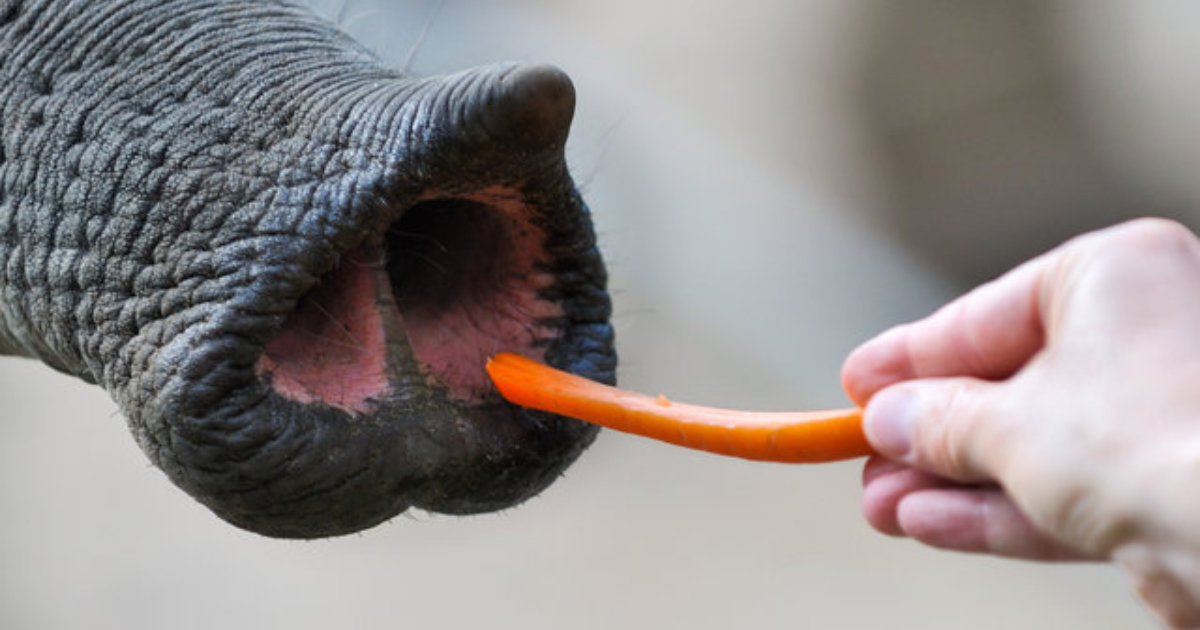
The elephant’s trunk is one of the most specialized noses in the animal kingdom.
Formed by the fusion of the nose and upper lip, it serves many purposes:
- Smelling.
- Breathing.
- Drinking.
- Picking up food.
- Touching objects.
- Producing sounds.
With tens of thousands of muscle bundles, the trunk is both incredibly strong and remarkably precise.
Moles: Built for Underground Life
Moles spend much of their lives tunneling through soil.
Their pointed noses help them:
- Push through loose earth.
- Detect prey.
- Explore narrow tunnels.
Some species, such as the star-nosed mole, possess highly specialized touch-sensitive appendages around the nose that allow them to locate prey in fractions of a second.
Seals and Sea Lions
Marine mammals face unique breathing challenges.
Seals and sea lions have nostrils that close tightly when diving underwater.
These muscular valves prevent water from entering the respiratory system while allowing rapid breathing at the surface.
Camels: Designed for Desert Conditions
Camel noses are perfectly adapted for arid environments.
Their nasal passages help:
- Reduce water loss.
- Warm cool night air.
- Cool hot desert air.
- Trap dust during sandstorms.
They can also partially close their nostrils when blowing sand fills the air.
Arctic Mammals
Animals living in cold climates have nasal passages that warm freezing air before it reaches the lungs.
This reduces heat loss while protecting delicate respiratory tissues.
Examples include:
- Arctic foxes.
- Reindeer.
- Musk oxen.
- Polar bears.
These adaptations improve survival during harsh winters.
Moist Noses
Many mammals have cool, moist noses.
The thin layer of moisture helps dissolve odor molecules, allowing scent receptors to detect them more efficiently.
Moist noses are common in:
- Dogs.
- Deer.
- Cattle.
- Foxes.
The Flehmen Response
Some mammals enhance scent detection using the flehmen response.
After detecting certain chemical signals, they curl the upper lip and inhale, directing scent molecules toward the vomeronasal organ.
This behavior is common in:
- Horses.
- Deer.
- Big cats.
- Goats.
It helps animals detect reproductive and social chemical cues.
Whiskers and the Nose
In many mammals, the nose works together with facial whiskers.
Whiskers help detect:
- Nearby objects.
- Air movement.
- Obstacles.
- Narrow openings.
Together, whiskers and the nose create an effective sensory system for navigating in darkness.
Nose Shapes Reflect Lifestyle
Different environments favor different nose designs.
Predators
Often possess well-developed noses for locating prey over long distances.
Grazing Mammals
Typically have broad muzzles adapted for feeding on grasses and vegetation.
Burrowing Species
Usually have compact or pointed noses suited to digging.
Aquatic Mammals
Possess nostrils adapted for rapid breathing at the water’s surface.
Communication Through Scent
Many mammals use scent as a form of communication.
Nasal detection allows animals to identify:
- Territory boundaries.
- Individual identity.
- Reproductive status.
- Social hierarchy.
Chemical communication often reduces the need for direct confrontation.
Can Animals Lose Their Sense of Smell?
Yes.
Illness, injury, aging, or environmental pollutants can reduce an animal’s ability to detect odors.
Because many mammals depend heavily on smell, losing this sense may affect feeding, reproduction, and survival.
Conservation and Habitat
Healthy habitats preserve the scent cues animals rely upon.
Habitat fragmentation, pollution, and human disturbance may interfere with:
- Scent trails.
- Territory marking.
- Foraging behavior.
- Navigation.
Protecting natural ecosystems helps maintain these essential sensory systems.
Practical Tips
When observing wildlife:
- Avoid using strong perfumes.
- Stay downwind whenever possible.
- Minimize sudden movements.
- Respect animals’ personal space.
Many mammals detect human scent long before they are seen.
Common Misconceptions
A Bigger Nose Always Means a Better Sense of Smell
Not necessarily. Internal nasal anatomy and the number of scent receptors are more important than external size.
Wet Noses Mean an Animal Is Sick
A moist nose is normal for many healthy mammals and often improves scent detection.
All Mammals Smell Equally Well
Smell sensitivity varies enormously among species depending on ecology and evolution.
The Elephant’s Trunk Is Only for Grabbing Food
The trunk is also a highly specialized nose used for breathing, smelling, drinking, touching, and communication.
Frequently Asked Questions
Which mammal has the best sense of smell?
Dogs are among the best-studied scent specialists, but bears are also believed to possess an exceptionally powerful sense of smell.
Why are dog noses wet?
Moisture helps capture and dissolve odor molecules, making them easier to detect.
Can mammals breathe and smell at the same time?
Yes. Mammals continuously process odor molecules as air passes through the nasal cavity.
Why do camels have closable nostrils?
They help keep blowing sand out while reducing moisture loss in dry desert conditions.
What is the purpose of the elephant’s trunk?
It combines the functions of a nose and an upper lip, allowing elephants to smell, breathe, drink, manipulate objects, and communicate.
Conclusion
Animal noses are remarkable examples of evolutionary specialization. From the scent-tracking abilities of dogs and bears to the versatile trunk of an elephant and the sand-resistant nostrils of a camel, each design reflects the unique demands of the environment in which the species evolved.
Although every mammal uses its nose to breathe and detect odors, evolution has transformed this essential organ into a multifunctional tool capable of locating food, recognizing family members, communicating through scent, regulating body temperature, and adapting to some of Earth’s most challenging habitats. Looking closely at an animal’s nose offers a fascinating glimpse into the lifestyle, ecology, and evolutionary history of the species itself.
SEO Package
SEO Title: Animal Noses Explained: Amazing Adaptations for Smell and Survival
Meta Description: Discover how animal noses evolved for smelling, hunting, communication, and survival, from elephant trunks to camel nostrils and powerful canine noses.
Focus Keyword: animal nose adaptations
Related Keywords:
- mammal noses
- animal sense of smell
- elephant trunk
- dog nose
- camel nostrils
- bear sense of smell
- mammal adaptations
- wildlife anatomy
- olfactory system
- animal evolution
URL Slug: animal-nose-adaptations
Suggested Category: Wildlife & Nature
Suggested Tags: Animal Adaptations, Mammals, Sense of Smell, Wildlife, Evolution, Animal Anatomy, Nature, Biology
Internal Linking
Explore how bird beaks evolved to match different diets:
https://secretsofthegreengarden.com/bird-beak-adaptations/
Learn how fur patterns help mammals survive in different environments:
https://secretsofthegreengarden.com/animal-fur-patterns-explained/
Discover remarkable ear adaptations across the animal kingdom:
https://secretsofthegreengarden.com/ears-built-for-survival/
Read about the hidden diversity of North American salamanders:
https://secretsofthegreengarden.com/north-american-salamanders/
Recommended External Sources
- Smithsonian’s National Zoo & Conservation Biology Institute: https://nationalzoo.si.edu
- Animal Diversity Web (University of Michigan): https://animaldiversity.org
- National Geographic Animals: https://www.nationalgeographic.com/animals