
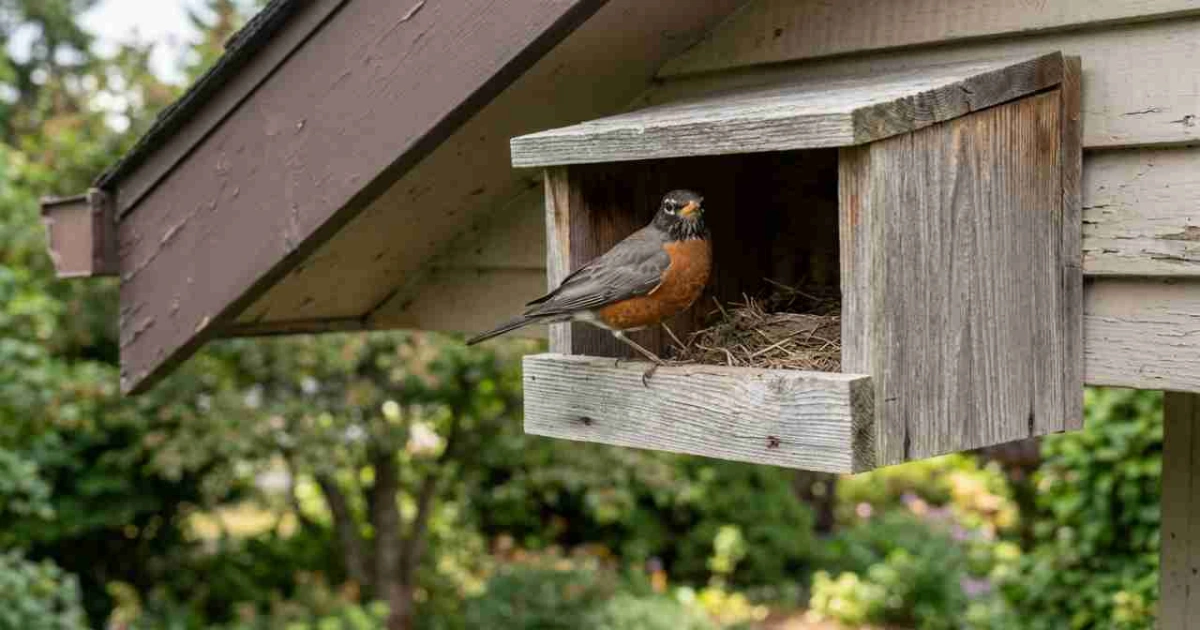
Every spring and summer, many homeowners are delighted to discover American robins building nests in trees, shrubs, porch ledges, or other sheltered locations around their property. These familiar birds are among the most recognized songbirds in North America, known for their orange-red breast, cheerful songs, and remarkable parenting instincts.
If you’ve found a robin’s nest in your yard, it’s important to understand what is happening during the nesting process and how your actions can help ensure the birds successfully raise their young. Knowing what to do—and what not to do—can make a significant difference for nesting robins.
Primary Keyword: American robin nesting season
Understanding the American Robin Nesting Season
The American robin’s breeding season typically begins in early spring and can continue through much of the summer, depending on climate and location.
Many robin pairs raise multiple broods during a single season. The entire nesting cycle is relatively short, which allows these birds to produce several generations of young each year.
A typical nesting cycle includes:
- Nest construction
- Egg laying
- Incubation
- Hatching
- Nestling development
- Fledging
From the first egg to the young birds leaving the nest, the process often takes about four weeks.
How Robins Build Their Nests
Female robins are primarily responsible for nest construction.
Using materials such as:
- Grass
- Twigs
- Mud
- Fine plant fibers
They create a sturdy cup-shaped nest designed to protect eggs and growing chicks.
Robins commonly place nests in:
- Trees
- Shrubs
- Window ledges
- Porch lights
- Gutters
- Building ledges
The nest location is carefully selected to provide shelter and protection from predators.
The Robin Nesting Timeline
Days 1–13: Egg Incubation
After laying a clutch of eggs, the female robin begins incubating them.
American robin eggs are famous for their distinctive blue color. During incubation, the female spends much of her time sitting on the nest to maintain a stable temperature.
The male often remains nearby, helping defend the nesting territory and providing protection.
Around Day 14: Hatching
After approximately two weeks, the eggs begin to hatch.
Newly hatched robins are:
- Featherless
- Blind
- Completely dependent on their parents
Both parents immediately begin gathering food to support the rapidly growing chicks.
Days 15–27: Nestling Growth
This stage is one of the busiest periods for robin parents.
Adults make countless trips each day carrying:
- Earthworms
- Insects
- Caterpillars
- Other protein-rich foods
The chicks grow rapidly, developing feathers and increasing in size every day.
Around Day 28: Fledging
By the end of the nesting cycle, young robins are ready to leave the nest.
This process is called fledging.
Although fledglings may appear vulnerable, leaving the nest is a normal and essential stage of development.
What To Do If You Find Robin Eggs
Finding robin eggs can be exciting, but the best action is usually no action at all.
Keep Your Distance
Avoid approaching the nest unnecessarily.
Excessive disturbance can stress the parent birds and attract predators.
Keep Pets Away
Dogs and cats should be prevented from accessing nesting areas whenever possible.
Even curious pets can unintentionally cause harm.
Observe From Afar
Use binoculars or observe through a window rather than approaching the nest directly.
This minimizes disturbance while allowing you to enjoy the nesting process.
What Not To Do During American Robin Nesting Season
Many well-meaning people accidentally interfere with nesting birds.
Avoid these common mistakes:
Do Not Touch the Nest
Handling nests, eggs, or chicks is generally discouraged and may be illegal under wildlife protection laws in some countries.
Do Not Move the Nest
Even if a nest seems poorly placed, relocating it can cause abandonment or disrupt parental care.
Do Not Trim Nearby Branches
Pruning vegetation near an active nest can expose young birds to predators and weather.
Do Not Use Lawn Chemicals Nearby
Pesticides and herbicides can reduce insect populations that robins depend on to feed their chicks.
What If You Find a Baby Robin on the Ground?
This is one of the most common concerns during American robin nesting season.
Nestlings vs. Fledglings
Understanding the difference is important.
Nestling
A nestling is:
- Mostly featherless
- Unable to hop or fly
- Dependent on the nest
If a healthy nestling falls from the nest and the nest is accessible, wildlife experts often recommend returning it to the nest.
Contrary to popular myths, parent birds generally do not reject chicks because of human scent.
Fledgling
A fledgling is:
- Mostly feathered
- Able to hop or flutter
- Learning to fly
Fledglings commonly spend several days on the ground while parents continue feeding them.
In most cases, a healthy fledgling should be left alone.
The parents are usually nearby, even if they are not immediately visible.
Why an Empty Nest Is Usually Good News
Many homeowners become concerned when they suddenly notice an empty robin nest.
In most situations, an empty nest means the young birds have successfully fledged.
Signs of successful fledging include:
- No eggs remaining
- No dead chicks present
- Adult robins nearby
- Young birds observed in surrounding vegetation
An empty nest is often evidence that the breeding attempt was successful.
Creating a Robin-Friendly Habitat
If you enjoy seeing robins in your yard, several landscaping practices can encourage nesting and feeding activity.
Plant Native Trees and Shrubs
Native plants provide:
- Shelter
- Nesting sites
- Food resources
- Insect habitat
Provide Water
A clean birdbath can be especially valuable during warm weather.
Leave Some Natural Areas
Robins frequently forage in areas with:
- Leaf litter
- Moist soil
- Natural ground cover
These areas support earthworms and insects.
Reduce Chemical Use
Minimizing pesticides helps maintain healthy insect populations that nesting birds depend on.
Why Robins Are Important for Backyard Ecosystems
Robins contribute to healthy ecosystems in several ways.
They help:
- Control insect populations
- Disperse seeds
- Support biodiversity
- Indicate environmental health
A yard that supports nesting robins often supports many other beneficial wildlife species as well.
Frequently Asked Questions
How long does American robin nesting season last?
The nesting cycle for one brood typically lasts about four weeks, but robins may raise multiple broods between spring and late summer.
Will robins abandon a nest if humans touch it?
The common belief that birds abandon nests because of human scent is largely a myth. However, excessive disturbance can still cause stress and should be avoided.
What should I do if I find a fledgling on the ground?
If the bird is fully feathered and appears healthy, leave it where it is. The parents are usually nearby and continue caring for it.
Can I remove a robin nest after the birds leave?
Once the nesting cycle is complete and the nest is no longer active, regulations may vary depending on location. Always check local wildlife laws before removing nests.
Why are robin eggs blue?
The distinctive blue color comes from pigments deposited during egg formation. Scientists continue to study the evolutionary advantages of eggshell coloration.
Conclusion
The American robin nesting season offers a fascinating glimpse into one of nature’s most familiar family stories. From the first blue eggs to the moment young birds leave the nest, each stage plays an important role in the survival of the species.
For homeowners, the best approach is usually simple: observe, enjoy, and give nesting robins the space they need. By avoiding unnecessary disturbance, keeping pets away from active nests, and creating wildlife-friendly habitats, you can help ensure these beloved songbirds continue to thrive in neighborhoods and gardens for generations to come.
Suggested Internal Links for SecretsoftheGreenGarden.com
Consider linking to related articles using anchor text such as:
- How to Create a Bird-Friendly Backyard
- Native Plants That Attract Songbirds
- Why Pollinator Gardens Benefit Backyard Wildlife
Suggested External Resources
For additional information, consider referencing:
- Cornell Lab of Ornithology Robin Identification and Nesting Resources
- U.S. Fish & Wildlife Service Bird Conservation Resources
- National Audubon Society Birding and Conservation Information
Related Keywords: robin nest, backyard birds, nesting birds, songbird conservation, bird-friendly garden, fledgling robin, bird nesting habits, wildlife gardening.