
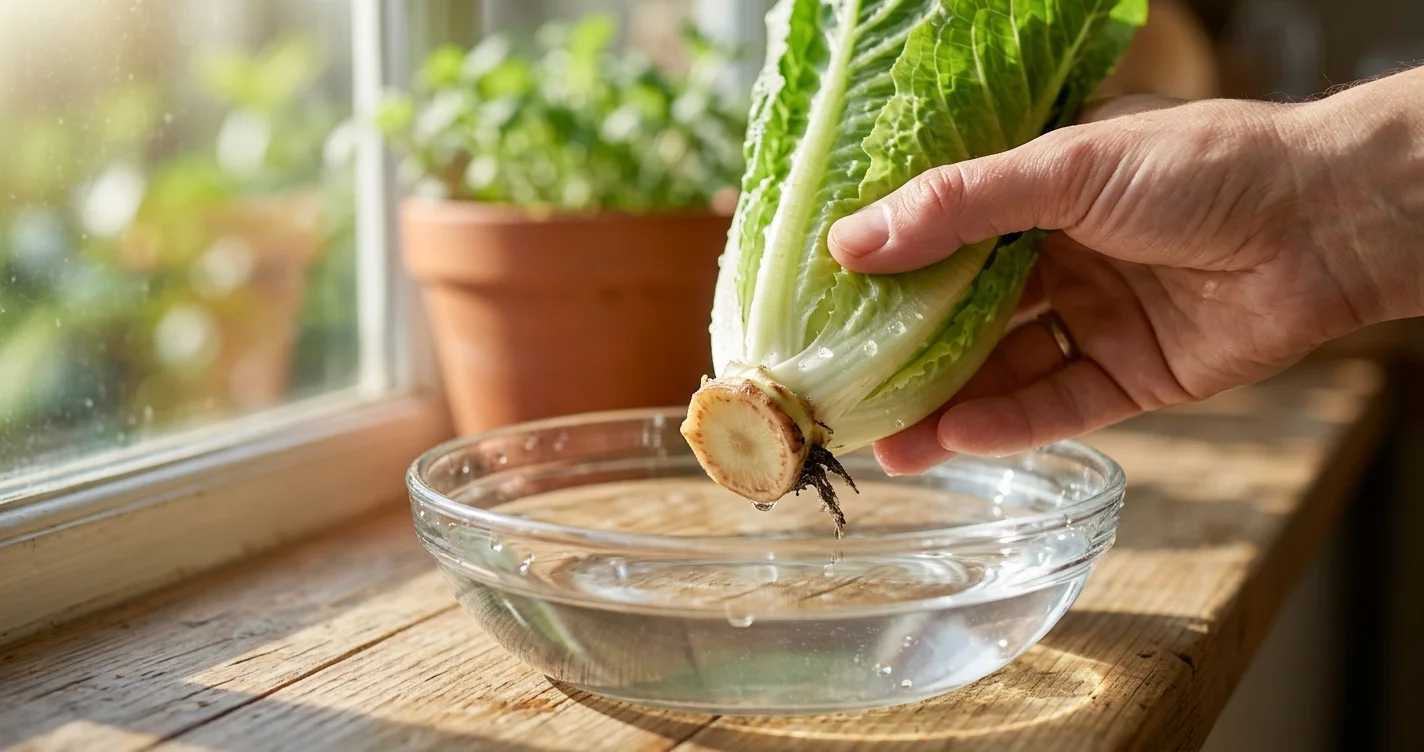
The bottom of a bok choy plant looks like something destined for the compost bin. Its leaves are gone, its stalks have been cut away, and only a short, pale base remains. Yet place that leftover piece in a shallow dish of water, and something surprising may happen: tiny green leaves begin emerging from the center.
You can regrow bok choy from scraps using little more than a kitchen leftover, clean water, and a bright windowsill.
The same basic technique works with romaine lettuce and celery. Instead of throwing away their bases, you can encourage the living growth points inside them to produce fresh leaves.
There is one important detail, though. These scraps usually will not regenerate an entirely new, full-sized vegetable in water alone. The most reliable result is a modest amount of new leafy growth, making the process more useful as a gardening experiment than as a replacement for buying produce.
Still, watching a vegetable begin growing again is a fascinating introduction to plant biology, food waste reduction, and the hidden potential of everyday kitchen scraps.
Table Of Contents
- Why Kitchen Scraps Can Grow Again
- Regrow Bok Choy From Scraps: Step-by-Step Method
- How to Regrow Romaine Lettuce in Water
- How to Regrow Celery From Kitchen Scraps
- The Science Behind Regrowing Vegetables in Water
- Bok Choy vs. Romaine vs. Celery: Which Regrows Best?
- Common Mistakes That Prevent Regrowth
- When and How to Move Regrowing Scraps Into Soil
- In Your Own Yard: Turn Kitchen Scraps Into a Mini Garden
- Why Regrowing Scraps Is Worth Trying
- Frequently Asked Questions
Why Kitchen Scraps Can Grow Again
Many vegetables remain biologically active after harvesting.
Although their roots and outer leaves may have been removed, some portions of the plant still contain living tissues capable of producing new growth.
The Hidden Growing Point
Bok choy, romaine lettuce, and celery all have growing regions near the center of their bases.
These regions contain cells that can continue dividing when conditions are favorable.
If the growing point remains intact, the vegetable may produce new leaves even after most of its original structure has been removed.
This is why a carefully saved base can sometimes grow while a random piece of leaf or stalk cannot.
Stored Energy Supports New Leaves
A harvested vegetable base contains some stored carbohydrates and nutrients.
These reserves can help support the earliest stages of regrowth.
Water keeps the tissues hydrated, allowing growth processes to continue.
However, the stored resources are limited.
As new leaves develop, the plant increasingly needs light, nutrients, and healthy roots to sustain further growth.
Why Water Works at First
Water provides moisture directly to the remaining plant tissues.
This can be enough to stimulate new leaves from an intact growing point.
But plain water does not supply the complete range of mineral nutrients needed for prolonged growth.
That is why moving a suitable regrowing base into potting mix can be helpful once roots develop.
Regrow Bok Choy From Scraps: Step-by-Step Method
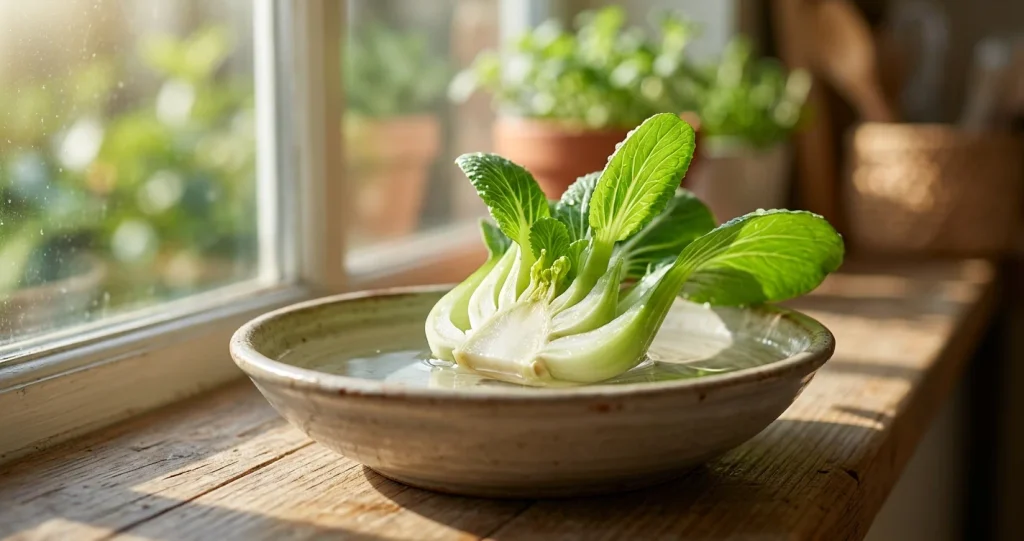
Bok choy, also called pak choi, is a leafy vegetable in the cabbage family.
Its thick stalks surround a central growing point, making the base a good candidate for a simple regrowth experiment.
Step 1: Save a Healthy Bok Choy Base
After using the leaves and stalks for cooking, retain approximately 1–2 inches of the bottom portion.
Choose a base that feels firm and shows no signs of decay.
The center should remain intact.
Avoid using scraps that are slimy, heavily bruised, or discolored.
Step 2: Place the Base in Shallow Water
Set the bok choy base upright in a small, clean dish.
Add enough water to cover the bottom cut surface without submerging the entire base.
Keeping the central growing point above water helps reduce prolonged wetness around developing leaves.
A shallow dish also makes it easier to observe changes.
Step 3: Choose a Bright Location
Place the dish near a window with bright, indirect sunlight.
A location with gentle morning light may also work.
Avoid intense afternoon sunlight, which can overheat the water or dry exposed tissues.
Moderate indoor temperatures are generally suitable.
Step 4: Refresh the Water Regularly
Replace the water daily, or sooner if it becomes cloudy.
Rinse the dish and gently inspect the base for signs of deterioration.
Clean water helps reduce the buildup of microorganisms.
If the base becomes soft, develops an unpleasant odor, or shows spreading rot, discard it.
Step 5: Watch for New Leaves
Under favorable conditions, small leaves may become visible within several days.
The exact timing depends on the freshness of the scrap, temperature, light, and condition of the growing point.
New growth usually emerges from the center.
The outer cut stalks will not rebuild themselves into their original shape.
Step 6: Decide Whether to Transplant
If healthy roots develop, you can try transferring the base into a container of potting mix.
Plant it shallowly, keeping the growing center above the soil surface.
Water gently and provide suitable light.
Some bases continue growing after transplanting, while others decline because their stored resources or root development are insufficient.
How to Regrow Romaine Lettuce in Water
Romaine lettuce is another popular vegetable for kitchen-scrap regrowth.
Its compact base can sometimes produce fresh central leaves after the outer leaves have been harvested.
Save the Lettuce Heart
Cut away the usable leaves while preserving approximately 1–2 inches of the base.
Make sure the central growing point remains undamaged.
A fresh, firm base is more likely to respond than one that has been stored for a long time.
Place It in a Small Dish
Position the base upright in shallow water.
Only the bottom portion should remain submerged.
Avoid filling the container so high that the central leaves sit underwater.
Provide Gentle Light
Place the dish in bright, indirect light.
The plant needs light to support photosynthesis as its new leaves expand.
If the leaves become pale and elongated, insufficient light may be one contributing factor.
Observe the New Growth
Small lettuce leaves may begin appearing within several days.
These leaves emerge from the center of the remaining base.
The result is usually a small cluster of tender leaves rather than a replacement for the original full-sized head.
Harvest Carefully
If the new leaves appear healthy, they may be harvested when large enough to use.
However, food safety matters.
Discard regrowth that has been exposed to dirty water, visible mold, or decaying tissue.
Because lettuce is commonly eaten raw, avoid consuming leaves from a base that has developed any signs of spoilage.
How to Regrow Celery From Kitchen Scraps
Celery has a distinctive base made up of tightly packed leaf stalks.
When the central growing point survives harvesting, new leaves can emerge.
Prepare the Celery Base
Cut the stalks away, leaving roughly 2 inches of the base.
Choose a firm piece without soft or rotten areas.
The center should remain intact.
Set It in Shallow Water
Place the base upright in a small bowl.
Add enough water to cover the bottom while keeping most of the stalk base above the surface.
This reduces the risk of excessive moisture around the developing center.
Watch the Center Change
Fresh green growth may appear in the middle of the celery base.
The surrounding cut stalks may gradually discolor or deteriorate as the plant uses its remaining resources.
This is different from producing an entirely new bunch of mature celery stalks.
Encourage Root Development
Some celery bases develop roots when maintained under favorable conditions.
If roots form, the base may be transferred to a container with well-draining potting mix.
Keep the growing point exposed above the soil.
Continue Growing in Soil
Celery generally requires consistent moisture and a supply of nutrients for sustained growth.
A container with suitable potting mix provides more support than plain water alone.
Even after transplanting, regrowth may remain modest.
The Science Behind Regrowing Vegetables in Water
The ability of these vegetables to produce new leaves is a form of continued vegetative growth.
It depends on living plant tissues, stored resources, and environmental conditions.
Meristems: Where New Growth Begins
Plants contain specialized growing regions called meristems.
These tissues produce new cells that develop into leaves, stems, and other structures.
In bok choy, romaine, and celery, surviving growing points near the center of the base may continue producing leaves after harvest.
The key is preserving these tissues during cutting.
If the growing point is destroyed, regrowth becomes much less likely.
Why the Original Stalks Do Not Return
A cut celery stalk does not simply lengthen back into its previous form.
Instead, new leaves and leaf stalks develop from living growing tissues.
The same principle applies to bok choy and romaine.
The new growth may resemble a miniature version of the original vegetable, but it is not a reconstruction of the harvested parts.
Water Supports Growth but Has Limits
Water is essential for cell expansion, nutrient transport, and photosynthesis.
However, plain tap water contains only limited and variable amounts of plant nutrients.
A vegetable base may initially rely on nutrients stored in its tissues.
Over time, sustained growth requires an appropriate supply of essential minerals.
Soil or a properly managed hydroponic nutrient solution can provide these nutrients.
Why Roots Matter
Roots absorb water and mineral nutrients.
Some kitchen scraps can produce new leaves before developing substantial roots.
This early growth may be temporary.
If roots develop and the base remains healthy, transplanting may improve its ability to continue growing.
Why Some Scraps Fail
Not every vegetable base will regrow.
Success depends on several factors, including the condition of the growing point, previous storage, tissue damage, temperature, and microbial activity.
A base that has begun rotting may deteriorate before new growth becomes established.
Even apparently healthy scraps can fail.
This variability is a normal part of the experiment.
Bok Choy vs. Romaine vs. Celery: Which Regrows Best?
All three vegetables can produce new leaves from intact bases, but their growth patterns differ.
| Vegetable | Typical new growth | Water-only limitations | Transplant potential |
|---|---|---|---|
| Bok choy | Small central leaves | Limited sustained growth | Possible if healthy roots form |
| Romaine lettuce | Tender leaves from the center | Usually produces a small harvest | Possible, but results vary |
| Celery | New leafy shoots and small stalks | Unlikely to form a full bunch | Possible with root development |
There is no guaranteed winner.
The freshness of the scrap and the conditions in your home may matter more than the vegetable species.
For beginners, trying all three side by side can make the differences easy to observe.
Common Mistakes That Prevent Regrowth
Kitchen-scrap gardening is simple, but several common mistakes can reduce success.
Submerging Too Much of the Base
Deep water can keep delicate tissues constantly wet.
This may encourage decay.
Use shallow water and keep the growing center exposed.
Forgetting to Change the Water
Stagnant water can become cloudy and develop unpleasant odors.
Regular water changes help maintain cleaner conditions.
Wash the container when replacing the water.
Using Damaged Scraps
A severely bruised or rotting base may lack healthy tissues needed for regrowth.
Choose fresh scraps whenever possible.
Providing Too Little Light
New leaves need adequate light for photosynthesis.
A dark kitchen corner may support little more than weak, pale growth.
Bright, indirect light is generally a better starting point.
Expecting a Full Grocery-Store Harvest
Regrowing scraps is not the same as growing vegetables from seed or transplanting established seedlings.
The main reward is observing new growth and sometimes harvesting a small amount of fresh greenery.
Expectations should remain realistic.
Leaving Scraps in Water Indefinitely
Water-only regrowth often reaches a limit.
If healthy roots form and continued growth is the goal, consider transferring the base into potting mix.
When and How to Move Regrowing Scraps Into Soil
Transplanting can provide a better environment for continued growth, but it is not always successful.
Look for Healthy Roots
Wait until the base has developed visible, healthy roots before attempting to transplant.
Roots should appear firm rather than slimy or discolored.
Some scraps may never develop a useful root system.
Choose a Container With Drainage
Use a small pot with drainage holes.
Fill it with fresh, well-draining potting mix.
Avoid heavy garden soil in indoor containers because it may compact and drain poorly.
Plant at the Correct Depth
Position the base so its roots contact the potting mix.
Keep the central growing point above the soil surface.
Burying the center can increase the risk of decay.
Maintain Even Moisture
Water gently after planting.
Keep the potting mix evenly moist but not waterlogged.
Gradually introduce stronger light if needed, rather than moving the plant abruptly into intense sun.
Monitor for Stress
Some leaves may wilt after transplanting.
If the base remains firm and new growth continues, the plant may recover.
Remove plants that develop significant rot or collapse.
In Your Own Yard: Turn Kitchen Scraps Into a Mini Garden
Regrowing vegetables can become part of a broader approach to reducing household food waste and learning about plant growth.
Create a Windowsill Experiment
Place bok choy, romaine, and celery bases in three separate labeled dishes.
Give them similar amounts of light and water.
Observe how quickly new leaves appear and how the different plants respond.
This makes a simple educational activity for families and beginning gardeners.
Keep a Growth Journal
Record the date each base was placed in water.
Photograph the plants every few days.
Note changes in leaf size, color, root development, and overall condition.
Comparing observations can help reveal which conditions produce the healthiest growth.
Use Healthy Regrowth Thoughtfully
Small new leaves may be useful as a garnish or addition to cooked dishes when they are healthy and grown under clean conditions.
However, water-grown scraps are not automatically safe to eat.
Use clean containers and potable water, avoid decaying bases, and follow standard produce-washing practices.
When in doubt, discard the regrowth rather than consuming it.
Compost Unsuccessful Scraps
If a base fails to regrow but is suitable for your composting system, return it to the compost pile.
Composting helps recycle organic matter into a useful soil amendment.
This means even an unsuccessful regrowth experiment can contribute to a more resource-conscious garden.
Grow Full-Sized Vegetables Separately
For a reliable harvest, grow bok choy, romaine, and celery from seeds or healthy transplants.
Kitchen-scrap regrowth is best treated as a complementary activity.
It demonstrates plant resilience without replacing conventional vegetable gardening.
Why Regrowing Scraps Is Worth Trying
The amount of food produced from a single vegetable base is usually small.
Nevertheless, the activity offers several benefits.
It Makes Plant Biology Visible
New leaves emerging from an apparently discarded vegetable provide a clear demonstration of living growing tissues.
The process makes abstract concepts such as meristems and vegetative growth easier to understand.
It Encourages Thoughtful Food Use
Saving a vegetable base encourages people to consider how food is grown and what happens to unused portions.
However, regrowing scraps does not necessarily eliminate food waste.
The environmental benefit depends on what is grown, how it is used, and the resources required.
It Requires Very Little Space
A small dish and a bright windowsill are enough to begin.
This makes the activity accessible to apartment residents and people without outdoor gardens.
It Can Inspire Further Gardening
Watching the first leaves emerge may encourage beginners to try seed starting, container gardening, or growing herbs indoors.
A simple experiment can become the beginning of a larger gardening interest.
Frequently Asked Questions
1. How long does it take to regrow bok choy from scraps?
New leaves may begin appearing within several days when the base is fresh and the growing point remains healthy.
However, timing varies with temperature, light, water quality, and the condition of the scrap.
Producing a substantial amount of new growth takes longer, and some bases never develop successfully.
2. Can romaine lettuce and celery grow forever in water?
No. Plain water does not provide a complete supply of essential plant nutrients.
The original base contains limited stored resources, and prolonged water exposure can increase the risk of decay.
For continued growth, a healthy rooted base may benefit from transplanting into suitable potting mix.
3. Can you eat vegetables regrown from kitchen scraps?
Healthy new leaves may be edible, but food safety depends on how the scraps were handled and maintained.
Use clean containers, potable water, and fresh bases.
Discard any plant showing mold, slime, unpleasant odors, or other signs of deterioration.
Wash harvested leaves before use, and remember that raw produce can still carry foodborne microorganisms.
Conclusion
That pale vegetable base sitting in a shallow dish of water is more than a kitchen leftover.
It contains living tissues that may still be capable of producing fresh green leaves.
Learning to regrow bok choy from scraps, along with romaine lettuce and celery, reveals how plants can continue growing after harvest when their central growing points remain intact.
The results are usually modest, and water alone cannot support unlimited growth. But the experiment offers an accessible way to explore plant biology, practice careful food use, and introduce gardening into even the smallest living space.
The next time you prepare a salad or chop vegetables for dinner, take another look at the base before throwing it away.
With a little water, light, and patience, it may have one more surprise waiting inside.
External Sources
1. Kitchen Scrap Gardening: Regrow Your Fruits and Vegetables! Explains regrowing celery bases in shallow water, replacing water regularly, and transplanting after new growth develops. It also identifies bok choy and lettuce as vegetables suitable for similar experiments. University of Illinois Extension.
2. Kitchen Scrap Gardening Identifies bok choy, celery, and lettuce as candidates for regrowth and explains that some vegetables are easier to regrow than others, with lettuce and celery among the easiest. University of Illinois Extension