
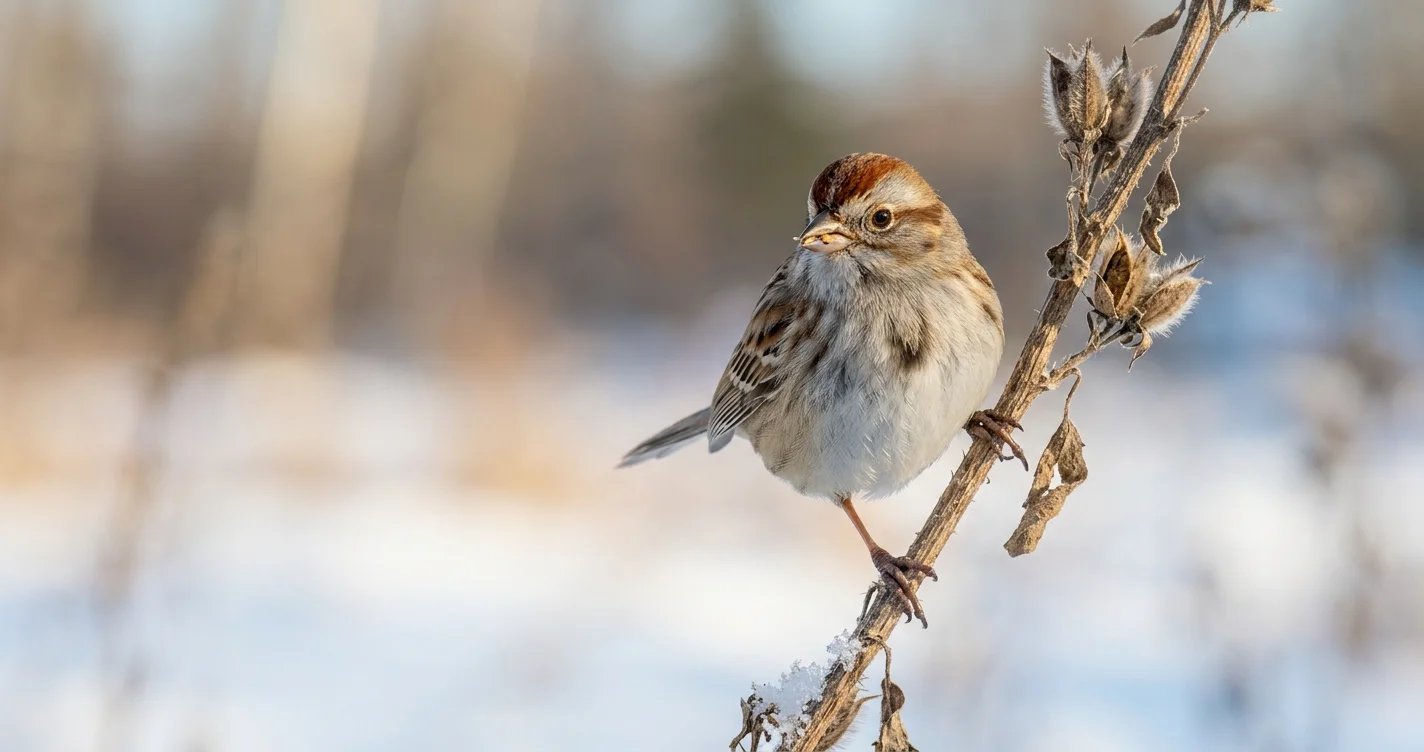
A tiny bird hops across a snow-covered garden, searching beneath dried flower stalks for seeds that most people would never notice. Its rusty cap glows against the white ground, and a small dark spot marks the center of its pale breast.
This is the American tree sparrow (Spizelloides arborea), a northern songbird that spends much of its winter quietly searching for food in fields, woodland edges, and backyard gardens.
Despite its name, the American tree sparrow is often seen feeding on the ground rather than in trees. It breeds in the far north, where shrubs and tundra vegetation dominate the landscape, then travels south to spend winter in more temperate regions.
For gardeners and birdwatchers, these seasonal visitors offer a wonderful opportunity to discover how native plants, standing seed heads, and thoughtful yard maintenance can support wildlife during the coldest months.
Even a small patch of untidy vegetation can become a valuable winter feeding area.
Table of Contents
- What Is an American Tree Sparrow?
- Where American Tree Sparrows Spend Winter
- How American Tree Sparrows Survive Freezing Temperatures
- What American Tree Sparrows Eat in Winter
- Why Native Seed-Producing Plants Matter
- How to Identify American Tree Sparrows
- American Tree Sparrow Behavior and Winter Flocks
- Common Threats to Wintering Tree Sparrows
- In Your Own Yard: How to Help American Tree Sparrows
- Common Mistakes to Avoid
- Frequently Asked Questions
What Is an American Tree Sparrow?
The American tree sparrow is a small migratory songbird belonging to the family Passerellidae, commonly called the New World sparrows.
It is native to North America and is especially associated with northern breeding habitats.
A Sparrow With a Misleading Name
The name “tree sparrow” can be confusing.
Unlike many woodland birds, American tree sparrows breed primarily in northern tundra and shrubby habitats, where tall trees may be scarce or absent.
The name originated from early comparisons with other sparrow species, rather than from a strict preference for living in trees.
During winter, these birds frequently forage close to the ground.
Distinctive Physical Features
American tree sparrows have several recognizable markings:
- A rusty-red crown.
- A gray face with a rusty line extending behind the eye.
- A small, dark spot near the center of the breast.
- Brown, streaked wings with pale wing bars.
- A two-toned bill, typically dark above and yellowish below.
Their rounded shape and warm brown coloring can make them particularly attractive against snowy winter backgrounds.
However, individual markings vary, and no single feature should be used in isolation.
A True Northern Traveler
American tree sparrows breed in Alaska and northern Canada.
When winter approaches, many migrate south into the northern and central United States and southern Canada.
Their winter distribution varies with weather, habitat, and food availability.
They are generally seasonal visitors rather than year-round backyard residents across most of the United States.
Where American Tree Sparrows Spend Winter
American tree sparrows favor habitats that provide both accessible seeds and protective cover.
Open Fields and Weedy Edges
During winter, they frequently occupy grassy fields, weedy patches, agricultural margins, and open areas containing scattered shrubs.
These environments can offer abundant seeds from grasses and herbaceous plants.
Standing vegetation also provides places to hide from predators.
Shrubby Woodland Borders
Woodland edges with dense shrubs can provide shelter while allowing birds to feed in nearby open areas.
A mixture of low vegetation and open ground is often more useful than a heavily manicured lawn.
Gardens and Residential Areas
American tree sparrows may visit suburban gardens, particularly where native plants retain seeds through winter.
They can also appear beneath bird feeders, collecting seeds that have fallen onto the ground.
Their presence depends heavily on geographic location.
In many southern states, they are uncommon or absent during winter.
How American Tree Sparrows Survive Freezing Temperatures
A bird weighing only a small fraction of a pound faces serious challenges during freezing weather.
Yet American tree sparrows regularly spend winter in landscapes covered with snow.
Their survival depends on several interacting adaptations.
Feathers Create Natural Insulation
Like other cold-weather birds, American tree sparrows rely on insulating feathers.
When temperatures drop, they can fluff their plumage to trap additional air close to the body.
This air reduces heat transfer between the bird and the surrounding environment.
A fluffed-up sparrow may look almost spherical, but the rounded appearance serves a practical purpose.
Metabolism Produces Body Heat
Birds maintain relatively high internal body temperatures.
To remain warm, they must generate heat through metabolic activity.
During cold conditions, their energy requirements can increase.
Seeds and other foods supply energy needed for movement, feeding, and temperature regulation.
Why Finding Food Is Essential
Cold weather creates a difficult balance.
A sparrow must spend energy searching for food while obtaining enough calories to replace what it uses.
Snow can cover seeds that would otherwise be accessible.
Birds may concentrate their feeding activity in exposed patches, beneath standing plants, or near sheltered ground.
Shelter Reduces Exposure
Dense shrubs, evergreen branches, and tangled vegetation can reduce exposure to wind.
These protected locations may be useful for resting and avoiding predators.
The exact shelter chosen depends on local conditions.
How Snow Changes Feeding Behavior
Snow does not always make feeding impossible.
Some seeds remain attached to standing stems above the snow.
Other seeds accumulate in sheltered areas where wind or vegetation keeps the ground partially exposed.
American tree sparrows can take advantage of these small feeding opportunities.
Survival Depends on the Whole Habitat
Insulation alone cannot guarantee survival.
A bird also needs food, suitable resting areas, and protection from hazards.
This is why winter habitat quality matters so much.
A landscape with native seed-producing plants and dense protective cover may provide more resources than an open lawn with little vegetation.
What American Tree Sparrows Eat in Winter
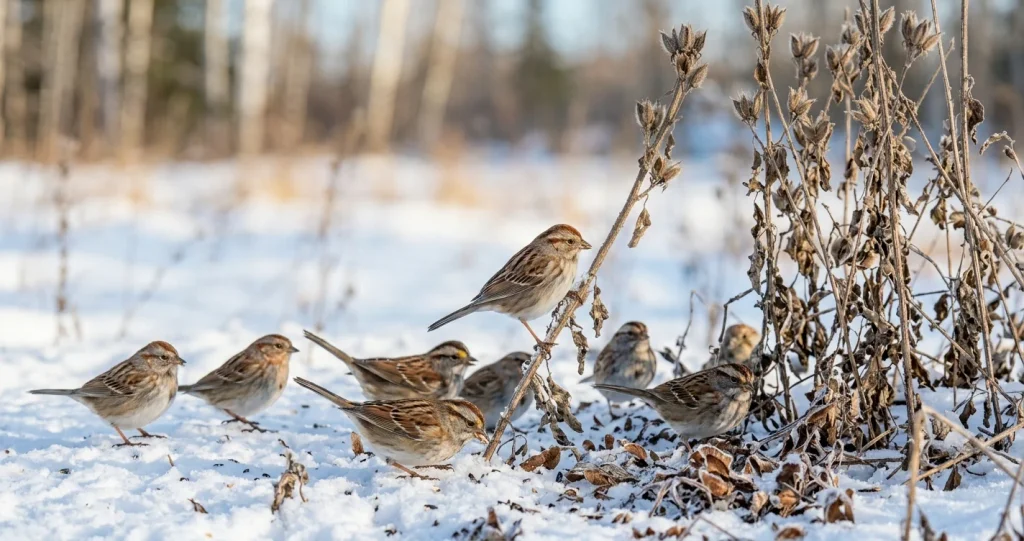
American tree sparrows rely heavily on seeds during the nonbreeding season.
Their diet can vary with habitat and food availability.
Seeds From Grasses and Wild Plants
Seeds from grasses and herbaceous plants are important winter foods.
The birds often search among dried stems and low vegetation, picking up small seeds from the ground.
They may also feed directly from standing plants.
Weed Seeds Are Valuable Food
Plants sometimes dismissed as weeds can produce seeds used by winter birds.
However, this does not mean gardeners should encourage invasive species.
Native and noninvasive plants can provide food without creating additional ecological problems.
Do They Eat Insects?
American tree sparrows consume more animal food during the breeding season, when insects and other small invertebrates are available.
In winter, seeds generally become more prominent in their diet.
They may still consume other foods opportunistically when available.
Will They Visit Bird Feeders?
Yes, American tree sparrows sometimes visit feeding stations.
They often forage on the ground or beneath feeders rather than remaining on elevated perches.
Millet and other small seeds may attract them in suitable regions.
However, feeder visits vary between individuals and locations.
Why Native Seed-Producing Plants Matter
One of the most effective ways to support seed-eating winter birds is to maintain plants that naturally provide food.
Standing Seed Heads Become Winter Pantries
Many flowering plants produce seeds during late summer and fall.
When their stems remain standing, those seeds may continue providing food during winter.
This can benefit sparrows and other seed-eating birds.
Native Grasses Provide Natural Food
Native grasses produce seeds that can support various wildlife species.
Their stems also create structure near the ground.
Species selection should reflect local climate, soil, and regional ecology.
Wildflowers Support More Than Birds
Native wildflowers can benefit insects during the growing season and birds after flowering.
Their seeds may persist into fall or winter.
The specific wildlife value depends on the plant species and local conditions.
Why Leaving Plants Standing Helps
Removing every dried stem in fall can eliminate potential feeding opportunities.
Allowing some healthy vegetation to remain until spring may preserve seeds and provide shelter.
This approach is particularly useful in gardens designed to support wildlife throughout the year.
How to Identify American Tree Sparrows
Winter sparrows can be challenging to distinguish because several species share brown, gray, and rusty markings.
Look for the Rusty Crown
American tree sparrows typically show a warm rusty crown.
The color contrasts with the grayer face.
Check the Breast Spot
A small dark spot often appears near the center of the otherwise relatively plain breast.
This can be helpful, although the spot may be difficult to see in some postures.
Examine the Bill
The two-toned bill is another useful identification feature.
The upper portion is generally dark, while the lower portion is yellowish.
Compare Similar Species
| Species | Helpful identification features | Typical winter habitat |
|---|---|---|
| American tree sparrow | Rusty cap, central breast spot, two-toned bill | Weedy fields, shrubby edges |
| Chipping sparrow | Slimmer appearance, relatively plain breast, seasonal plumage changes | Open woodland, lawns, brush |
| Field sparrow | Pinkish bill, pale eye ring, relatively plain face | Brushy fields, grasslands |
| Song sparrow | Strong breast streaking, often converging into a central spot | Shrubby edges, wetlands, gardens |
Use multiple field marks together.
Geographic range, vocalizations, and behavior can also help confirm identification.
American Tree Sparrow Behavior and Winter Flocks
American tree sparrows often become more social outside the breeding season.
Feeding in Groups
Small groups may search together through fields or beneath feeders.
Flocking can help birds locate productive feeding areas, although the benefits vary with circumstances.
Ground-Hopping Behavior
These sparrows commonly move through low vegetation with short hops.
They may pause frequently to inspect the ground for seeds.
Sharing Habitat With Other Birds
American tree sparrows can occur alongside dark-eyed juncos, song sparrows, and other wintering birds.
Mixed feeding groups may gather wherever food is concentrated.
Why They Suddenly Disappear
A flock may leave a feeding location when food becomes scarce or conditions change.
The birds may simply move to another nearby habitat.
Seasonal movement patterns can also influence local abundance.
Common Threats to Wintering Tree Sparrows
American tree sparrows face several challenges during migration and winter.
Habitat Loss
The removal of brushy fields, native grasslands, and weedy edges can reduce available feeding habitat.
Development and intensive land management may simplify landscapes that once provided diverse winter resources.
Window Collisions
Like other small birds, American tree sparrows may collide with glass.
Windows that reflect vegetation or sky can be especially hazardous.
Outdoor Cats
Free-roaming domestic cats can threaten small ground-feeding birds.
Keeping cats indoors or in secure outdoor enclosures reduces this risk.
Severe Winter Conditions
Extended snow cover, freezing precipitation, and extreme cold can make feeding more difficult.
Birds may respond by changing feeding locations or moving to more favorable areas.
Changing Northern Ecosystems
Environmental changes across breeding and wintering regions may affect habitat availability.
The effects vary by region and may interact with other pressures.
In Your Own Yard: How to Help American Tree Sparrows
Supporting American tree sparrows does not require a large property.
Small changes can improve habitat for many winter birds, even where this particular species is uncommon.
Leave Native Seed Heads Standing
Avoid cutting back every dried wildflower and grass in fall.
Allow suitable native plants to retain their seeds through winter.
These plants can provide natural feeding opportunities.
Plant Native Grasses and Wildflowers
Choose regionally appropriate native species that produce seeds.
Local native plant societies and university Extension services can help identify suitable options.
A mixture of plant heights and growth forms can create more varied habitat.
Maintain Dense Shrubs
Shrubs provide shelter and cover near feeding areas.
Where possible, retain native shrubs and avoid excessive winter pruning.
Offer Appropriate Birdseed
In regions where American tree sparrows occur, a feeder offering small seeds may attract them.
White proso millet is commonly used for ground-feeding sparrows.
Use a clean tray or other suitable feeder design rather than scattering large amounts of seed directly onto wet ground.
Remove spoiled seed promptly.
Keep Feeding Areas Clean
Bird feeders can concentrate wildlife and increase the risk of disease transmission.
Clean feeders regularly and remove accumulated seed waste.
If sick birds appear, temporarily discontinue feeding and follow local wildlife agency guidance.
Provide Safe Drinking Water
A clean birdbath can provide water when natural sources are frozen.
A properly maintained heated birdbath may be useful in colder climates.
Follow electrical safety instructions and replace dirty water.
Reduce Window Hazards
Apply effective bird-safe markings to the exterior of large windows.
Keep feeders positioned according to established bird-collision prevention guidance.
Protect Birds From Pets
Keep domestic cats indoors or use secure outdoor enclosures.
Supervise dogs near feeding areas when possible.
Preserve a Little Winter Messiness
A garden does not need to look abandoned to benefit wildlife.
Leaving a corner of standing grasses, seed heads, and sheltered vegetation can provide resources while the rest of the yard remains maintained.
Common Mistakes to Avoid
Some well-intentioned gardening habits can reduce winter bird habitat.
Clearing Every Plant in Fall
Removing all dried vegetation eliminates potential seed sources.
Leave selected healthy native plants standing where practical.
Relying Only on Feeders
Feeders can supplement natural foods, but they do not replace diverse habitat.
Native plants, shrubs, and protected ground areas provide resources that feeders alone cannot offer.
Using Invasive Seed-Producing Plants
Not every plant that produces seeds is environmentally beneficial.
Choose native or noninvasive species appropriate for your region.
Allowing Feeders to Become Dirty
Old seed, damp debris, and accumulated droppings can create unhealthy conditions.
Maintain feeding stations consistently.
Approaching Birds Too Closely
Repeated disturbance can interrupt feeding.
Observe from a respectful distance and allow birds to move naturally.
Frequently Asked Questions
1. Do American tree sparrows stay in the United States all winter?
Many American tree sparrows spend winter in parts of the United States, especially northern and central regions.
Their distribution varies by year, habitat, and weather.
Most breed farther north in Alaska and Canada before returning to their breeding areas.
2. What is the best food for American tree sparrows at backyard feeders?
Small seeds, particularly white proso millet, may attract American tree sparrows.
They often prefer feeding close to the ground.
Natural seeds from native grasses and wildflowers are also valuable.
Keep feeding areas clean and avoid offering spoiled food.
3. How can I tell an American tree sparrow from a chipping sparrow?
American tree sparrows typically show a rusty crown, a small central breast spot, and a two-toned bill.
Chipping sparrows are usually slimmer and have different facial markings and bill coloration.
Season, location, and several field marks should be considered together.
Conclusion
The next time you see a small, rusty-capped bird searching beneath snowy garden plants, take a closer look.
It may be an American tree sparrow, a remarkable northern traveler that depends on seeds, protective vegetation, and suitable winter habitat.
Helping these birds does not require complicated equipment or major landscaping changes.
Leaving native seed heads standing, preserving shrubs, maintaining clean feeding stations, and reducing common hazards can make a meaningful difference for winter wildlife.
The smallest details in a garden often matter most.
A few dried stems, a patch of native grass, and a sheltered corner may provide exactly what a hungry winter visitor needs.
External Sources
American Tree Sparrow — Illinois DNR Species Fact Sheet (PDF)
This state wildlife agency fact sheet describes the species’ distinguishing markings, Illinois winter habitats, flocking behavior, and diet. dnr.illinois.gov