
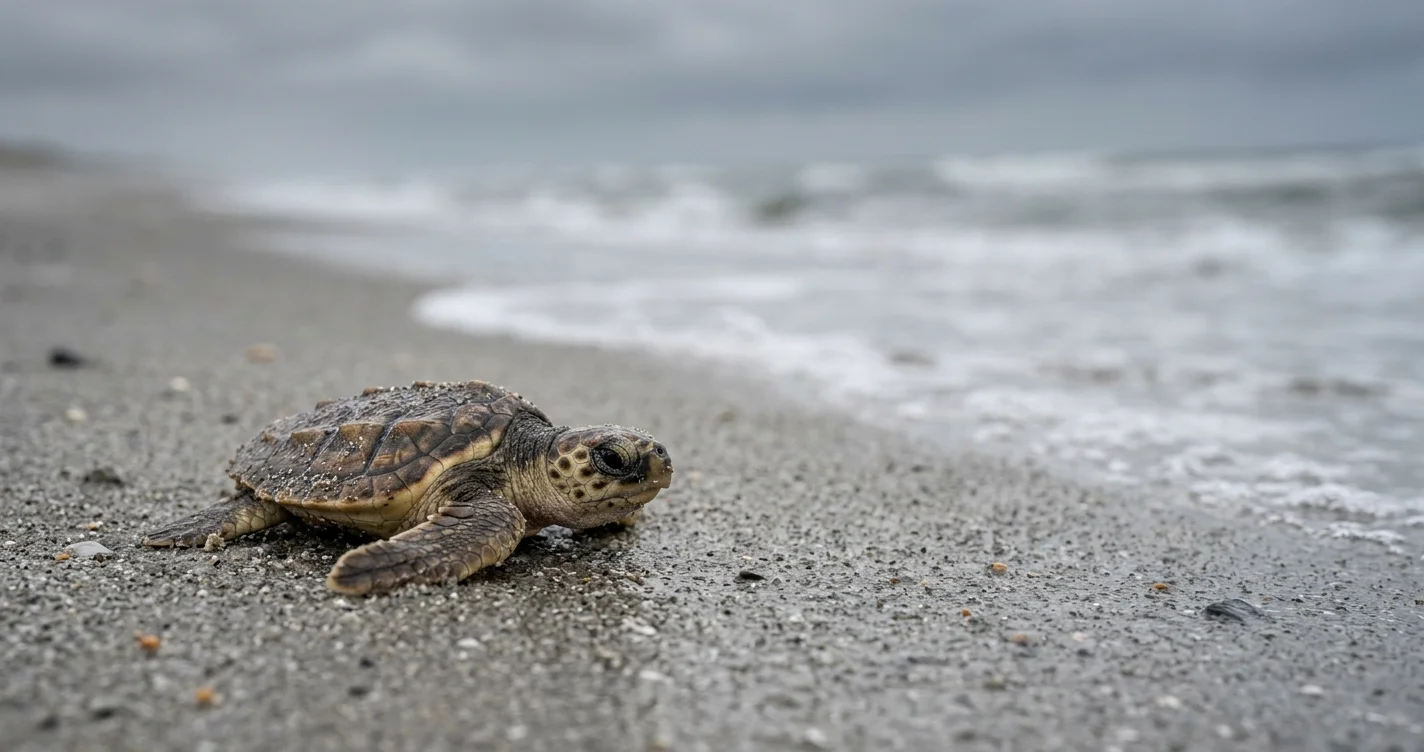
A sea turtle lies motionless on a Massachusetts beach in November. The wind is bitter, the sand is cold, and the animal barely responds. At first glance, it may appear lifeless. Yet this turtle could still be alive—and in urgent need of professional rescue.
Every fall, cold-stunned sea turtles wash ashore along Cape Cod, sometimes in surprisingly large numbers. These ocean travelers, built for warmer waters, become trapped when sea temperatures drop faster than they can escape.
The phenomenon is especially striking because sea turtles spend most of their lives in the ocean. They can swim enormous distances, navigate coastal waters, and survive challenges that would overwhelm many other animals. But a sudden drop in water temperature can leave them helpless.
Cape Cod’s distinctive coastline makes the situation particularly dangerous.
Understanding why these strandings happen, how cold affects a turtle’s body, and what beachgoers should do when they find one can make a meaningful difference.
Table of Contents
- What Are Cold-Stunned Sea Turtles?
- Why Cape Cod Becomes a Stranding Hotspot
- Cold-Stunned Sea Turtles: How Cold Affects Their Bodies
- Which Sea Turtle Species Strand on Cape Cod?
- When Does Cold-Stunning Season Begin?
- What Happens During a Sea Turtle Rescue?
- How Rehabilitation Helps Sea Turtles Recover
- Why These Strandings Matter for Conservation
- What to Do if You Find a Cold-Stunned Sea Turtle
- In Your Own Yard: Helping Coastal Wildlife
- Frequently Asked Questions
What Are Cold-Stunned Sea Turtles?
Sea turtles are reptiles, which means their body temperature is strongly influenced by the surrounding environment.
Unlike mammals that generate substantial internal heat to maintain a relatively stable body temperature, sea turtles depend heavily on environmental warmth.
They are adapted to marine life, but prolonged exposure to unusually cold water can disrupt their normal physiological functions.
This condition is known as cold-stunning.
A Dangerous Response to Falling Temperatures
As water temperatures fall, a sea turtle’s metabolism slows.
The animal may become sluggish, swim less effectively, and eventually lose the ability to move normally.
In severe cases, it may float helplessly or become stranded on shore.
Cold-stunning is not simply ordinary winter dormancy. It is a potentially life-threatening medical emergency.
Affected turtles can develop additional complications, including dehydration, injuries, and infections.
Why a Motionless Turtle May Still Be Alive
Severely cold-stunned turtles may show very little visible movement.
Their breathing and other bodily functions can become difficult to detect without specialized assessment.
This is one reason trained responders treat stranded turtles cautiously, even when they appear unresponsive.
A beachgoer should never assume a motionless sea turtle is dead or attempt to test its responsiveness.
The appropriate response is to contact authorized wildlife rescuers immediately.
Why Cape Cod Becomes a Stranding Hotspot
Cape Cod’s geography helps explain why the region experiences recurring cold-stunning events.
The peninsula curves around Cape Cod Bay, creating a partially enclosed coastal area.
During warmer months, juvenile sea turtles may enter the bay to feed.
As autumn progresses, some fail to leave before conditions become dangerous.
The Hook-Shaped Coastline
Cape Cod extends eastward into the Atlantic Ocean before curving northward.
This unusual shape can complicate the movement of turtles trying to reach warmer waters.
Turtles in Cape Cod Bay may encounter coastlines that do not lead directly toward an open southward escape route.
As temperatures fall, their swimming ability may decline before they successfully leave the area.
Rapid Seasonal Cooling
Cape Cod Bay undergoes substantial seasonal temperature changes.
Water that was suitable for sea turtles during summer and early fall can become dangerously cold later in the year.
Turtles that remain in the bay may experience prolonged exposure to temperatures below their normal tolerance.
The precise temperature at which cold-stunning develops varies with species, individual condition, and exposure duration.
Wind and Currents Push Turtles Toward Shore
Once turtles become weak or incapacitated, they are less able to control their movement.
Wind and water circulation can transport them toward beaches.
Certain wind conditions may increase the likelihood of turtles washing ashore along the bay’s coastline.
This is why stranding activity can change dramatically from one day to the next.
Why Cape Cod Is Different From an Open Coast
On a relatively open coastline, a turtle may have a more direct route toward offshore or southward waters.
Cape Cod Bay’s enclosed shape creates additional navigational challenges.
Combined with autumn cooling and changing winds, this geography helps explain the region’s unusual concentration of cold-stunned turtle strandings.
Cold-Stunned Sea Turtles: How Cold Affects Their Bodies
The science of cold-stunning involves more than a turtle simply feeling cold.
Sea turtles rely on temperature-sensitive biological processes that influence movement, circulation, digestion, and immune function.
When those processes slow too far, the animal can no longer function normally.
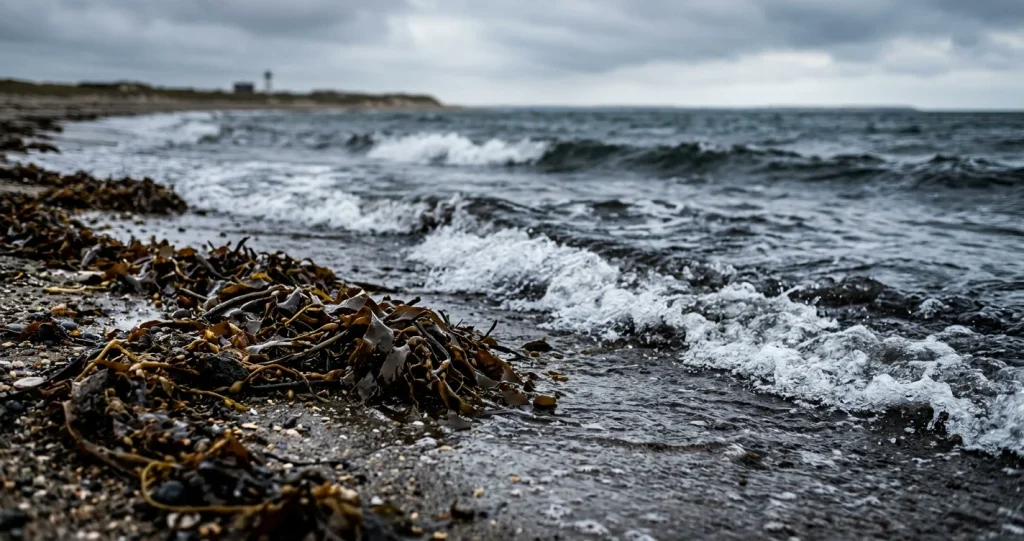
Step 1: Water Temperature Drops
During autumn, coastal water temperatures decline.
Sea turtles can tolerate a range of temperatures, but prolonged exposure to cold water creates increasing physiological stress.
Cold-stunning is often associated with water temperatures around 50°F (10°C) or lower, although this is not a universal threshold for every turtle.
Species, size, health, and duration of exposure all influence the response.
Step 2: Metabolism Slows
As ectothermic animals, sea turtles experience temperature-related changes in metabolic activity.
When their bodies cool, many biochemical processes slow.
Muscle performance may decline, and normal movement becomes increasingly difficult.
The turtle may stop feeding or become unable to swim effectively.
Step 3: Swimming Ability Declines
A healthy sea turtle can move through water using powerful flipper strokes.
A cold-stunned turtle may lose the coordination and strength required for normal swimming.
Some individuals become lethargic and float near the surface.
Others may be carried by currents rather than actively navigating.
This loss of mobility can make escape from cold water increasingly unlikely.
Step 4: Additional Medical Problems Develop
Prolonged cold exposure can contribute to serious physiological disturbances.
Affected turtles may experience problems involving circulation, electrolyte balance, and organ function.
Immune responses may also be impaired, increasing vulnerability to infections.
Some stranded turtles have pneumonia or other complications requiring veterinary treatment.
Not every turtle develops the same problems, which is why individual medical assessment is essential.
Step 5: The Turtle Becomes Stranded
When a turtle can no longer swim effectively, winds and currents may carry it toward shore.
The animal may be deposited on a beach, where exposure to cold air creates further danger.
Stranding does not necessarily mean the turtle has died.
However, survival often depends on rapid discovery, appropriate handling, and professional rehabilitation.
Why Rapid Warming Is Not the Answer
A common assumption is that a cold turtle should be warmed as quickly as possible.
In reality, sudden warming can create additional physiological stress.
Professional rehabilitation teams use controlled temperature management and veterinary monitoring.
The appropriate warming schedule depends on the turtle’s condition and medical needs.
Members of the public should not place stranded sea turtles in warm water, use heating pads, or attempt to warm them indoors.
The safest action is to notify trained responders and follow their instructions.
Which Sea Turtle Species Strand on Cape Cod?
Several sea turtle species occur in the waters around Massachusetts.
However, cold-stunning events on Cape Cod most often involve particular species and age groups.
Kemp’s Ridley Sea Turtle
The Kemp’s ridley (Lepidochelys kempii) is especially associated with Cape Cod cold-stunning events.
It is one of the world’s most endangered sea turtle species.
Juvenile Kemp’s ridleys use coastal feeding habitats along the Atlantic seaboard.
Some enter Cape Cod Bay during warmer months and remain there as temperatures decline.
Their relatively small size and vulnerability to cold conditions contribute to their prominence in regional rescue efforts.
Green Sea Turtle
Green sea turtles (Chelonia mydas) also appear among Cape Cod’s cold-stunned strandings.
Despite their name, green turtles are not necessarily green on the outside. The common name refers to the color of their body fat.
Young green turtles may use coastal habitats for feeding and development.
When trapped in cold waters, they can experience the same dangerous loss of movement and physiological function.
Loggerhead Sea Turtle
Loggerheads (Caretta caretta) are another species occasionally affected.
They are generally larger than the juvenile Kemp’s ridleys commonly found on Cape Cod beaches.
Loggerheads can also become incapacitated during severe cold exposure.
Their medical needs may differ because of body size, injury patterns, and individual health.
Why Species Identification Matters
Different sea turtle species have different ecological characteristics and conservation concerns.
Rescue organizations record species, size, location, and condition when evaluating stranded animals.
These observations help researchers understand seasonal patterns and support conservation planning.
For beachgoers, however, identifying the species is less important than reporting the turtle promptly.
When Does Cold-Stunning Season Begin?
Cape Cod’s cold-stunning season generally occurs during late fall and early winter.
Many strandings happen in November and December, although timing varies from year to year.
Autumn Creates the Risk
During summer, coastal waters may be warm enough for juvenile sea turtles to feed actively.
As autumn advances, temperatures begin falling.
Turtles that remain in Cape Cod Bay become increasingly vulnerable.
Weather Influences Daily Strandings
Cold spells, wind direction, and coastal water movement can influence when turtles reach beaches.
Some days may bring relatively few strandings.
Other periods can produce substantial rescue activity.
This variability makes ongoing beach monitoring especially important during the season.
Does Climate Change Affect Cold-Stunning?
Scientists are investigating how changing ocean temperatures and shifting sea turtle distributions influence cold-stunning patterns.
Warmer waters may allow some turtles to travel farther north or remain in northern habitats longer.
However, cold-stunning events depend on multiple interacting factors, including seasonal cooling, turtle behavior, and coastal geography.
It would be misleading to attribute every change in stranding numbers to one cause.
Long-term monitoring is essential for understanding these trends.
What Happens During a Sea Turtle Rescue?
Sea turtle rescue on Cape Cod involves trained volunteers, conservation organizations, veterinary professionals, and rehabilitation facilities.
One of the best-known organizations involved in local stranding response is Mass Audubon’s Wellfleet Bay Wildlife Sanctuary.
Beach Patrols and Discovery
During cold-stunning season, trained volunteers search sections of Cape Cod’s beaches for stranded turtles.
Patrols may be organized around weather conditions and expected stranding activity.
Volunteers document locations and help arrange appropriate transport.
Initial Assessment
When a turtle is found, authorized responders assess its condition.
They may document body size, visible injuries, responsiveness, and other relevant observations.
Because severe cold-stunning can make signs of life difficult to detect, assessment requires appropriate training.
Transport to Rehabilitation
Rescued turtles are transported to facilities equipped to provide specialized care.
In New England, the New England Aquarium’s Sea Turtle Hospital plays an important role in treating cold-stunned turtles.
Other accredited facilities may also assist, particularly when stranding numbers are high.
Veterinary Treatment
Treatment depends on the animal’s condition.
Veterinary teams may provide controlled warming, fluid support, diagnostic testing, and treatment for infections or injuries.
Some turtles recover relatively quickly.
Others require prolonged rehabilitation because of serious medical complications.
How Rehabilitation Helps Sea Turtles Recover
A successful rescue does not end when a turtle reaches a hospital.
Cold-stunned sea turtles may need extensive medical care before they can safely return to the ocean.
Gradual Stabilization
The initial goal is to stabilize the animal.
Veterinary staff carefully manage temperature and monitor physiological responses.
Sudden changes can be harmful, so treatment is individualized.
Treating Complications
Some turtles arrive with pneumonia, dehydration, or other medical problems.
Diagnostic imaging, laboratory tests, and veterinary examinations may help guide treatment.
Medication and supportive care are provided when appropriate.
Restoring Normal Swimming
As turtles recover, rehabilitation teams monitor their movement and swimming behavior.
A turtle must be able to swim, dive, and function adequately before release.
Normal activity is an important sign of recovery, but medical clearance is also necessary.
Returning Turtles to the Ocean
Recovered turtles are released only when conditions are suitable.
Rehabilitation organizations coordinate releases in waters warm enough for the species and season.
Some animals may be transported to more southern locations when northern waters remain too cold.
Release decisions depend on veterinary assessment, environmental conditions, and applicable wildlife permits.
Why These Strandings Matter for Conservation
Cold-stunning is not only a local wildlife emergency.
It also has broader implications for marine conservation.
Protecting Vulnerable Species
Kemp’s ridley sea turtles are federally protected and face multiple threats throughout their life cycle.
Rescuing juveniles can contribute to conservation efforts by giving individual turtles a chance to survive and return to the wild.
However, rescue alone cannot eliminate the wider threats facing sea turtle populations.
Learning From Stranding Records
Stranding data provide valuable information about sea turtle distribution, seasonal movements, and environmental conditions.
Researchers can examine patterns across years to investigate changes in the number, timing, and locations of strandings.
These records help identify questions that require further study.
The Importance of Coastal Communities
Residents, volunteers, and beach visitors can contribute to conservation by reporting stranded animals.
Community awareness helps ensure that turtles are discovered and referred to trained professionals.
The key is responsible reporting rather than attempting independent rescue or rehabilitation.
What to Do if You Find a Cold-Stunned Sea Turtle
Finding a sea turtle on a cold beach can be alarming.
The most important thing is to avoid improvising treatment.
Sea turtles are protected wildlife, and improper handling can cause additional harm.
Contact an Authorized Rescue Organization
On Cape Cod, report stranded sea turtles to Mass Audubon’s Wellfleet Bay Wildlife Sanctuary or the appropriate local marine animal stranding network.
For immediate local assistance, the Wellfleet Bay Wildlife Sanctuary’s widely published sea turtle stranding hotline is 508-349-2615. Confirm current contact information through the organization when possible.
If you are elsewhere in the United States, contact the NOAA Fisheries regional stranding network or local authorized marine wildlife responders.
Give an Accurate Location
Provide the beach name, nearby landmarks, and the turtle’s approximate location.
If safe, note whether the animal is near the waterline or exposed to incoming waves.
Photographs taken from a respectful distance may help responders assess the situation.
Do Not Put the Turtle Back in the Ocean
Returning a cold-stunned turtle to cold water can be dangerous.
The animal may be unable to swim or escape the conditions that caused the emergency.
Leave decisions about transport and treatment to trained professionals.
Do Not Attempt to Warm the Turtle
Avoid hot water, heating pads, blankets warmed with electrical devices, or other improvised warming methods.
Do not feed the turtle or attempt to give it water.
Rapid warming and inappropriate handling can create serious complications.
Follow Responder Instructions
Stay at a safe distance and keep pets and bystanders away.
If rescuers provide specific instructions, follow them carefully.
Do not move or handle the turtle unless authorized responders explicitly direct you to do so.
In Your Own Yard: Helping Coastal Wildlife
Even if you live far from Cape Cod, there are practical ways to support marine wildlife.
For coastal residents, small everyday choices can reduce some of the pressures affecting sea turtles and other animals.
Reduce Plastic Waste
Plastic debris can enter waterways and eventually reach marine habitats.
Secure household trash, reduce unnecessary disposable plastics, and dispose of fishing line responsibly.
Participating in organized shoreline cleanups can also help remove debris.
Keep Beaches Wildlife-Friendly
Avoid disturbing wildlife resting or nesting along shorelines.
Keep dogs under control and follow local beach regulations.
Do not approach sea turtles for close-up photographs.
Use Outdoor Lighting Responsibly
In sea turtle nesting areas, artificial lighting can interfere with nesting females and hatchlings.
Use turtle-friendly lighting practices where recommended by local conservation authorities.
Cape Cod’s cold-stunning events are different from nesting-related concerns, but responsible coastal lighting remains an important conservation measure in suitable regions.
Support Established Rescue Organizations
Wildlife rehabilitation requires trained staff, specialized equipment, and ongoing funding.
Supporting reputable conservation and rehabilitation organizations can help sustain these services.
Volunteering should take place through authorized programs rather than independent animal handling.
Learn Your Local Stranding Contacts
If you regularly visit beaches, identify the appropriate wildlife response organization before an emergency occurs.
Save its contact information and familiarize yourself with reporting procedures.
Knowing whom to call is often more useful than attempting to intervene directly.
Frequently Asked Questions
1. Can a cold-stunned sea turtle recover?
Yes. Some cold-stunned sea turtles recover with appropriate veterinary treatment and rehabilitation.
Recovery depends on factors such as the severity and duration of cold exposure, injuries, infections, and overall condition.
Some turtles require weeks or months of care, while others do not survive despite treatment.
2. Why are so many cold-stunned sea turtles found on Cape Cod?
Cape Cod Bay’s geography can make it difficult for some turtles to leave as autumn water temperatures fall.
When turtles become weak or incapacitated, winds and currents may carry them onto beaches.
The combination of seasonal cooling, coastal shape, and water movement contributes to recurring strandings.
3. Should I put a stranded sea turtle back in the water?
No. A cold-stunned turtle may be unable to swim and could be exposed to the same dangerous cold conditions.
Do not return it to the ocean or attempt home treatment.
Contact authorized marine wildlife responders and follow their instructions.
Conclusion
A motionless sea turtle on a winter beach may look like an animal that has reached the end of its journey.
But appearances can be deceiving.
For cold-stunned sea turtles, Cape Cod’s cold waters and unusual coastline can turn a seasonal migration challenge into a life-threatening emergency.
As temperatures fall, their metabolism and swimming ability may decline until winds and currents carry them ashore.
Fortunately, trained rescuers and veterinary teams can sometimes give these vulnerable animals a second chance.
The most important lesson for beachgoers is simple: report stranded turtles promptly, keep a respectful distance, and never attempt to return them to cold water or warm them without professional guidance.
That quiet turtle on the sand may still have thousands of miles of ocean ahead of it.
External Sources
1. Cold-Stunning and Sea Turtles — Frequently Asked Questions
Explain temperature-related physiological changes, stranding risks, conservation implications, and professional rescue. NOAA Fisheries
2. Protecting Sea Turtles on Cape Cod
Explain the local stranding season, Cape Cod rescue efforts, and instructions for beachgoers who find a turtle. Mass Audubon — Wellfleet Bay Wildlife Sanctuary
3. Sea Turtle Rescue and Rehabilitation
Describe veterinary rehabilitation, medical stabilization, transport, and release of rescued turtles. New England Aquarium
4. Cold Snaps and Stunned Sea Turtles
Explain why cold water can be fatal, how rescuers gradually warm turtles, and how the public can support response efforts. NOAA Fisheries — June 12, 2026