
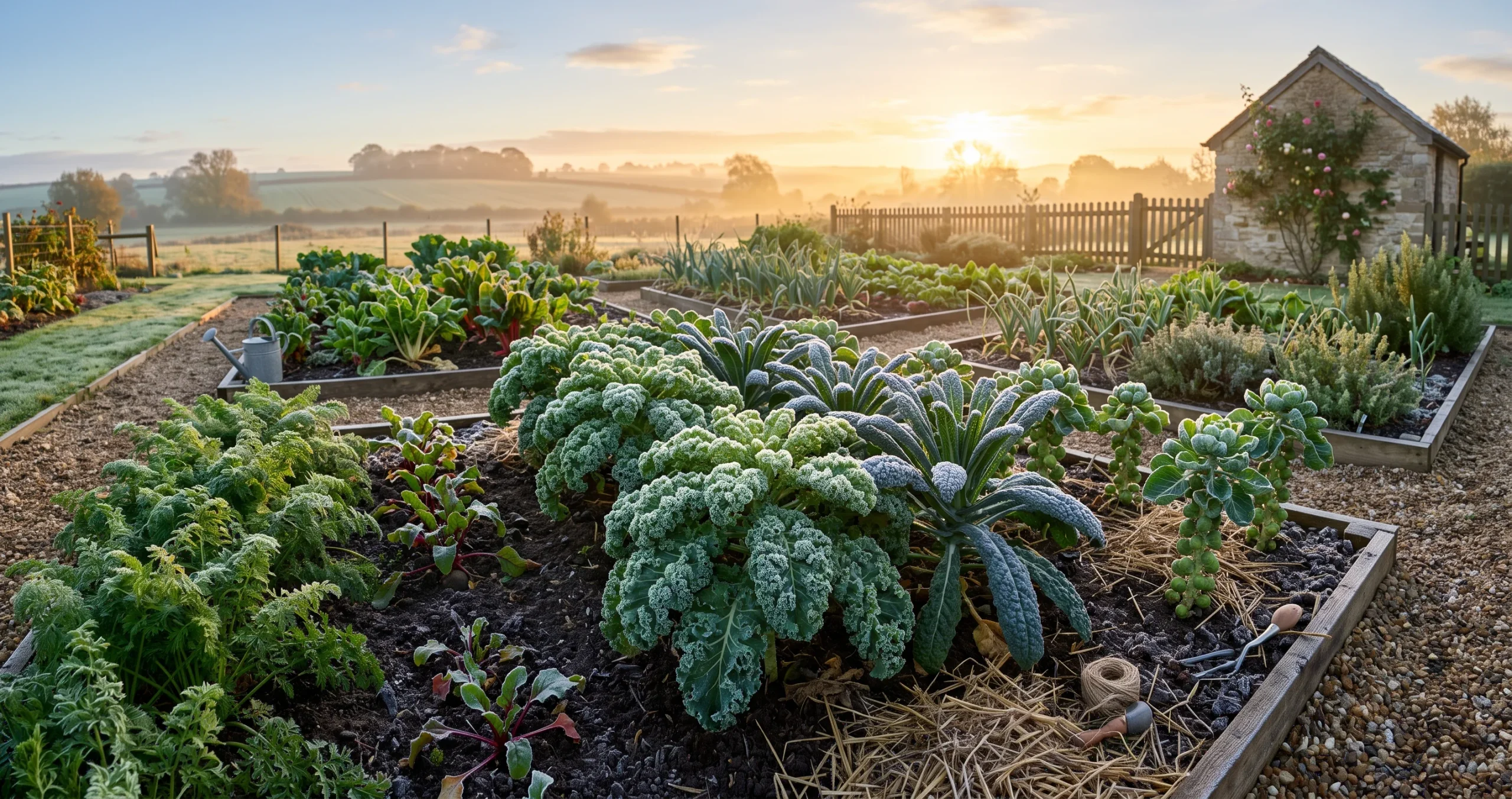
Carrots, parsnips, kale, and Brussels sprouts can develop a noticeably sweeter flavor after exposure to cold weather. This is not simply a gardening myth. It reflects real changes happening inside living plant tissues.
As temperatures fall, cold-tolerant vegetables begin adjusting their metabolism. Soluble sugars can accumulate, carbohydrate use changes, and cells prepare for the water stress associated with freezing.
To us, the result can taste sweeter. To the plant, however, these changes are part of surviving cold weather.
Table of Contents
- Why vegetables get sweeter after frost
- The vegetable garden becomes a chemistry lab
- Why plants accumulate soluble sugars
- How freezing can dehydrate a plant
- Does frost convert starch into sugar?
- Why kale tastes sweeter after frost
- Why carrots become sweeter in cold weather
- Why parsnips improve after cold weather
- Why Brussels sprouts taste better after frost
- Other vegetables that respond to cold
- When frost starts damaging vegetables
- The sweetness is an accident from our point of view
- FAQ
- Conclusion
Why Vegetables Get Sweeter After Frost
The phenomenon of vegetables sweeter after frost begins with a basic problem faced by plants: they cannot escape cold weather.
When temperatures decline, many cold-tolerant plants undergo cold acclimation. This is a physiological process that prepares their tissues to tolerate colder conditions.
Cold acclimation can begin before an actual frost occurs. Exposure to cool but nonfreezing temperatures can trigger changes in gene expression, membrane composition, carbohydrate metabolism, proteins, antioxidants, and cellular water relations.
Soluble sugars are an important part of this response.
Depending on the vegetable and plant tissue, concentrations of glucose, fructose, sucrose, and other soluble carbohydrates may change as temperatures decline.
These metabolic changes help explain why some vegetables harvested during cold weather can taste different from the same crops harvested earlier in the season.
The Vegetable Garden Becomes a Chemistry Lab When Temperatures Fall
A garden may appear quiet on a cold autumn morning, but its plants are undergoing substantial biochemical changes.
Growth generally slows as temperatures decline. At the same time, cold-responsive metabolic pathways can become increasingly important.
Sugars may accumulate because their production, consumption, transport, and storage are changing. Stored carbohydrates may also be mobilized in certain tissues.
The result varies dramatically among species.
A kale leaf, for example, does not respond exactly like a carrot root. A Brussels sprout bud does not have the same carbohydrate-storage system as a parsnip.
This is why saying simply that “frost turns starch into sugar” does not accurately describe every vegetable.
Why Soluble Sugars Matter
Sugar is not only something that makes food taste sweet.
Inside a plant, soluble sugars participate in energy metabolism, signaling, osmotic regulation, and responses to environmental stress.
During cold acclimation, higher concentrations of certain soluble carbohydrates can contribute to osmotic adjustment. They may also help stabilize proteins and cellular membranes when tissues experience cold-induced dehydration.
These functions become particularly important when temperatures approach or fall below freezing.
How a Frozen Plant Can Actually Become Dehydrated
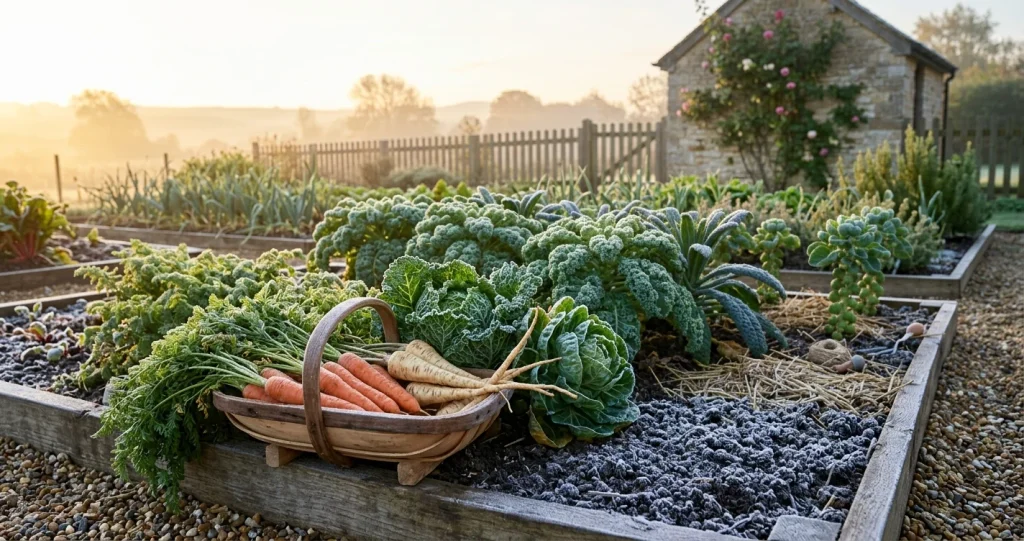
One of the strangest parts of cold-weather plant biology is that a plant surrounded by frozen water can suffer from dehydration.
When temperatures fall sufficiently, ice commonly forms first outside living cells.
As extracellular water freezes, water is drawn from the cellular interior toward the extracellular environment. The cells consequently lose water and shrink.
This is known as freeze-induced dehydration.
For the plant, surviving freezing therefore involves more than simply preventing ice from appearing.
Cells must also tolerate substantial changes in water balance while maintaining functional membranes and proteins.
Accumulating compatible solutes, including sugars, is one component of this complex survival system.
Sugar Is Not Simply Plant Antifreeze
A popular explanation for vegetables sweeter after frost says that plants produce sugar as a natural antifreeze.
That analogy is useful only up to a point.
Dissolved compounds can influence freezing behavior, but the remarkable cold tolerance of plants cannot generally be explained by sugars simply lowering the freezing point of cellular water.
Their roles are more complicated.
Soluble sugars can participate in osmotic adjustment and interact with cellular structures. They may help stabilize membranes and proteins during the dehydration associated with freezing.
Cold tolerance also involves many other processes, including changes in membrane lipids, protective proteins, antioxidants, gene expression, and cellular metabolism.
Calling sugar “antifreeze” therefore hides much of the fascinating biology.
Does Frost Really Convert Starch Into Sugar?
The statement that frost converts starch into sugar is partly based on real plant physiology, but it is often presented too broadly.
Plants can store carbohydrates as starch. Under certain cold conditions, starch metabolism changes and enzymes involved in starch degradation can contribute to increased pools of soluble carbohydrates.
However, this is not the only reason some vegetables become sweeter.
Cold can affect how quickly plants produce, transport, consume, and store carbohydrates. Growth may slow, changing the balance between sugar production and sugar use.
The mechanism also depends strongly on the plant tissue.
Roots, leaves, stems, and buds perform different biological functions and therefore do not necessarily respond identically.
The more accurate explanation is that cold reorganizes carbohydrate metabolism, sometimes resulting in increased soluble sugars that humans can taste.
Why Kale Tastes Sweeter After Frost
Kale is one of the vegetables most strongly associated with cold-weather flavor improvement.
Unlike heat-loving vegetables such as peppers and cucumbers, kale is a cool-season crop capable of tolerating substantial cold.
As temperatures fall, kale undergoes cold acclimation. Changes in soluble carbohydrate levels can contribute to a different balance of flavors within the leaves.
This matters because kale’s flavor is not determined by sugar alone.
The leaves contain numerous compounds contributing to vegetal, pungent, and sometimes bitter flavors. When sweetness increases, our perception of those stronger flavors can change.
This helps explain why cold-grown kale may taste milder or sweeter.
However, not every kale plant responds identically. Variety, plant age, temperature history, growing conditions, and harvest timing can all influence flavor.
Why Carrots Become Sweeter in Cold Weather
Carrots offer a particularly interesting example because the part we eat is a storage root.
Throughout the growing season, that root stores carbohydrates produced by the plant.
When soil temperatures decline, carbohydrate metabolism inside the root can change. Under suitable cold conditions, soluble sugar concentrations may increase.
That can make late-season carrots taste noticeably sweeter.
Cold soil rather than visible frost alone is important here. A carrot does not necessarily need its leaves covered with white frost before metabolic changes begin underground.
This is another reason the phrase vegetables sweeter after frost should not be interpreted too literally. Cool temperatures can influence plant chemistry before freezing occurs.
Why Parsnips Improve After Cold Weather
Parsnips are perhaps the classic example of a root crop associated with winter sweetening.
Gardeners traditionally leave mature parsnips in the soil through periods of cold autumn weather rather than harvesting the entire crop immediately.
There is good horticultural reasoning behind this practice.
Cold soil can increase sugar concentrations in parsnip roots, changing their flavor. University of Minnesota Extension specifically notes that cold soil temperatures influence parsnip flavor by increasing sugar content.
This means two parsnips from the same crop can taste different depending on when they were harvested.
The genetics of the plant have not suddenly changed. Its metabolism has responded to its environment.
That is one of the clearest examples of humans tasting the biochemical consequences of plant cold adaptation.
Why Brussels Sprouts Taste Better After Frost
Brussels sprouts are another vegetable famous for improving during cool autumn weather.
The small structures we eat are compact buds growing along the plant’s stem.
As a member of the Brassica oleracea group, Brussels sprouts are naturally suited to cool-season production. Cold conditions can influence carbohydrate metabolism and flavor within the developing sprouts.
University horticultural guidance commonly recommends harvesting Brussels sprouts during cool fall weather, and their flavor can improve after exposure to cold.
Again, this should not be interpreted as meaning increasingly severe freezing produces increasingly sweet sprouts.
There is an important biological limit.
Other Cold-Loving Vegetables
Several other cool-season vegetables can tolerate frost and may undergo flavor or carbohydrate changes during cold weather.
These include:
- collards
- cabbage
- turnips
- rutabagas
- spinach
- some broccoli varieties
- other hardy leafy greens
Their responses should not be treated as identical.
A cabbage head consists primarily of tightly packed leaves, while a rutabaga is an enlarged storage organ. Their physiology and carbohydrate metabolism differ.
Cultivars within a single vegetable species can also differ significantly in cold tolerance.
For more information about choosing crops for the cooler part of the growing season, see our guide to fall vegetable planting by region on Secrets of the Green Garden.
A Frost Can Improve Flavor — Until It Starts Destroying the Plant
There is an important limit to the idea of vegetables sweeter after frost.
Colder does not always mean sweeter.
Cold acclimation can prepare hardy plants for freezing temperatures, and some vegetables tolerate light or moderate frost remarkably well.
A sufficiently severe or prolonged freeze, however, overwhelms those protective mechanisms.
As extracellular ice continues forming, cells can lose excessive amounts of water. Membranes can become damaged and cellular structures can stop functioning normally.
The consequences often become obvious after the vegetable thaws.
Freeze-damaged tissue may appear:
- limp
- translucent
- water-soaked
- discolored
- soft
- eventually mushy
At this stage, the vegetable is not experiencing beneficial cold acclimation. Its tissues have suffered physical and physiological injury.
There is no universal temperature separating beneficial cold from destructive freezing.
Cold tolerance varies according to species, cultivar, developmental stage, previous acclimation, duration of freezing, wind exposure, soil conditions, and microclimate.
The Sweetness Is an Accident From Our Point of View
This is perhaps the strangest part of the story.
A parsnip is not trying to become delicious.
A kale plant does not increase soluble sugars because it wants to improve a winter salad, and Brussels sprouts did not evolve cold responses so humans would enjoy roasting them.
The plant is responding to environmental stress.
Changes in sugars and other metabolites contribute to energy management, osmotic adjustment, cellular stability, and the larger process of cold acclimation.
Humans simply happen to possess taste receptors that detect one consequence of those biochemical changes.
We experience it as sweetness.
The flavor improvement is therefore essentially a sensory side effect of plant survival physiology.
FAQ About Vegetables Sweeter After Frost
Do vegetables really become sweeter after frost?
Yes, certain vegetables can develop higher soluble sugar concentrations or taste sweeter after exposure to cold conditions. Parsnips, carrots, kale, and Brussels sprouts are well-known examples, although the response varies among crops and cultivars.
Does frost actually turn starch into sugar?
Sometimes starch breakdown contributes to increased soluble carbohydrate levels, but it is not a universal explanation. Cold affects multiple aspects of carbohydrate production, storage, transport, and consumption.
Can vegetables become sweeter without freezing?
Yes. Cold acclimation can begin during cool, nonfreezing conditions. Visible frost is not required before plant metabolism begins responding to falling temperatures.
Why are parsnips sweeter after cold weather?
Cold soil conditions can increase sugar content in parsnip roots. This is why gardeners often delay harvesting mature parsnips until after sustained cool autumn weather.
Why can kale taste better after frost?
Cold acclimation can alter soluble carbohydrate concentrations and the overall balance of flavor compounds in kale leaves. Increased sweetness can make stronger vegetal flavors seem less dominant.
Can a hard freeze ruin vegetables?
Yes. Once freezing exceeds a plant’s tolerance, excessive cellular dehydration and membrane damage can injure or kill tissues. Damaged vegetables can become limp, translucent, water-soaked, or mushy after thawing.
Which vegetables respond most noticeably to cold?
Parsnips, carrots, kale, Brussels sprouts, collards, turnips, rutabagas, and some other cool-season crops are commonly associated with cold-weather flavor changes. The response varies according to species, cultivar, maturity, and environmental conditions.
Conclusion:
The phenomenon of vegetables sweeter after frost is much more fascinating than the familiar claim that frost simply converts starch into sugar.
As temperatures decline, cold-tolerant plants reorganize their physiology. Carbohydrate metabolism changes, soluble sugars can accumulate, osmotic balance shifts, and cells prepare for the dehydration stress associated with freezing.
Those processes evolved to help plants survive.
Yet when we harvest a cold-grown carrot, parsnip, kale leaf, or Brussels sprout, our taste receptors can detect part of that biochemical response.
The sweeter flavor humans enjoy can therefore be a detectable side effect of the remarkable chemistry that helps a living plant cope with winter.