
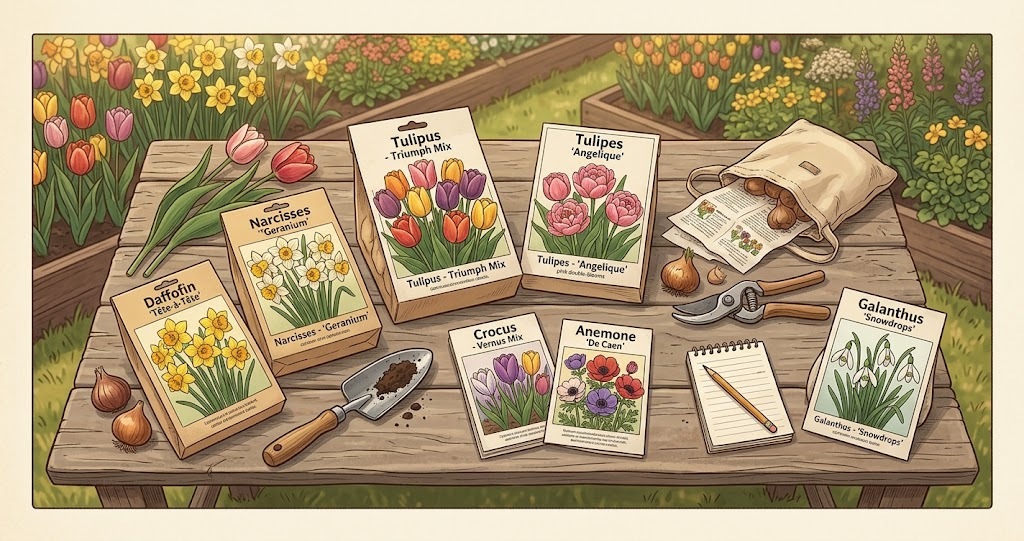
Tulips, daffodils, crocuses, hyacinths, and alliums may feel like fall gardening projects, but waiting until planting season to shop can limit your choices. If you’re wondering when to order spring bulbs, late summer is often the practical answer—even though most hardy spring-flowering bulbs won’t go into the ground until fall.
The distinction is simple: ordering time and planting time are not necessarily the same. Specialty bulb companies and nurseries begin taking orders before fall planting conditions arrive, and popular cultivars can become unavailable as seasonal inventory is reserved.
Ordering earlier gives you time to plan your display and secure the bulbs you want. Then you wait for appropriate fall conditions before planting them.
Table of Contents
- Why Spring Bulbs Are Ordered Before They’re Planted
- When to Order Spring Bulbs
- Why Popular Bulbs Can Sell Out
- Why You Shouldn’t Plant Them in Summer
- When Spring Bulbs Should Actually Go Into the Ground
- How Soil Temperature Affects Planting
- What to Do When Bulbs Arrive Early
- How to Store Bulbs Before Planting
- How to Recognize Healthy Bulbs
- Best Bulbs for Cold-Winter Regions
- Spring Bulbs for the Mid-Atlantic and Midwest
- Spring Bulbs for the Pacific Northwest
- Spring Bulbs for the South
- What Warm-Climate Gardeners Need to Know
- Bulbs for Western and Dry Climates
- Choosing Bulbs for Pollinators
- Planning a Long Spring Bloom Season
- Common Bulb-Ordering Mistakes
- Frequently Asked Questions
- Final Thoughts
Why Spring Bulbs Are Ordered Before They’re Planted
The confusion begins with the phrase “fall bulbs.”
Gardeners commonly use that term for spring-flowering bulbs planted in autumn. Tulips, daffodils, crocuses, hyacinths, and many ornamental alliums belong to this group.
That doesn’t mean you should wait until late fall to start shopping.
Bulb merchants operate on a seasonal inventory cycle. Growers lift bulbs after foliage has matured and the plants enter dormancy. Bulbs are cleaned, graded, stored, and distributed through wholesale and retail channels.
Specialty mail-order companies commonly open their fall bulb catalogs or begin taking orders during summer.
Orders may be accepted before bulbs are ready to ship. Shipping is then scheduled according to the company’s seasonal timeline and, in some cases, the customer’s climate.
This creates an important distinction between reserving a bulb and planting it.
You can order in August without putting anything in the soil in August.
When to Order Spring Bulbs: Why Late Summer Makes Sense
For many U.S. gardeners, August into early September is a useful period for choosing and ordering spring-flowering bulbs.
You’re early enough to find a broad selection but close enough to fall that you can realistically plan where everything will go.
This matters most when you’re looking for specific cultivars.
If all you want is a bag of common yellow daffodils, you may find them at a garden center well into fall. But if you’re searching for a particular species tulip, unusual allium, miniature narcissus, specialty crocus, or carefully coordinated color combination, selection can narrow as orders accumulate.
So when to order spring bulbs depends partly on how particular you are.
Gardeners with flexible plans can shop later.
Gardeners building a specific design benefit from ordering earlier.
Why Popular Bulbs Can Sell Out
Flower bulbs aren’t manufactured continuously throughout the year.
A retailer has access to a finite seasonal crop.
Once a cultivar’s available inventory has been allocated to customer orders, that variety may not return until the following season.
This is particularly relevant for unusual species, newly popular cultivars, specialty collections, and bulbs produced in smaller quantities.
Late summer ordering therefore isn’t about forcing gardeners into an artificial deadline. It reflects the practical realities of seasonal horticultural production.
The same principle applies at local nurseries.
Garden centers receive seasonal shipments, and the best selection is often available relatively early in the sales period. Waiting until the ideal planting weekend can mean shopping after other gardeners have already selected the largest or most desirable bulbs.
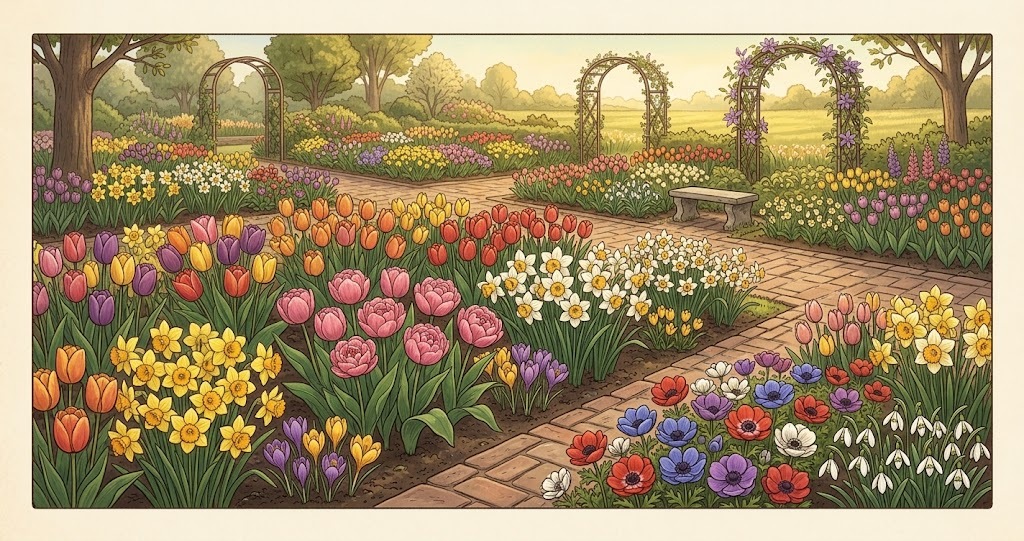
Ordering Early Does Not Mean Planting Early
This is the most important distinction in the entire process.
Late summer can be an excellent ordering window while still being too early to plant many hardy spring-flowering bulbs.
Spring bulbs generally need to establish roots in autumn without being pushed into excessive top growth by warm conditions.
Iowa State University Extension recommends planting spring-flowering bulbs in fall and notes that gardeners should allow time for root development before the ground freezes. Iowa State University Extension — Planting Spring-Flowering Bulbs
Exact timing varies geographically.
Northern gardeners may plant relatively early because winter arrives sooner. Farther south, planting is delayed until soil temperatures cool appropriately.
This is why a nationwide date such as “plant October 15” isn’t useful for everyone.
Follow local Cooperative Extension recommendations for your region.
Why Cool Soil Matters
Hardy spring bulbs evolved around a seasonal cycle.
They grow roots during cool fall conditions, spend winter in a dormant or slowly developing state, and emerge as temperatures rise in spring.
Many familiar spring bulbs also require an extended chilling period to flower properly.
Planting while the soil is still very warm can interfere with the ideal establishment schedule and may contribute to premature growth or disease problems under unfavorable conditions.
Gardeners should therefore resist the urge to plant immediately simply because a box arrives.
Your delivery date isn’t necessarily your planting date.
Check soil and weather conditions first.
What to Do When Bulbs Arrive Early
Open the package.
One of the worst things you can do is leave a shipment sealed in a warm box for weeks without inspecting it.
Bulbs are living plant structures. Although dormant, they continue respiring and require appropriate storage conditions.
Remove packing materials as needed and inspect the bulbs.
Healthy bulbs should generally feel firm and substantial for their size. A dry papery outer tunic is normal on tulips, daffodils, and many other bulbs.
Small surface blemishes aren’t automatically a problem.
However, bulbs that are extremely soft, wet, badly moldy, or obviously rotting should be separated from healthy material.
If planting conditions are appropriate, plant promptly.
If not, store the bulbs correctly until the weather cooperates.
How to Store Bulbs Before Planting
Proper storage bridges the gap between when to order spring bulbs and when to put them in the ground.
The general rule is simple: cool, dry, dark, and ventilated.
Keep dormant bulbs away from direct sunlight, heaters, hot garages, and other places where temperatures fluctuate dramatically.
Air circulation matters.
Don’t seal bulbs inside an airtight plastic bag for extended storage. Mesh bags, paper bags with ventilation, or the breathable packaging supplied by reputable bulb companies are generally more appropriate.
Avoid excessive moisture.
Damp storage conditions encourage fungal growth and rot, while very hot and dry conditions can cause bulbs to lose excessive moisture.
A cool basement or another protected, ventilated location can work depending on household conditions.
Keep Bulbs Away From Ripening Fruit
If you decide to refrigerate bulbs, there’s an important warning.
Don’t store them beside apples, pears, bananas, or other ripening fruits.
Ripening fruit releases ethylene gas, a plant hormone that can damage developing flower structures inside some bulbs.
A refrigerator used primarily for beverages or other non-produce storage can be more suitable if chilling is necessary.
However, don’t assume every bulb needs refrigeration.
In cold-winter climates, outdoor soil normally provides the winter chilling required by hardy spring-flowering bulbs. Artificial prechilling is particularly relevant to warm regions where winters don’t provide sufficient cold.
Follow recommendations for your climate and the specific bulb.
How to Recognize High-Quality Bulbs
Earlier ordering gives you access to more choices, but quality still matters.
Look for firm bulbs without obvious decay.
For a given cultivar and grade, larger bulbs often contain greater stored reserves and can produce stronger first-year flowering than undersized material.
Size comparisons should be made within the same species.
A naturally tiny crocus corm shouldn’t be compared with a daffodil bulb.
Reject bulbs that are mushy, severely shriveled, or have extensive active rot.
A little loose papery skin is usually harmless.
Best Spring Bulbs for Cold-Winter Regions
Gardeners in northern states have some of the easiest conditions for classic spring bulbs because winter naturally provides chilling.
Daffodils are particularly dependable.
Many return year after year when planted in suitable soil and sunlight. They are available in early, midseason, and late-flowering selections, making it possible to extend the display.
Tulips also perform beautifully in cold climates, although longevity varies considerably by type.
Darwin hybrid and some species tulips may return more reliably than highly bred types that are often treated as seasonal displays.
Crocuses are excellent for very early color.
Other choices include snowdrops, Siberian squill where it is not considered invasive locally, grape hyacinths, ornamental alliums, and true hyacinths.
Always check regional invasive-plant guidance before introducing aggressively spreading species.
Spring Bulbs for the Midwest and Mid-Atlantic
Much of the Midwest and Mid-Atlantic offers excellent conditions for traditional fall-planted bulbs.
Daffodils, tulips, crocuses, alliums, grape hyacinths, and hyacinths are widely grown.
The greater challenge can be timing.
An unusually warm September may leave soil warmer than ideal even though retailers are already shipping bulbs.
Don’t use the shipping box as your planting calendar.
Wait for appropriate autumn conditions according to local Extension recommendations while storing bulbs correctly.
This is also a good time to coordinate bulb planting with other fall garden work. Our guide Which Perennials to Divide in Fall explains which established plants can be divided during the same seasonal garden cleanup.
Spring Bulbs for the Pacific Northwest
The Pacific Northwest can provide excellent conditions for many spring-flowering bulbs, particularly where winters are cool and drainage is adequate.
Daffodils, tulips, crocuses, alliums, and numerous smaller bulbs can perform well.
Drainage becomes especially important in wet-winter areas.
Dormant bulbs sitting in persistently saturated soil are more vulnerable to rot.
Amend planting design rather than automatically adding material directly beneath each bulb. Raised beds, slopes, and naturally well-drained planting sites can be useful where winter rainfall is substantial.
Choose bulbs according to your specific microclimate rather than assuming the entire Pacific Northwest behaves identically.
Spring Bulbs for Southern Gardens
Warm-climate gardeners need a different strategy.
Daffodils are often more reliable than tulips in areas with relatively mild winters, but performance varies among daffodil types.
Some narcissus groups are particularly well adapted to warmer regions.
Tulips are more challenging because many require substantial winter chilling and may perform more like annuals in warm climates.
Gardeners in parts of the South often purchase prechilled tulips or chill suitable bulbs before planting.
This makes when to order spring bulbs especially important.
Ordering early allows enough time to secure the varieties you want and, where appropriate, complete the required chilling period before the local planting window.
Bulbs for the Deep South and Warmest U.S. Regions
In very mild climates, don’t assume a traditional northern bulb calendar will work.
Your local Cooperative Extension service is especially valuable.
Some daffodils, including certain tazetta types, are better suited to mild-winter conditions than many classic tulips.
Dutch iris, some species bulbs, and regionally appropriate selections may also perform well depending on local climate.
Tulips and traditional hyacinths may require prechilling and are frequently treated as annual displays.
The objective isn’t to recreate a Vermont spring garden in Florida.
Choose plants adapted to the winter conditions you actually have.
Bulbs for Western and Dry Climates
Western U.S. gardens cover an enormous range of climates.
A high-elevation Colorado garden has little in common with coastal Southern California.
In cold interior regions, traditional tulips, daffodils, crocuses, and alliums can perform extremely well.
In Mediterranean-climate areas, gardeners should select bulbs adapted to mild, wetter winters and dry summers or use prechilling where required.
Drought-conscious gardeners can also explore species tulips and ornamental alliums suited to their region.
Again, regional recommendations matter more than USDA hardiness zone alone.
Hardiness tells you something about winter survival. It doesn’t tell you everything about chilling requirements, summer moisture tolerance, or local planting schedules.
Choosing Bulbs for Pollinators
Spring bulbs can also contribute to a broader flowering calendar.
Crocuses and certain other early-flowering bulbs can provide pollen or nectar when relatively few plants are blooming.
Later, ornamental alliums can extend the bulb season and attract numerous flower-visiting insects.
Bulbs shouldn’t replace regionally appropriate native flowering plants, however.
Think of them as one layer in a garden designed to offer flowers across multiple seasons.
Late-season resources matter just as much as spring flowers. Our guide The Fall Pollinator Gap covers native plants that help carry the flowering season in the opposite direction.
Plan for Months of Flowers, Not One Weekend
One advantage of ordering in late summer is having time to design a sequence rather than buying whatever is left at the store.
Choose bulbs with different bloom periods.
Start with very early crocuses or snowdrops where appropriate.
Follow them with early daffodils, hyacinths, and early tulips.
Midseason daffodils and tulips can continue the display, followed by late tulips and ornamental alliums.
You can also layer bulbs among perennials whose foliage later conceals fading bulb leaves.
Remember not to remove bulb foliage immediately after flowering.
Leaves need time to photosynthesize and replenish the underground storage organ for the next growing cycle.
Common Bulb-Ordering Mistakes
Waiting until planting day to shop
You may still find bulbs, but your preferred cultivars could be unavailable.
Order earlier when selection matters.
Planting immediately because the bulbs arrived
Shipping and planting dates aren’t interchangeable.
Wait for appropriate fall conditions.
Leaving the shipping box unopened
Inspect bulbs shortly after delivery.
A warm, poorly ventilated package isn’t intended for long-term storage.
Storing bulbs somewhere hot
Garages and sheds can remain surprisingly warm in late summer.
Choose a cooler, dry, ventilated location.
Refrigerating bulbs with fruit
Ethylene released by ripening produce can damage flower development.
Keep bulbs separated.
Assuming every bulb works everywhere
Climate matters.
A tulip that perennializes beautifully in Michigan may need prechilling and annual replacement in a mild Southern climate.
Frequently Asked Questions
When should I order spring bulbs?
Late summer into early fall is a practical ordering period for many U.S. gardeners. Ordering during August or early September can provide better access to specific cultivars before seasonal inventories narrow.
Your actual planting date may be considerably later.
When should I plant spring-flowering bulbs?
Most hardy spring-flowering bulbs are planted in fall after conditions cool but early enough for roots to establish before winter.
Exact timing depends on your region. Follow local Cooperative Extension guidance rather than relying on a single nationwide date.
Can I order bulbs in August and plant them in October?
Yes.
That’s exactly why when to order spring bulbs and when to plant them should be treated as separate decisions.
Store the bulbs somewhere cool, dry, dark, and ventilated until conditions are appropriate.
How long can bulbs stay out of the ground?
Dormant bulbs can be stored temporarily under proper conditions, but they aren’t intended to sit around indefinitely.
Plant them during the recommended seasonal window for your region rather than carrying them unnecessarily into winter or spring.
Should I refrigerate tulip bulbs?
It depends on your climate.
Cold-winter regions generally provide sufficient natural chilling outdoors. In mild-winter areas, tulips may require prechilling before planting.
Consult regional Extension recommendations for the appropriate duration and planting schedule.
What are the easiest spring bulbs for beginners?
Daffodils are among the most dependable choices across many regions where suitable winter conditions occur.
Crocuses and ornamental alliums are also relatively straightforward in appropriate climates and well-drained soil.
Is September too late to order spring bulbs?
Usually not.
Many suppliers still have substantial inventories in September. However, specific or highly sought-after cultivars may sell out earlier.
The more specific your planting plan, the more useful late-summer ordering becomes.
Final Thoughts
Understanding when to order spring bulbs comes down to separating two gardening decisions that are often mistakenly treated as one.
Ordering is about availability.
Planting is about biology.
Late summer gives you access to a broader seasonal selection of tulips, daffodils, crocuses, alliums, hyacinths, and specialty bulbs before popular cultivars are reserved or sold out.
Fall provides the cooler soil conditions that hardy spring bulbs need for root establishment and their normal seasonal cycle.
Between those two moments, store your bulbs properly. Keep them cool, dry, dark, and well ventilated, inspect them when they arrive, and avoid storing refrigerated bulbs beside ripening fruit.
Most importantly, choose bulbs for your actual climate.
Cold-winter gardeners can grow an enormous range of traditional spring bulbs. Southern and mild-winter gardeners need to pay closer attention to chilling requirements and should favor selections proven to perform locally.
Order while you still have choices.
Then wait.
Some of the best spring gardens begin months before the first bulb ever touches the soil.
Ecology, Container Gardening
Internal Link Suggestions:
Which Perennials to Divide in Fall
External Dofollow Authoritative Sources:
Iowa State University Extension and Outreach — Planting Spring-Flowering Bulbs
https://yardandgarden.extension.iastate.edu/how-to/planting-spring-flowering-bulbs
University of Minnesota Extension — Planting Bulbs, Tubers and Rhizomes
https://extension.umn.edu/how/planting-bulbs-tubers-and-rhizomes
University of Illinois Extension — Bulbs and More
https://extension.illinois.edu/bulbs