
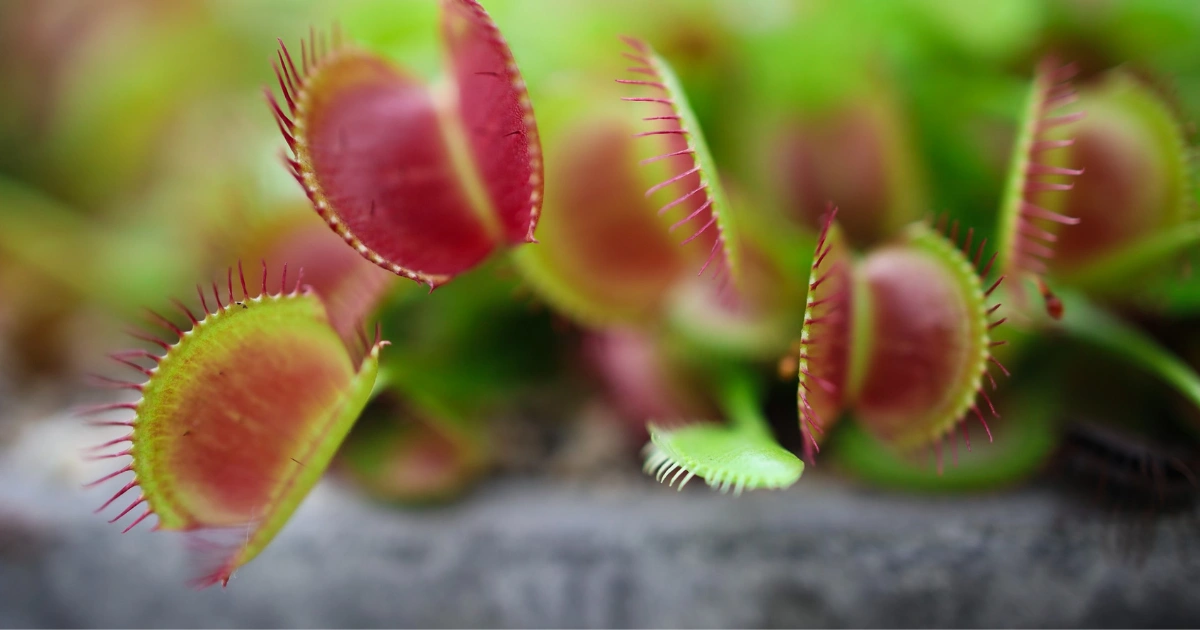
The Venus flytrap (Dionaea muscipula) is one of the most fascinating examples of plant intelligence. Despite lacking a brain or central nervous system, this carnivorous plant can detect, remember, and respond to environmental stimuli in a highly precise manner. Recent research has uncovered how the flytrap “counts” touches and determines when to close its trap, making decisions that optimize energy expenditure and nutrient intake.
Understanding Venus Flytrap Behavior
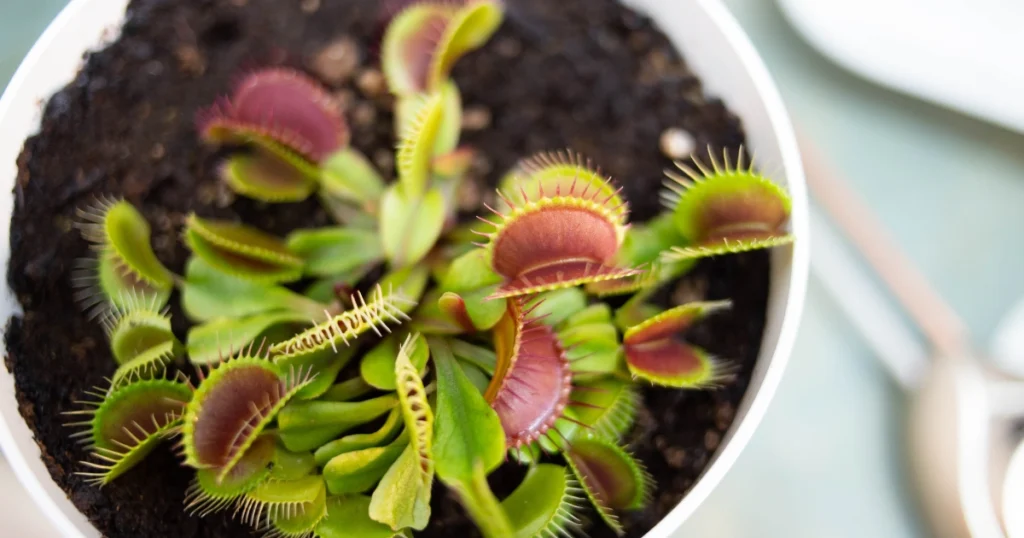
Venus flytraps grow in nutrient-poor soils, which forces them to rely on insects for essential nitrogen and phosphorus. The plant’s leaves have specialized structures called trigger hairs. When an insect touches these hairs, it initiates a rapid electrical signal within the plant, starting a chain of events that determines whether the trap closes.
Step 1: Detection
The first step in the Venus flytrap’s response is stimulus detection. A single touch of a trigger hair does not immediately cause the trap to snap shut. This mechanism ensures the plant does not waste energy on non-nutritive debris like raindrops or dust.
Step 2: Memory
Once a trigger hair is stimulated, the plant “remembers” the event for approximately 20 seconds. During this period, if a second touch occurs, the electrical signals accumulate, signaling the trap to prepare for closure. This short-term memory ensures that only genuine prey triggers a response.
Step 3: Decision
The flytrap’s trap will only close when two distinct stimulations are detected within a short time window. This counting mechanism helps the plant avoid false alarms, conserving energy for actual prey. If additional trigger hairs are touched, the trap may adjust the force or speed of closure depending on the intensity and number of touches.
Step 4: Verification
Even after the trap closes, the Venus flytrap continues to monitor its prey. If the captured insect continues to move, it may trigger further enzyme secretion and enhanced digestion. This ensures that the plant expends energy only when food is present and worthwhile.
How Counting Benefits the Venus Flytrap
The counting system is vital for survival in a challenging environment:
- Energy Conservation: Closing traps unnecessarily can deplete the plant’s energy reserves. Counting reduces wasteful closures.
- Optimal Nutrient Intake: By verifying prey movement, the plant maximizes nutrient extraction from captured insects.
- Selective Prey Capture: Smaller debris or non-nutritive objects are ignored, ensuring the plant targets high-protein meals.
Mechanism Behind the Electrical Signals
The Venus flytrap uses action potentials, similar to nerve impulses in animals, to transmit signals across its leaf. When the trigger hairs are stimulated:
- An electrical signal propagates along the leaf.
- Ion channels in the cell membranes generate a voltage difference.
- Multiple stimuli within a defined period accumulate, reaching a threshold that triggers the trap closure.
This electrical communication allows the plant to process information and make conditional decisions despite having no neurons or brain.
Scientific Observations and Experiments
Studies conducted on Venus flytraps have revealed:
- Single touches are ignored unless followed by a second within 20 seconds.
- Five or more stimulations often lead to enzyme production and initiation of digestion.
- The plant can discern between living prey and inert objects based on movement patterns.
This highlights the flytrap’s unique ability to combine short-term memory and signal integration for decision-making.
Implications for Plant Intelligence
The Venus flytrap challenges traditional notions of intelligence:
- It demonstrates that complex behavior does not require a brain.
- The plant uses a combination of electrical signaling, chemical responses, and mechanical action to interact with its environment.
- Understanding these mechanisms may provide insights into bio-inspired robotics, sensors, and energy-efficient decision systems.
Key Takeaways
- Venus flytraps rely on trigger hairs to detect prey.
- They count touches to determine when to close their trap.
- Electrical signals act as a communication system, enabling decision-making.
- The plant avoids false triggers, conserving energy and maximizing nutrient uptake.
- Continued prey movement triggers digestion, ensuring efficient energy use.
FAQ About Venus Flytrap Behavior
Q1: Can Venus flytraps distinguish between different types of insects?
A1: The plant primarily responds to movement and repeated touches. While it cannot “identify” species, its counting mechanism favors larger, moving prey over small debris.
Q2: How fast does a Venus flytrap close its trap?
A2: Trap closure typically occurs within 100–300 milliseconds after the threshold of two stimulations is reached.
Q3: Do Venus flytraps have memory?
A3: Yes, they exhibit short-term memory, retaining information about a stimulus for about 20 seconds.
Q4: Can a trap reopen if no prey is inside?
A4: Yes, traps can reopen after 12–24 hours if no digestion occurs, allowing the plant to conserve energy.
Q5: How do electrical signals in the flytrap work?
A5: The plant uses ion fluxes across cell membranes to generate action potentials, which propagate the signal for trap closure.