
Table of Contents
- Why Yellowjackets Seem So Aggressive Every Late Summer
- Understanding the Yellowjacket Life Cycle
- The Shift from Protein to Sugar Foraging
- Why Late Summer Brings More Human Encounters
- Are Yellowjackets Really More Aggressive?
- Safe Ways to Reduce Yellowjacket Problems
- Cover Food and Drinks
- Manage Trash Carefully
- Avoid Floral Scents Around Outdoor Meals
- Stay Calm Around Foraging Wasps
- Why DIY Nest Removal Can Be Dangerous
- Practical Tips
- Common Mistakes
- Frequently Asked Questions
- Conclusion
Why Yellowjackets Get More Aggressive in Late Summer (It’s Not Really About Aggression)
If you’ve ever tried to enjoy an outdoor meal in August or September, you’ve probably wondered why yellowjackets suddenly seem determined to crash every picnic, barbecue, and backyard gathering. The truth is that yellowjackets aggressive late summer behavior isn’t usually the result of the insects becoming naturally meaner. Instead, it’s the predictable outcome of dramatic seasonal changes inside the colony.
By late summer, yellowjacket colonies have reached their largest size, their nutritional needs have changed, and many of the foods they seek happen to overlap with human outdoor activities. Understanding why this happens can help you avoid unnecessary conflicts while appreciating the important ecological role these social wasps play for most of the growing season.
Why Yellowjackets Seem So Aggressive Every Late Summer
Yellowjackets are social wasps that live in annual colonies founded by a single queen each spring.
Throughout summer, worker wasps spend much of their time hunting insects, feeding larvae, expanding the nest, and protecting the colony. During this period, they often go largely unnoticed because their preferred food sources are not the same ones attracting people.
Late summer changes everything.
As the colony matures, both its population and nutritional demands shift. At the same time, people are spending more time outdoors enjoying ripe fruit, picnics, cookouts, fairs, and sporting events. These overlapping food interests create the impression that yellowjackets have suddenly become much more aggressive.
Understanding the Yellowjacket Life Cycle
A yellowjacket colony lasts for only one season.
Each spring, a fertilized queen emerges from winter shelter and begins building a small paper nest.
She raises the first generation of workers herself.
Once workers emerge, they take over nest expansion, food collection, brood care, and defense while the queen focuses almost exclusively on laying eggs.
Throughout summer, the colony grows steadily.
By late summer or early fall, colonies are often at their maximum size, containing many thousands of workers depending on the species and environmental conditions.
Eventually, new queens and males are produced, mating occurs, and the original colony naturally declines as cold weather arrives.
Only newly fertilized queens survive to establish colonies the following year.
The Shift from Protein to Sugar Foraging
One of the biggest reasons yellowjackets seem different in late summer is that their diet changes.
Early Season: Hunting for Protein
During spring and early summer, workers actively hunt insects such as:
- Caterpillars
- Flies
- Beetle larvae
- Other soft-bodied insects
These protein-rich prey are fed primarily to developing larvae.
In return, the larvae produce carbohydrate-rich secretions that nourish the adult workers.
This exchange is an important part of colony nutrition.
Late Season: Searching for Sugar
As the season progresses, the colony begins producing fewer larvae and more reproductive adults.
Because there are fewer larvae producing sugary secretions, adult workers increasingly seek carbohydrates from external sources.
That means searching for:
- Fruit
- Tree sap
- Flower nectar
- Soft drinks
- Fruit juice
- Ice cream
- Sweet desserts
- Sports drinks
- Syrups
Unfortunately, these are exactly the foods commonly found at outdoor gatherings.
The result is not true aggression but increased competition for attractive sugar sources.
University entomology programs, including the University of California Integrated Pest Management Program, explain this seasonal dietary shift as a major reason for increased late-season encounters:
https://ipm.ucanr.edu/
Why Late Summer Brings More Human Encounters
Several seasonal factors combine to increase conflicts.
Colonies Are at Their Largest
Late in the season, thousands of workers may be foraging simultaneously.
Simply having more foragers in the environment increases the likelihood that people will encounter them.
Natural Foods Change
As flowering plants finish blooming, nectar availability may decline in some landscapes.
Meanwhile, ripe fruit becomes abundant.
Yellowjackets naturally investigate these changing food resources.
Outdoor Activities Increase
Late summer is also peak season for:
- Backyard barbecues
- Picnics
- Farmers markets
- County fairs
- Sporting events
- Outdoor festivals
Human food becomes another readily available sugar source.
Garbage Contains Attractive Odors
Outdoor trash cans often contain sugary drink containers, fruit scraps, and food residue.
Without secure lids, they become highly attractive foraging sites.
Are Yellowjackets Really More Aggressive?
In many situations, no.
What people interpret as aggression is often persistent food-searching behavior.
Workers may repeatedly circle drinks or food because they’re investigating sugar sources—not because they’re attempting to sting.
However, yellowjackets do become genuinely defensive when their nest is disturbed.
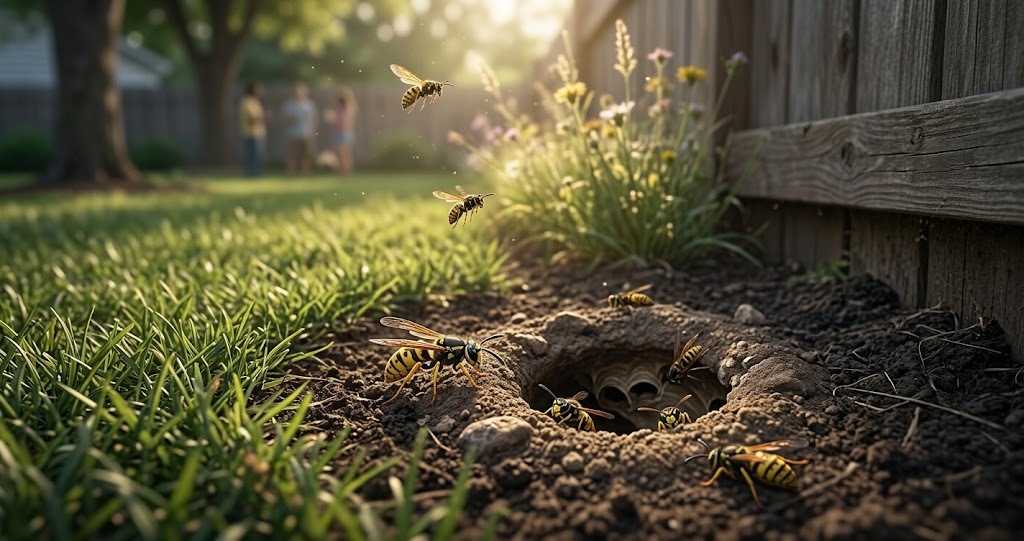
Approaching a nest too closely, mowing directly over an underground entrance, disturbing landscaping around a colony, or attempting nest removal can quickly provoke defensive stinging.
Understanding this distinction helps explain why a wasp investigating your lemonade behaves very differently from one protecting its colony.
Safe Ways to Reduce Yellowjacket Problems
Most conflicts can be minimized through simple preventive measures.
Cover Food and Drinks
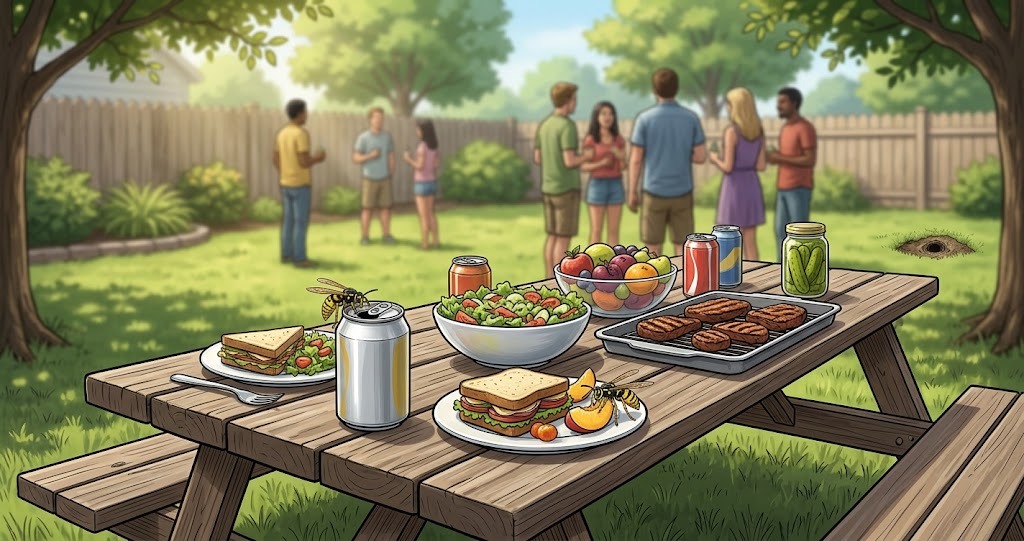
Open beverage cans and cups make it easy for yellowjackets to crawl inside unnoticed.
Whenever possible:
- Keep drinks covered.
- Use clear cups instead of opaque cans.
- Cover serving dishes.
- Store desserts indoors until serving time.
Checking drinks before each sip is a simple but valuable habit during late summer.
Manage Trash Carefully
Garbage provides a steady supply of attractive odors.
Reduce attraction by:
- Using tight-fitting lids.
- Emptying trash regularly.
- Rinsing recyclable drink containers.
- Cleaning sticky spills around bins.
Keeping trash farther from outdoor dining areas also helps.
Avoid Bright Floral Clothing and Strong Fragrances Near Dining Areas
Yellowjackets primarily locate food using odors, but bright floral patterns and strongly scented perfumes, lotions, or hair products may increase curiosity in some situations, particularly around flowering landscapes.
If you’re planning an outdoor meal during peak yellowjacket season, choosing unscented personal products and avoiding highly floral clothing can help reduce unwanted attention.
Stay Calm Around Foraging Wasps
Swatting is rarely helpful.
Sudden movements may increase defensive responses if a wasp feels threatened.
Instead:
- Move slowly.
- Allow the insect to investigate briefly.
- Gently move food away.
- Wait for it to leave.
Most foraging workers eventually move on if they do not find accessible food.
For more ways to enjoy your yard safely alongside beneficial insects, read our guide:
https://secretsofthegreengarden.com/backyard-insect-safety/
Why DIY Nest Removal Can Be Dangerous
Although individual foraging yellowjackets are usually manageable, active nests are a different matter.
Yellowjacket colonies vigorously defend their nest when disturbed.
Because many species nest underground, homeowners sometimes discover colonies only after accidentally stepping nearby or mowing over an entrance.
Attempting DIY removal without proper protective equipment can result in multiple stings.
Commercial aerosol sprays, gasoline, fire, boiling water, or improvised methods are not only hazardous but may also increase the risk of injury to people, pets, and the environment.
If a nest poses a genuine safety concern—particularly near doorways, children’s play areas, or frequently used paths—consult local extension guidance or a licensed pest management professional.
Practical Tips
- Keep sugary foods covered outdoors.
- Use trash containers with secure lids.
- Rinse beverage containers before recycling.
- Harvest overripe fruit promptly.
- Wear unscented personal care products during outdoor meals.
- Stay calm if a yellowjacket approaches.
- Learn where nests are before mowing or trimming vegetation.
Common Mistakes
Swatting at Every Yellowjacket
Rapid movements can make defensive encounters more likely.
Leaving Sweet Drinks Uncovered
Open beverage containers are among the most common attractants.
Ignoring Fallen Fruit
Rotting fruit produces strong odors that attract foraging wasps.
Attempting Nest Removal Without Protection
Disturbing an active colony can trigger coordinated defensive behavior and multiple stings.
Frequently Asked Questions
Why are yellowjackets worse in late summer?
Colonies are larger, fewer larvae are producing sugary secretions for workers, and adult wasps increasingly seek sugar-rich foods that often overlap with human outdoor activities.
Are yellowjackets useful?
Yes. Earlier in the season, they help control many insect pests by hunting caterpillars, flies, and other insects to feed their larvae.
Why do they keep flying around my soda?
Late-season workers actively seek carbohydrates, making sugary beverages highly attractive.
Should I kill every yellowjacket I see?
Generally no. Individual foraging wasps play ecological roles and usually move on if food is unavailable. Management should focus on preventing attractants and avoiding nest disturbance.
What should I do if I find a nest?
Keep your distance, avoid disturbing the area, and consult local extension recommendations or a qualified pest management professional if the nest presents a safety risk.
Conclusion
Yellowjackets haven’t suddenly become mean when late summer arrives. Their apparent change in behavior reflects a fascinating shift in colony biology as they transition from feeding developing larvae with protein to searching for sugar to sustain a mature colony and its reproductive phase.
Understanding this seasonal change explains why backyard meals, picnic tables, garbage cans, and fruit trees become such popular destinations during August and September. By covering food and drinks, managing trash carefully, avoiding unnecessary attractants, and leaving nest removal to trained professionals when necessary, homeowners can dramatically reduce conflicts while respecting the important ecological role these remarkable insects play throughout much of the growing season.