
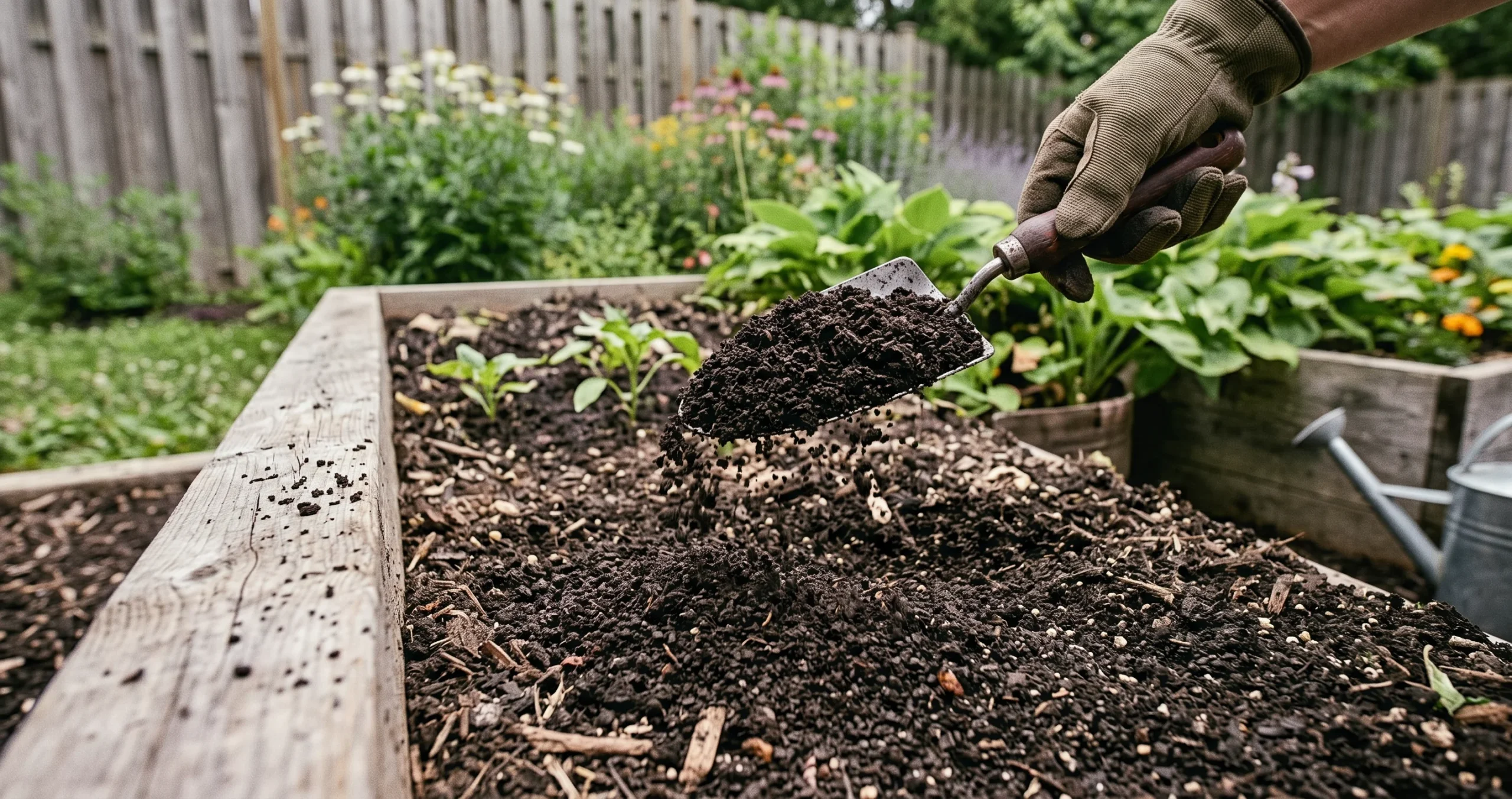
Dark, crumbly, earthy, and surprisingly valuable in the garden, worm castings are the finished material produced when composting worms and microorganisms process organic waste. Gardeners sometimes call them “black gold” because a relatively small amount can serve as a useful soil amendment.
The nickname is informal, not a scientific classification, and worm castings are not a miracle fertilizer. Their real value comes from combining stabilized organic material, plant nutrients, and biological activity in a convenient amendment that can complement compost, mulch, and an appropriate fertilization program.
Table of Contents
- What Are Worm Castings?
- What Happens Inside a Worm Bin?
- What Worm Castings Contain
- How Worm Castings Can Benefit Soil
- Worm Castings vs. Regular Compost
- How to Use Worm Castings
- Starting a Simple Worm Bin
- What to Feed Composting Worms
- What Not to Put in a Worm Bin
- Common Worm-Bin Mistakes
- Common Myths About Worm Castings
- Frequently Asked Questions
- Conclusion
What Are Worm Castings?
Worm castings are associated with vermicomposting, a process in which specialized composting worms help transform food scraps, bedding, and other organic materials into a dark, stabilized amendment.
Oregon State University Extension explains that vermicomposting is commonly done with the red wiggler, Eisenia fetida. Its digestive system helps convert organic material into vermicast, commonly referred to as worm castings.
The everyday term “worm castings” is useful, although the contents of a finished worm bin are often more accurately described as vermicompost. Oklahoma State University Extension notes that separating pure worm feces from the surrounding processed material is difficult, so commercial products labeled as castings may actually contain fine vermicompost.
That distinction does not make the material less useful. It simply helps gardeners understand what they are buying or harvesting.
Why Are They Called “Black Gold”?
Finished vermicompost is typically dark and crumbly, which helps explain the gold-related nicknames gardeners use for valuable compost products. Oregon State University Extension notes that gardeners have long called compost “black gold,” while some refer to worm castings as “black diamonds.”
Neither expression means the material has magical properties.
Its usefulness comes from recycling organic material into a concentrated amendment that can contribute nutrients and organic matter while affecting physical properties of growing media.
What Happens Inside a Worm Bin?
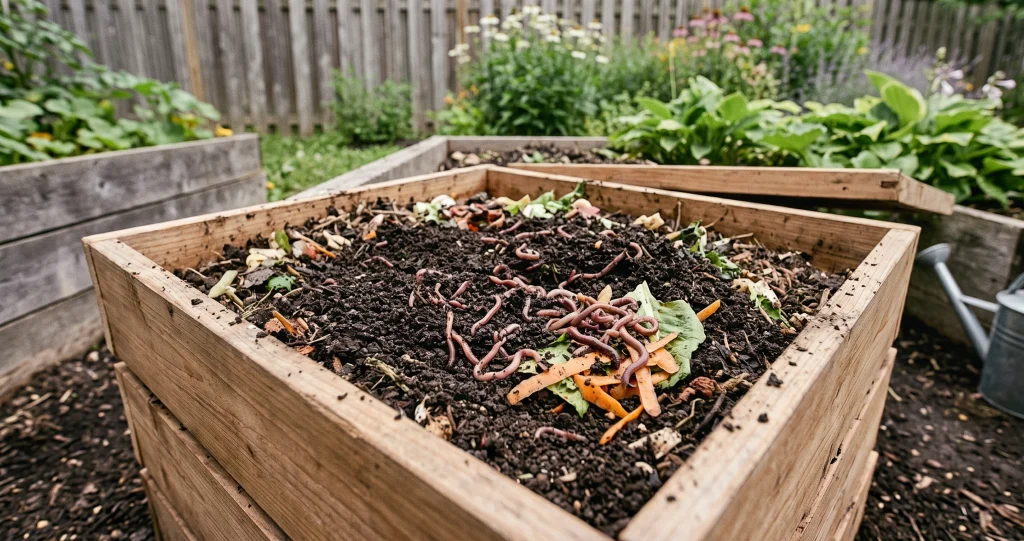
A worm bin is more than a container filled with worms.
It is a small decomposition ecosystem involving worms and microorganisms. Food scraps begin breaking down, microbes colonize the material, and composting worms consume processed organic matter along with associated microorganisms.
Unlike a conventional hot compost pile, a worm bin should not become hot. Oklahoma State University Extension explains that traditional composting releases substantial energy as heat, whereas vermicomposting works best under cooler conditions suitable for the worms.
The worms also move through the bedding, helping keep the material mixed and aerated.
Eventually, recognizable food and bedding become increasingly difficult to identify. What remains is a dark, fine material that can be harvested and used in the garden.
What Do Worm Castings Contain?
Worm castings contain organic material and plant nutrients, but their composition is not universal.
The final nutrient content depends on what entered the system, how the bin was managed, the bedding used, moisture conditions, and the maturity of the finished material.
Oregon State University Extension identifies nitrogen, phosphorus, potassium, calcium, and magnesium among nutrients found in vermicast and also notes the presence of bacteria, fungi, and protozoa.
That does not mean every bag of castings provides identical nutrient concentrations.
This variability is one reason gardeners should be cautious with claims that a particular amount of worm castings can replace a complete fertilizer in every garden.
For crops with substantial nutrient demands, soil testing and crop-specific fertilizer recommendations remain more reliable ways to determine what is actually needed.
How Worm Castings Can Benefit Soil
The appeal of worm castings goes beyond their nutrient content.
Adding stabilized organic material can contribute to the physical and biological environment around plant roots. Penn State Extension reports that vermicompost can affect soil porosity and water-holding capacity while supplying nutrients.
However, results vary with soil type, crop, application rate, growing conditions, and the properties of the vermicompost itself.
Organic Matter
Organic matter is central to productive garden soil.
Regular additions of compost, plant residues, mulch, and other suitable organic materials can help maintain soil structure and support the organisms involved in decomposition and nutrient cycling.
Worm castings can become one component of that strategy.
Gardeners interested in broader soil-building approaches can also read How the Mulch You Choose Changes Your Soil Beneath the Surface, which explains how surface organic materials influence moisture and soil conditions.
Nutrient Contribution
Worm castings can supply plant nutrients, but describing them simply as “fertilizer” misses part of their value.
Their usefulness comes from the combination of organic material, nutrients, and the characteristics of the finished vermicompost.
Nutrient content can vary considerably, so a commercial product’s analysis is more informative than assuming all castings have the same N-P-K value.
Moisture and Structure
Adding organic amendments to soil can influence how water and air move through it.
Vermicompost may be particularly useful as one ingredient in container mixes or garden soil amendments because of its fine, crumbly texture.
It should still be combined sensibly with other materials. A container filled with nothing but castings is usually unnecessary and can be considerably more expensive than a balanced potting mixture.
Worm Castings vs. Regular Compost
Worm castings and traditional compost are related products, but they are produced differently and are best thought of as complementary rather than competing amendments.
Traditional composting depends heavily on microorganisms and, in a managed hot pile, rising temperatures. Vermicomposting uses specialized worms alongside microorganisms and is intentionally kept at temperatures that allow the worms to survive.
Regular compost is usually practical when a gardener needs a substantial volume of organic matter for garden beds. It can be made from large quantities of yard debris, leaves, kitchen scraps, and other compostable materials.
Worm castings are commonly used in smaller amounts.
Their fine texture makes them convenient for potting mixes, transplanting, top-dressing, and targeted applications around plants.
Hot composting also offers an important advantage that worm bins generally do not: sufficient heat can help reduce certain weed seeds and pathogens. Penn State Extension specifically notes that vermiculture provides little to no reduction of weed seeds or pathogens because it lacks the heating process of aerobic hot composting.
Cost matters too.
If you need enough organic matter to amend several large raised beds, good finished compost is often more practical. Castings can then be reserved for more targeted applications.
There is therefore no universal winner.
A productive garden may use compost for bulk organic matter, mulch for surface protection, and worm castings in smaller quantities where their characteristics are useful.
How to Use Worm Castings in the Garden
There is no single application rate appropriate for every plant and every product.
Always consider the existing soil, crop requirements, growing medium, and manufacturer’s directions when using purchased castings.
Vegetable Beds and Raised Beds
Castings can be incorporated into the upper soil layer or applied around established vegetables.
They can also be combined with finished compost rather than used alone. This is often economical because compost supplies bulk organic matter while the vermicompost becomes one component of the amendment.
Containers and Houseplants
Worm castings can be blended into a potting mix.
Oklahoma State University Extension gives a general example of using vermicompost as roughly one-quarter to one-third of a potting mix by volume, but individual crops and commercial products may call for different proportions.
Containers still need a growing medium with suitable drainage, aeration, moisture retention, and structural stability.
Seedlings and Transplants
Small amounts of mature vermicompost can be incorporated into an appropriate seedling or transplant medium.
Seedlings are sensitive to poor drainage and excessive nutrient concentrations, so castings should not automatically replace a properly formulated seed-starting medium.
Top-Dressing Established Plants
One of the simplest methods is to distribute a modest layer around an established plant and gently incorporate it into the soil surface if appropriate.
Watering then moistens the material and integrates it with the upper soil zone over time.
Mixing Castings With Compost
This is one of the most practical approaches for home gardeners.
Finished compost provides volume and organic matter, while vermicompost can supplement the mixture. There is no need to choose exclusively between the two.
Starting a Simple Worm Bin
Making your own castings does not require a large yard.
A ventilated container, suitable composting worms, bedding, moisture, food scraps, and reasonable temperatures can create a functional home vermicomposting system.
Choose the Right Worms
Red wigglers, Eisenia fetida, are among the standard choices for home worm bins because they naturally inhabit organic-rich surface material rather than deep mineral soil.
Do not assume ordinary garden earthworms will behave the same way. Oregon State University Extension specifically distinguishes red wigglers from common garden earthworms and recommends the former for confined composting systems.
Prepare the Bedding
Bedding should retain moisture while allowing oxygen into the bin.
Depending on the system, materials can include shredded paper, mature compost, fallen leaves, or coir. Oklahoma State University Extension recommends moist, lightweight, biodegradable bedding and describes a starting layer about 6–10 inches deep.
Think damp rather than waterlogged.
Maintain Suitable Conditions
Worms breathe through their skin, so both moisture and oxygen matter.
Oklahoma State University Extension reports strong growth for red wigglers around 65–85°F, while another of its home vermicomposting guides gives 60–75°F as an optimum working range. Extremely hot bins can injure or kill worms.
The practical lesson is simple: keep the bin comfortably cool, moist, aerated, and out of temperature extremes.
Feed Gradually
Do not bury worms under a mountain of fresh scraps on day one.
Introduce food gradually and watch how quickly it disappears. If significant food remains uneaten, wait before adding more.
Overfeeding is one of the easiest ways to create odor and pest problems.
What Can Go Into a Worm Bin?
Fruit and vegetable scraps are standard choices.
Coffee grounds and paper filters, tea materials without unsuitable synthetic components, small amounts of plain grains, and finely crushed eggshells can also be used in many home systems. Oregon State University recommends chopping food into small pieces to encourage faster breakdown.
Brown bedding materials are equally important.
Shredded paper and dry leaves help balance wet food scraps and maintain the physical structure of the bin.
What Not to Put in a Worm Bin
A worm’s ability to encounter decomposing organic material does not mean every kitchen scrap belongs in a home bin.
Avoid meat, fish, greasy foods, large quantities of dairy products, and bones. These materials can create odor and pest problems in small household systems. Oklahoma State University Extension specifically recommends keeping meat, dairy, greasy foods, and pet waste out of home worm bins.
Large quantities of citrus, onion, or garlic are also better avoided or used sparingly. Oregon State University Extension similarly advises caution with these materials.
Do not add plastic, metal, glass, synthetic materials, or chemically contaminated material.
Pet feces should also stay out of a typical household vermicomposting system intended to produce amendments for the garden.
Common Worm-Bin Mistakes
Overfeeding
Too much food can decompose faster than worms can process it.
The result may be odors, flies, excessive microbial activity, and unfavorable conditions.
Keeping the Bin Too Wet
Worms need moisture, but saturated bedding can lose oxygen.
If liquid continually drains from the bin, reassess moisture levels and add suitable dry bedding rather than assuming wetter is better.
Poor Aeration
Compacted material creates poor conditions for an aerobic vermicomposting system.
Fluffy bedding, ventilation, and appropriate moisture help maintain oxygen.
Allowing the Bin to Overheat
A worm bin is not supposed to behave like a hot compost pile.
Keep it out of intense sun and other locations where temperatures can climb excessively.
Expecting Castings to Replace Everything Else
Worm castings are one soil amendment.
They do not eliminate the value of compost, mulch, appropriate fertilizers, soil testing, good irrigation, or suitable potting media.
Common Myths About Worm Castings
Myth: Worm Castings Are a Complete Fertilizer
They contain plant nutrients, but composition varies.
A crop with a specific nutrient deficiency may still require a targeted fertilizer or soil amendment based on actual growing conditions.
Myth: More Castings Always Means Better Growth
Plants do not operate according to a “more is always better” rule.
Once growing conditions meet their needs, adding increasing quantities of an amendment may offer little benefit and wastes a relatively valuable material.
Myth: Worm Castings Are Automatically Better Than Compost
They are different.
Regular compost is excellent for adding larger quantities of organic matter. Vermicompost can be useful in smaller, targeted applications.
Which one is more appropriate depends on the job.
Myth: Any Earthworm Can Run a Worm Bin
Different earthworm species occupy different ecological niches.
Red wigglers are particularly well adapted to rich surface organic material and confined composting conditions. Common deep-burrowing garden worms are not equivalent substitutes.
Myth: A Worm Bin Should Smell Bad
A healthy bin should not produce a strong rotten odor.
Oklahoma State University lists excessive food, exposed food, greasy or meaty material, and insufficient air among potential causes of bad smells.
Persistent odor is therefore a signal to check management rather than an unavoidable feature of vermicomposting.
Frequently Asked Questions
How long do worm castings last in soil?
There is no precise expiration date once castings are incorporated into soil. Their organic components continue interacting with the soil system and decomposing over time.
Rather than thinking of castings as a fertilizer that suddenly “runs out,” consider them part of an ongoing soil-management program.
Can worm castings burn plants?
Mature vermicompost is commonly used around plants and in potting mixtures. However, quality and nutrient content vary, so using a tested commercial product according to its directions is preferable to assuming unlimited quantities are harmless.
Can they replace fertilizer?
Not necessarily.
Castings contribute nutrients, but plants have different nutritional requirements. Heavy-feeding crops or deficient soils may still require additional fertilization.
How much should I put in containers?
There is no universal recipe.
Oklahoma State University provides a general example of about one-quarter to one-third vermicompost by volume in a potting mix. Treat that as a guideline rather than a requirement for every crop and product.
Are worm castings good for seedlings?
Mature vermicompost can be incorporated into some seedling media, but seedlings also require excellent aeration, drainage, and appropriate nutrient levels.
Use castings as one ingredient rather than automatically filling seed trays with pure vermicompost.
Are homemade castings different from commercial castings?
They can be.
Feedstock, bedding, moisture, maturity, processing, storage, and screening can all affect the finished material. Commercial products can also vary from one manufacturer to another.
How often should I apply worm castings?
There is no scientifically meaningful schedule that works for every garden.
Application should depend on the crop, soil, other amendments already used, and product recommendations. Repeated applications are not automatically necessary simply because castings are organic.
How long does a worm bin take to produce usable vermicompost?
Conditions matter, but Oklahoma State University Extension reports that worms can turn bedding and feed into dark compost in roughly two to five months under suitable management.
Conclusion
Worm castings deserve attention, but their value is more interesting than the nickname “black gold” suggests.
Vermicomposting transforms suitable household organic waste into a dark, stable material that can contribute organic matter and nutrients to garden soils and growing media. It also gives gardeners a practical way to recycle kitchen scraps without maintaining a traditional outdoor compost pile.
The strongest approach is not to treat castings as a miracle product.
Use worm castings alongside finished compost, mulch, responsible organic-matter recycling, soil testing when appropriate, and targeted fertilization when plants actually need it. In that larger soil-health strategy, the material coming from a humble worm bin can indeed become a valuable garden resource.
External Sources:
- Oregon State University Extension Service — Composting with Worms
Oregon State University Extension vermicomposting guide - Oklahoma State University Extension — Vermicomposting – Composting with Worms
Oklahoma State University Extension vermicomposting guide - Penn State Extension — Vermicomposting Puts Worms to Work
Penn State Extension vermicomposting guide