
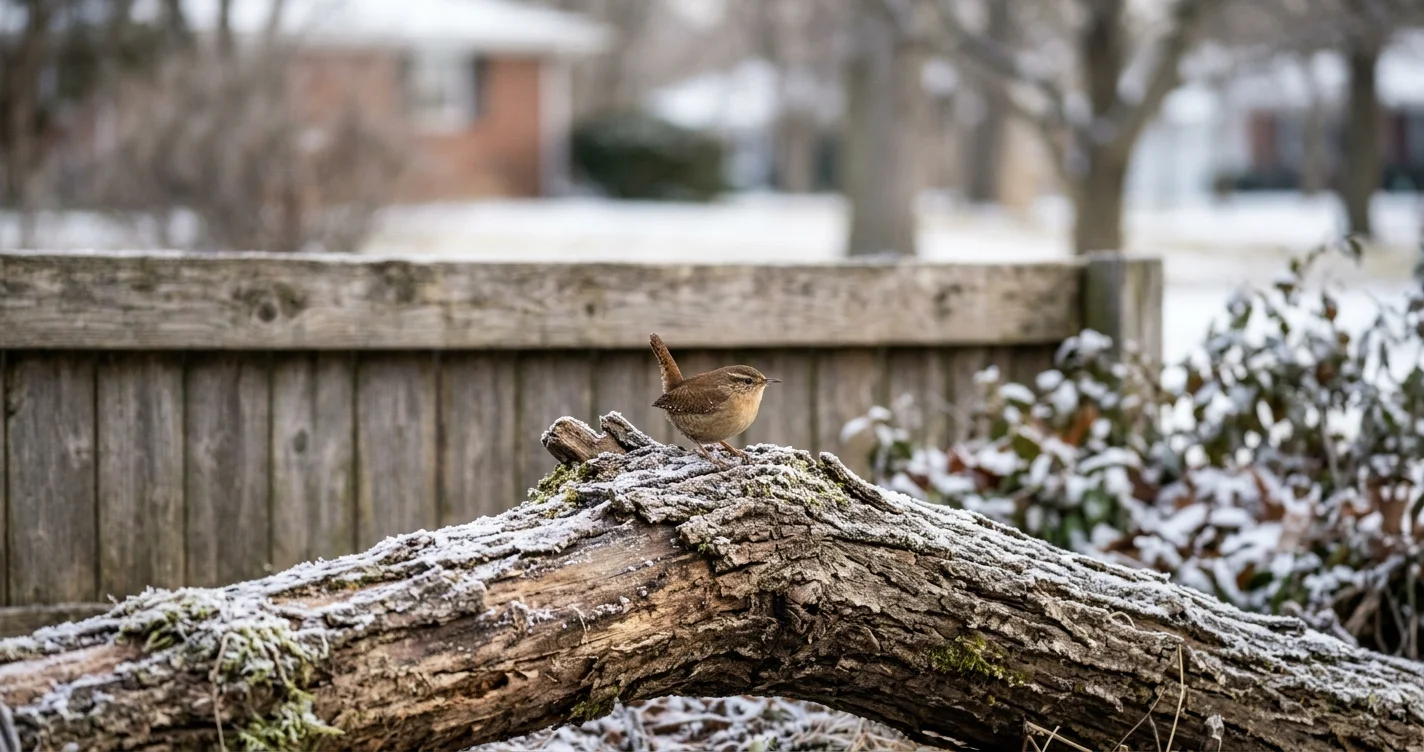
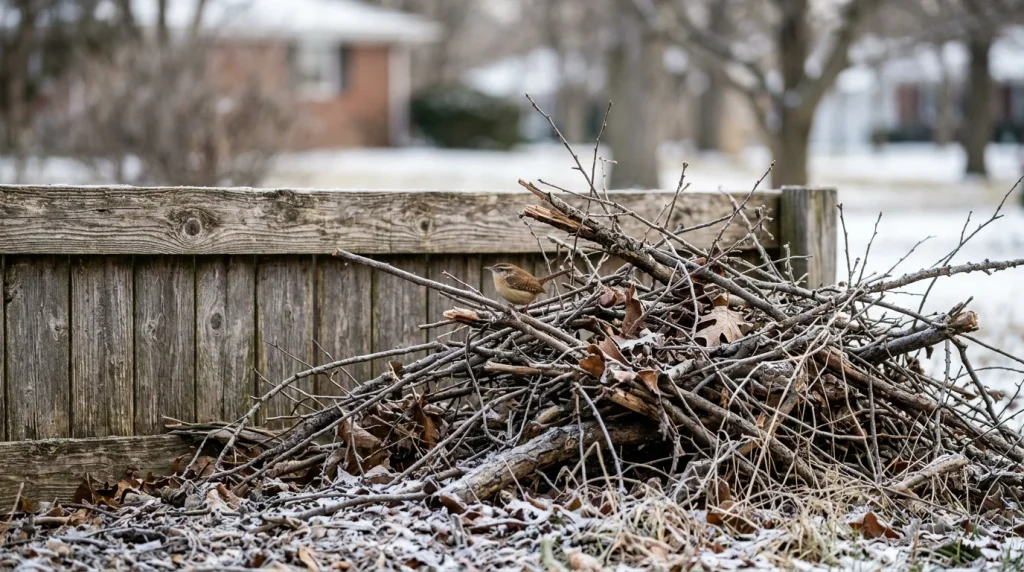
A pile of fallen branches might look like ordinary garden debris. But on a cold winter morning, something extraordinary can be hiding beneath it.
A tiny brown bird slips between two twigs, pauses for a moment, and disappears into the shadows. Seconds later, it reappears with its short tail pointing almost straight upward.
You may have just spotted a winter wren, one of North America’s smallest and most secretive woodland birds.
Despite its delicate appearance, this energetic little songbird can survive challenging winter conditions by searching for insects and other tiny invertebrates in sheltered places. Dense vegetation, fallen logs, and tangled branches can provide valuable cover while it forages.
For gardeners, that creates a fascinating opportunity. A thoughtfully placed brush pile can imitate some of the sheltered structures winter wrens use in natural woodland habitats.
The result is a simple wildlife-friendly feature that may benefit far more than one species.
Table of Contents
- Meet the Winter Wren: A Tiny Bird With a Big Personality
- Winter Wren Survival: The Science Behind Brush Piles
- Why Winter Wrens Love Tangled Branches
- What Winter Wrens Eat During Cold Weather
- Where Winter Wrens Spend the Winter
- How to Recognize a Winter Wren in Your Yard
- Building a Wildlife-Friendly Brush Pile
- Other Birds and Animals That Benefit From Brush Piles
- Common Mistakes When Creating Winter Shelter
- In Your Own Yard: A Simple Winter Habitat Plan
- Frequently Asked Questions
Meet the Winter Wren: A Tiny Bird With a Big Personality
The winter wren (Troglodytes hiemalis) is a small, round-bodied songbird associated with forests, dense undergrowth, and sheltered woodland habitats.
Its brown feathers blend remarkably well with fallen leaves, bark, and decaying wood.
Although it can be difficult to see, its movements are often distinctive.
A Bird That Seems Almost Mouse-Like
Winter wrens frequently move close to the ground.
They slip beneath roots, investigate fallen logs, and disappear into narrow openings between branches.
Their short tails are often held upright, giving them a recognizable silhouette.
A winter wren may appear suddenly at the edge of a brush pile before vanishing again.
This behavior helps explain why the species can remain unnoticed even when it is nearby.
A Surprisingly Powerful Song
For such a small bird, the winter wren produces an elaborate, energetic song.
During the breeding season, males deliver rapid sequences of musical notes that can seem remarkably loud for their size.
Their vocal abilities contrast with their secretive appearance.
In winter, observers may be more likely to notice short calls than the full breeding song.
Winter Wren or Pacific Wren?
An important identification detail concerns the bird’s geographic range.
The winter wren and Pacific wren (Troglodytes pacificus) were once treated as a single species in North America.
Today, they are recognized as separate species.
Winter wrens are primarily associated with eastern North America, while Pacific wrens occur mainly in the western part of the continent.
Both use dense vegetation and woody cover, but their songs, genetics, and distributions differ.
Winter Wren Survival: The Science Behind Brush Piles
A winter wren weighs only a small fraction of what many familiar backyard birds weigh.
That makes surviving cold weather a demanding biological challenge.
Its body must maintain a suitable internal temperature while finding enough food to meet its energy needs.
Dense woody cover can help by providing protected spaces for movement, shelter, and foraging.
Small Birds Lose Heat Quickly
Small animals generally have a relatively large surface area compared with their body volume.
This means they can lose body heat rapidly in cold environments.
Birds maintain high body temperatures through metabolism, insulation, and behavioral adjustments.
For a tiny bird such as a winter wren, finding food and reducing unnecessary exposure can be especially important.
How Branches Reduce Wind Exposure
A brush pile contains numerous small spaces between overlapping branches.
These sheltered pockets can reduce direct exposure to wind.
Wind increases convective heat loss by moving warmer air away from an animal’s body.
A bird resting or moving within dense cover may experience less wind exposure than one perched in an open location.
However, the temperature inside a brush pile depends on its structure, weather conditions, snow cover, and surrounding vegetation.
A brush pile should be understood as potential shelter rather than a guaranteed warm refuge.
Why the Ground Beneath a Brush Pile Matters
The ground beneath woody debris often contains fallen leaves, decomposing plant material, and small spaces protected from direct sunlight and wind.
These environments can support invertebrates and other organisms.
Winter wrens search through such habitats for food.
The combination of cover and foraging opportunities helps explain why tangled woody structures are useful.
Brush Piles Imitate Natural Forest Features
In mature forests, fallen branches, decaying logs, exposed roots, and dense shrubs create complicated ground-level habitats.
These structures offer hiding places and support a variety of organisms.
A backyard brush pile can reproduce some of that complexity on a smaller scale.
It cannot replace an intact forest ecosystem, but it may add useful habitat structure to an otherwise simplified landscape.
Does a Brush Pile Guarantee Winter Wrens?
Not necessarily.
Winter wrens are more likely to use yards near suitable woodland, shrubby corridors, or other connected habitats.
Local distribution, food availability, disturbance, and seasonal conditions all influence whether a bird visits.
Even where winter wrens are absent, brush piles may benefit other wildlife.
Why Winter Wrens Love Tangled Branches
Winter wrens are especially comfortable moving through dense, irregular spaces.
Their behavior makes them well suited to environments that might seem difficult for larger birds to navigate.
Narrow Spaces Offer Concealment
The gaps between branches can provide places to retreat when danger approaches.
Dense cover may make it harder for some predators to pursue a small bird.
However, brush piles do not eliminate predation risk.
Cats, snakes, and other predators may also investigate woody debris.
Fallen Wood Creates Feeding Opportunities
Decaying logs and damp leaf litter can support insects, spiders, and other invertebrates.
Winter wrens often investigate crevices and sheltered surfaces while searching for prey.
A pile that includes some naturally weathered branches may provide more varied habitat than a tightly stacked bundle of clean, dry sticks.
A Connection to Natural Woodland Behavior
Winter wrens frequently forage around roots, streambanks, fallen trees, and dense undergrowth.
These locations provide both physical cover and access to small prey.
A brush pile placed near native shrubs or existing woodland vegetation may be more useful than one isolated in the middle of an exposed lawn.
What Winter Wrens Eat During Cold Weather
Winter wrens are primarily insectivorous birds.
Unlike many backyard visitors, they do not depend heavily on typical seed-feeder offerings.
Insects and Spiders
Their diet includes small insects, spiders, and other invertebrates.
They may search beneath bark, among roots, and through fallen vegetation.
In winter, some invertebrates remain available in sheltered microhabitats even when temperatures are low.
Why Leaf Litter Is Important
Fallen leaves help create habitat for decomposers and small invertebrates.
They also protect the soil surface from direct exposure.
When leaves accumulate beneath shrubs and around woody debris, they can contribute to a more complex ground-level environment.
This may support the small prey that winter wrens seek.
Why Birdseed Is Not the Main Attraction
A winter wren may occasionally investigate areas near bird feeders, but standard seed mixes are not its primary food source.
Creating suitable habitat for naturally occurring invertebrates is generally more relevant to its feeding ecology.
Native vegetation, leaf litter, and reduced pesticide use can contribute to that goal.
Where Winter Wrens Spend the Winter
Winter wrens breed mainly in forested regions of eastern North America, including parts of Canada and the northern United States.
Many individuals migrate southward for the colder months.
Eastern and Southern Winter Habitats
Wintering birds occur across much of the eastern and southeastern United States.
They use forests, wooded wetlands, shrubby areas, and other habitats with dense ground-level cover.
Their exact winter distribution varies with geography and weather.
Why Moist Woodlands Are Attractive
Moist environments often support abundant leaf litter, decaying wood, and sheltered crevices.
These conditions can provide foraging opportunities.
Winter wrens are frequently associated with damp woodland areas, stream corridors, and dense vegetation.
However, they can also occur in other suitable habitats.
Can Winter Wrens Visit Suburban Gardens?
Yes, particularly where gardens are close to woodland or contain dense shrubs and natural ground cover.
A yard with mature trees, native vegetation, and fallen woody material may offer useful habitat.
Sightings are less predictable in highly exposed landscapes dominated by short lawns and sparse vegetation.
How to Recognize a Winter Wren in Your Yard
Winter wrens are easy to overlook because their plumage closely resembles the brown leaves and bark around them.
Fortunately, several features can help distinguish them from other small backyard birds.
Look for the Upright Tail
The winter wren has a remarkably short tail that it frequently holds upright.
Combined with its rounded body, this creates a compact, almost ball-shaped appearance.
The bird often bobs its body while moving through low vegetation.
Notice the Fine Brown Markings
Winter wrens are predominantly brown, with darker barring across their wings, tail, and lower body.
Their slender bills are well suited to searching narrow crevices for small prey.
A subtle pale eyebrow may be visible under favorable lighting.
Watch Its Movements
Rather than spending long periods on exposed branches, winter wrens frequently hop and scamper through dense cover.
They investigate roots, fallen logs, and ground-level vegetation.
Their rapid movements can resemble those of a tiny woodland mouse.
Compare It With Other Wrens
Carolina wrens are larger and generally show a more conspicuous white eyebrow and warmer reddish-brown plumage.
House wrens also have longer tails relative to their bodies.
The winter wren’s tiny size, short upright tail, dark brown coloration, and preference for dense woodland cover are particularly useful identification clues. Audubon Field Guide+1
Building a Wildlife-Friendly Brush Pile
Creating a brush pile is one of the simplest ways to add natural shelter to a backyard.
The goal is to imitate the irregular arrangement of fallen branches and logs found on a woodland floor.
Step 1: Choose a Suitable Location
Select a quiet corner of the yard, preferably near existing shrubs, trees, or other vegetation.
A sheltered location may be more useful than an exposed area in the middle of a lawn.
Keep the pile away from buildings, outdoor heating equipment, and other potential fire hazards.
Follow local fire-safety rules, especially in areas prone to wildfires.
Step 2: Build a Stable Foundation
Begin with several larger branches or logs.
Arrange them so that small spaces remain underneath and between the pieces.
These openings can provide access for birds and other small animals.
The foundation should be stable enough to avoid unexpected collapse.
Step 3: Add Smaller Branches
Place smaller branches and twigs loosely over the foundation.
Avoid compressing everything into a solid mass.
The resulting structure should contain a mixture of sheltered pockets and narrow passageways.
This layered construction follows the general approach recommended by the National Audubon Society for backyard bird habitat. Audubon
Step 4: Include Natural Ground Cover
Where appropriate, allow fallen leaves to remain beneath and around the pile.
Leaf litter supports soil organisms and small invertebrates.
Over time, the woody material will begin to decompose, creating additional habitat complexity.
Use clean, untreated natural materials.
Step 5: Let the Structure Settle Naturally
A brush pile does not need constant rearranging.
As branches weather and settle, the structure may develop additional crevices.
Inspect it occasionally from the outside for safety hazards, invasive plants, or unwanted debris.
Avoid dismantling an occupied pile during nesting or sheltering periods.
Other Birds and Animals That Benefit From Brush Piles
A brush pile can support more than winter wrens.
Its ecological value comes from providing a variety of small sheltered spaces.
Sparrows and Juncos
Dark-eyed juncos and several sparrow species may use brush piles as temporary shelter.
These birds often forage near the ground and retreat into dense cover when disturbed.
Other Wrens
Carolina wrens and Bewick’s wrens may also use brushy habitats, depending on their geographic ranges.
Each species has different habitat preferences, so visitors vary by region.
Insects and Other Small Wildlife
Spiders, beetles, and other invertebrates may occupy the spaces within decaying wood and leaf litter.
Small mammals, amphibians, and reptiles may also use woody cover where conditions are suitable.
These organisms contribute to a more complex backyard food web.
Common Mistakes When Creating Winter Shelter
A wildlife-friendly brush pile should provide useful habitat without creating unnecessary hazards.
Placing It Too Close to Buildings
Dry branches can become combustible.
Maintain appropriate separation from homes, sheds, fences, and other structures according to local fire-safety guidance.
Using Treated or Contaminated Wood
Avoid pressure-treated lumber, painted boards, and wood contaminated with chemicals.
Natural branches and untreated logs are more appropriate for wildlife habitat.
Making the Pile Too Compact
A tightly compressed pile may provide fewer accessible spaces for small birds.
Loose layers create the openings that make brush piles useful.
Disturbing It Too Frequently
Repeatedly moving branches can disturb sheltering animals.
Once established, allow the pile to remain relatively undisturbed unless maintenance is necessary.
Ignoring Outdoor Cats
Free-roaming cats can threaten small birds, including ground-foraging species.
Keeping cats indoors or in secure outdoor enclosures helps reduce predation risks.
A brush pile should complement broader bird-safety practices rather than serve as the only protective measure.
In Your Own Yard: A Simple Winter Habitat Plan
Supporting winter wrens does not require a large property or expensive equipment.
A small number of thoughtful changes can make a backyard more welcoming to birds and other wildlife.
Preserve a Quiet Corner
Choose an area where natural vegetation can remain relatively undisturbed.
Allow leaves and small branches to accumulate where safe and appropriate.
This creates a transition between garden beds and more natural habitat.
Combine Brush Piles With Native Shrubs
Native shrubs can provide additional cover, insects, and seasonal food resources.
When planted near a brush pile, they may create a more connected sheltering area.
Select plants suited to your region’s climate and soil.
Maintain Natural Food Sources
Reduce unnecessary pesticide applications.
Preserve some fallen leaves and decaying wood where they do not create safety problems.
These materials can support invertebrates that insect-eating birds depend on.
Provide Accessible Water
A shallow birdbath can benefit many backyard birds.
During freezing weather, a properly designed heated birdbath may help keep water available.
Maintain cleanliness and follow the manufacturer’s electrical safety instructions.
Observe Without Disturbing
Winter wrens often reveal themselves through movement rather than prolonged perching.
Watch quietly near dense shrubs, fallen logs, and brush piles.
Listen for short, sharp calls and look for a tiny brown bird moving close to the ground.
The Cornell Lab of Ornithology specifically recommends native landscaping, dense vegetation, and brush piles as potential ways to support winter wrens around homes. All About Birds
Frequently Asked Questions
1. Will a brush pile attract winter wrens to my backyard?
A brush pile may provide useful shelter and foraging habitat, particularly in yards near woodlands or dense vegetation. However, winter wren visits depend on geographic range, local habitat, food availability, and seasonal conditions. A brush pile cannot guarantee their presence.
2. What do winter wrens eat when insects seem to disappear in winter?
Winter wrens continue searching for small invertebrates in sheltered locations, including leaf litter, decaying wood, bark crevices, and exposed roots. They may also consume some berries when available. Their diet differs from that of seed-eating birds commonly attracted to backyard feeders.
3. How large should a brush pile be for small winter birds?
There is no universally required size. A modest pile of larger branches topped with smaller twigs can provide useful cover if it contains accessible openings and remains stable. Its location, structure, surrounding vegetation, and safety are generally more important than achieving an exact measurement.
Conclusion
Return to that quiet winter morning.
Beneath a pile of fallen branches, a tiny brown bird moves through the shadows, searching for food while the cold wind passes overhead.
The winter wren may be easy to overlook, but its behavior reveals something important about wildlife-friendly gardening.
Natural habitat is not always neat or carefully arranged.
Sometimes, the most useful features are fallen logs, tangled branches, native shrubs, and leaves left beneath the trees.
A brush pile cannot replace a healthy forest, and it will not attract every species to every yard. But it can add valuable shelter and foraging opportunities to a garden that might otherwise offer little ground-level cover.
By preserving a small corner of natural habitat, gardeners can support the intricate relationships between birds, insects, plants, and soil.
And on the right winter morning, that ordinary pile of branches may become the hiding place of one of North America’s most remarkable little songbirds.
External Sources
1. Cornell Lab of Ornithology — Winter Wren Life History — Habitat, diet, feeding behavior, breeding, and seasonal movements. All About Birds
2. National Audubon Society — Winter Wren — Identification, behavior, winter habitat, and vocalizations. Audubon Field Guide
3. National Audubon Society — How to Build a Brush Pile for Birds — Practical instructions for creating sheltered backyard habitat. Audubon
4. New Hampshire Audubon — Help Winter Birds — Winter habitat management, natural shelter, water, and responsible bird feeding. NH Audubon