
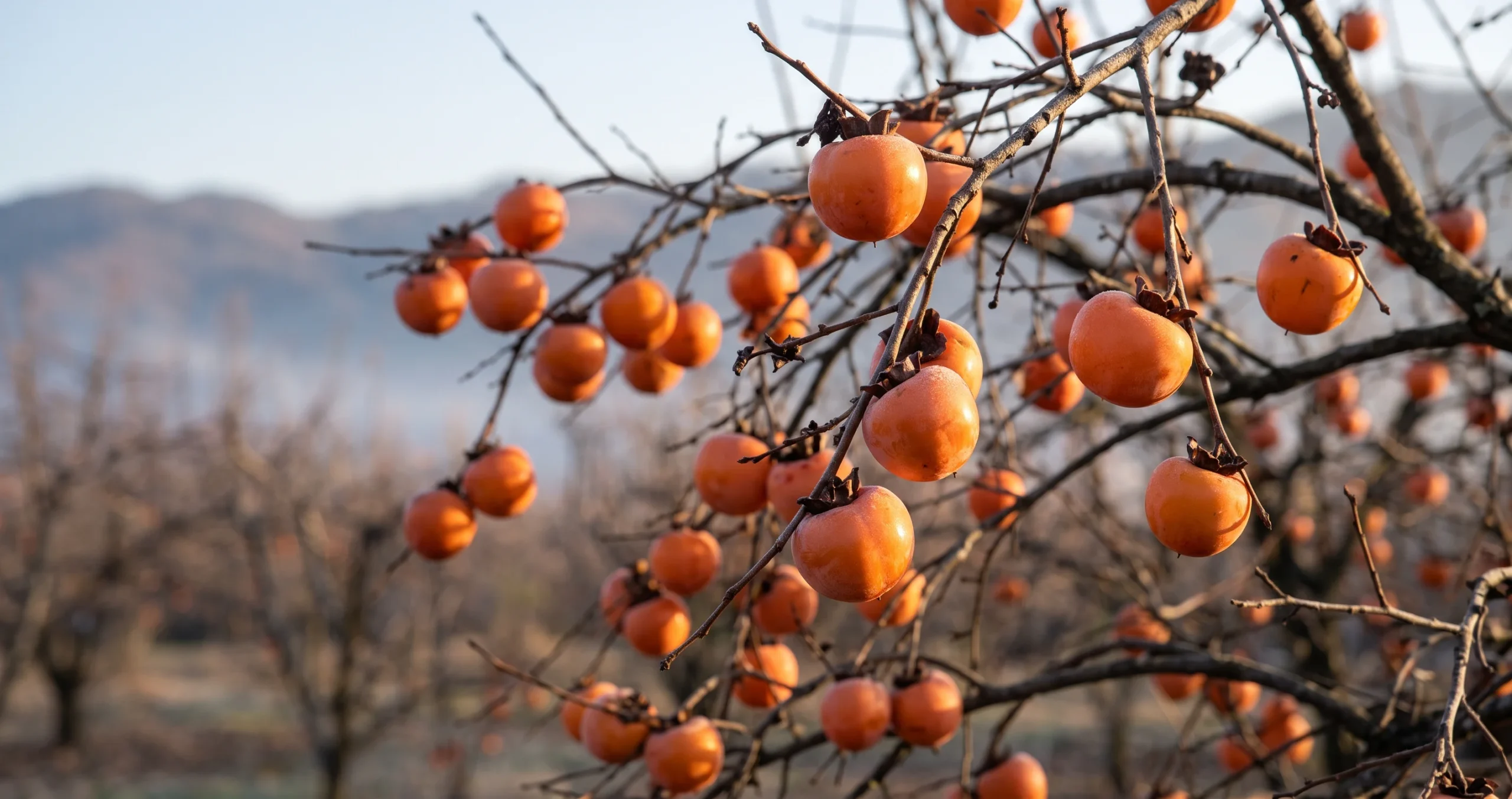
One bite can make your mouth feel as though every drop of moisture has disappeared. A few weeks later, fruit from the same tree can taste wonderfully sweet, with soft, rich flesh that almost resembles jam.
That is the strange magic of the wild persimmon.
Across parts of the eastern and central United States, American persimmon trees produce small, round fruits that undergo one of nature’s most dramatic flavor transformations. Before ripening, their astringency can be overwhelming. Once fully mature, they become a seasonal treat for people and wildlife alike.
An old piece of country wisdom says persimmons need frost before they become edible. But the real explanation is more interesting.
The secret lies inside the fruit, where natural compounds change as ripening progresses.
Table of Contents
- What Makes Wild Persimmons So Unusual
- Why Wild Persimmons Make Your Mouth Pucker
- The Truth About Frost and Persimmon Ripening
- How to Tell When a Wild Persimmon Is Ripe
- Where American Persimmons Grow Naturally
- Why Wildlife Loves Persimmon Trees
- In Your Own Yard: Growing American Persimmons
- Harvesting and Using Ripe Wild Persimmons
- Frequently Asked Questions
What Makes Wild Persimmons So Unusual
The American persimmon (Diospyros virginiana) is a native North American tree known for its sweet autumn fruit and distinctive bark.
Unlike the large persimmons commonly sold in supermarkets, American persimmons are generally smaller, although fruit size varies considerably among trees and cultivated selections.
Their appearance changes as they mature. Firm green fruit gradually develops yellow-orange to reddish-orange tones, sometimes becoming darker as it softens.
But color alone does not reveal the most important transformation.
A persimmon that looks beautifully orange may still contain enough soluble tannins to produce an unpleasantly dry sensation in the mouth.
Another fruit from the same tree, fully softened and mature, may taste exceptionally sweet.
A Native Fruit With a Long History
American persimmons have been used as food for generations.
Indigenous communities throughout the tree’s native range recognized the fruit as a seasonal resource and developed ways to prepare and preserve it.
Today, wild persimmons remain popular among foragers, native-plant gardeners, and people interested in traditional American foods.
Their flavor is often described as rich and honey-like, sometimes with notes reminiscent of dates or other dried fruit.
However, sweetness and flavor vary among individual trees, growing conditions, and ripeness stages.
Why Wild Persimmons Make Your Mouth Pucker
The intense puckering sensation caused by an unripe persimmon is called astringency.
It is not the same thing as sourness.
A sour lemon stimulates taste receptors associated with acidity. An astringent persimmon creates a drying, rough sensation across the tongue, gums, and inner cheeks.
The explanation involves tannins, saliva, and the remarkable chemistry of ripening fruit.
The Role of Soluble Tannins
Tannins are naturally occurring plant compounds found in many fruits, leaves, seeds, and bark.
In unripe American persimmons, soluble tannins can be present at concentrations high enough to produce powerful astringency.
When you bite into the fruit, these compounds interact with proteins in your saliva.
Saliva normally helps lubricate the mouth, allowing food to move comfortably across its surfaces.
Tannins can bind to salivary proteins and cause them to aggregate, reducing their ability to provide that familiar slippery sensation.
The result is the characteristic dry, puckering feeling.
This is why an unripe persimmon can seem to make your entire mouth tighten.
Why the Fruit Becomes Sweeter
As persimmons mature, their internal chemistry changes.
The fruit softens, sugars become more noticeable, and the amount or activity of soluble astringent tannins generally declines.
Some tannins become less soluble through processes associated with ripening, reducing their ability to interact with saliva.
The exact mechanisms can differ among persimmon species and cultivars.
In American persimmons, the familiar practical result is that fruit often becomes much more pleasant to eat when fully soft and ripe.
The transformation can be dramatic.
A fruit that was nearly impossible to enjoy while firm may develop a smooth, rich flavor once its flesh becomes soft.
Why Color Is Not Enough
One of the most common mistakes when harvesting wild persimmons is assuming that orange means ripe.
Color development and the loss of astringency do not always occur at exactly the same rate.
A brightly colored fruit may still be firm and unpleasantly astringent.
For many American persimmons, texture provides a more useful clue.
Fully ripe fruit is often very soft, sometimes appearing wrinkled or slightly collapsed.
Although this appearance might seem undesirable in other fruits, it can be perfectly normal for a ripe American persimmon.
The Truth About Frost and Persimmon Ripening
For generations, people have repeated the advice that persimmons should never be eaten before the first frost.
There is a reason this belief became popular.
In many regions, American persimmons ripen during autumn, when nighttime temperatures begin to fall.
The first frosts often occur around the same general period when fruit becomes soft and sweet.
But timing is not the same as cause.
Frost Is Not Required for Ripeness
American persimmons can become fully ripe without experiencing freezing temperatures.
In some locations and seasons, fruit softens and loses much of its astringency before the first frost arrives.
The process is driven primarily by fruit development and ripening physiology.
Cool autumn weather may coincide with that process, but frost itself is not a universal requirement.
The exact ripening schedule depends on factors such as genetics, climate, and local growing conditions.
Some trees produce enjoyable fruit earlier in the season, while others ripen later.
Why the Frost Myth Persists
Imagine a family gathering persimmons from the same woodland tree every autumn.
Early in the season, the fruit is firm and intensely astringent.
Several weeks later, after a cold night, the persimmons are soft and sweet.
It would be natural to associate the improved flavor with the frost.
However, the fruit has also had additional time to mature.
That extra ripening time may be the more important explanation.
The traditional advice can therefore work as a rough seasonal reminder in some places without being scientifically precise.
Freezing Is Not the Same as Natural Ripening
Freezing fruit can alter its texture because ice crystals may damage cell structures.
This sometimes makes frozen and thawed fruit feel softer.
However, physical softening does not necessarily mean that all astringent compounds have become harmlessly inactive or that the fruit has completed its normal ripening process.
A hard, immature persimmon should not be assumed to become delicious simply because it has spent time in a freezer.
For reliable flavor, starting with properly mature fruit is more important.
How to Tell When a Wild Persimmon Is Ripe
Recognizing ripe American persimmons becomes easier with experience.
Rather than relying on a single sign, consider several characteristics together.
Look for Very Soft Fruit
A ripe American persimmon often feels extremely soft when gently handled.
Its skin may appear slightly wrinkled, and the flesh may have a thick, custard-like consistency.
Avoid squeezing fruit aggressively, since ripe persimmons bruise and split easily.
Watch for Naturally Fallen Persimmons
Fully mature persimmons frequently fall from the tree.
Freshly fallen fruit can be an excellent indication that ripening has progressed.
However, fruit can also fall because of wind, damage, pests, or other causes.
Check each persimmon individually rather than assuming that every fallen fruit is ready to eat.
Collect only clean, sound fruit from a safe location.
Pay Attention to the Individual Tree
American persimmon trees vary.
One tree may produce fruit that becomes sweet relatively early, while another may retain astringency much longer.
Fruit size, color, and texture can also differ.
Learning the characteristics of a particular tree is often more useful than following a fixed calendar date.
Where American Persimmons Grow Naturally
American persimmons are native to a broad area of the eastern and central United States.
They occur in a variety of landscapes, including woodland edges, old fields, open woods, and other suitable habitats.
The species generally performs well in climates with warm growing seasons and appropriate winter conditions.
A Tree With Distinctive Bark
Mature American persimmon trees often develop dark, deeply furrowed bark.
Its blocky pattern is sometimes compared to an alligator’s skin.
This feature can help with identification, particularly when the tree is not carrying fruit.
However, bark appearance changes with age, and young trees may look quite different.
Reliable identification should combine several characteristics, including leaves, bark, flowers, and fruit.
Not Every Tree Produces Fruit
American persimmons commonly have male and female flowers on separate trees, although reproductive variation exists.
Female trees generally need compatible pollen to produce seeded fruit.
Some cultivated selections may produce fruit without pollination under certain conditions.
For gardeners hoping to harvest persimmons, understanding the reproductive characteristics of the selected tree is important.
Why Wildlife Loves Persimmon Trees
A persimmon tree can become a valuable food source as autumn progresses.
Its fruit is eaten by various wild animals, and its branches contribute to the structure of woodland and edge habitats.
Mammals That Feed on Persimmons
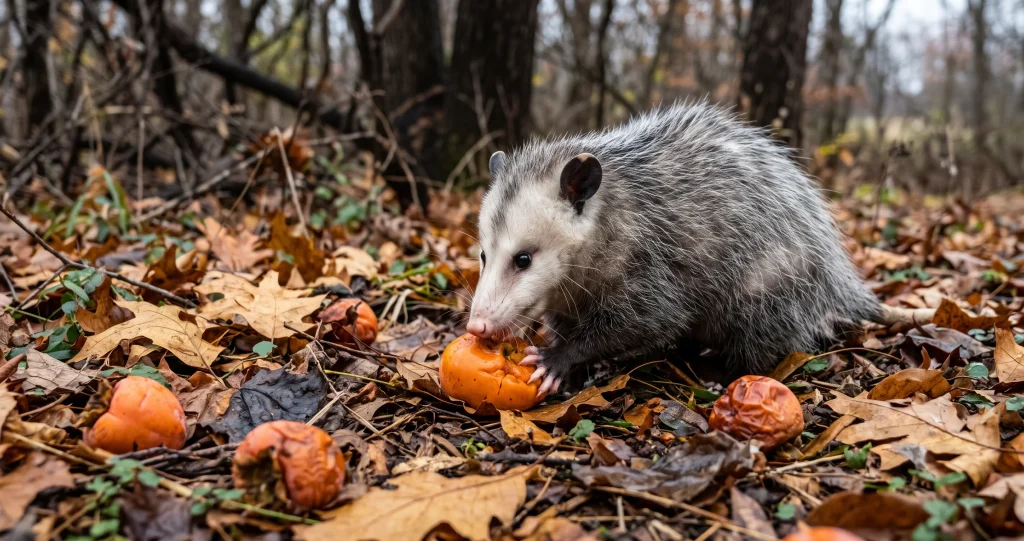
Raccoons, opossums, foxes, and deer are among the mammals known to consume persimmon fruit.
Some animals collect fallen fruit, while others may reach fruit still attached to branches.
Wildlife feeding patterns depend on local species, seasonal food availability, and habitat conditions.
Persimmons can be especially attractive when other fruit sources become less abundant.
Birds and Seasonal Food
Some birds also eat persimmons.
The fruit can contribute to the seasonal food resources available in a wildlife-friendly landscape.
However, different bird species have different diets, and not every bird visiting a persimmon tree is necessarily feeding on the fruit.
Trees also provide perching places, cover, and other habitat features.
Seeds and Wildlife Movement
Animals that consume persimmons may transport seeds away from the parent tree.
In some cases, seeds pass through an animal’s digestive system and are deposited elsewhere.
This can contribute to seed dispersal.
The effectiveness of dispersal varies with the animal involved and the conditions in which seeds are deposited.
In Your Own Yard: Growing American Persimmons
Growing an American persimmon can be a rewarding choice for gardeners interested in native fruit trees and wildlife.
Once established in a suitable location, these trees can become long-lived features of the landscape.
Choose a Suitable Planting Site
American persimmons generally grow best in full sun when fruit production is the goal.
They tolerate a range of soils, but adequate drainage and sufficient space for root development remain important.
Consider the tree’s mature size before planting.
Avoid placing it too close to buildings, underground utilities, or other areas where future growth could create problems.
Select the Right Tree
If fruit production is important, purchase a named cultivar or a nursery tree with clearly described reproductive characteristics.
Seed-grown trees can vary substantially in fruit quality, growth habits, and sex.
A reputable nursery can help identify selections suited to local climate conditions.
For gardeners with limited space, choosing a cultivar with a known fruiting habit may be more practical than planting several unidentified seedlings.
Plant Carefully and Water During Establishment
Plant the tree at the appropriate depth, keeping the root flare near the soil surface.
Avoid burying the trunk too deeply.
Water consistently during establishment, especially during dry periods.
A layer of organic mulch can help moderate soil moisture and reduce competition from nearby weeds.
Keep mulch away from direct contact with the trunk.
Give the Tree Time
American persimmons are not necessarily quick-producing fruit trees.
The time required to begin fruiting depends on whether the tree is seed-grown or grafted, its age at planting, and growing conditions.
Avoid expecting a substantial crop immediately.
A healthy, well-established tree is a better long-term goal than forcing rapid growth with excessive fertilizer.
Harvesting and Using Ripe Wild Persimmons
When American persimmons reach full ripeness, their soft flesh can be used in several traditional preparations.
The fruit is often eaten fresh, processed into pulp, or incorporated into baked goods.
Collect Fruit Carefully
Choose fruit that is soft, mature, and free from obvious spoilage.
Use clean containers and avoid collecting fruit from contaminated ground or roadside locations exposed to pollutants.
Ripe persimmons are delicate, so shallow containers can help prevent crushing.
Wash fruit appropriately before preparing it.
Remove Seeds Before Cooking
American persimmons commonly contain several large seeds.
These should be removed when preparing pulp.
A food mill or suitable strainer can help separate the soft flesh from seeds and skin.
The resulting pulp can be used in puddings, breads, and other recipes.
Store Ripe Fruit Safely
Fully ripe persimmons are perishable.
Refrigerate fruit promptly when it will not be used immediately.
For longer storage, prepared pulp may be frozen in suitable food-safe containers.
Discard fruit showing signs of mold, fermentation, or other spoilage.
Avoid using questionable fruit simply because persimmons naturally become very soft when ripe.
Frequently Asked Questions
Do wild persimmons need frost before they become sweet?
No. American persimmons can ripen and lose much of their astringency before frost occurs. The traditional belief probably developed because ripening and the first cold nights often happen around the same time. Fruit maturity and softness are generally more useful indicators than the calendar’s first freezing temperature.
Why does an unripe persimmon make your mouth feel dry?
Unripe persimmons contain soluble tannins that interact with proteins in saliva. This reduces the normal lubricating effect of saliva and produces a strong drying sensation called astringency. As the fruit ripens, changes in tannin chemistry generally make the flesh much more pleasant to eat.
Can American persimmons grow in a home garden?
Yes. American persimmons can be grown in suitable parts of the United States. They generally prefer a sunny location and adequate space for mature growth. Gardeners interested in fruit should choose appropriate cultivars and consider pollination requirements, local climate, and the tree’s eventual size.
Conclusion
The next time a wild persimmon makes your mouth pucker, remember that the fruit is revealing something about its chemistry.
Soluble tannins create that powerful drying sensation, while natural ripening gradually transforms the fruit into something soft and sweet.
Frost may arrive around the same time, but it is not the secret ingredient.
The real wonder is the change happening inside the persimmon itself.
From astringent green fruit to rich autumn sweetness, this native American tree offers a remarkable reminder that nature often rewards patience.
External Sources
1. University of Missouri Extension — Persimmon: Nature’s Fall Fruit
Explains American persimmon ripening, the puckering effect of tannins, and why freezing temperatures are not required to eliminate astringency.
2. University of Florida IFAS — Alleviating Astringency in Persimmon Fruit
Provides a scientific explanation of soluble tannins, their interaction with saliva, and the changes that reduce astringency.
3. University of Georgia Extension — Home Garden Persimmons
Covers persimmon varieties, pollination requirements, planting, and home-garden care.
4. North Carolina Forest Service — American Persimmon
Describes the tree’s growing conditions, planting considerations, native habitat, and value to wildlife.
5. Purdue Extension — Persimmon Selection and Storage
Explains how to recognize ripe persimmons, why unripe fruit tastes astringent, and how to handle ripe fruit.