
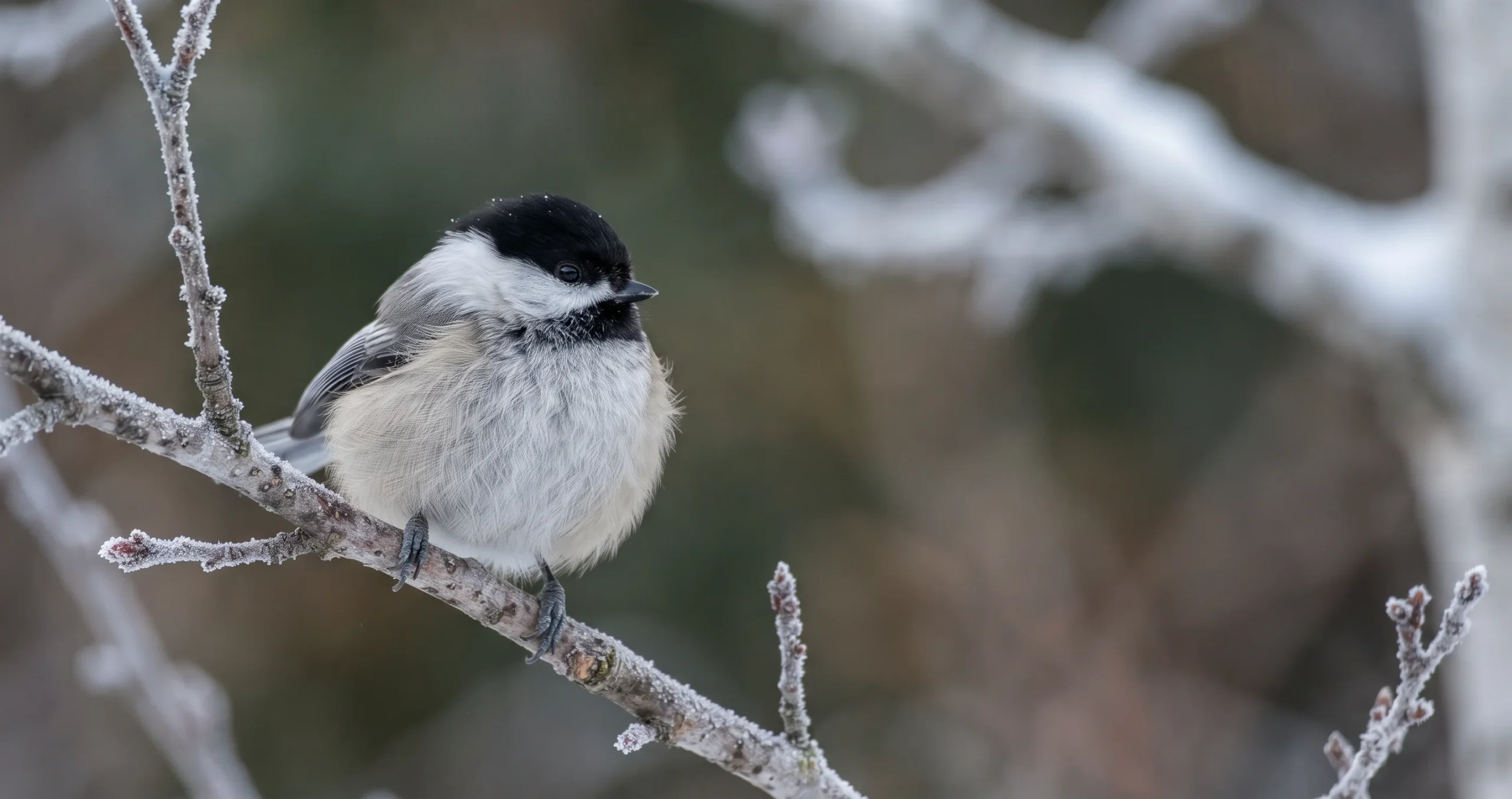
A small songbird settles onto a narrow branch as daylight fades. The wind moves the tree, the temperature drops, and the bird closes its eyes. Hours later, it is still perched in almost the same position.
Understanding how birds sleep on branches reveals one of nature’s most fascinating adaptations: a specialized arrangement of muscles, tendons, and joints that helps many perching birds maintain their grip while resting.
The mechanism is often called a perching tendon lock, although the popular name simplifies a more complex biological system. It works alongside balance, foot anatomy, and the bird’s choice of a secure sleeping location.
For backyard gardeners, this remarkable ability also raises practical questions. Where do birds spend cold winter nights, and what can we do to make our gardens better places for them to rest?
Table of Contents
- How Birds Sleep on Branches Without Falling
- How the Perching Tendon Mechanism Works
- How Birds Release Their Grip When They Wake
- Do All Birds Sleep the Same Way?
- How Birds Stay Warm While Sleeping
- Where Birds Roost During Winter
- How to Provide a Winter Roost Box
- What Gardeners Can Leave for Natural Roosting Cover
- Common Myths About Sleeping Birds
- Frequently Asked Questions
How Birds Sleep on Branches Without Falling
Imagine trying to sleep while balancing on a narrow railing. For a person, the effort of maintaining that position would make restful sleep nearly impossible.
Many songbirds, however, are built for perching. Their feet can curl securely around a branch, and the anatomy of their legs helps maintain that grip with relatively little ongoing muscular effort.
This ability is especially important for small birds such as chickadees, finches, sparrows, and many other familiar backyard species.
When a bird settles onto a perch, its legs bend and its toes wrap around the supporting surface. Tendons associated with the toe-flexing muscles help maintain the curved position.
The bird does not simply switch off its muscles and become an immovable object. Its posture, balance, and nervous system still matter, and it can react to movement or danger.
Nevertheless, the mechanical assistance provided by its feet makes resting on a branch far more practical than it would be for an animal without similar adaptations.
How the Perching Tendon Mechanism Works
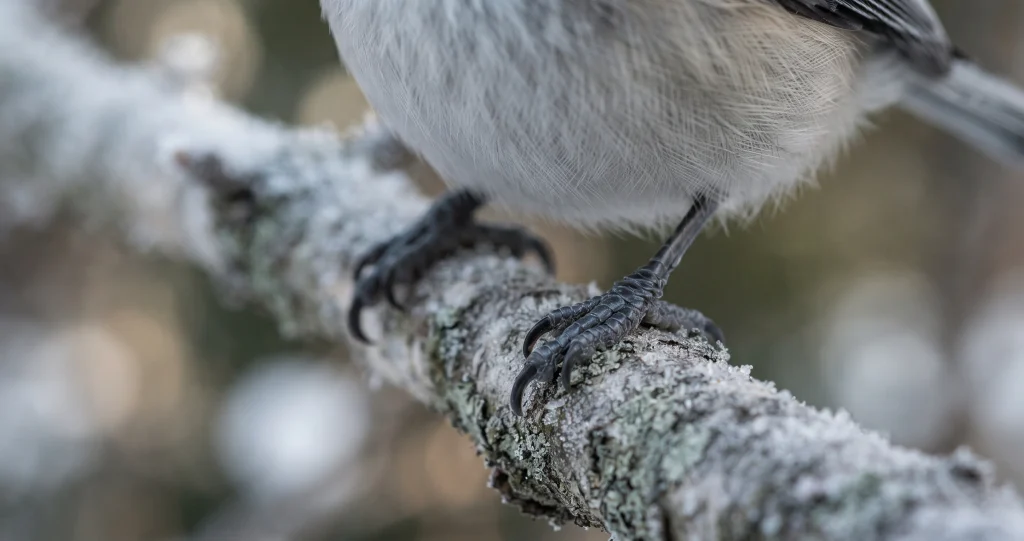
The secret behind how birds sleep on branches lies partly in the relationship between their leg joints and the tendons controlling their toes.
The Role of Tendons and Leg Joints
Tendons are strong connective tissues that transmit force from muscles to bones. In a bird’s leg, long flexor tendons extend toward the toes and help bend them around a perch.
The joints involved are not arranged exactly like human legs. What appears to be a bird’s backward-bending knee is generally its ankle region, while the true knee is located higher and is often hidden by feathers.
As the bird lowers its body and bends its legs, the geometry of the joints and tendons can increase tension in the toe-flexing system.
This encourages the toes to curl around the branch and helps the bird maintain its grip.
Some descriptions refer to tendons passing around both the knee and ankle regions. The precise arrangement varies among bird groups, so the mechanism should not be treated as identical in every species.
Why the Toes Stay Curled
Many perching birds have three toes pointing forward and one pointing backward. This arrangement, called anisodactyly, allows the foot to wrap around branches of different sizes.
The rear toe provides an opposing point of contact, while the forward toes help distribute gripping force.
Specialized tendon surfaces and surrounding tissues can also contribute to maintaining flexion in certain birds.
Rather than requiring continuous, powerful muscle contractions throughout the night, the system allows a secure resting posture with reduced effort.
Researchers have also shown that the traditional explanation of a completely automatic, weight-triggered lock is too simple for all birds. Foot posture and active muscle control remain important.
For a useful overview of bird anatomy and adaptations, the Cornell Lab of Ornithology provides educational resources on bird structure and behavior.
Why Branch Size Matters
A branch must provide a suitable surface for the bird’s feet.
If it is extremely wide, the toes may not wrap around it effectively. If it is too thin or unstable, the perch may move excessively.
Birds often select sheltered branches or twigs that allow a comfortable grip while reducing exposure to wind and predators.
The ideal perch depends on the bird’s size, foot structure, and surrounding habitat.
How Birds Release Their Grip When They Wake
A bird’s toes do not remain permanently locked around a branch.
When it straightens its legs, changes posture, or prepares to move, the forces acting on the toe-flexing tendons change.
The toes can then extend and release the perch through coordinated movement of the muscles and joints.
This transition happens naturally as the bird shifts its weight or takes flight.
The process is not like opening a mechanical padlock. It is a flexible biological system that allows gripping, adjusting, walking, and releasing.
That flexibility matters because a bird may need to respond immediately to a predator, a moving branch, or another disturbance.
Do All Birds Sleep the Same Way?
The familiar image of a songbird sleeping on a branch represents only one of several bird sleeping strategies.
Ducks and other waterbirds may rest while floating. Shorebirds sometimes sleep while standing, and many species occasionally balance on one leg.
Woodpeckers and some other cavity-using birds often spend the night inside tree holes rather than on exposed branches.
Swifts have unusual resting behaviors, and certain species can spend extended periods in flight.
Even among birds that regularly perch, foot anatomy and sleeping posture vary.
Therefore, the perching tendon mechanism is best understood as an important adaptation among many birds, not a universal explanation for how every bird sleeps.
Different species have evolved different ways to remain secure while resting.
How Birds Stay Warm While Sleeping
Keeping a grip on a branch is only part of surviving a cold night.
Small birds also face a serious challenge: maintaining body temperature while losing heat to the surrounding air.
Fluffed Feathers Create Insulation
A resting bird often appears rounder than it does during the day.
This happens because it raises or fluffs its feathers, trapping pockets of air close to its body.
The trapped air provides insulation and reduces heat loss.
Feathers do not generate warmth themselves. Instead, they help retain heat produced by the bird’s metabolism.
Why Birds Tuck Their Heads
Many birds turn their heads backward and tuck their bills into their shoulder or back feathers while resting.
This posture helps reduce exposure of relatively uninsulated body surfaces.
A tucked head also creates the familiar appearance of a small bird curled into a compact ball.
Some birds additionally draw one leg into their feathers while standing on the other.
These behaviors can reduce exposed surface area and help conserve energy during cold weather.
Energy Conservation During Winter
Winter nights are particularly demanding because birds may have fewer daylight hours available for feeding.
Small species must obtain enough energy during the day to support their metabolism overnight.
Some birds can temporarily lower body temperature or enter shallow torpor under certain conditions, although this ability differs among species.
Others rely on stored energy, sheltered roosts, and effective feather insulation.
A secure nighttime location is therefore valuable for more than preventing falls. It can also reduce exposure to wind, rain, and extreme cold.
Where Birds Roost During Winter
A roost is a place where a bird settles to rest or sleep.
Winter roosting sites vary considerably among species, but many birds seek locations that provide shelter from wind and precipitation.
Dense Evergreen Trees
Evergreens are valuable because they retain foliage throughout the cold season.
Pines, spruces, firs, and other dense conifers can provide protected spaces among their branches.
Birds may move deeper into the foliage as temperatures drop or winds increase.
Dense evergreen cover can also make resting birds less visible to predators.
Tree Cavities and Old Woodpecker Holes
Natural cavities provide another important form of shelter.
Chickadees, nuthatches, woodpeckers, and certain other birds may use tree cavities for nighttime roosting.
These spaces can reduce exposure to wind and precipitation.
A cavity’s usefulness depends on its size, condition, entrance, and the species attempting to use it.
Shrubs, Vines, and Tangled Vegetation
Dense shrubs can create protected resting spaces near the ground.
Native thickets, evergreen hedges, and climbing vegetation may provide shelter for sparrows and other small birds.
A perfectly tidy garden does not always offer the best wildlife habitat.
Leaving suitable vegetation standing can preserve valuable cover through winter.
Communal Roosts
Some birds gather in groups when they sleep.
Starlings, blackbirds, and certain other species may form communal roosts containing many individuals.
Group roosting can offer advantages, although the reasons vary by species and circumstances.
Not every backyard bird sleeps in a flock, and many species rest alone or in small groups.
How to Provide a Winter Roost Box
A winter roost box is a specially designed shelter that may offer cavity-roosting birds a protected place to spend cold nights.
Unlike a conventional nesting box, which is designed primarily for raising young, a roost box is intended to provide resting space during unfavorable weather.
The Cornell Lab’s guide to attracting birds with roost boxes explains how these shelters can benefit birds that naturally use cavities. All About Birds
Choose the Right Design
A useful roost box should be sturdy, weather-resistant, and appropriate for the species likely to visit.
Some designs place the entrance near the bottom to help retain warmer air higher inside. Internal perches or textured surfaces can provide resting places, depending on the intended occupants.
Avoid sharp edges, exposed nails, and unnecessary exterior perches that might assist predators.
The box should also allow safe cleaning and have appropriate drainage and ventilation.
Choose a Sheltered Location
Mount the box securely in a quiet location protected from prevailing winter winds.
A tree, sturdy post, or suitable building wall may provide support, depending on the design and local conditions.
Consider nearby vegetation, predator access, and exposure to severe weather.
A predator guard may be appropriate where climbing predators are a concern.
Keep Expectations Realistic
Not every bird will use a roost box, and a newly installed shelter may remain empty.
Some species prefer natural cavities, dense vegetation, or familiar nighttime locations.
Roost boxes should supplement existing habitat rather than replace it.
Clean and inspect them when unoccupied, following guidance appropriate to the design and local wildlife.
What Gardeners Can Leave for Natural Roosting Cover
One of the simplest ways to help winter birds is to preserve useful shelter already growing in the garden.
A backyard does not need to look abandoned to provide valuable wildlife habitat.
Keep Dense Shrubs and Evergreen Cover
Native evergreen shrubs, conifers, and dense hedges can offer protection throughout winter.
Planting several shrubs together may create more substantial cover than a single isolated plant.
Choose species suited to your climate, available space, and soil conditions.
Where practical, combine evergreen shelter with native plants that provide seasonal berries, seeds, or insect habitat.
Leave Some Stems and Seed Heads Standing
Many gardeners cut every perennial stem to ground level in fall.
Leaving selected healthy stems and seed heads standing can preserve cover and support insects and seed-eating birds.
The benefits vary by plant and wildlife species, but a less aggressively cleared garden often offers more habitat structure.
Remove diseased material where necessary, and keep paths and building entrances accessible.
Preserve Safe Natural Cavities
Standing dead trees, sometimes called snags, can provide important wildlife habitat.
Old woodpecker cavities may later be used by other birds for nesting or shelter.
However, dead trees near homes, sidewalks, or frequently used areas can present falling hazards.
Ask a qualified arborist to assess questionable trees rather than keeping an unsafe snag solely for wildlife.
Reduce Disturbance Near Roosting Areas
Birds benefit from predictable, relatively undisturbed nighttime shelter.
Avoid repeatedly shining bright lights into occupied roosts or approaching resting birds for close-up photographs.
Keeping cats indoors, particularly overnight, also reduces risks to wildlife.
For a broader approach to backyard habitat, connect this section with a related article on your website about native plants, winter wildlife, or wildlife-friendly garden design.
Common Myths About Sleeping Birds
Myth: Every Bird’s Feet Lock Automatically
The idea that every sleeping bird is held in place by a completely automatic tendon lock is an oversimplification.
Research on European starlings found that their sleeping posture differed from the classic explanation, with balance playing a substantial role.
This is an important reminder that biological mechanisms can vary between species.
Myth: Birds Must Grip Tightly All Night
Some birds maintain a curved-toe posture, but gripping is not the only way they remain secure.
Foot shape, balance, posture, and the characteristics of the perch all contribute.
Myth: Birds Always Sleep in Nests
Most birds do not use breeding nests as their regular year-round sleeping places.
Depending on the species, they may rest on branches, in cavities, among vegetation, or in other protected locations.
Myth: A Bird That Looks Fluffy Is Always Sick
Fluffed feathers can be a normal response to cold weather or rest.
However, persistent lethargy, unusual posture, or an inability to respond normally may indicate illness or injury.
Observe from a distance and contact a licensed wildlife rehabilitator if a bird appears genuinely distressed.
Frequently Asked Questions
Do birds ever fall off branches while sleeping?
Healthy perching birds generally maintain stable resting positions through their foot anatomy, balance, and suitable perch selection. Falls can still occur because of injury, severe disturbance, or unstable footing.
Do birds sleep with both eyes closed?
Many birds close both eyes during sleep, but some species can also sleep with one eye open. This ability is associated with a form of sleep in which one brain hemisphere remains more alert than the other.
Why do birds stand on one leg when sleeping?
Standing on one leg can help some birds reduce heat loss by keeping the other leg tucked into insulating feathers. It is particularly noticeable in waterbirds, although resting postures vary.
Can backyard birds sleep in birdhouses during winter?
Yes. Some cavity-using species shelter in birdhouses during cold weather, even outside the breeding season. A purpose-built roost box may provide more suitable resting space than a standard nesting box.
Should I remove old bird nests before winter?
Inspect nest boxes only when unoccupied and follow local recommendations for cleaning. Avoid disturbing active nests or protected birds, and remember that natural nests and cavities serve different purposes.
Conclusion
The next time you notice a chickadee resting on a narrow branch, consider the remarkable anatomy hidden beneath its feathers.
The answer to how birds sleep on branches involves much more than a simple tendon lock. Specialized feet, coordinated muscles, balance, insulating feathers, and carefully chosen roosts all help birds rest securely.
Scientists continue to investigate the details of avian perching, and research has challenged some familiar explanations of completely passive gripping.
For gardeners, the practical lesson is equally fascinating: a winter landscape filled with dense shrubs, evergreen branches, and safe natural cavities can provide valuable places for birds to spend the night.
A few thoughtful habitat choices can make a backyard more welcoming throughout the coldest months.
External Sources
1. Experimental Analysis of Perching in the European Starling
Peer-reviewed research examining the automatic perching mechanism and challenging the assumption that sleeping birds always maintain a fully passive tendon lock.
Galton & Shepherd (2012), Read the study on PubMed
2. The Digital Tendon Locking Mechanism of the Avian Foot
Foundational anatomical research describing tendon and sheath structures associated with locking mechanisms across different bird groups.
Quinn & Baumel (1990), Read the scientific publication.
3. Attract Birds With Roost Boxes
Practical guidance about winter roosting behavior, suitable shelter designs, and cavity-using backyard birds.
Cornell Lab of Ornithology, Read Cornell’s roost-box guide.