
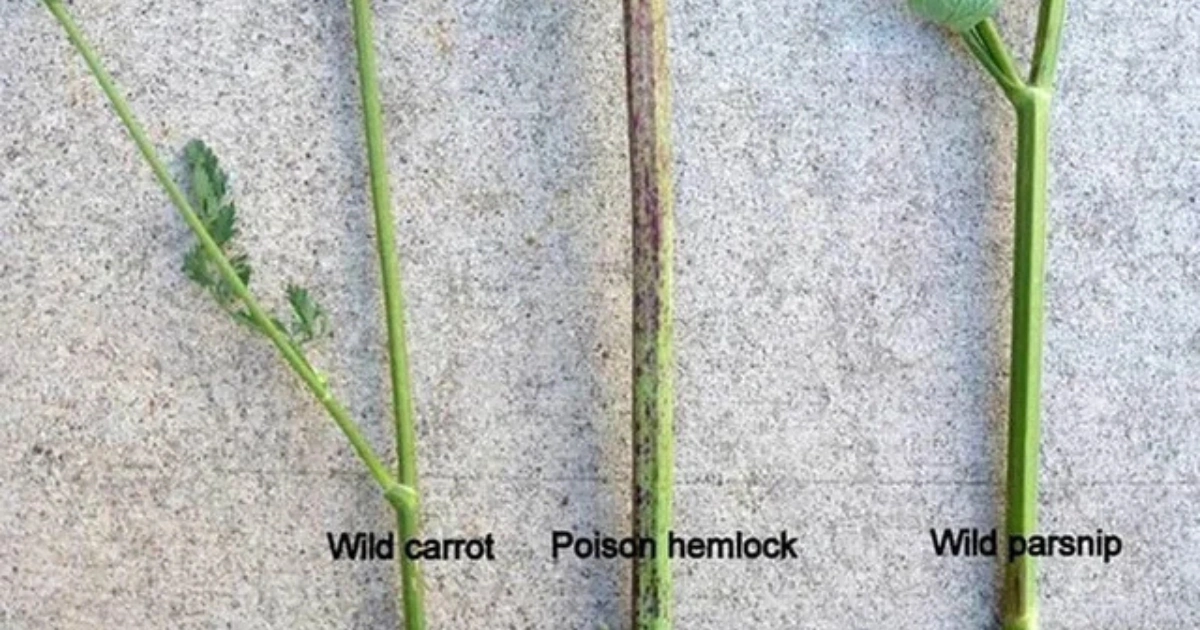
Primary Keyword: wild carrot vs poison hemlock
Many plants in the carrot family produce clusters of white flowers that appear remarkably similar at first glance. Unfortunately, some of these lookalikes can be dangerous or even deadly. Among the most commonly confused species are wild carrot, poison hemlock, and giant hogweed.
Learning the differences between these plants is important for gardeners, hikers, foragers, and landowners. Misidentification can lead to serious health risks, especially when dealing with poisonous or skin-damaging species.
One crucial rule should always be followed: never consume or handle a wild plant based on a single identifying feature. Proper identification requires examining multiple characteristics and, when in doubt, avoiding contact altogether.
Why These Plants Are Often Confused
Wild carrot, poison hemlock, and giant hogweed all belong to the carrot family (Apiaceae), which is known for its umbrella-shaped flower clusters called umbels.
Shared characteristics include:
- White flower clusters
- Tall stems
- Fern-like foliage
- Similar growth habits
- Roadside and field habitats
Because of these similarities, mistakes can occur, especially when plants are immature or viewed from a distance.
Wild Carrot (Queen Anne’s Lace)
Wild Carrot
Wild carrot, often called Queen Anne’s Lace, is generally considered the safest of the three species discussed here.
It is the wild ancestor of the modern cultivated carrot.
Key Identification Features
Hairy Stem
The stem is covered with small hairs.
This is often one of the easiest distinguishing characteristics.
Carrot-Like Odor
When leaves or roots are crushed, they usually produce a recognizable carrot scent.
However, smell should never be used as the sole identification method.
Flower Structure
Many flower clusters contain a small dark-purple or reddish flower in the center, although this feature is not always present.
Size
Wild carrot is generally smaller than giant hogweed and poison hemlock.
Typical Habitat
Wild carrot commonly grows in:
- Meadows
- Roadsides
- Abandoned fields
- Sunny open areas
Poison Hemlock
Poison Hemlock
Poison hemlock is one of the most toxic plants found in North America and Europe.
Every part of the plant contains poisonous alkaloids capable of causing severe poisoning in humans and animals.
Key Identification Features
Smooth Stem
Unlike wild carrot, poison hemlock stems are smooth and hairless.
Purple Blotches
One of the most important identifying characteristics is the presence of irregular purple or reddish spots on the stem.
These blotches are often visible even from a distance.
Large Size
Mature plants frequently reach:
- 6 to 10 feet (1.8 to 3 meters)
- Sometimes even taller
White Flower Clusters
Large umbrella-shaped clusters of white flowers appear during late spring and summer.
Toxicity Warning
Poison hemlock can be deadly if ingested.
Symptoms may include:
- Tremors
- Muscle weakness
- Respiratory failure
- Paralysis
Never consume any plant that could potentially be poison hemlock.
Giant Hogweed
Giant Hogweed
Giant hogweed is not usually deadly when touched, but it can cause severe skin injuries.
The plant produces sap containing compounds called furanocoumarins that react with sunlight.
Key Identification Features
Enormous Size
Giant hogweed often reaches:
- 10 to 15 feet (3 to 4.5 meters)
- Occasionally even taller
Massive Leaves
Leaves can exceed several feet in width and are deeply lobed.
Thick Bristly Stem
The stem is typically:
- Thick
- Ridged
- Covered with coarse hairs
- Marked with purple blotches
Huge Flower Clusters
Flower heads can measure up to 2 feet (60 cm) across.
Health Risks
Contact with sap may cause:
- Severe burns
- Blistering
- Long-lasting skin sensitivity
- Eye injuries if sap enters the eyes
Because symptoms can worsen after sunlight exposure, immediate washing and medical advice are recommended after suspected contact.
Comparing the Three Plants
| Feature | Wild Carrot | Poison Hemlock | Giant Hogweed |
|---|---|---|---|
| Stem Texture | Hairy | Smooth | Bristly |
| Purple Stem Spots | Usually absent | Present | Often present |
| Height | 1–4 ft | 6–10+ ft | 10–15+ ft |
| Flower Size | Small to medium | Medium | Very large |
| Main Risk | Misidentification | Highly poisonous | Sap causes severe burns |
| Leaf Size | Small, delicate | Large, fern-like | Massive, deeply lobed |
Why Stem Characteristics Matter
Many identification guides emphasize stems because flowers can appear similar across multiple species.
Generally:
- Hairy stem → often suggests wild carrot
- Smooth stem with purple blotches → possible poison hemlock
- Thick bristly stem with huge leaves → possible giant hogweed
However, no single characteristic should be used alone for identification.
Safety Tips for Foragers and Gardeners
Never Rely on One Feature
Plant identification should always involve:
- Stem characteristics
- Leaf shape
- Flower structure
- Growth habit
- Habitat
- Overall size
Wear Protective Clothing
When dealing with unknown plants:
- Wear gloves
- Wear long sleeves
- Avoid skin contact
Avoid Tasting Unknown Plants
Even experienced foragers avoid consuming plants that cannot be identified with certainty.
Teach Children to Avoid Unknown Plants
Children should be taught never to touch or eat unfamiliar plants without adult supervision.
Common Misidentification Mistakes
Assuming All White Umbel Flowers Are Safe
Many members of the carrot family look similar.
Several toxic species produce flower clusters nearly identical to edible relatives.
Using Smell Alone
A carrot-like scent can be helpful but should never be the primary identification tool.
Ignoring Plant Size
Giant hogweed’s enormous dimensions often distinguish it from wild carrot.
Overlooking Stem Details
Hair, color patterns, and stem texture are among the most important diagnostic features.
Frequently Asked Questions
Is wild carrot safe to eat?
Wild carrot has historically been used as a food source, but misidentification risks are extremely high. Consumption should only occur with expert-level identification.
How poisonous is poison hemlock?
Poison hemlock is extremely toxic and can be fatal if ingested.
Can giant hogweed cause burns?
Yes. Its sap can cause severe skin reactions when exposed to sunlight.
What is the easiest way to tell wild carrot from poison hemlock?
Wild carrot typically has a hairy stem, while poison hemlock has a smooth stem often marked with purple blotches.
Should I remove giant hogweed from my property?
In many regions, giant hogweed is considered invasive. Removal should be performed carefully using protective equipment and local management guidelines.
Internal Linking Suggestions
For SecretsoftheGreenGarden.com, consider linking to:
- Common Toxic Plants Found in Home Landscapes
- Beginner’s Guide to Plant Identification
- Beneficial Wildflowers for Pollinators
External Linking Suggestions
For authoritative identification and safety information, consider referencing:
- USDA Natural Resources Conservation Service
- University of Minnesota Extension – Poisonous Plants Resources
- Centers for Disease Control and Prevention (CDC) – Giant Hogweed Information
Conclusion
The comparison of wild carrot vs poison hemlock highlights why accurate plant identification is so important. While wild carrot is generally harmless, poison hemlock is highly toxic and giant hogweed can cause severe skin injuries through sap exposure. Because these plants share similar flower structures, relying on a single feature is never enough. Careful observation of stems, leaves, plant size, and growth habits provides a safer approach, helping gardeners and outdoor enthusiasts avoid potentially dangerous mistakes.