
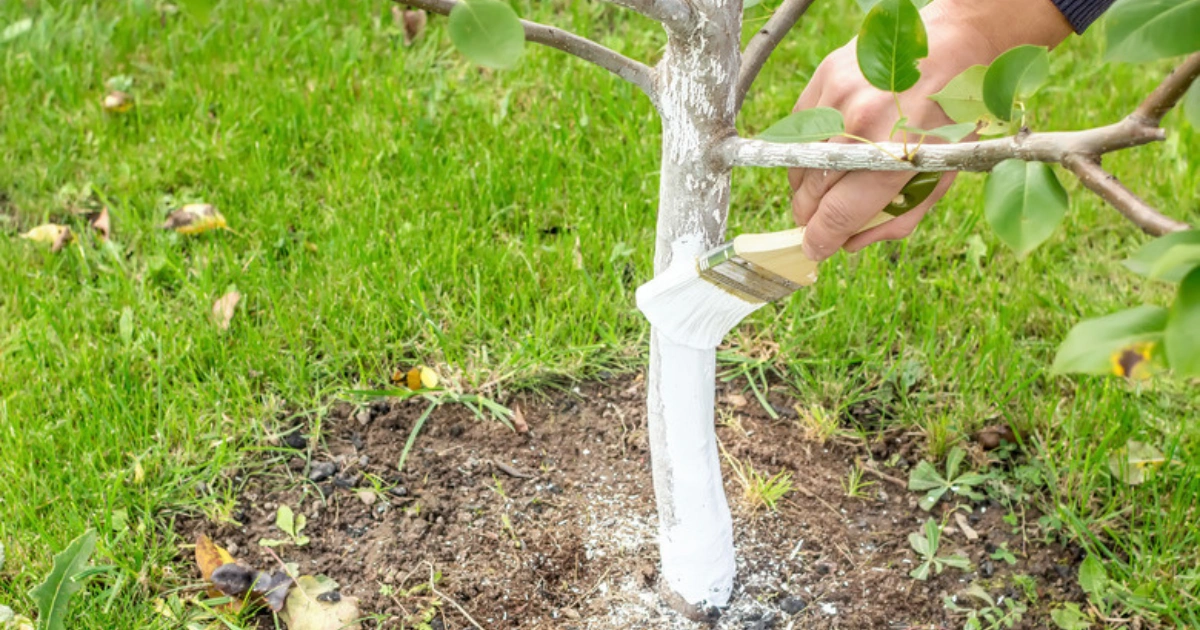
Tree trunks painted white are a common sight in orchards, vineyards, and home gardens around the world. Although some people assume the white coating is decorative, it actually serves an important protective purpose. This traditional technique, often called lime washing or tree whitewashing, has been used for generations to help protect trees from environmental stress and certain pests.
Applying a lime wash mixture to tree trunks can help reduce bark damage caused by intense sunlight, temperature fluctuations, and other environmental pressures. It is especially popular in regions with strong sun exposure and hot summers.
In this guide, you will learn what lime wash is, why gardeners use it, how it benefits trees, and how to apply it safely and effectively.
What Is Lime Wash for Trees?
Lime wash is a protective coating commonly made from hydrated lime mixed with water. The mixture is applied to the lower trunk and sometimes the main branches of trees.
Why the Coating Is White
The white color reflects sunlight away from the bark, helping regulate trunk temperature and reduce stress caused by heat and sudden temperature changes.
This method has been widely used in:
- Orchards
- Vineyards
- Fruit tree gardens
- Agricultural landscapes
Why Trees Need Protection From Sun Damage
Tree bark can suffer damage when exposed to intense sunlight or rapid temperature fluctuations.
Common Bark Problems
Excessive heat and sun exposure may contribute to:
- Bark cracking
- Sunscald
- Heat stress
- Tissue damage
Young fruit trees are especially vulnerable because their bark is thinner and more sensitive.
How Lime Wash Helps Protect Trees
Lime wash acts as a reflective barrier that reduces direct heat absorption.
Main Benefits of Lime Wash
Properly applied lime wash may help:
- Reflect sunlight
- Reduce bark temperature
- Prevent cracking
- Lower heat stress
- Reduce environmental pressure on the trunk
This protective layer can be especially useful during extreme summer conditions or harsh winter sunlight.
Can Lime Wash Help With Pests?
Some gardeners believe lime washing may discourage certain insects and pests from settling on tree trunks.
Possible Pest-Related Benefits
Lime wash may help reduce conditions favorable for:
- Some crawling insects
- Certain overwintering pests
- Bark-related infestations
However, lime wash should not be viewed as a complete pest-control solution by itself.
Integrated orchard management remains important.
Lime Wash and Disease Prevention
Healthy bark plays a critical role in protecting trees from infections.
Why Bark Protection Matters
Cracked or damaged bark can sometimes allow:
- Fungal pathogens
- Bacteria
- Insect-related injuries
By helping minimize bark stress, lime wash may indirectly reduce disease pressure in some situations.
Good pruning, sanitation, and watering practices remain equally important.
Which Trees Benefit Most From Lime Wash?
Lime washing is especially common on fruit trees and young orchard plantings.
Frequently Whitewashed Trees
Examples include:
- Apple trees
- Citrus trees
- Peach trees
- Pear trees
- Plum trees
Young trees with exposed trunks often benefit most from sunlight protection.
Best Time to Apply Lime Wash
Timing influences effectiveness.
Ideal Application Seasons
Many gardeners apply lime wash:
- Before intense summer heat
- During late winter
- Before spring sun exposure
In hot climates, applications before peak summer temperatures are especially common.
How to Prepare a Basic Lime Wash Mixture
Traditional lime wash is relatively simple.
Common Ingredients
Basic mixtures often contain:
- Hydrated lime
- Water
Some growers add natural binders for improved adhesion.
Important Safety Note
Hydrated lime is alkaline and should be handled carefully.
Protective equipment is recommended during mixing and application.
How to Apply Lime Wash to Trees
Application is usually straightforward.
Basic Application Steps
- Clean loose debris from the trunk
- Mix lime wash thoroughly
- Apply evenly with a brush
- Cover the lower trunk and main branches
Avoid applying excessively thick layers.
Areas Typically Covered
Most gardeners focus on:
- Lower trunk
- Exposed bark
- Main structural branches
Thin, even coverage generally works best.
Lime Wash vs Regular Paint
Some people confuse lime wash with white paint.
Why Specialized Tree Coatings Matter
Regular household paint may:
- Trap moisture
- Damage bark
- Contain harmful chemicals
Tree-safe whitewashing products or proper lime mixtures are safer options for orchard use.
Environmental Benefits of Traditional Lime Washing
Lime washing is often considered a lower-impact protective practice compared to some chemical treatments.
Sustainable Gardening Advantages
This traditional technique may help:
- Reduce bark stress naturally
- Support long-term tree health
- Lower reliance on harsher products
Many orchard owners combine lime washing with organic gardening methods.
Common Mistakes When Whitewashing Trees
Improper application can reduce effectiveness.
Mistakes to Avoid
- Using oil-based paints
- Applying thick heavy coatings
- Ignoring damaged bark
- Applying during freezing weather
- Neglecting overall tree care
Lime wash works best as part of a complete tree maintenance strategy.
Additional Ways to Protect Tree Bark
Lime wash is only one part of tree care.
Other Helpful Practices
Healthy trees also benefit from:
- Proper watering
- Mulching
- Pruning
- Pest monitoring
- Balanced fertilization
Strong overall health improves natural resilience.
Does Lime Wash Extend Tree Lifespan?
While no treatment guarantees longevity, reducing stress and bark damage can contribute to healthier long-term growth.
Why Stress Reduction Matters
Lower environmental stress may help trees:
- Maintain healthier bark
- Recover from heat exposure
- Resist certain environmental pressures
Healthy bark supports nutrient flow and structural integrity.
Traditional Orchard Practices Around the World
Whitewashed trunks have been used in agricultural systems for centuries.
Why the Technique Remains Popular
Growers continue using lime wash because it is:
- Affordable
- Easy to apply
- Widely available
- Traditionally trusted
Modern orchard management still incorporates this technique in many regions.
FAQ
Why are tree trunks painted white?
White coatings help reflect sunlight and reduce bark overheating and cracking.
What is tree lime wash made from?
Traditional lime wash is usually made from hydrated lime mixed with water.
Does lime wash prevent insects?
It may help discourage some pests, but it is not a complete insect-control solution.
Can all trees be whitewashed?
Fruit trees and young trees are most commonly treated, especially in sunny climates.
Is regular paint safe for trees?
Standard household paints are generally not recommended because they may damage bark or trap moisture.
Final Thoughts
Lime washing trees is a simple but valuable traditional gardening practice that helps protect bark from heat, sunlight, and environmental stress. By reflecting sunlight and reducing temperature fluctuations, this protective coating may help prevent cracking, improve bark health, and support long-term tree vitality.
Although lime wash is not a cure-all solution, it remains a useful addition to responsible orchard and garden care when combined with proper watering, pruning, and pest management.
For many gardeners and orchard owners, this affordable technique continues to offer reliable protection season after season.
Suggested Internal Links for secretsofthegreengarden.com
- Best Natural Ways to Protect Fruit Trees
- How to Prevent Bark Damage in Young Trees
- Easy Orchard Care Tips for Healthy Harvests